 |
 |
Hydrogen technology and partners
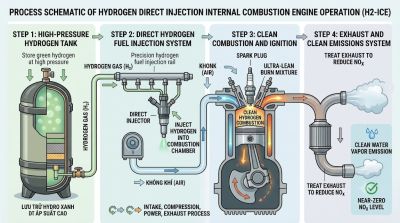
Technical and Economic Efficiency of Hydrogen Injection Equipment in Internal Combustion Engines: A Comprehensive Review from International Studies
Hydrogen injection technology in internal combustion engines (H2-ICE) has made significant advances in recent years, particularly in heavy-duty trucks and industrial applications. Key technical challenges are being addressed, and the economic viability is becoming clearer. The Direct Injection (DI) method is emerging as the technology standard, outperforming Port Fuel Injection (PFI) in efficiency and abnormal combustion control.
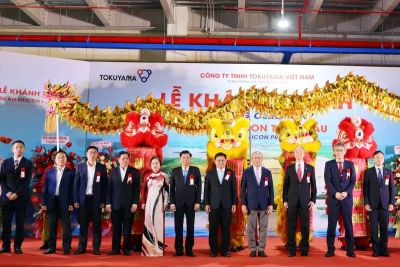
Hydrogen Potential from High-Tech Semiconductor Projects: The Case of Tokuyama at Phu My 3 Industrial Park
The inauguration of Tokuyama Vietnam Co., Ltd.'s polysilicon manufacturing plant at the Phu My 3 Specialized Industrial Park on August 13, 2026, marks not only a significant milestone for Vietnam's semiconductor industry but also opens up enormous potential for the development of the hydrogen ecosystem in the region. The inherent connection between polysilicon production and high-purity hydrogen creates a strategic opportunity to build a circular economy model and integrate clean energy.
Green Hydrogen vs. BESS: The Great Energy Storage Race and the Road Ahead
As the global renewable energy market expands, energy storage has become the industry's biggest bottleneck. With Direct Power Purchase Agreements (DPPA) gaining momentum, businesses are not only demanding clean energy but also stability in power supply.
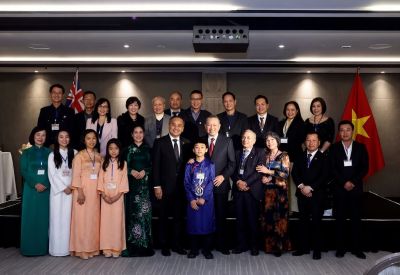
New Zealand's Hydrogen Potential and International Cooperation in the Context of General Secretary To Lam's Visit
General Secretary and President To Lam's state visit to New Zealand is opening opportunities to promote bilateral relations, particularly in the fields of energy transition and sustainable development . In this context, New Zealand's hydrogen potential and international cooperation projects are attracting significant attention.

Vietnam-Australia Energy Cooperation: New Momentum from Strategic Initiatives and Hydrogen Investment Opportunities
In the context of global energy transition and the Comprehensive Strategic Partnership between the two countries deepening, Vietnam-Australia energy cooperation has recorded significant progress in 2026. Notably, cooperative activities are being accelerated as Party General Secretary and State President Tô Lâm makes an official visit to Australia this week, raising expectations for new strategic cooperation agreements in the energy sector and supply chains.
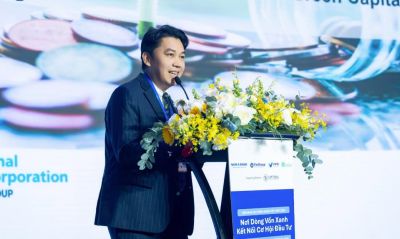
IFC's Perspective on Green Finance for Energy and VAHC's Assessment of Hydrogen at the Vietnam Green Finance Conference 2026
At the Vietnam Green Finance Conference 2026 organized by VIFC-HCM, Nam Á Bank and FiinGroup supported by GGGI, Mr. Paul Xavier, Program Officer at the International Finance Corporation (IFC) – a member of the World Bank Group, delivered a significant presentation on global green capital flows and opportunities for Vietnam.
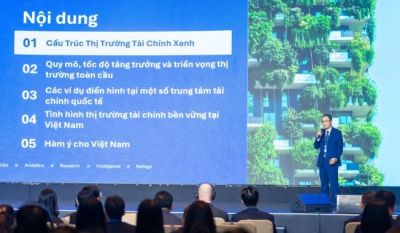
Review of Sustainable Finance Products at Selected International Finance Centers and Implications for VIFC-HCMC – Perspectives from FiinGroup and VAHC's Assessment on Hydrogen
At the Vietnam Green Finance Conference 2026 by VIFC-HCM, Nam A Bank and FiinGroup, supported by GGGI, Mr. Le Xuan Dong, CFA, Managing Director, Head of Market Research & Advisory Services at FiinGroup, delivered a presentation on the structure of the green finance market and lessons from international financial centers (IFCs).
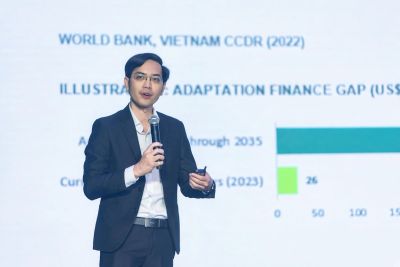
Building a Green Finance Ecosystem at VIFC-HCMC and Perspectives on Hydrogen from VAHC
At the Vietnam Green Finance Conference 2026, Associate Professor, Dr. Nguyen Huu Huan, Vice Chairman of the Executive Agency of the Vietnam International Financial Center in Ho Chi Minh City (VIFC-HCMC), delivered a significant presentation on the strategy for building a green finance ecosystem. According to Dr. Huan, Vietnam is facing a massive climate finance need. The World Bank's Country Climate and Development Report (CCDR) shows that by 2040, Vietnam will need approximately $368 billion in additional investment to achieve its climate adaptation and mitigation targets. This figure is equivalent to about 6.8% of GDP per year, while current public resources only meet about 2% of GDP, making the mobilization of private and international capital a critical factor.
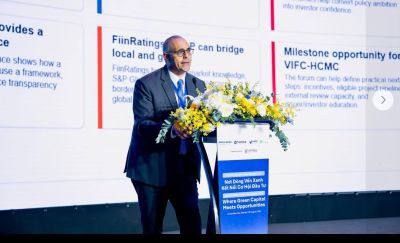
Vietnam Green Finance Forum 2026: International experiences and implications for Vietnam from S&P Global and comments from VAHC on the hydrogen challenge for the Vietnamese market.
On August 6, 2026, at the Vietnam Green Finance Conference 2026 co-hosted by VIFC-HCM, Nam Á Bank and FiinGroup, Mr. Matthew Batrouney, Managing Director, Commercial Lead for Sustainable Finance, APAC at S&P Global Ratings, delivered a key presentation on international experience and implications for Vietnam in the green bond sector.
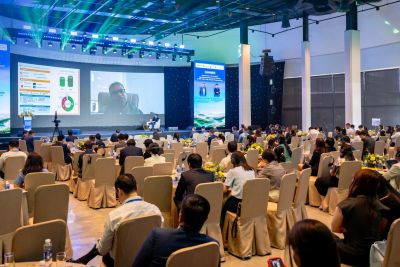
Vietnam Green Finance Conference 2026: Where Green Capital Connects Investment Opportunities and Lessons from GIFT City on Transition Finance
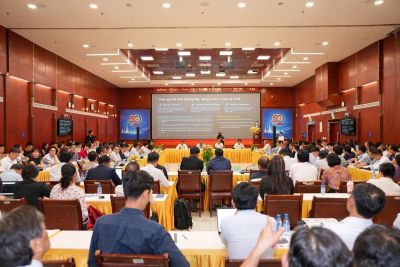
On August 6, 2026, the Vietnam Green Finance Conference 2026, themed "Where Green Capital Connects Investment Opportunities," took place in Ho Chi Minh City. The event was co-organized by the Executive Agency of Ho Chi Minh City International Financial Center (VIFC-HCMC), Nam A Bank, FiinGroup, and the Vietnam Office of the Global Green Growth Institute (GGGI).
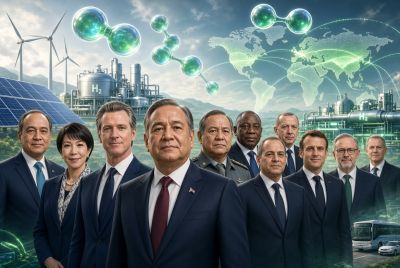
Global Leaders Double Down on Hydrogen: Key Moves from Malaysia, Japan, India, U.S., Philippines, Brazil, Colombia, and More (August 2026)
The global hydrogen landscape is entering a critical new phase, moving beyond pilot projects and national strategies into concrete policy actions, cross-border partnerships, and real-world infrastructure development. As the urgency to decarbonize industrial sectors and achieve energy independence intensifies, top national leaders from Asia, North America, Europe, Latin America, and Africa are increasingly placing hydrogen at the center of their economic and energy agendas. From signing landmark legislation and launching demand-creation initiatives to granting exploration permits and forging strategic alliances, these high-level moves signal a decisive shift toward a more commercially viable and globally integrated hydrogen economy. This article provides a comprehensive update on the latest hydrogen-related activities and statements from heads of state and government leaders around the world.

INDEFOL and the Vision for Green Hydrogen in Vietnam: A Discussion with Mr. Manuel Baumgartner, APAC GH2 Trading Director at INDEFOL
Against the backdrop of the global green hydrogen revolution, Vietnam is emerging as a strategic destination for clean energy projects. Mr. Manuel Baumgartner, APAC GH2 Trading Director at INDEFOL, sat down with VAHC's Annie Nguyễn for an open conversation about the company's strategy, specific projects in Vietnam, and vision for the future.
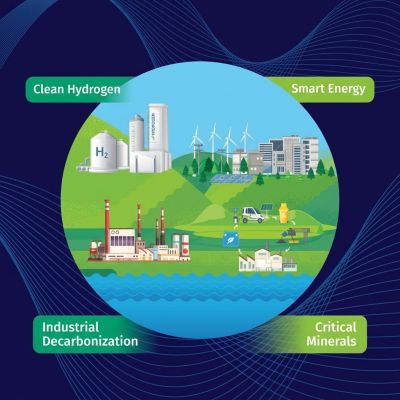
UNIDO's Hydrogen Support Mechanisms and Recommendations for Vietnam
The United Nations Industrial Development Organization (UNIDO) launched its Global Programme for Hydrogen in Industry (GPHI) in 2021, with support from the Governments of Austria, Germany, and Italy. The programme's goal is to support a just hydrogen transition in developing countries, with a focus on social and environmental considerations.
UNIDO is currently implementing hydrogen projects in more than 13 countries, including Algeria, Brazil, China, Egypt, Ecuador, Malaysia, Morocco, Namibia, Nigeria, Pakistan, Philippines, South Africa, and Tunisia.
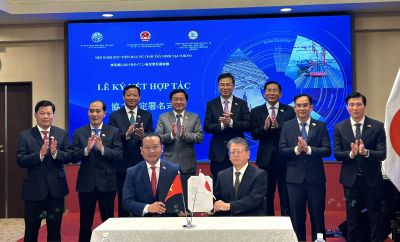
NEDO's International Hydrogen Programs and Policy Recommendations for Vietnam
Japan is a global pioneer in hydrogen strategy, targeting 3 million tons of hydrogen per year by 2030 and 20 million tons by 2050. Due to limited domestic energy resources, Japan has prioritized building cross-border supply chains by partnering with countries rich in renewable resources to import hydrogen and its derivatives, especially through the Green Innovation Fund.
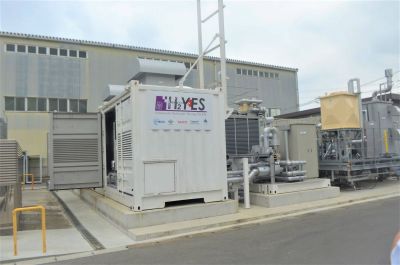
Cooperation Opportunities with JBIC and METI: Strategic Recommendations for Vietnam
The Japan Bank for International Cooperation (JBIC) is Japan's policy bank, established in April 2012 with capital of $15.6 billion, wholly owned by the Japanese government. JBIC has outstanding loans and equity participations totaling $105.6 billion, along with guarantee facilities of $8.89 billion (as of March 31, 2025). JBIC's financial instruments include export loans, import loans, overseas investment loans, untied loans, equity participation, and guarantees.
JBIC plays a key role in financing the entire low-carbon hydrogen value chain – from upstream production (water electrolysis, liquid hydrogen production), transportation (specialized vessels, hydrogen carriers like ammonia and MCH), to downstream utilization (receiving terminals, dehydrogenation, fuel synthesis).
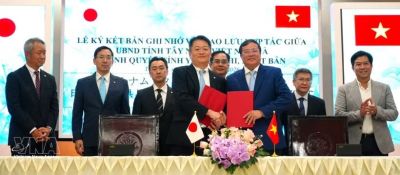
Japan's International Hydrogen Policy and Recommendations for Vietnam
Japan is a global pioneer in hydrogen strategy, with targets of 3 million tons of hydrogen per year by 2030 and 20 million tons by 2050. Due to limited domestic energy resources, Japan focuses on building cross-border supply chains, partnering with countries rich in renewable resources to import hydrogen and its derivatives.
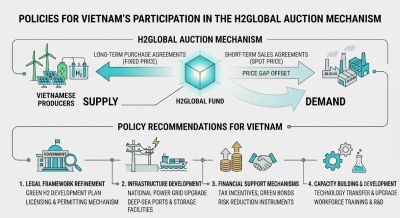
Policy Recommendations for Vietnam to Participate in the H2Global Auction Mechanism
Vietnam is facing a very good opportunity to participate in the global green hydrogen market through the H2Global auction mechanism. With its coastal geography, abundant wind and solar resources, and Net Zero 2050 commitment, Vietnam can become Southeast Asia's green hydrogen production and export hub.
2026 is the golden moment to act: Germany and the Netherlands have opened the Asian regional auction under H2Global, India has signed a bilateral agreement with Germany, and other countries like Oman are negotiating participation. If Vietnam delays, its supplier position will be taken by direct competitors like India and Middle Eastern countries.
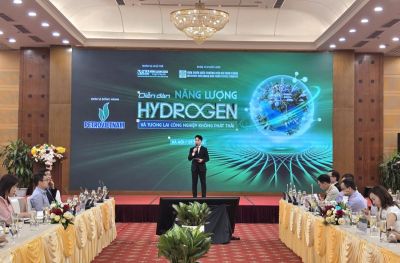
Vietnam pushes domestic technology and standards to build a viable hydrogen industry
Vietnam's hydrogen industry is at a critical turning point, with a focus on mastering technology, refining technical standards, and building a comprehensive ecosystem. According to experts at the Hydrogen Energy Forum held on July 29 in Hanoi, alongside technological progress, completing the regulatory framework, technical standards, and ecosystem development are considered essential conditions for establishing a hydrogen industry in Vietnam.
|
|
|
Vietnam ASEAN Hydrogen Club (VAHC) Contact Information: Secretariat of VAHC Club Zalo number: 093 691 7386 Email: contact@vahc.com.vn |
Addres: Unit 5.8, 5th Floor, Indochina Park Tower, 4 Nguyen Dinh Chieu Street, Tan Dinh ward, Ho Chi Minh City, Vietnam Facebook: click here Website: vahc.com.vn |