 |
 |
Hydrogen technology and partners
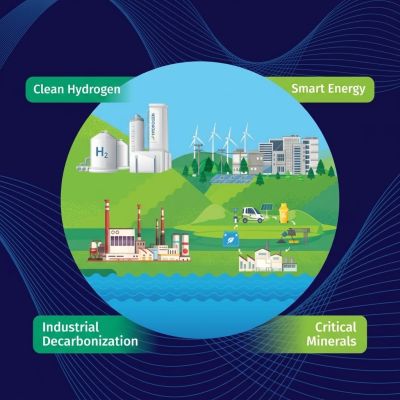
UNIDO's Hydrogen Support Mechanisms and Recommendations for Vietnam
The United Nations Industrial Development Organization (UNIDO) launched its Global Programme for Hydrogen in Industry (GPHI) in 2021, with support from the Governments of Austria, Germany, and Italy. The programme's goal is to support a just hydrogen transition in developing countries, with a focus on social and environmental considerations.
UNIDO is currently implementing hydrogen projects in more than 13 countries, including Algeria, Brazil, China, Egypt, Ecuador, Malaysia, Morocco, Namibia, Nigeria, Pakistan, Philippines, South Africa, and Tunisia.
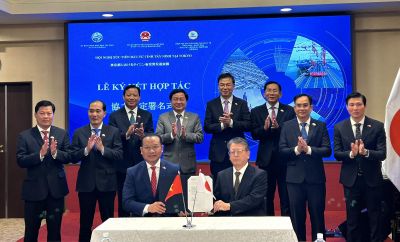
NEDO's International Hydrogen Programs and Policy Recommendations for Vietnam
Japan is a global pioneer in hydrogen strategy, targeting 3 million tons of hydrogen per year by 2030 and 20 million tons by 2050. Due to limited domestic energy resources, Japan has prioritized building cross-border supply chains by partnering with countries rich in renewable resources to import hydrogen and its derivatives, especially through the Green Innovation Fund.
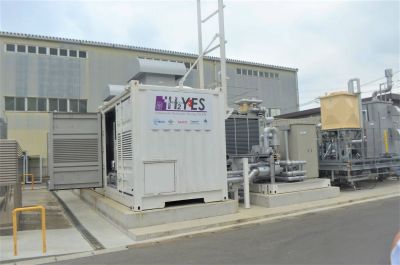
Cooperation Opportunities with JBIC and METI: Strategic Recommendations for Vietnam
The Japan Bank for International Cooperation (JBIC) is Japan's policy bank, established in April 2012 with capital of $15.6 billion, wholly owned by the Japanese government. JBIC has outstanding loans and equity participations totaling $105.6 billion, along with guarantee facilities of $8.89 billion (as of March 31, 2025). JBIC's financial instruments include export loans, import loans, overseas investment loans, untied loans, equity participation, and guarantees.
JBIC plays a key role in financing the entire low-carbon hydrogen value chain – from upstream production (water electrolysis, liquid hydrogen production), transportation (specialized vessels, hydrogen carriers like ammonia and MCH), to downstream utilization (receiving terminals, dehydrogenation, fuel synthesis).
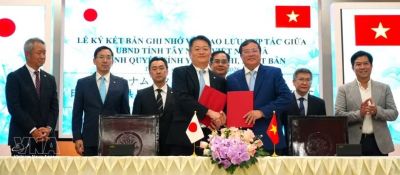
Japan's International Hydrogen Policy and Recommendations for Vietnam
Japan is a global pioneer in hydrogen strategy, with targets of 3 million tons of hydrogen per year by 2030 and 20 million tons by 2050. Due to limited domestic energy resources, Japan focuses on building cross-border supply chains, partnering with countries rich in renewable resources to import hydrogen and its derivatives.
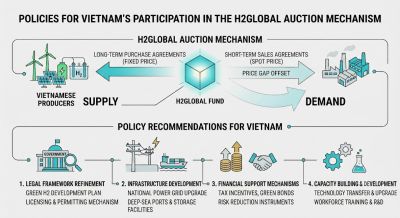
Policy Recommendations for Vietnam to Participate in the H2Global Auction Mechanism
Vietnam is facing a very good opportunity to participate in the global green hydrogen market through the H2Global auction mechanism. With its coastal geography, abundant wind and solar resources, and Net Zero 2050 commitment, Vietnam can become Southeast Asia's green hydrogen production and export hub.
2026 is the golden moment to act: Germany and the Netherlands have opened the Asian regional auction under H2Global, India has signed a bilateral agreement with Germany, and other countries like Oman are negotiating participation. If Vietnam delays, its supplier position will be taken by direct competitors like India and Middle Eastern countries.
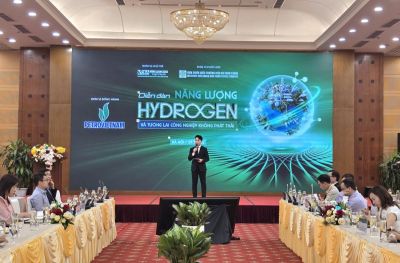
Vietnam pushes domestic technology and standards to build a viable hydrogen industry
Vietnam's hydrogen industry is at a critical turning point, with a focus on mastering technology, refining technical standards, and building a comprehensive ecosystem. According to experts at the Hydrogen Energy Forum held on July 29 in Hanoi, alongside technological progress, completing the regulatory framework, technical standards, and ecosystem development are considered essential conditions for establishing a hydrogen industry in Vietnam.
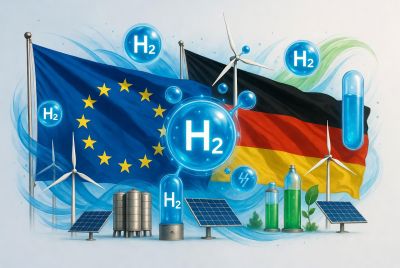
Policy Bottlenecks Threaten EU and German Hydrogen Targets Amid Growing Industry Criticism
The European Union and Germany are facing a sobering reality: ambitious hydrogen targets are being undermined by severe policy bottlenecks. Despite technological readiness and political commitments, the hydrogen market has failed to take off, and industry frustration is intensifying. This delay not only threatens climate goals but also endangers European industrial competitiveness. Without clear and stable policies, investors will move capital elsewhere, and Europe risks missing its opportunity to lead in hydrogen technology.

From Industrial Waste Gas to Clean Electricity: Hydrogen-Rich Gas Power Generation Technology and Opportunities for Vietnam
In heavy industries such as steel, chemicals, and oil refining, large volumes of hydrogen-rich waste gas have been flared or vented directly into the atmosphere for decades. This is not only a waste of resources but also a source of environmental pollution. However, with the advancement of hydrogen-rich gas power generation technology, this situation is changing.
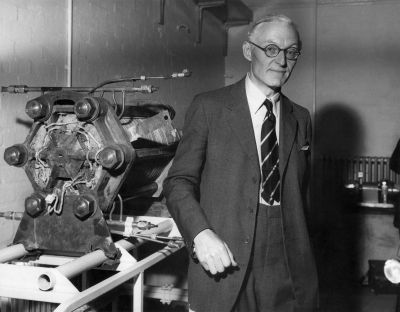
History of Hydrogen Fuel Cell Development: From 1839 Invention to Global Commercialisation in 2026
The principle of the hydrogen fuel cell was first discovered in 1838 by Swiss chemist Christian Friedrich Schönbein. A year later, in 1839, Welsh scientist and lawyer Sir William Robert Grove built the first working fuel cell, which he called a "gas battery." Grove's device successfully generated electricity by combining hydrogen and oxygen, and he is recognised as the "father of the fuel cell."
In 1842, Grove further refined his design. In 1889, chemists Ludwig Mond and Charles Langer developed a fuel cell with longer service life and first coined the term "fuel cell."

Analysis of Hydrogen Leakage's Climate Impact: Mechanisms, Sources, Leakage Rates, and Greenhouse Equivalence
Hydrogen itself is not a greenhouse gas, but when leaked into the atmosphere, it causes global warming through indirect mechanisms. Hydrogen molecules react with hydroxyl radicals in the atmosphere. Hydroxyl radicals act as the primary "cleanser" of the atmosphere, responsible for breaking down methane and other greenhouse gases. However, because the daily production of hydroxyl radicals is limited, large-scale hydrogen leakage consumes a significant portion of them, reducing the atmosphere's capacity to break down methane, thereby extending methane's atmospheric lifetime and intensifying the greenhouse effect. Additionally, hydrogen leakage also affects ozone and stratospheric water vapour concentrations, which are also important greenhouse agents.

From Aluminum Waste to Clean Fuel: A Golden Opportunity for Vietnam's Hydrogen Industry
On the morning of July 26, in Lâm Đồng Province, General Phan Văn Giang, Deputy Prime Minister and Minister of National Defence, attended the ceremony announcing Vietnam's first aluminum ingot products. The event marked the first time Vietnam successfully produced aluminum ingots using electrolysis technology with a current intensity of 500 kA, completing the final link in the value chain from bauxite mining and alumina production to aluminum smelting. This is a pivotal milestone in the development of Vietnam's foundational materials industry, contributing to the realisation of the policy of deep processing to enhance the value of national resources.

From Glasgow to Antalya – Hydrogen in the Global Climate Policy Mainstream July 25, 2026
The journey from COP26 in Glasgow (2021) to the upcoming COP31 in Antalya, Turkey (November 2026) has witnessed hydrogen's transformation from a promising technical solution into a strategic pillar of global climate negotiations.

Economic Analysis of Modern Airships for Freight and Passenger Transport in Vietnam's Major Cities and Trans-Vietnam Routes
The concept of using modern airships for freight and passenger transport in major urban centres and across Vietnam is gaining attention as the search for green logistics solutions intensifies. However, an objective assessment of economic viability requires analysis based on real technical specifications and costs, benchmarked against Vietnam's infrastructure and demand profile.

Hydrogen in Semiconductor Manufacturing: An Irreplaceable Role from Chip Technology to Green Energy Transition
In the era of AI and high-performance computing, the semiconductor industry faces dual pressure: producing increasingly sophisticated chips while minimizing its carbon footprint. Against this backdrop, hydrogen emerges as an irreplaceable factor – both an essential "catalyst" in the microfabrication process and a key to the industry's decarbonization.

European Hydrogen Valleys and Asian Hydrogen Hubs: Models, Purposes, and Operations
The concepts of "Hydrogen Valleys" and "Hydrogen Hubs" have become key models in the global clean energy strategy. While sharing the common goal of advancing the hydrogen economy, these two models reflect distinct approaches between Europe and Asia, stemming from different policy contexts, resources, and strategic priorities.

Net Zero Challenge 2026: Opportunity for Climate Tech Solutions to Pilot in Vietnam
The Net Zero Challenge (N0C), Vietnam's largest climate technology innovation competition, has officially opened applications for its fourth edition. Co-organized by Touchstone Partners and Temasek Foundation, N0C 2026 promises significant opportunities for global climate tech solutions ready to pilot in Vietnam.

Investment Opportunity: Hydrogen Recovery and Industrial H₂O₂ Production Project at Nghi Son
Nghi Son Refinery and Petrochemical LLC (NSRP) has issued a call for interest, seeking domestic and international investors for the "Hydrogen Recovery and Industrial Hydrogen Peroxide (H₂O₂) Production Plant" project at the Nghi Son Refinery and Petrochemical Complex in Thanh Hoa Province, Vietnam. This is a strategic investment opportunity leveraging the feedstock and infrastructure advantages of one of Asia's most modern refineries.

Anchoring Maritime Decarbonisation in Vietnam: The Role of Methanol and Green Ammonia in Green Bunkering at Cai Mep Port Cluster
Vietnam is positioning the Cai Mep–Thi Vai port cluster as a future hub for green marine fuels, with methanol and green ammonia playing pivotal roles in the country’s long-term maritime decarbonisation strategy. Supported by the Australian Government’s Partnerships for Infrastructure (P4I) program, a recent feasibility study highlights these two alternative fuels as critical components for sustainable bunkering development in Vietnam.
|
|
|
Vietnam ASEAN Hydrogen Club (VAHC) Contact Information: Secretariat of VAHC Club Zalo number: 093 691 7386 Email: contact@vahc.com.vn |
Addres: Unit 5.8, 5th Floor, Indochina Park Tower, 4 Nguyen Dinh Chieu Street, Tan Dinh ward, Ho Chi Minh City, Vietnam Facebook: click here Website: vahc.com.vn |