

Governor Kotaro Nagasaki and the Green Hydrogen Vision: Global Connections from Yamanashi
August 19, 2026
Annie Nguyễn, VAHC Secretariat
Yamanashi Prefecture, at the foot of Mount Fuji, is not only famous for its natural landscapes but is also asserting Japan's pioneering position in the field of green hydrogen. Leading this strategy is Governor Kotaro Nagasaki, who has been actively promoting a global green hydrogen vision, transforming Yamanashi into a technology hub and an ambitious international cooperation bridge.
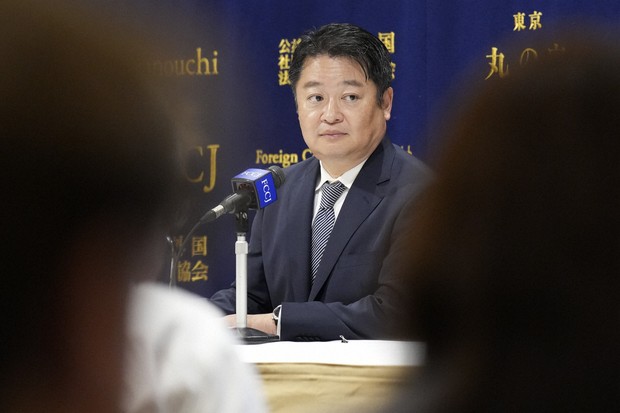
Governor Kotaro Nagasaki
Yamanashi has long been recognized as one of Japan's leading regions in the development of green hydrogen and green ammonia. The prefecture has developed advanced hydrogen energy systems, converting electricity from renewable sources such as solar and wind into hydrogen, which is then used as fuel, for energy storage, and for clean transportation. Governor Nagasaki's vision aims to export Yamanashi's technology and experience to the world, establishing strategic partnerships with many countries and territories.
Cooperation with the United States: A Strategic Technology Partnership
The cooperative relationship between Yamanashi and the United States has been strengthened through a significant agreement with SGH2 Energy, headquartered in Washington, D.C. In February 2025, Governor Kotaro Nagasaki signed a cooperation agreement with SGH2 Energy to promote green hydrogen initiatives in the Fuji Five Lakes region, a world-famous tourist area at the foot of Mount Fuji.
Under this agreement, SGH2 Energy will develop and operate a modern carbon-negative hydrogen production facility, using its proprietary SPEG plasma gasification technology to convert local biomass and biological waste into high-purity hydrogen. The green hydrogen produced will be used to power fuel cell electric vehicles, replacing diesel tourist buses, and to provide clean energy for local industries. The project aims to transform the Fuji Five Lakes region into a sustainable "green city," creating a model for future global urban development.
Governor Nagasaki emphasized that this cooperation demonstrates Yamanashi's strong commitment to creating a sustainable future, while affirming the region's pioneering position in clean energy innovation and sustainable tourism.
Cooperation with Malaysia: The Japan-Malaysia Hydrogen Hub
The cooperative relationship between Yamanashi and Malaysia is being realized through the fields of education and research, with the involvement of the University of Yamanashi. In July 2026, the National University of Malaysia and the University of Yamanashi officially established the Japan-Malaysia Hydrogen Hub.
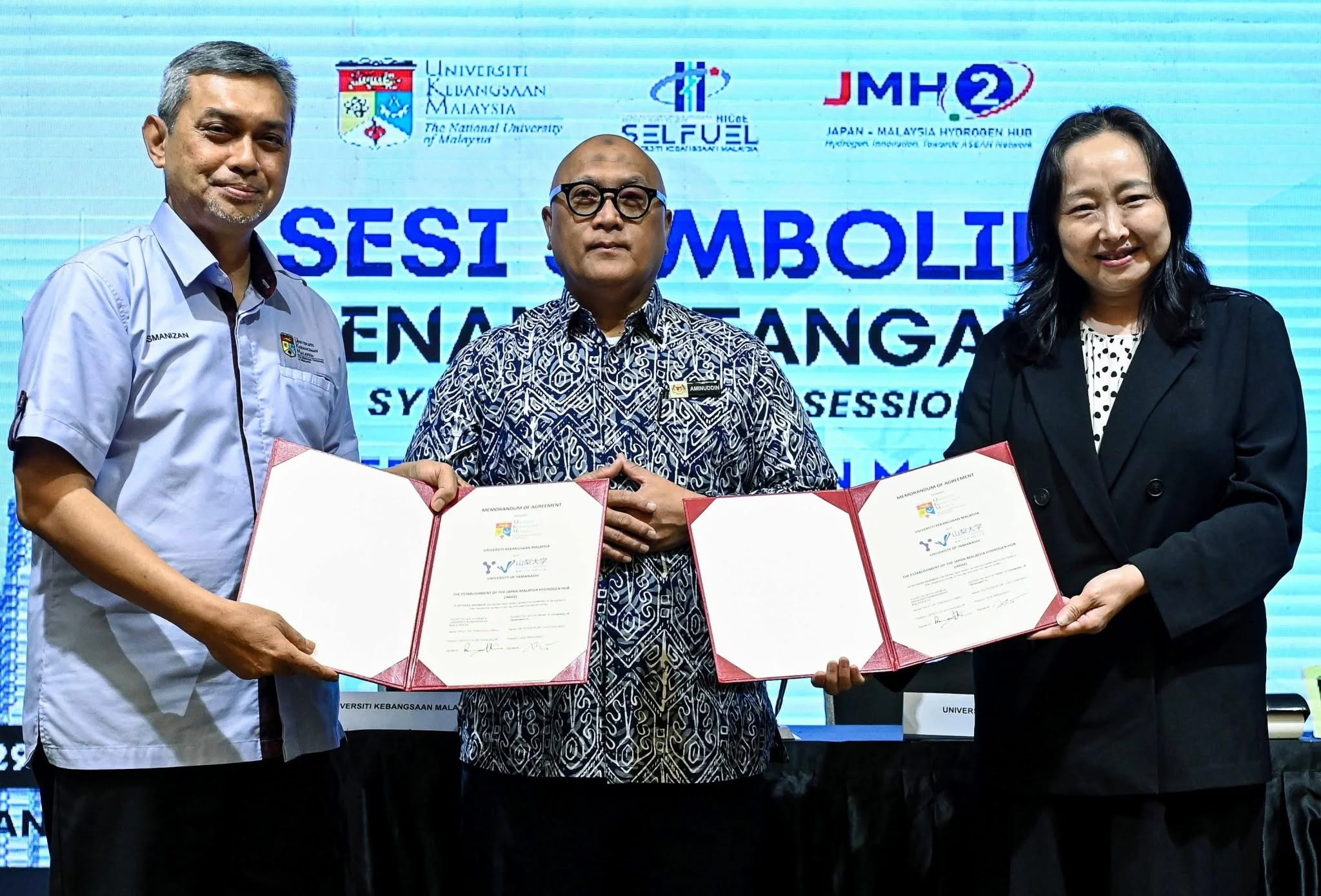
Datuk Dr Aminuddin Hassim (centre) witnesses the exchange of an MOA between Prof. Dr Ismanizan Ismail (left) and Prof. Dr Xiaoyang Mao (right), during the opening of the 4th Fuel Cell and Hydrogen Technology Symposium, held in conjunction with the 2nd International Solar Hydrogen Symposium 2026, at Palm Garden Hotel, Putrajaya, today, 29 July 2026. - Photo: BERNAMA
This hub, located at the Fuel Cell Institute of the National University of Malaysia, was established under the framework of Japan's Program for Formulating University Research Centers. The hub is expected to become an ASEAN regional platform for collaborative research, researcher and student exchanges, professional training, industrial cooperation, and commercialization of clean energy technologies. This initiative is part of the University of Yamanashi's strategy to expand its global research network.
University of Yamanashi Vice President, Professor Xiaoyang Mao, stated that the National University of Malaysia was chosen as the ASEAN partner because of its established expertise in hydrogen and fuel cells, as well as the long-standing research cooperative relationship between the two universities. The hub is expected to connect not only Malaysia and Japan but also extend to researchers, industries, and organizations across ASEAN.
Highlight in Cooperation with India: From Memorandum to Action
India is one of the most important partners in Governor Nagasaki's global hydrogen strategy. In December 2024, he signed a Memorandum of Understanding with the state of Uttar Pradesh, one of India's largest and most influential states. This agreement focuses on promoting cooperation in industry, tourism, vocational education, with a special focus on green hydrogen, clean energy innovation, and technology exchange.
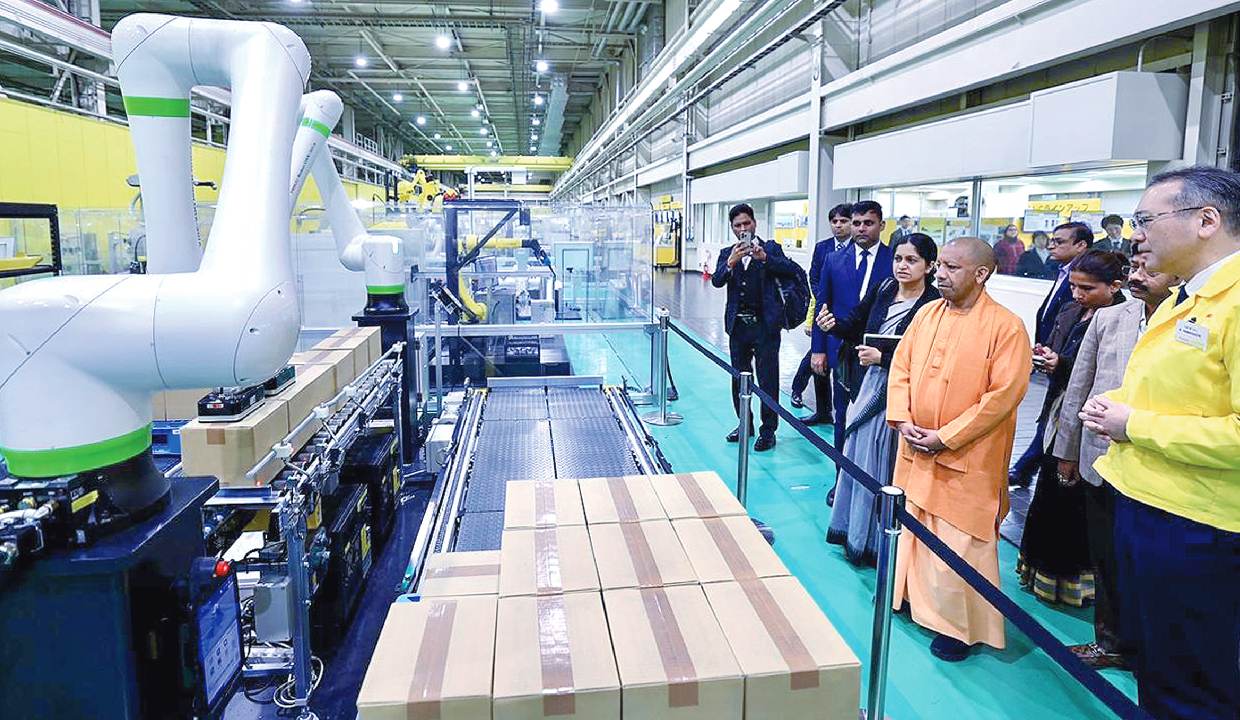
Uttar Pradesh Chief Minister Yogi Adityanath on Thursday held discussions with Yamanashi Prefecture Governor Kotaro Nagasaki to further strengthen UP-Yamanashi cooperation.
This relationship was quickly reinforced through concrete activities. During his visit to Japan in February 2026, Uttar Pradesh Chief Minister Yogi Adityanath held talks with Governor Nagasaki and together they toured an advanced hydrogen energy plant in Yamanashi. During the visit, the two sides agreed on a historic green hydrogen technology agreement, under which students from Uttar Pradesh's higher technical education institutions will be trained in Japan, and this technology will be applied in the state's industries, public transportation, and energy sectors. Chief Minister Adityanath also welcomed Governor Nagasaki's proposal to lead a delegation of two hundred CEOs to Uttar Pradesh in August 2026 to further promote industrial and investment partnerships.
Promoting Strategic Cooperation with Vietnam
Vietnam is an important destination in Governor Nagasaki's hydrogen agenda. In May 2026, he led a high-level delegation from Yamanashi Prefecture to visit and work in Vietnam, with important meetings at the Ministry of Industry and Trade and the Hanoi People's Committee.
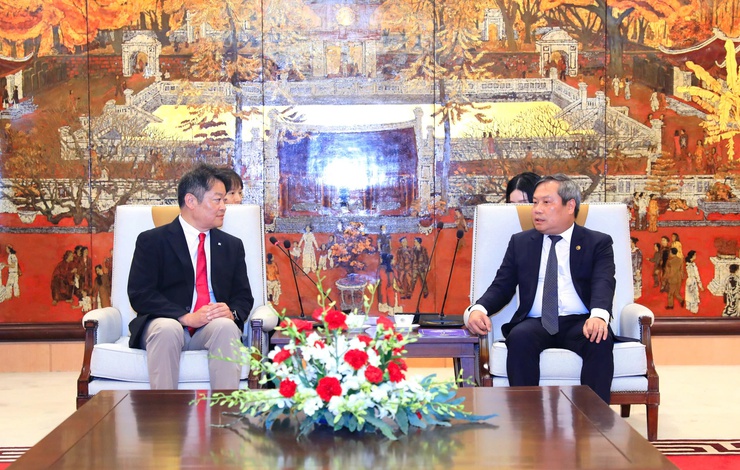
Hanoi People's Committee Chairman Vu Dai Thang holds discussions with Nagasaki Governor Kotaro.
Cooperation with Hanoi
On May 10, 2026, Governor Nagasaki met with the Chairman of the Hanoi People's Committee. During the meeting, the two sides focused on discussing green urban development, low-emission transportation, and technology application in urban management. Governor Nagasaki affirmed that Yamanashi, with its pioneering strengths in green transition and hydrogen technology, is ready to share its experience with Hanoi. Hanoi's side stated that the city is implementing many measures to build a smarter and greener urban model, including establishing low-emission zones and encouraging the use of electric vehicles. City leaders also proposed that the two sides promote student exchange programs and high-quality human resource training.
Cooperation with Tay Ninh
Tay Ninh is another key locality in Governor Nagasaki's cooperation strategy in Vietnam. On May 8, 2026, Tay Ninh Province and Yamanashi Prefecture signed a Memorandum of Understanding on international cooperation, opening new cooperation opportunities in renewable energy, green hydrogen, and high-tech agriculture.
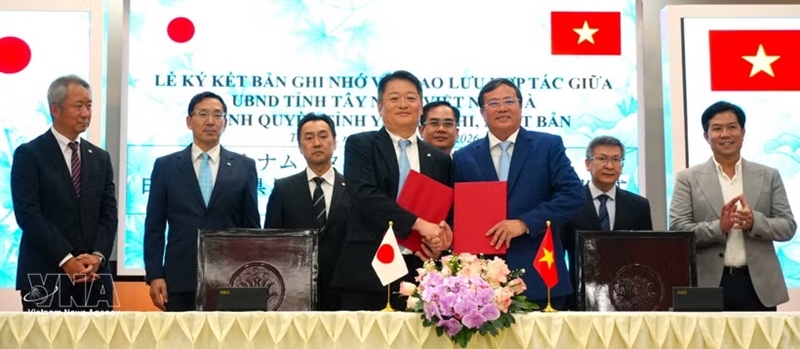
Chairman of the Tay Ninh provincial People’s Committee Le Van Han (front, right) and Yamanashi Governor Nagasaki Kotaro sign the MoU on international exchange and cooperation on May 8.
At the signing ceremony, Tay Ninh Provincial People's Committee Chairman Le Van Han appreciated the cooperation potential with Yamanashi in areas such as labor, high-tech agriculture, tourism, and renewable energy. Governor Nagasaki also highly appreciated Tay Ninh's development potential with its modern industrial parks, abundant human resources, vast fruit-growing areas, and beautiful natural landscapes. The two sides agreed to promote cooperation in green hydrogen, smart agriculture, expert and technician exchanges, and technology transfer towards carbon neutrality and enhancing agricultural product value.
Cooperation with Vietnam's Ministry of Industry and Trade
During the meeting with Deputy Minister of Industry and Trade Truong Thanh Hoai, Governor Nagasaki proposed promoting investment cooperation and developing green hydrogen and green ammonia in Vietnam. He emphasized that Yamanashi Prefecture is ready to share experience, transfer technology, and train human resources, including Vietnamese officials and engineers.
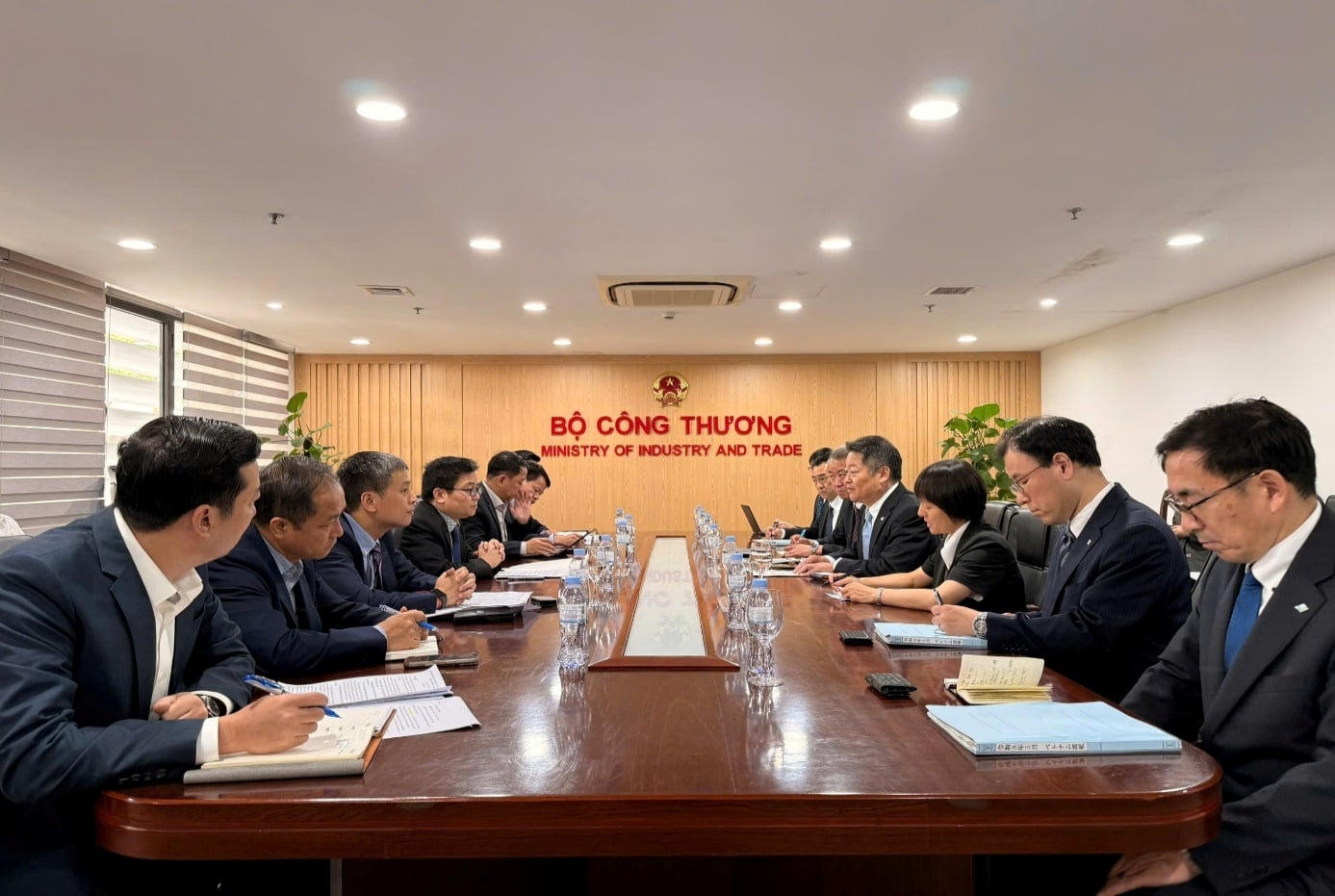
On the Vietnamese side, the meeting was organized by representatives from the Ministry of Industry, the Ministry of Chemicals, the Ministry of Innovation, Ecological Transition and Industrial Promotion, the Ministry of Foreign Market Development, and the Ministry of Oil, Gas and Coal. The Japanese delegation included senior officials from the Yamanashi Prefectural Government and representatives from the Embassy of Japan in Vietnam.
Vietnam's side highly appreciated Japan's pioneering role in energy transition in Asia, while emphasizing the importance of green hydrogen and green ammonia in the economic development strategy and Vietnam's net-zero carbon target. As production costs remain high, Deputy Minister Truong Thanh Hoai suggested that Yamanashi investors consider piloting some projects in localities with potential such as Quang Tri, which has advantages in solar and wind energy. Vietnam's Ministry of Industry and Trade is ready to support connecting Yamanashi Prefecture with relevant agencies and localities. On this occasion, Governor Nagasaki extended an invitation to Vietnam's Ministry of Industry and Trade to attend the International Green Hydrogen Conference hosted by Yamanashi Prefecture at the end of 2026.
Conclusion
Governor Kotaro Nagasaki is not only the head of a Japanese prefectural government but also a diplomat and energy strategist with far-reaching vision. Through diplomatic visits and the signing of strategic cooperation agreements with partners such as the United States, Malaysia, India, and Vietnam, he is steadily transforming Yamanashi into a global green hydrogen technology hub. His vision extends beyond technology transfer to include human resource development, cultural connections, and the building of sustainable, long-term partnerships. His tireless efforts will undoubtedly make a significant contribution to promoting the clean energy transition and building a sustainable future on a global scale.