

Green Hydrogen vs. BESS: The Great Energy Storage Race and the Road Ahead
VAHC Secretariat, Annie Nguyễn | Date: August 13, 2026
As the global renewable energy market expands, energy storage has become the industry's biggest bottleneck. With Direct Power Purchase Agreements (DPPA) gaining momentum, businesses are not only demanding clean energy but also stability in power supply.
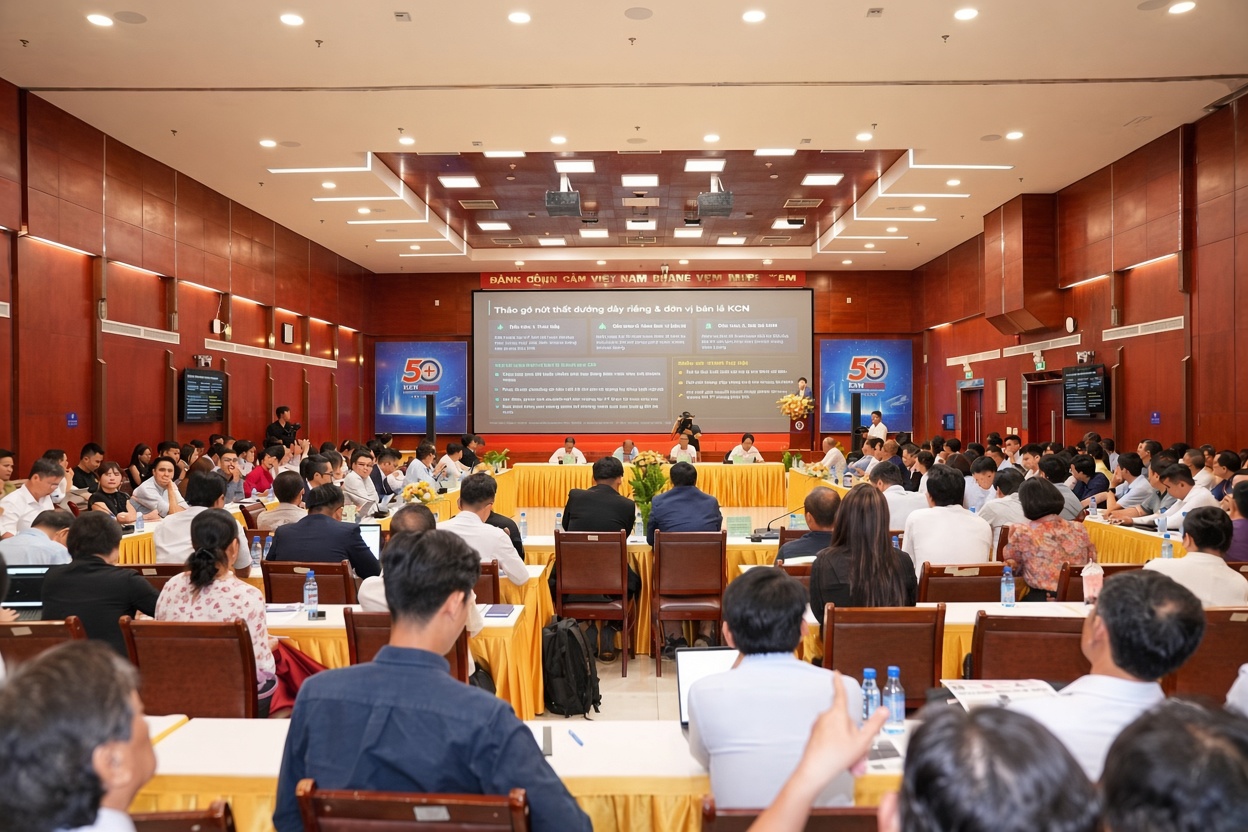
The forum "Direct Power Purchase Agreement and Battery Energy Storage System: Levers for Green Transition and Sustainable Development," organized by the Business Forum Magazine, VCCI, and the Institute for Smart Energy Application Research (iSEAR), was held on the afternoon of August 13, 2026.
Green hydrogen, Battery Energy Storage Systems (BESS), and traditional solutions like pumped hydro are fiercely competing for market share. But which technology is superior? Let's break down the strengths, weaknesses, and future potential of each.
1. BESS (Lithium-ion Batteries): The Instant Hero
BESS is currently the dominant choice due to its lightning-fast response time (in milliseconds). It is the ideal solution for grid frequency regulation and for filling sudden gaps in solar or wind power generation. Battery costs have dropped drastically over the past decade, making BESS an easy, modular solution that requires no specific terrain. Moreover, in the context of DPPA, renewable plants combined with BESS can secure firm hourly power outputs, making long-term contracts much easier to negotiate.
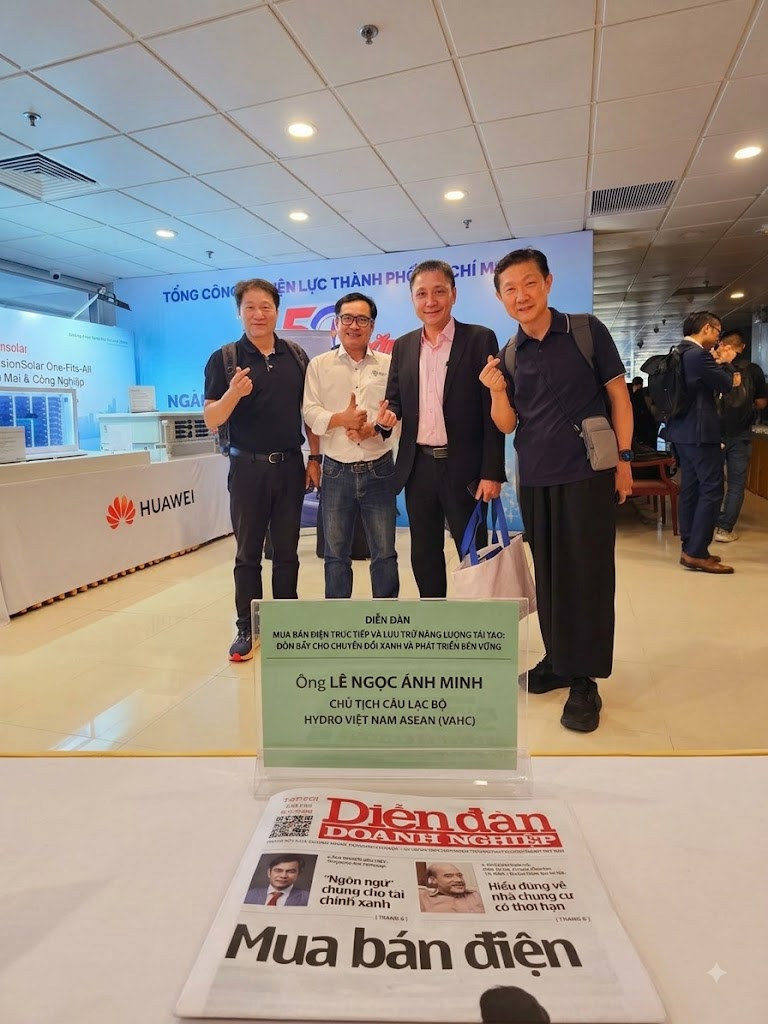
Mr. Bui Van Tien, CEO of VATEC, Mr. Le Ngoc Anh Minh, Chairman of VAHC, along with Mr. Sangil Park, Vice Chairman, and Mr. Sangki Jang, CEO, DeepBrain Co Ltd,
Energy Chain, South Korea, pose for a commemorative photo at the Forum.
However, the biggest drawback of BESS is its short storage duration (typically 2 to 4 hours). If bad weather persists, the battery will quickly drain. Additionally, battery capacity degrades significantly after 8–10 years, requiring costly replacements, and the supply chain for raw materials (Lithium, Cobalt) remains geopolitically risky.
2. Green Hydrogen: The Strategic Long-Term Vault
Unlike BESS, green hydrogen excels at seasonal storage (spanning months). This is the only technology capable of storing excess energy from rainy or sunny seasons to be used during dry seasons when generation is low. Hydrogen can also be liquified or converted into ammonia for cross-border transport, unlocking massive energy export potential. Furthermore, it is not just for power generation; it serves as a vital feedstock for hard-to-abate industries (steel, cement, fertilizers) and heavy transport.
However, the massive challenges are extremely high initial capital expenditure (CAPEX) and poor round-trip efficiency (only 30–40% from Electricity -> H2 -> Electricity). This is precisely why many current hydrogen projects remain "waiting for buyers." The production cost is far higher than fossil fuels, and banks are hesitant to release capital without guaranteed long-term off-take agreements.
3. Pumped Hydro and Traditional Methods
This method offers extremely long lifespans (50+ years) and decent efficiency (70–80%). However, it requires massive elevation differences and causes significant environmental impacts. In Vietnam, scaling this technology is becoming increasingly difficult as most suitable geographical sites are already in use.
Conclusion:
There is no single "silver bullet" solution. The real future lies in a Hybrid model: BESS will manage immediate, short-term fluctuations (minute-by-minute), while Green Hydrogen will address long-term seasonal storage and provide clean fuel for heavy industry. Governments and energy enterprises must tailor their strategies for each technology to balance costs, minimize risks, and ensure national energy security.
Overview of Key Energy Storage Technologies
| Criteria | Green Hydrogen | BESS (Lithium-ion Batteries) | Pumped Hydro Storage | Thermal Storage |
|---|---|---|---|---|
| Principle | Water electrolysis to produce H2 → Compression/Storage → Combustion or fuel cells to regenerate electricity. | Charge batteries when electricity is cheap, discharge when prices are high. | Pump water uphill when excess power is available; release through turbines when needed. | Store thermal energy (e.g., in molten salt) to operate steam turbines. |
| Storage Duration | Seasonal, Long-term (Weeks - Months) | Short-term (Minutes - 4 Hours) | Medium-term (Hours - Days) | Medium-term (Hours) |
| Energy Density | Highest (~120 MJ/kg) | Low (~0.6 - 1 MJ/kg) | Moderate | Low |
| Response Time | Slow (Minutes - Hours) | Ultra-fast (Milliseconds) | Relatively fast | Slow |
| Capital Expenditure (CAPEX) | Very High (Currently extremely expensive) | Decreasing, moderate | Very High (Highly terrain-dependent) | Moderate |
| Geographical Dependency | Low (Can be built near renewable sources) | Low (Easy to deploy) | Very High (Requires large elevation differences) | Moderate |
| Round-trip Efficiency | Poor (~30% - 40% from Electricity → H2 → Electricity) | Good (~85% - 95%) |