

Hydrogen Potential from High-Tech Semiconductor Projects: The Case of Tokuyama at Phu My 3 Industrial Park
Date: August 14, 2026 | Annie Nguyễn, VAHC Secretariat
Introduction: When the Semiconductor Industry Meets the Hydrogen Economy
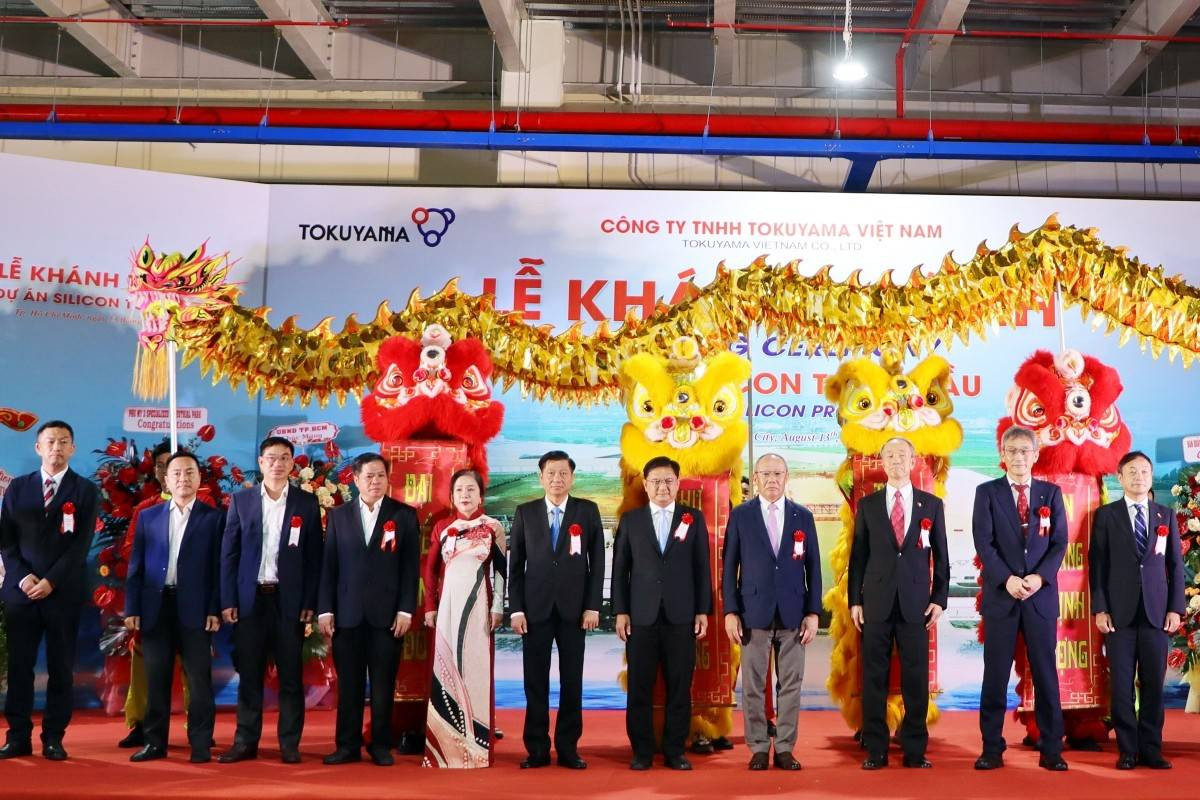
The inauguration of Tokuyama Vietnam Co., Ltd.'s polysilicon manufacturing plant at the Phu My 3 Specialized Industrial Park on August 13, 2026, marks not only a significant milestone for Vietnam's semiconductor industry but also opens up enormous potential for the development of the hydrogen ecosystem in the region. The inherent connection between polysilicon production and high-purity hydrogen creates a strategic opportunity to build a circular economy model and integrate clean energy.
Hydrogen – An Indispensable Raw Material in Polysilicon Production
High-purity hydrogen plays an essential role as a reducing agent in the Siemens process, Tokuyama's core polysilicon production technology. In the chemical reaction with trichlorosilane, hydrogen helps produce silicon with purity up to 9N (99.9999999%) – a near-absolute level that meets the stringent requirements of the semiconductor industry. The scale of hydrogen consumption is substantial, with each ton of polysilicon requiring approximately 3,000 Nm³ of hydrogen with a minimum purity of 99.9999% (dew point below -55°C).
At Tokuyama's plant in Japan, this hydrogen is supplied from the company's own saltwater electrolysis process for caustic soda (NaOH) production – a core product of the Group. The hydrogen is purified to the highest purity level (99.9999%) and fed back into the polysilicon production process, creating a closed-loop cycle.
The Circular Economy Model from By-Product Hydrogen
Beyond being a hydrogen consumer, Tokuyama is also a valuable hydrogen supplier. The by-product hydrogen from the caustic soda production process has been utilized for various applications:
Collaboration with Honda and Mitsubishi (2025)
Since 2025, Tokuyama has partnered with Honda and Mitsubishi Corporation in a demonstration project using by-product hydrogen to operate a stationary fuel cell power station in Shunan, Yamaguchi, Japan. The station uses fuel cell systems recycled from Honda's FCEVs to supply electricity to a data center operated by Mitsubishi Corporation. The project aims to test the commercial feasibility of fuel cell reuse and contribute to carbon reduction for data centers – increasingly energy-intensive facilities.
Development of Magnesium Hydride (MgH₂) and ECOMIX
Tokuyama has also developed technology to react hydrogen with magnesium to create magnesium hydride (MgH₂) – a solid-state hydrogen carrier that is safe and has high storage density, exceeding even ammonia. The ECOMIX product – a fuel additive containing MgH₂ – has been tested on domestic transport vessels and demonstrated a 5.9% reduction in fuel consumption.
Vietnam's Semiconductor Development Policies and Directions
The presence of the Tokuyama project in Vietnam takes place against the backdrop of the Government's accelerated strategy for developing the semiconductor industry with clear directions and high determination. Prime Minister Pham Minh Chinh emphasized that the "Vietnam-Japan Cooperation Forum on Strategic Industries, High Technology, Green Transformation, and Semiconductors" is an important event demonstrating the comprehensive strategic partnership between Vietnam and Japan, held on April 28, 2025, with Prime Minister Shigeru Ishiba.
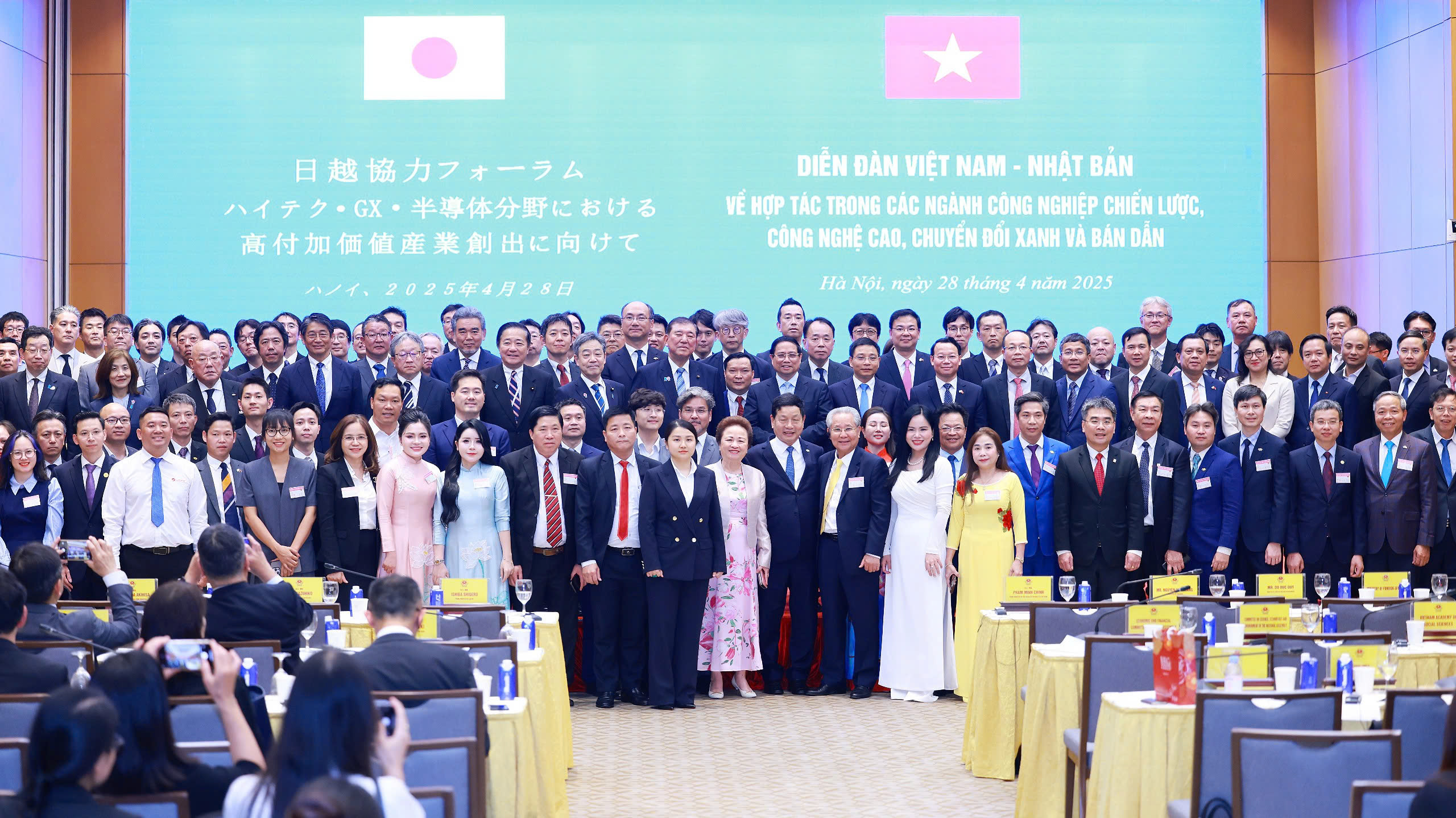
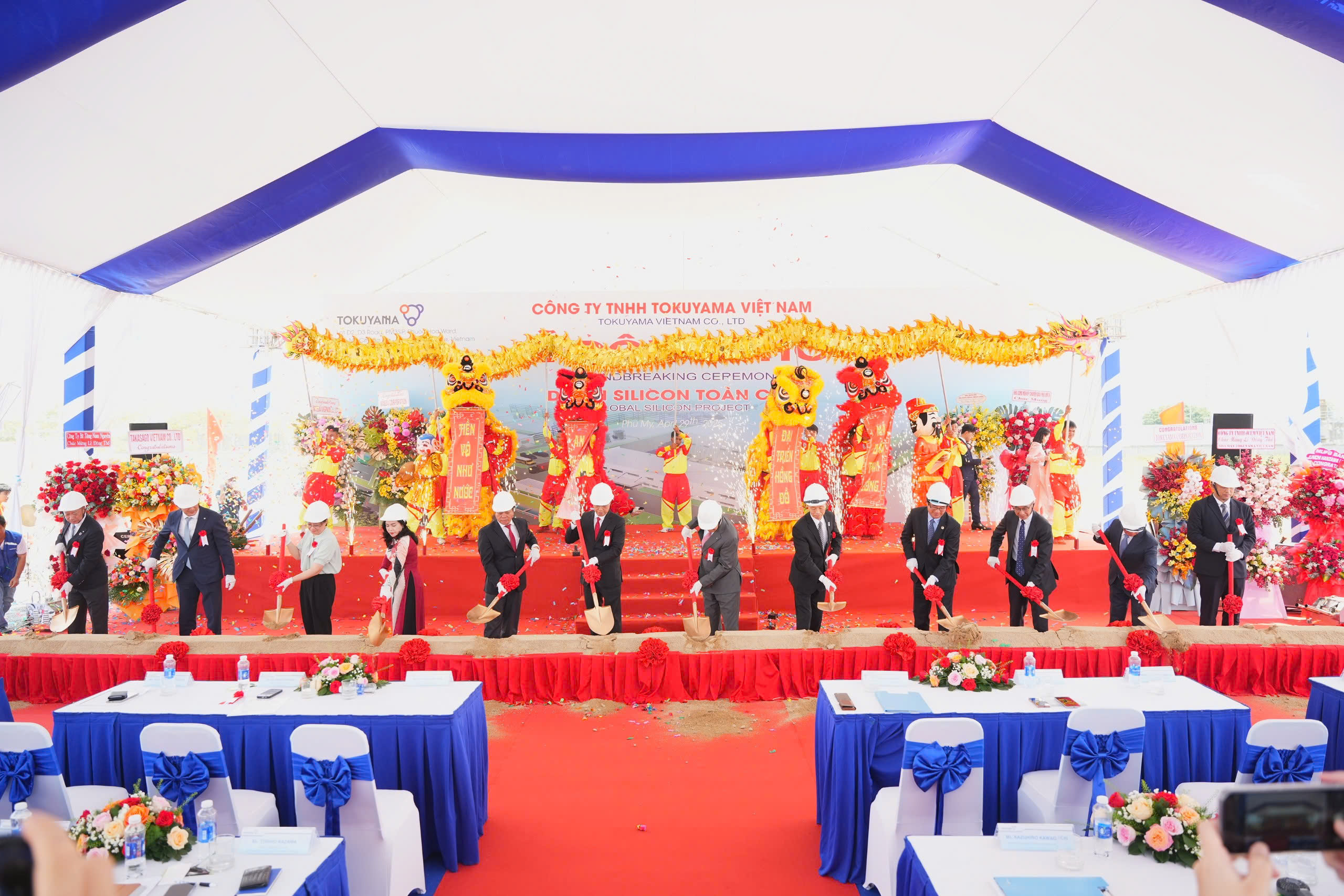
On April 29, 2025, just one day after the Vietnam-Japan Cooperation Forum on Strategic Industries, High Technology, Green Transformation, and Semiconductors, co-chaired by Vietnamese Prime Minister Pham Minh Chinh and Japanese Prime Minister Ishiba Shigeru, Tokuyama Vietnam Co., Ltd. officially held the groundbreaking ceremony for its polysilicon production project for the semiconductor industry at Phu My 3 Intensive Industrial Park.
Legal Framework and Strategic Objectives
The National Steering Committee for Semiconductor Industry Development is currently headed by Deputy Prime Minister Ho Quoc Dung according to Decision No. 1046/QD-TTg dated June 11, 2026. The Committee's structure has been consolidated with Minister of Science and Technology Vu Hai Quan as Permanent Deputy Head and Minister of Finance Ngo Van Tuan as Deputy Head.
Vietnam has built a relatively comprehensive legal system to promote the semiconductor industry, including the Digital Technology Industry Law, the Semiconductor Industry Development Strategy to 2030 with a vision to 2050, and the Human Resource Development Program for the semiconductor industry. According to former Deputy Prime Minister Nguyen Chi Dung (then Head of the Steering Committee at the March 2026 meeting), 2026 was identified with the motto "Decisive implementation – Synchronized coordination – Focused concentration – Creating substantive results."
Ecosystem Development and Value Chain Localization
Vietnam has begun forming important foundations for the semiconductor industry, participating in all stages of the global value chain, attracting over 50 chip design companies with approximately 7,000 engineers. Total FDI capital in the semiconductor sector has reached over US$14.2 billion with 241 projects. Notably, the groundbreaking of Viettel Group's first high-tech semiconductor chip manufacturing plant in Vietnam in January 2026 marked an important milestone.
Ho Chi Minh City, where the Tokuyama plant is located, is playing a pioneering role in the national semiconductor strategy with plans to build a comprehensive ecosystem, including attracting major FDI projects and expanding the Saigon High-Tech Park (SHTP).
Potential for Phu My 3 Industrial Park and Vietnam's Hydrogen Ecosystem
Tokuyama's plant at Phu My 3 Industrial Park opens up many opportunities to develop the hydrogen ecosystem in Vietnam while supporting the country's semiconductor development goals:
-
Creating Demand for High-Purity Hydrogen: With a designed capacity of nearly 5,000 tons of polysilicon per year, the plant will create a stable source of demand for high-quality hydrogen. This is a driving force for developing domestic hydrogen production, storage, and transportation capabilities.
-
Opportunities for Renewable Energy Integration: If the plant uses renewable energy sources (such as rooftop solar power within the industrial park) to produce green hydrogen on-site, the carbon footprint of the entire value chain would be significantly reduced. This aligns with the SHTP's goal of using over 50% renewable energy.
-
Circular Model for the Region: Similar to Tokuyama's model in Japan, if other chemical plants in Phu My 3 Industrial Park also produce hydrogen as a by-product, a hydrogen supply and utilization network could be established, creating clear economic and environmental efficiencies.
-
Connecting with the National Green Hydrogen Strategy: The project could serve as a perfect "demonstration project" for Vietnam's Green Hydrogen Strategy (Decision 165/QD-TTg), demonstrating how high technology and clean energy can be integrated. Using green hydrogen in polysilicon production would also help Vietnamese semiconductor products meet increasingly stringent carbon emission requirements from export markets.
Conclusion
Tokuyama's project at Phu My 3 Industrial Park not only places Vietnam on the global semiconductor supply chain map but also opens a new direction for developing the hydrogen industry. Leveraging by-product hydrogen sources, combined with Vietnam's renewable energy potential and support from national semiconductor development policies under the direction of the National Steering Committee headed by Deputy Prime Minister Ho Quoc Dung, could turn Phu My 3 Industrial Park into a model for clean energy integration in high-tech manufacturing. This is a strategic opportunity for Vietnam to build a sustainable hydrogen ecosystem, meeting domestic demand and moving toward future exports.
Global Polysilicon Production Facilities
Tokuyama is expanding its polysilicon production network to meet global semiconductor demand. The key locations and facilities include:
| Location | Details & Capacity | Status & Notes |
|---|---|---|
| Tokuyama Factory, Japan (Shunan City, Yamaguchi) | The main plant and historical center for polysilicon production and chemical manufacturing. | Serves as the primary source of by-product hydrogen. |
| Samalaju Industrial Park, Sarawak, Malaysia (Tokuyama Malaysia Sdn. Bhd.) | Two plants: PS-1 (6,200 tonnes/year) and PS-2 (13,800 tonnes/year), built with a total investment of approximately ¥200 billion. | A major overseas production base operating since 2014. |
| Samalaju Industrial Park, Sarawak, Malaysia (Joint Venture with OCI) | OTSM (OCI Tokuyama Semiconductor Materials): 10,000 tonnes/year of high-grade semiconductor polysilicon. | A 50-50 joint venture with OCI Holdings (South Korea), with an investment of around $435 million. Construction began in 2025, and operations are expected to start after 2029. |
| Phu My 3 Industrial Park, Ho Chi Minh City, Vietnam (Tokuyama Vietnam) | ~5,000 tonnes/year polysilicon. | Focuses on downstream processing (crushing, washing, finishing) from semi-finished products imported from Japan and Malaysia. Inaugurated in August 2026. Investment of over $60 million. |
Hydrogen Production
Tokuyama's hydrogen production primarily derives from two sources:
-
By-product Hydrogen from Caustic Soda Production (Main Source)
-
Origin: A significant quantity of hydrogen is generated as a by-product during the production of caustic soda (sodium hydroxide) via the ion-exchange membrane electrolysis process at its main factory in Japan.
-
Utilization: This hydrogen is captured and purified instead of being released, forming the core supply for both internal use and external partnerships.
-
-
Renewable Energy Pilot Projects (Supplementary Source)
-
As part of a Japanese government-backed initiative (FY2015-2021), Tokuyama began piloting hydrogen production using solar power, complementing its by-product hydrogen supply.
-
The company is also actively developing diaphragms for water electrolysis, aiming to produce "green hydrogen."
-
Hydrogen Consumption and Business Model
Tokuyama's by-product hydrogen is consumed through a circular economy model, with both internal and commercial applications:
| Purpose | Details |
|---|---|
| Internal Use (Polysilicon Production) | High-purity hydrogen is an essential reducing agent in the Siemens process, used to deposit high-purity silicon. This is a core internal demand for hydrogen. |
| Fuel Cell Power Generation | * Panasonic (2021): Supplied hydrogen for a pure hydrogen fuel cell generator at the Tokuyama Factory, producing electricity and heat for local use. |
-
Honda & Mitsubishi Corp (2025): Providing hydrogen for a stationary fuel cell power station to supply electricity for a data center in Shunan City. |
| Advanced Materials (Magnesium Hydride - MgH₂) | Tokuyama reacts its by-product hydrogen with magnesium to produce magnesium hydride (MgH₂), a solid-state hydrogen carrier. This material is: -
Safe and stable at room temperature and atmospheric pressure.
-
Has a high hydrogen storage density (exceeding that of ammonia).
-
Can release hydrogen easily via hydrolysis. |
| Fuel Additive (ECOMAX) | ECOMAX, a petroleum fuel additive containing hydrogenated magnesium, was developed with Being Co., Ltd. Ship trials showed a 5.9% reduction in fuel consumption, and it is now commercially available. |
Business Model Summary
Tokuyama operates an integrated chemical model:
-
Production: Manufactures caustic soda, generating hydrogen as a by-product.
-
Refining & Utilization: Purifies and uses this hydrogen internally to produce high-value polysilicon.
-
Commercialization: Sells hydrogen and its derivatives (MgH₂, ECOMIX, fuel cell electricity) to the broader energy market.
Through its expanding network of polysilicon plants in Japan, Malaysia, and Vietnam, Tokuyama is creating substantial future demand for hydrogen, while its core chemical operations enable the supply of this resource and the development of new hydrogen-based products and services.