


ANALYSIS OF THE OIL AND GAS LAW (AMENDED) 2026: CCUS AND NATURAL HYDROGEN - A STRATEGIC SHIFT TOWARD A MODERN ENERGY INDUSTRY
Tony Tâm, Legal Team, VAHC | August 26, 2026
Introduction: A Law of Transition
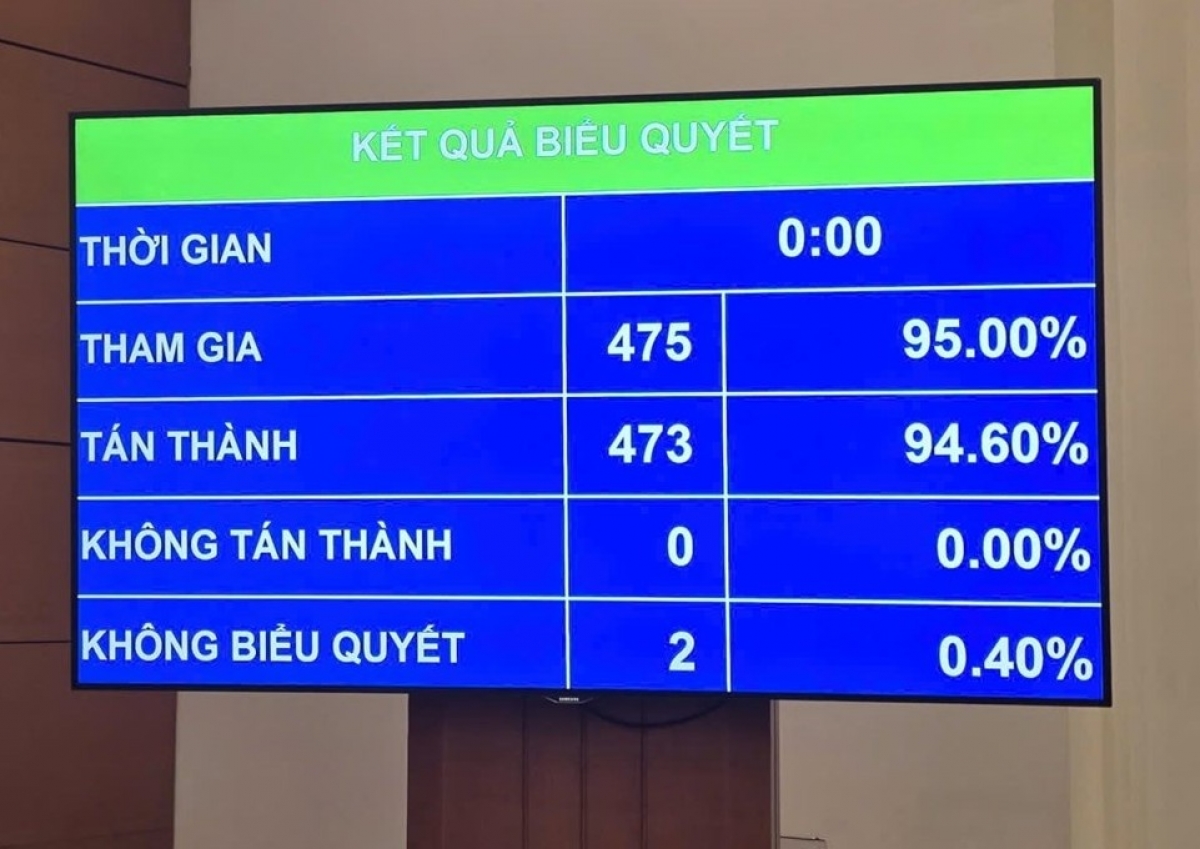
On August 23, 2026, the National Assembly of Vietnam officially passed the amended Oil and Gas Law with an approval rate of 94.6% (473 out of 475 delegates). More than a technical revision, this 12-chapter, 62-article law marks a strategic shift: from a legal framework for traditional resource extraction to building a solid legal foundation for a modern energy industry, with a focus on sustainable development and climate change response.
The new law takes effect from March 1, 2027, opening a new chapter for Vietnam's oil and gas sector. The most important highlight is the first-time inclusion of Carbon Capture and Storage (CCS) and Natural Hydrogen activities within the legal framework. This analysis delves into the specific provisions regarding these two new and promising areas.
I. IN-DEPTH ANALYSIS OF CCUS PROVISIONS IN THE NEW LAW
1. Groundbreaking Legal Foundation
The amended Oil and Gas Law 2026 is considered a legal breakthrough as it adds specific provisions on the activities of capturing, processing, transporting, injecting, and storing CO₂ (CCS) associated with oil and gas operations. Previously, this field lacked a clear legal framework, making the implementation of CCS projects difficult. This is seen as a prerequisite for Vietnam to participate in the potential carbon storage market, estimated to be worth tens of billions of USD.
2. Financial Mechanisms and Carbon Value Monetization
The law establishes a transparent and strongly incentivizing financial mechanism, turning emission reduction activities into a legitimate source of revenue:
-
Ownership of carbon credits: Contractors performing CCS activities are granted the right to own, exchange, and trade carbon credits according to environmental protection laws.
-
Clear financial accounting: Revenue from selling carbon credits is accounted for as a reduction in recovery costs, while CCS implementation costs are included in recoverable oil and gas operating costs. This creates a direct economic incentive, helping investors see the financial viability of adopting green technology.
3. Investment Incentives and Infrastructure Utilization
To materialize CCS projects, the law introduces solutions to optimize resources and reduce investment costs:
-
Utilizing depleted fields: The law strongly encourages the use of depleted oil and gas fields or existing oil and gas facilities for CO₂ capture, injection, and storage. Instead of being worthless assets, these fields become "carbon storage" facilities, generating new revenue streams.
-
Incorporation into existing contracts: The law allows the addition of CCS activities into existing oil and gas contracts, providing flexibility and reducing administrative barriers.
-
Special incentives: Projects applying CCS technology will benefit from special investment incentive policies.
4. Long-term Legal Liability and Monitoring
One of the most complex issues of CCS is liability for the storage site after project completion. The law has begun to address this:
-
Contractor's responsibility: After CCS operations cease, the contractor is responsible for monitoring, ensuring the safety of the CO₂ storage facility, and remediating any leakage incidents before handing it over to Petrovietnam for management. This clearly defines responsibilities and mitigates risks for the state.
5. Assessment and Challenges
While a significant step forward, experts consider this only the beginning of the legal framework for CCS. The current law focuses solely on CCS associated with oil and gas activities. To develop a large-scale CCS market serving other major emitting industries like gas power, cement, or steel, a more comprehensive legal framework and detailed guidance are needed. The development of sub-law documents, particularly decrees and circulars, will be crucial to the success of these policies.
II. ANALYSIS OF NATURAL HYDROGEN - A NEW RESOURCE
1. Expanding the Definition of "Unconventional Oil and Gas"
Another notable new point is the law's detailed addition of the concept of "unconventional oil and gas," which includes natural hydrogen gas. This is the first time natural hydrogen has been identified and included in Vietnam's legal framework. Natural hydrogen is understood as hydrogen in gaseous form, originally present in natural accumulations and extracted from wells.
2. Strategic Significance
The legalization of natural hydrogen reflects the global trend of exploring and developing new clean energy sources. This move:
-
Creates an extraction legal framework: Paves the way for survey, exploration, and extraction activities of this highly promising clean energy resource in Vietnam.
-
Diversifies supply: Reduces dependence on traditional fossil fuels, moving towards a more diverse and sustainable energy portfolio.
-
Attracts investment: Provides a legal basis to attract investors, particularly international energy corporations interested in natural hydrogen extraction technology.
III. INTEGRATION INTO THE OVERALL ENERGY STRATEGY
The amended Oil and Gas Law is not limited to CCS and natural hydrogen. It reflects a comprehensive vision of a multi-faceted oil and gas industry as the pillar of a modern energy ecosystem. This is demonstrated by:
-
Expansion into offshore energy: The law allows contractors to implement offshore energy projects (wind, solar, wave, tidal, green hydrogen, green ammonia) within the scope of their oil and gas contracts. Implementation costs are included in recoverable costs.
-
Management model transformation: The law shifts from a "procedure-based" management model to a "responsibility and results-based" model, aiming for greater dynamism and efficiency.
-
Support for high-tech supply chains: For the first time, the law includes provisions encouraging the development of domestic technical services and high-tech supply chains, and exempting import taxes on machinery and equipment for research and manufacturing that cannot yet be produced domestically.
CONCLUSION: A STEP IN THE RIGHT DIRECTION, BUT CHALLENGES LIE AHEAD
The amended Oil and Gas Law 2026, with its breakthrough provisions on CCUS, natural hydrogen, and offshore energy, has created a solid foundation for Vietnam's oil and gas industry to transform into a modern energy sector capable of providing diverse products, services, and solutions. Legalizing new business models like CCS is a necessary condition for Vietnam to catch up with pioneering countries in the region like Malaysia and Indonesia.
However, true success will depend on the quality of detailed guiding documents (Decrees, Circulars), implementation capacity, and coordination among regulatory agencies. Furthermore, to realize the potential of the CCS market, Vietnam needs to strengthen international cooperation policies (G2G) to attract capital, technology, and facilitate cross-border carbon credit transactions. This law is evidence that Vietnam is ready for a new energy era, but the road ahead requires continuous effort to turn legal opportunities into tangible realities.