

Cargo airships: a new direction for Vietnam's low-altitude economy
August 30, 2026
By Lê Ngọc Ánh Minh, Chairman of VAHC
These past few days, the skies over Cà Mau have been filled with vibrant colors from 34 hot air balloons at the festival held here for the first time, attracting thousands of locals and tourists. This event not only offers a novel tourism experience but also hints at a much larger potential: using airships as cargo transport vehicles in Vietnam's emerging low-altitude economy.

The hot air balloon festival and Heritage Culture Festival took place from August 27 to September 2, 2026, in Bac Lieu Ward, Ca Mau Province. The balloon festival featured 34 colorful hot air balloons, including tethered balloons, sightseeing balloons, ground display balloons, and an evening balloon lantern program.
Low-altitude economy: Vietnam's new playground
Vietnam is emerging as an innovative country in the low-altitude economy sector, with strong policies from the Government and local authorities. According to the Ministry of Science and Technology, the national UAV strategy is built on four main pillars: developing UAVs as a transformative industry for low-altitude transport; applying a dual-use approach integrating civilian and defense applications; prioritizing technology mastery and self-reliance in designing and producing core technologies; and positioning the State as the market shaper while businesses drive innovation and global competitiveness.
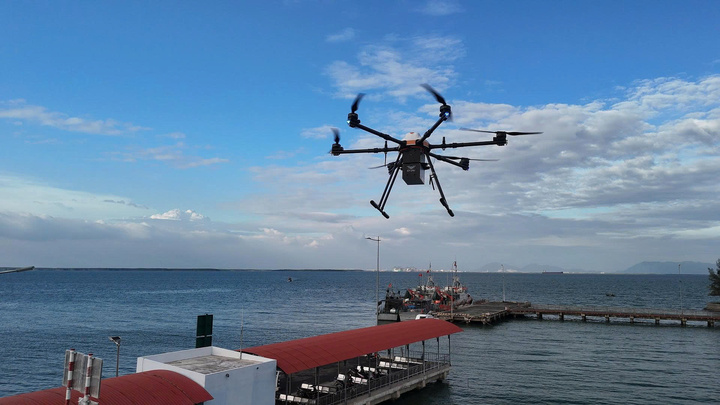
On the morning of February 12, 2026, Ho Chi Minh City launched an overseas delivery route using unmanned aerial vehicles (UAVs). The UAV carried a 2 kg package on a journey of more than 12 km from Can Gio to Vung Tau in 15 minutes; about 6 times faster than road transport and 3 times faster than waterway transport.
Hanoi and Ho Chi Minh City are pioneering testing mechanisms for flying taxis, flying cars, and drone deliveries. The revised Capital Law has introduced the concept of "low-altitude economy" into the legal framework, not just as an industrial policy but also as a new spatial management domain. Dien Bien province has approved a controlled testing program with approximately 6,000 UAV flights within a "sandbox" for the low-altitude economy, focusing on four sectors: agriculture, logistics, healthcare, and digital mapping.
However, while drones and UAVs are receiving significant attention, another segment of the low-altitude economy remains underexplored: commercial cargo airships. This represents a new aviation industry that is actually quite old, having flourished in the early 20th century before being overshadowed by airplanes.
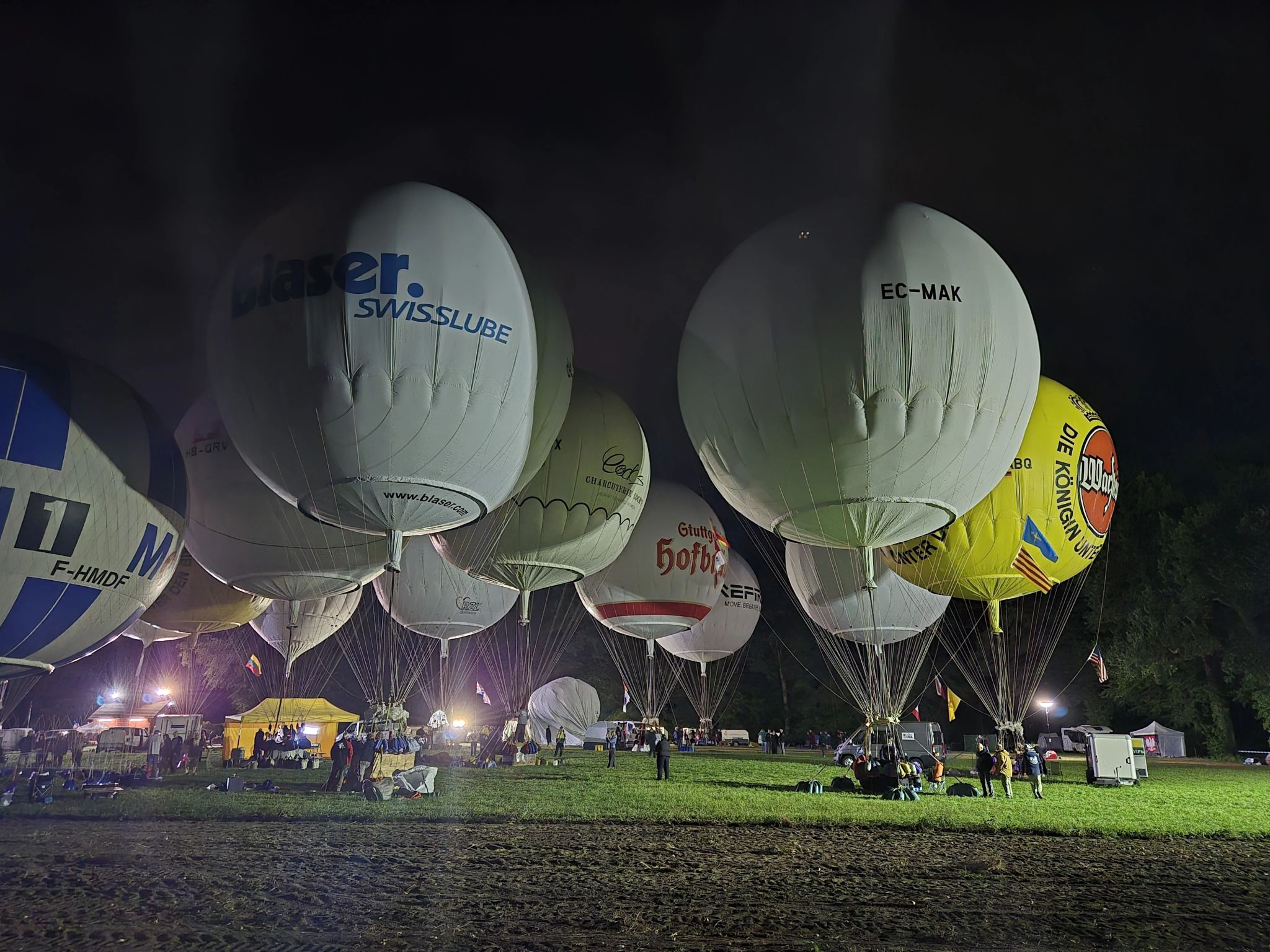
On the night of Friday, August 28, 2026, 26 balloons were filled with hydrogen from the pipeline of Air Liquide, one of the world's leading industrial gas companies, with the pipeline running through Gladbeck and having a branch leading to the launch site in Wittringer Wald. Each balloon has a capacity of 1,000 m³ of gas and was filled in about 30 minutes, with three balloons being filled simultaneously. The 69th Gordon Bennett Cup gas balloon race took place in Gladbeck, Germany.
Advantages of heavy-lift cargo airships
Startup models in the US and Europe are demonstrating the enormous potential of modern airships. H2 Clipper (California, USA) is developing a hydrogen-powered cargo airship with a range of over 9,650 km, payload capacity of up to 225 tons – 8-10 times that of the best cargo aircraft today – and transportation costs 30-50% lower than current air freight. With a speed of approximately 280 km/h, it is 7-10 times faster than sea transport.
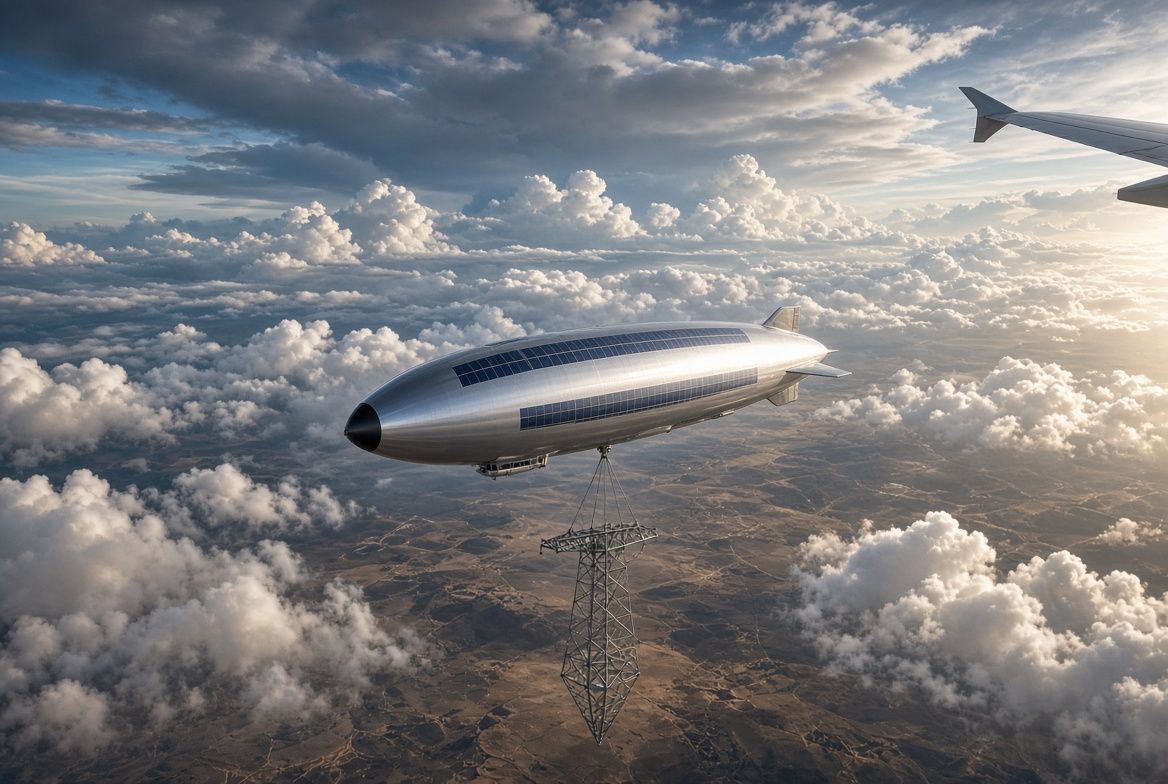
The idea of using modern airships to transport cargo and passengers in major cities and across Vietnam is attracting attention in the context of seeking green logistics solutions. However, to objectively assess economic efficiency, it is necessary to analyze based on actual technical specifications and costs, compared with Vietnam's infrastructure context and needs.
According to Joel Davis, Founder of the Big Rigid Airship Project — an expert in team building and removing practical barriers and an advocate for developing safe, scalable rigid hydrogen airships – serving cargo, passenger, and humanitarian missions; Big Rigid Airship Project, Colonial Heights, Virginia, USA, in the field of cargo transport, the question of size and shape limits of cargo packages is always a challenge. The Big Rigid Airship Project (BRAP) is researching the ability to transport cargo using external sling loads for goods that could never fit inside conventional cargo holds or aircraft, including:
-
Long wind turbine blades
-
Irregularly shaped mining equipment
-
Bridge sections
-
Other oversized cargo
Practical limits are not just about weight
The BRAP project has shown that the limits of airship transport are not simply the weight of the cargo, but include many complex technical factors:
-
Load behavior: How the load responds when lifted by one or more points.
-
Spin control: The ability to keep the load from spinning during transport.
-
Workspace: The amount of clear space required around the lifting area.
-
Attachment points and lifting equipment: The load-bearing capacity of attachment points on the airship and lifting equipment.
-
Weather conditions: The effect of wind and weather on station-keeping ability.
-
Control precision: Requirements for precise position control in 6 degrees of freedom space.
Flying Whales (France-Canada) is building the LCA60T airship, 200 meters long, using helium lift gas and hybrid-electric engines, capable of carrying 60 tons of cargo, with testing expected to begin in 2025 or 2027. Airlander 10 from Hybrid Air Vehicles (UK), using helium with hybrid engines, has received approximately $1.8 billion in orders. The company is developing the Airlander 50 version with a 60-ton payload, expected to operate in the early 2030s.
The core differentiator of airships compared to other transport modes is their vertical takeoff and landing capability, requiring no runways or massive ground infrastructure. When using green hydrogen, airships operate with zero carbon emissions.
Integration into Vietnam's logistics system
With a 1,600 km long terrain featuring many mountains and islands, cargo airships have the advantage of connecting areas lacking road, rail, or airport infrastructure. Flying Whales emphasizes the advantage of transporting oversized cargo such as wind turbines or construction materials to remote locations without connections to global supply chains, reducing emissions and environmental impact from infrastructure construction. Hybrid Air Vehicles is collaborating with the Scottish Government to explore logistics solutions for rural areas.
Instead of building specialized airports, existing seaports and railway stations could be integrated as takeoff/landing points for airships. This makes transport simpler, more efficient, and cost-effective, creating seamless multi-modal logistics routes, with potential for direct delivery from factories to distribution centers without ground intermediary steps.
Opportunities for Vietnam's hydrogen industry
Another important benefit is that cargo airships would create significant hydrogen consumption demand, promoting the development of Vietnam's green hydrogen industry. H2 Clipper can transport liquid hydrogen at low cost, creating a stable and large-scale consumption market for domestic hydrogen production. Hydrogen airships could also serve as "sky pipelines" to transport green hydrogen to consumption areas.
Conclusion
With strong innovative policies from the Government and support from major cities, Vietnam has full potential to become a regional leader in cargo airship applications. This is not only a new direction for the low-altitude economy but also a green, efficient logistics solution for bulky cargo, opening a new chapter for the aviation industry and contributing to the country's low-carbon economy, especially the emerging hydrogen economy.
References
France 2030 AI. (2026, March 10). Flying Whales — France 2030 Company Profile. https://france2030.ai/companies/flying-whales/
VietnamPlus. (2026, June 25). Dien Bien approves UAV sandbox for low-altitude economy development. https://en.vietnamplus.vn/dien-bien-approves-uav-sandbox-for-low-altitude-economy-development-post347246.vnp
Dassault Systèmes. (2025, October 20). H2 Clipper. 3DEXPERIENCE Lab. https://www.3ds.com/3dexperiencelab/portfolio/h2-clipper
CNN. (2023, October 13). A new generation of airships is taking to the skies. https://edition.cnn.com/travel/gallery/cloudline-modern-airships-cargo-revival-spc-intl/index.html
Thông tấn xã Việt Nam. (2026, April 25). Vietnam charts UAV strategy as Hanoi eyes low-altitude economy. https://vietnam.vnanet.vn/english/print/vietnam-charts-uav-strategy-as-hanoi-eyes-low-altitude-economy-442631.html
Lusha. (2025, August 24). H2 Clipper, Inc. Business Profile. https://www.lusha.com/business/e4d4900792085de1/