

From Aluminum Waste to Clean Fuel: A Golden Opportunity for Vietnam's Hydrogen Industry
July 26, 2026
VAHC Secretariat
On the morning of July 26, in Lâm Đồng Province, General Phan Văn Giang, Deputy Prime Minister and Minister of National Defence, attended the ceremony announcing Vietnam's first aluminum ingot products. The event marked the first time Vietnam successfully produced aluminum ingots using electrolysis technology with a current intensity of 500 kA, completing the final link in the value chain from bauxite mining and alumina production to aluminum smelting. This is a pivotal milestone in the development of Vietnam's foundational materials industry, contributing to the realisation of the policy of deep processing to enhance the value of national resources.
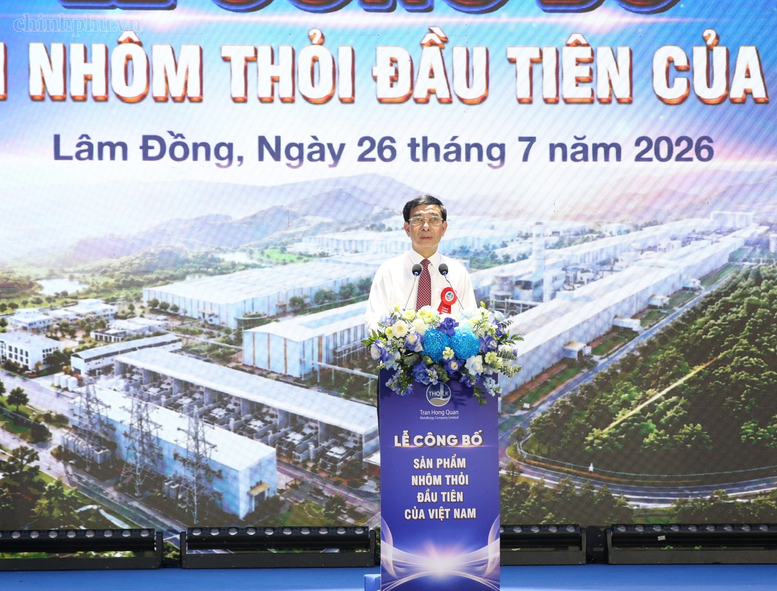
Photo: General Phan Văn Giang speaking at the ceremony – VGP/Nguyễn Hoàng
However, alongside this achievement, a strategic question arises: With its large bauxite reserves and operating aluminum refineries, can Vietnam utilise aluminum by-products to produce hydrogen – the clean fuel of the future?
The answer is yes, and this represents a golden opportunity for Vietnam to simultaneously address industrial waste challenges and create a new hydrogen industry, contributing to green growth and sustainable development.
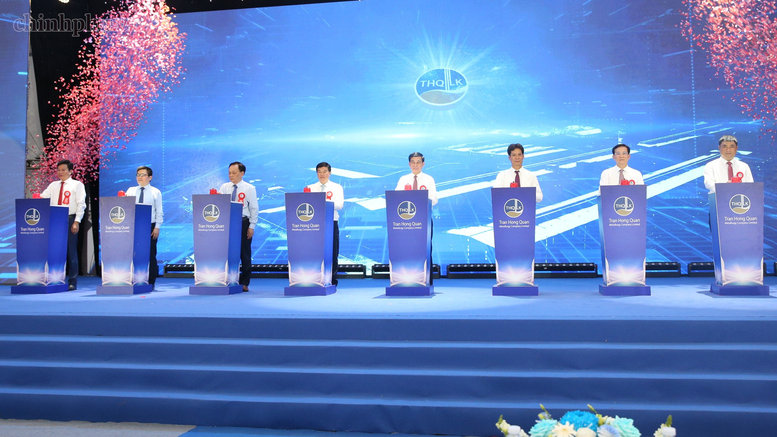
Photo: General Phan Văn Giang and delegates at the announcement ceremony for Vietnam's first aluminum ingot products – VGP/Nguyễn Hoàng
Red Mud – The Overlooked "Gold Mine"
The Bayer process for producing alumina from bauxite ore generates large volumes of highly alkaline solid waste known as red mud. For every tonne of alumina produced, approximately 1–1.5 tonnes of red mud are generated. This is one of the world's largest-volume industrial wastes. Currently, most red mud is stored in dams, occupying vast land areas and posing significant environmental safety risks. Under Vietnamese standards and the Basel Convention, red mud is classified as hazardous waste.
However, red mud is not merely waste. Its composition contains significant quantities of valuable metal oxides, particularly Fe₂O₃ (30–60%), Al₂O₃ (10–20%), SiO₂ (3–50%), Na₂O (2–10%), CaO (2–8%), and approximately 10% TiO₂. This high iron and metal oxide content makes red mud a potential feedstock for hydrogen production through various technological pathways.
Applications of Red Mud in Hydrogen Production: Technological Approaches
Global research has been developing several technologies to utilise red mud for hydrogen production:
-
Catalyst for biomass gasification: Red mud can be used as a catalyst in biomass gasification to produce hydrogen, simultaneously addressing waste treatment and generating clean energy. Studies show that red mud is an effective catalyst support, increasing green hydrogen yield, reducing coke formation, and improving product quality.
-
Oxygen carrier for Chemical Looping Hydrogen Production (CLHP): Red mud has been studied as an effective oxygen carrier in chemical looping technology for hydrogen production, offering the dual benefit of waste treatment and clean energy generation.
-
Photocatalytic water splitting: Red mud can be used as a photocatalyst in water-splitting reactions to produce hydrogen, opening a pathway for low-cost green hydrogen production using sunlight.
-
Catalyst for methane decomposition (CDM): With its high iron content (approximately 20–30% by weight), red mud is a promising, low-cost catalyst for methane decomposition to produce hydrogen.
-
Hydrogen reduction of red mud: Hydrogen itself can be used to reduce red mud, recovering valuable metals such as magnetite and sodium aluminate, creating a closed-loop circular process.
Aluminium Dross – Another Hydrogen Source
Beyond red mud, the aluminium smelting process also produces another by-product: aluminium dross. Aluminium dross can react with alkaline solutions (NaOH or KOH) to release hydrogen gas. Research shows that each gram of aluminium dross can generate approximately 1.1–1.2 litres of hydrogen gas. This process not only produces hydrogen but also enables recycling of aluminium dross into valuable materials.
A Golden Opportunity for Vietnam
Vietnam stands at a significant opportunity to take the lead in this field:
-
Abundant raw material sources: With large bauxite reserves and operating alumina and aluminium plants (such as the Lâm Đồng Aluminium Complex and Đắk Nông Aluminium – TKV), the supply of red mud and aluminium dross is substantial and stable.
-
Solving environmental challenges: Utilising red mud and aluminium dross for hydrogen production would significantly reduce industrial solid waste, freeing up land and reducing environmental pollution risks.
-
Creating a clean energy source: Hydrogen produced from aluminium by-products is a clean energy source that can be used across multiple sectors, including transportation, industry, and power generation.
-
Developing deep processing industries: This aligns with the policy of developing deep processing industries to enhance the value of national resources.
-
Technology export potential: Vietnam could become a regional pioneer in hydrogen production from aluminium by-products, opening opportunities for cooperation and technology transfer with countries in the region and worldwide.
1. Red Mud Processing Technologies
Red mud is waste from alumina (Al₂O₃) production from bauxite ore using the Bayer process.
| Technology / Project | Implementing Organisation | Description | Stage |
|---|---|---|---|
| Chemical Looping Hydrogen Production (CLHP) using CeO₂-modified red mud | Research (scientific) | Transforms red mud into a high-performance oxygen carrier for clean hydrogen production. Red mud modified with CeO₂ creates oxygen vacancies, enhancing oxygen transport capacity, achieving hydrogen yield of 4.39 mmol/g and maintaining 94% performance after 50 cycles. | Laboratory research |
| HARARE Project (Hydrogen As the Reducing Agent in the Recovery of metals and minerals from metallurgical waste) | Sintef (Norway) leading, with 9 industrial and research partners from 4 European countries | Uses hydrogen as a reducing agent to recover iron, aluminium, cobalt, scandium... from copper slag and red mud. The reduction of iron oxides by hydrogen at high temperatures replaces carbon, avoiding CO₂ emissions. | 4-year project starting June 2021 |
| Plasma-enhanced chemical vapor reduction | Research (scientific) | A method for reducing red mud using chemical plasma, enabling efficient iron extraction from red mud. | Research |
| Photocatalysis | Research (scientific) | Uses red mud as a photocatalyst in the visible light region to produce hydrogen from water. | Laboratory research |
2. Aluminium Dross Processing Technologies
Aluminium dross is waste from aluminium production and recycling.
| Technology / Project | Implementing Organisation | Description | Stage |
|---|---|---|---|
| Waste-to-Energy (W2E) Technology | Novacium SAS (France) and HPQ Silicon Inc. (Canada) | Uses black aluminium dross (BAD) as feedstock to produce green hydrogen and valuable solid by-products. The process also generates heat, neutralises waste, and can be deployed on-site. HPQ holds exclusive licensing rights for North America. | Provisional patent application filed. Laboratory-scale trials successful; pilot-scale validation underway; targeting commercialisation within 12 months. |
| Direct Hydrolysis | Research (e.g., MDPI studies) | Uses white aluminium dross from primary aluminium production to produce hydrogen through hydrolysis reaction with water. | Research |
Conclusion and Recommendations for Vietnam
The application of aluminium by-products for hydrogen production is a highly promising pathway, though currently still in early development stages. These technologies could be adopted in Vietnam through the following approaches:
-
Research collaboration and technology transfer: Domestic research institutes, universities, and enterprises can collaborate with organisations such as Sintef (Norway), HPQ Silicon / Novacium (Canada/France), or European universities to conduct joint research, pilot trials, and eventually technology transfer. Vietnam's advantage lies in its abundant and stable supply of raw materials (from aluminium complexes such as TKV and Lâm Đồng).
-
Partnerships with technology providers: For Novacium/HPQ's technology, Vietnamese enterprises can explore opportunities for licensing or partnership to import and operate aluminium dross processing systems on-site at their facilities once the technology is commercially ready.
-
Investment in domestic R&D: Vietnam can proactively invest in research and development to master and adapt these technologies to the specific characteristics of domestic red mud and aluminium dross sources.
Close monitoring of these projects and proactive pursuit of cooperation opportunities are essential steps for Vietnam to transform "waste" from the aluminium industry into a "resource" for the future hydrogen economy.