

Cooperation Opportunities with JBIC and METI: Strategic Recommendations for Vietnam
Date: August 2, 2026
By Annie Nguyễn
1. Overview of JBIC and METI's Roles in Hydrogen Development
1.1. JBIC – Japan's Strategic Financial Instrument
The Japan Bank for International Cooperation (JBIC) is Japan's policy bank, established in April 2012 with capital of $15.6 billion, wholly owned by the Japanese government. JBIC has outstanding loans and equity participations totaling $105.6 billion, along with guarantee facilities of $8.89 billion (as of March 31, 2025). JBIC's financial instruments include export loans, import loans, overseas investment loans, untied loans, equity participation, and guarantees.
JBIC plays a key role in financing the entire low-carbon hydrogen value chain – from upstream production (water electrolysis, liquid hydrogen production), transportation (specialized vessels, hydrogen carriers like ammonia and MCH), to downstream utilization (receiving terminals, dehydrogenation, fuel synthesis).
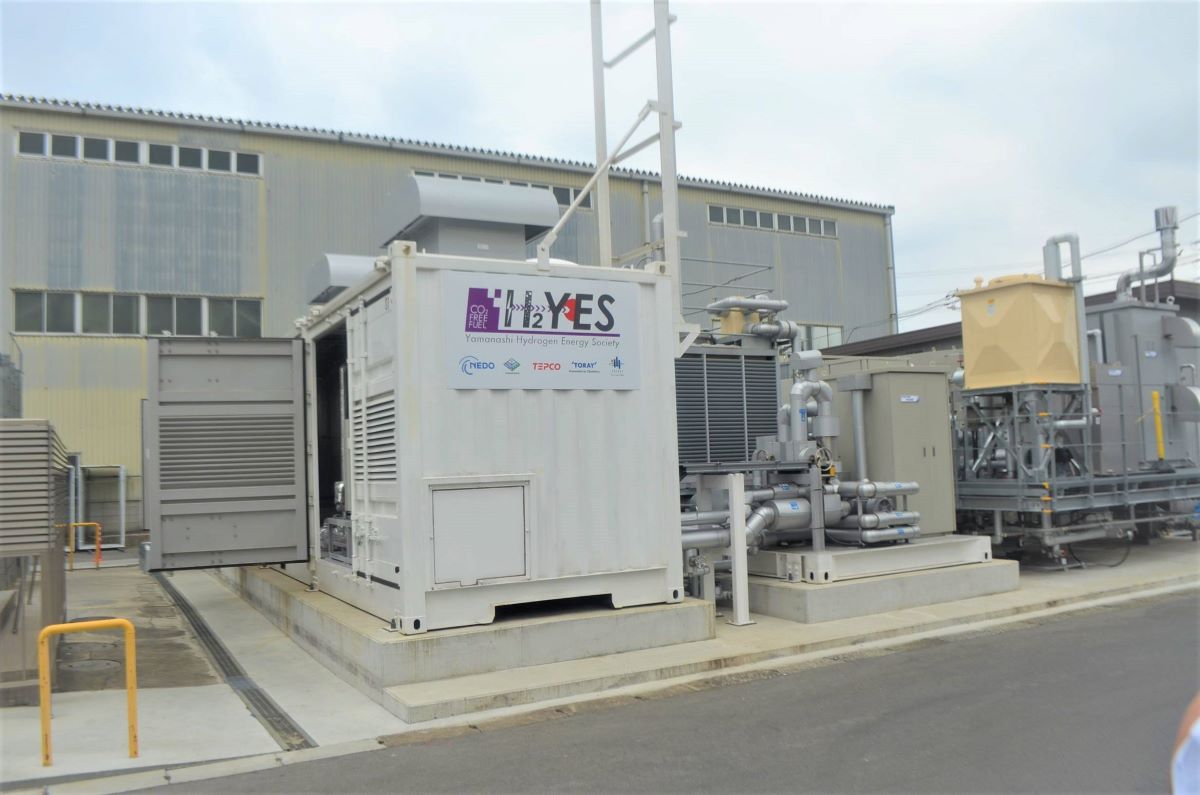
Unit 1 of the Yamanashi Model P2G System that began trial operation on August 6, 2024, in Kawagoe, Saitama Prefecture. (©Sankei by Takashi Hirao)
1.2. METI – Policy Direction and International Cooperation
Japan's Ministry of Economy, Trade and Industry (METI) formulates and implements Japan's national hydrogen strategy through mechanisms such as the Green Innovation Fund (GIF) with approximately ¥2 trillion ($13 billion), the Hydrogen Society Promotion Act (enacted and enforced from October 2024), and the Price Gap Support Scheme (CfD) with a total budget of ¥3 trillion (approximately $21 billion).
METI has established important bilateral and multilateral cooperation frameworks with Vietnam, including:
-
Joint Statement on Energy Transition Cooperation (2021): Emphasizing cooperation in hydrogen, ammonia, and CCUS.
-
AZEC Initiative (Asia Zero Emission Community): Vietnam was the first country selected by Japan for decarbonization support, with a commitment of up to $8 billion for renewable energy, energy efficiency, hydrogen, ammonia, and CCUS projects.
-
Bilateral meetings: Regular Energy Working Group meetings between METI and Vietnam's Ministry of Industry and Trade (MOIT).
METI also organizes international events such as the Hydrogen Energy Ministerial Meeting (HEM) and Tokyo GX Week to promote global cooperation. JBIC participates in international programs like Hydrogen for Development (H4D) and the 10 GW Lighthouse Initiative to support global hydrogen market development.
2. Specific Cooperation Opportunities for Vietnam
2.1. Financial Support from JBIC
2.1.1. Untied Loans
JBIC can provide untied loans for energy and hydrogen infrastructure projects in Vietnam. These loans offer competitive interest rates and long repayment periods. Priority areas include:
-
Port infrastructure, storage tanks, and pipelines for hydrogen/ammonia transport.
-
Large-scale electrolyzer plants and hydrogen/ammonia receiving terminals.
-
Renewable energy development (wind, solar) to support green hydrogen production.
JBIC has financed large-scale energy projects in Vietnam, including:
-
Block B Gas Project: $832 million untied loan (JBIC contributed $415 million) for gas field development and pipeline transport.
-
Nghi Son Refinery: JBIC was a major investor.
-
Other projects: Credit support for BIDV and VPBank to promote grid development and renewable energy.
2.1.2. Price Gap Support (CfD) through JBIC
Japan's CfD scheme has a total budget of $21 billion (¥3 trillion) to bridge the gap between low-carbon hydrogen and fossil fuel prices. Projects must supply hydrogen from around 2030 and meet carbon intensity and cost criteria. JBIC manages and disburses these funds.
Vietnam can participate by:
-
Developing large-scale green hydrogen projects (from wind and solar) to supply Japanese companies (like JERA, Mitsui) already certified for CfD support.
-
Partnering with Japanese corporations to jointly apply for METI/JBIC's CfD program.
-
Leveraging bilateral agreements (like AZEC) to facilitate hydrogen/ammonia exports to Japan.
2.1.3. Equity Investment and Funds
JBIC can invest equity in strategic hydrogen projects and companies, as seen with its $23 million investment in FirstElement Fuel (FEF) in California. JBIC is also the only anchor investor from Japan in the world's largest hydrogen-focused fund (€1.5 billion, up to €1.8 billion), with investors including Air Liquide, TotalEnergies, and Plug Power. Vietnam can:
-
Propose JBIC for equity investment in key hydrogen projects.
-
Partner with global hydrogen funds that JBIC participates in.
2.2. Policy and Technical Cooperation with METI
2.2.1. Participation in International Forums and Initiatives
Vietnam should actively participate in forums organized by METI, including:
-
Hydrogen Energy Ministerial Meeting (HEM): Participate as a Southeast Asian representative to share experiences and learn from leading countries.
-
Tokyo GX Week: Engage in discussions on hydrogen, carbon recycling, and sustainable fuels.
-
AZEC: Leverage Vietnam's position as the first country selected for support to propose specific projects and participate in AZEC meetings to accelerate progress.
2.2.2. Cooperation in Standardization and Legal Frameworks
METI is actively promoting standardization and regulatory harmonization at international forums such as IEA H2TCP and IMO. Vietnam can:
-
Cooperate with METI to develop green hydrogen standards and certification aligned with international standards (e.g., EU RFNBO, CertifHy).
-
Participate in technical cooperation projects (e.g., IEA H2TCP Task 50 on cost and carbon intensity comparison) to enhance capacity and international integration.
2.2.3. Human Resource Development and Technology Transfer
METI and JBIC have human resource development programs under AZEC. Vietnam can propose:
-
Joint training programs on hydrogen technology and safety.
-
On-site training at Japanese hydrogen facilities.
-
Supporting the development of hydrogen research centers in Vietnam with Japanese research institutes (e.g., University of Tokyo, University of Yamanashi, AIST).
3. Strategic Recommendations for Vietnam
3.1. Legal and Institutional Framework
| Recommendation | Specific Actions | Potential Partners |
|---|---|---|
| Establish a National Hydrogen Committee | Coordinate strategy and negotiations with JBIC/METI; develop a national hydrogen roadmap to 2050. | MOIT, MOF, MPI |
| Finalize green hydrogen standards and certification | Meet Japanese and EU standards (RFNBO) for export to Japan. | METI, JBIC, MOIT |
| Implement a domestic price gap support mechanism | Reference Japan's CfD model to attract foreign investment. | MOF, JBIC, METI |
3.2. Finance and Investment
| Recommendation | Specific Actions | Potential Partners |
|---|---|---|
| Propose large-scale hydrogen projects to JBIC | Develop green hydrogen projects in provinces with wind and solar potential (Binh Thuan, Ninh Thuan, Ca Mau, Tra Vinh). | PVN, PV GAS, Japanese corporations (Mitsui, JERA) |
| Participate in Japan's CfD program | Partner with Japanese companies to supply green hydrogen from Vietnam to Japan through the CfD mechanism. | JERA, Mitsui, JBIC, METI |
| Attract equity investment from JBIC and global hydrogen funds | Propose JBIC and investment funds for equity participation in key hydrogen projects. | JBIC, Air Liquide, TotalEnergies |
| Mobilize untied loans | Propose JBIC for untied loans for port infrastructure and electrolyzer plants. | JBIC, Japanese commercial banks |
3.3. Technical and Policy Cooperation
| Recommendation | Specific Actions | Potential Partners |
|---|---|---|
| Participate in METI-led international initiatives | Attend HEM, Tokyo GX Week, and AZEC meetings to enhance Vietnam's position and learn from experience. | METI, AZEC member countries |
| Research and training cooperation | Sign MoUs with Japanese research institutes; participate in IEA H2TCP projects. | University of Tokyo, University of Yamanashi, AIST, NEDO |
| Build strategic partnerships with Japanese corporations | Promote cooperation with Kawasaki Heavy Industries, Mitsui, JERA, IHI, and ENEOS. | Kawasaki, Mitsui, JERA, IHI, ENEOS |
4. Conclusion
Japan, through JBIC and METI, is building a comprehensive financial and policy support system to drive the global hydrogen value chain. Vietnam, as the first country selected by Japan for support under AZEC with a commitment of $8 billion, has a golden "window of opportunity" to deeply integrate into Japan's hydrogen supply chain. However, this requires urgent action from Vietnam, including completing the legal framework, developing projects, attracting investment, and participating in international initiatives.
Three priority actions in the next 6 months:
-
Propose 2-3 large-scale hydrogen projects to JBIC and Japanese partners, leveraging untied loans and CfD support.
-
Formally participate in METI's international initiatives (HEM, Tokyo GX Week, AZEC) and send delegations to Energy Working Group meetings with Japan.
-
Sign strategic cooperation MoUs with Japanese research institutes and corporations to build capacity and promote technology transfer.