

Vietnam pushes domestic technology and standards to build a viable hydrogen industry
Date: August 1, 2026
VAHC Secretariat
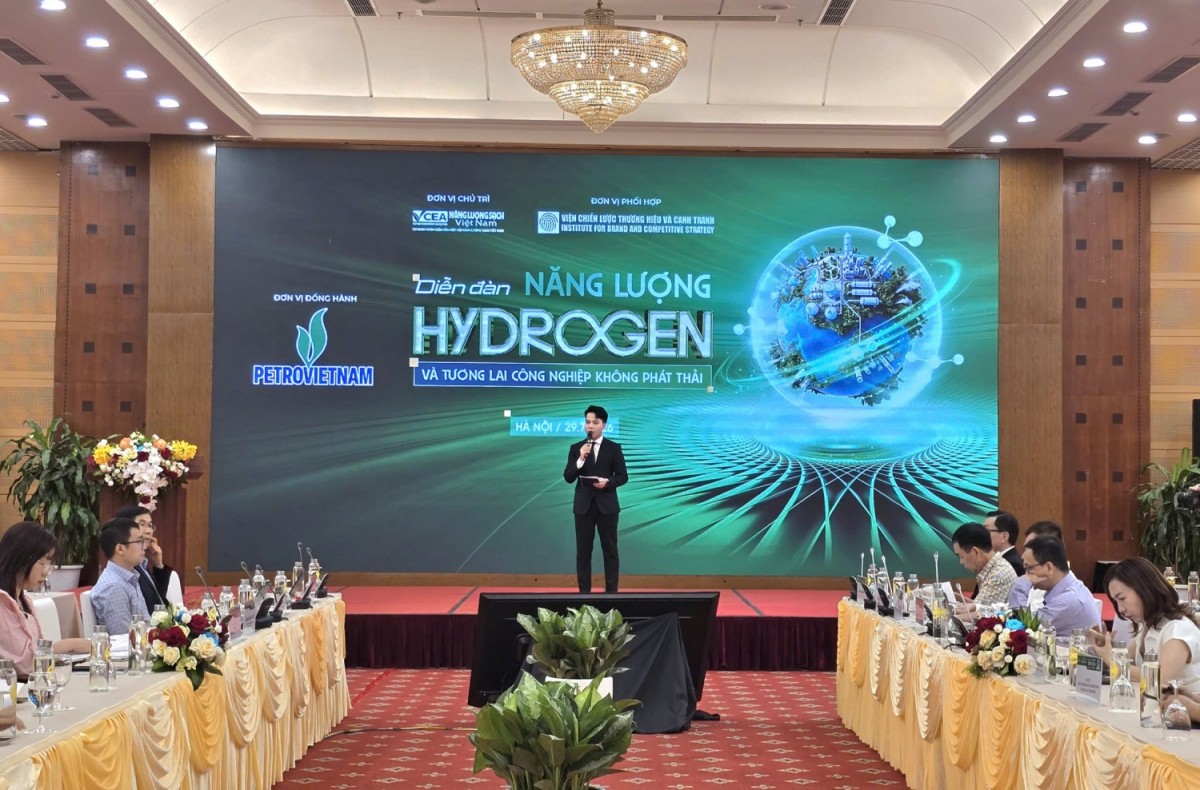
Vietnam's hydrogen industry is at a critical turning point, with a focus on mastering technology, refining technical standards, and building a comprehensive ecosystem. According to experts at the Hydrogen Energy Forum held on July 29 in Hanoi, alongside technological progress, completing the regulatory framework, technical standards, and ecosystem development are considered essential conditions for establishing a hydrogen industry in Vietnam.
Strategic Foundation
Vietnam has established an initial foundation for hydrogen development through the Hydrogen Energy Development Strategy (Decision 165/QĐ-TTg, February 2024), setting targets of 100,000-500,000 tons of hydrogen/year by 2030 and 10-20 million tons/year by 2050. The strategy was developed through close coordination between the Ministry of Industry and Trade (MOIT), other ministries, and international organizations, providing a framework for research direction and investment attraction.
However, Mr. Đặng Hải Anh - Deputy Director of the Oil and Gas and Coal Department (MOIT) - noted that the current roadmap still needs to be refined to provide more specific guidance for the entire hydrogen value chain, from production and storage to utilization.
Current Status of Vietnam's Hydrogen Industry
Currently, hydrogen in Vietnam is primarily produced from fossil fuels in the form of "grey" and "brown" hydrogen, with an annual output of approximately 500,000 tons, serving fertilizer production and oil refining. Hydrogen is currently used at Phu My, Ca Mau, Ha Bac, and Ninh Binh fertilizer plants, as well as Dung Quat and Nghi Son refineries.
To date, Vietnam has no commercial-scale green hydrogen projects in operation. Several pioneering projects have recorded initial progress: in Long An, Indefol's project has produced green hydrogen on a trial basis with 1 MW capacity and has mastered approximately 50% of alkaline electrolysis technology; TGS's project in Tra Vinh is expected to commence commercial operation in Q2 2027 with a capacity of approximately 24,000 tons of hydrogen/year.
Advantages and Potential
According to expert assessments, Vietnam possesses many advantages for hydrogen development thanks to abundant wind and solar resources, while also having potential for natural hydrogen exploration and production in the Northwest and Truong Son mountain ranges. Associate Professor Phạm Hoàng Lương, Vice President of the Vietnam Clean Energy Association, emphasized the need to quickly address three major bottlenecks: transmission and grid infrastructure, technological capacity, and the legal framework.
Technology Mastery and Standardization Direction
According to Mr. Đặng Hải Anh, following the implementation of the Strategy, awareness of hydrogen in Vietnam has seen positive changes. Many universities and research institutes have begun to approach and assess the feasibility of mastering technology within the hydrogen value chain. MOIT is coordinating with GIZ to implement programs supporting research, technology transfer, and human resource training.
Technical standards (TCVN, QCVN) have been identified as both a management tool and a scientific foundation for Vietnam to gradually master the hydrogen value chain, ensuring safety and alignment with international practices. MOIT has developed a roadmap for completing the technical standard system by 2030 and 2050, with the period up to 2030 prioritizing the development of standards to support hydrogen development. In August 2026, MOIT will organize a consultation workshop to gather expert and business feedback on the new policy framework.
Ecosystem Approach
Mr. Mai Huy Tân, Chairman of Green THDV Investment Consulting JSC, suggested that green hydrogen should be developed as an integrated ecosystem rather than as standalone electrolysis projects. He proposed an integrated model combining agricultural biomass, renewable energy, green hydrogen, biochar, and green fuels, leveraging Vietnam's advantage in integrating available resources.
Development Directions
MOIT will continue to concretize the hydrogen development roadmap for each consumption sector such as industry, transport, and chemicals in the coming period. One important direction is to prioritize developing hydrogen derivatives such as ammonia and methanol to leverage existing infrastructure before expanding pure green hydrogen production.
The Ministry will also study special incentive mechanisms on taxes, land rent, loan support, as well as policies to attract experts and encourage high-emission sectors to transition to hydrogen use through pilot projects.
With these efforts, experts believe that hydrogen is opening an opportunity to develop a new industry in Vietnam, contributing to achieving the net-zero emissions target by 2050 and participating deeply in the global green fuel supply chain.