

From Industrial Waste Gas to Clean Electricity: Hydrogen-Rich Gas Power Generation Technology and Opportunities for Vietnam
July 27, 2026
Technology Team, VAHC
I. Introduction: When Industrial Waste Gas Becomes a Valuable Resource
In heavy industries such as steel, chemicals, and oil refining, large volumes of hydrogen-rich waste gas have been flared or vented directly into the atmosphere for decades. This is not only a waste of resources but also a source of environmental pollution. However, with the advancement of hydrogen-rich gas power generation technology, this situation is changing.
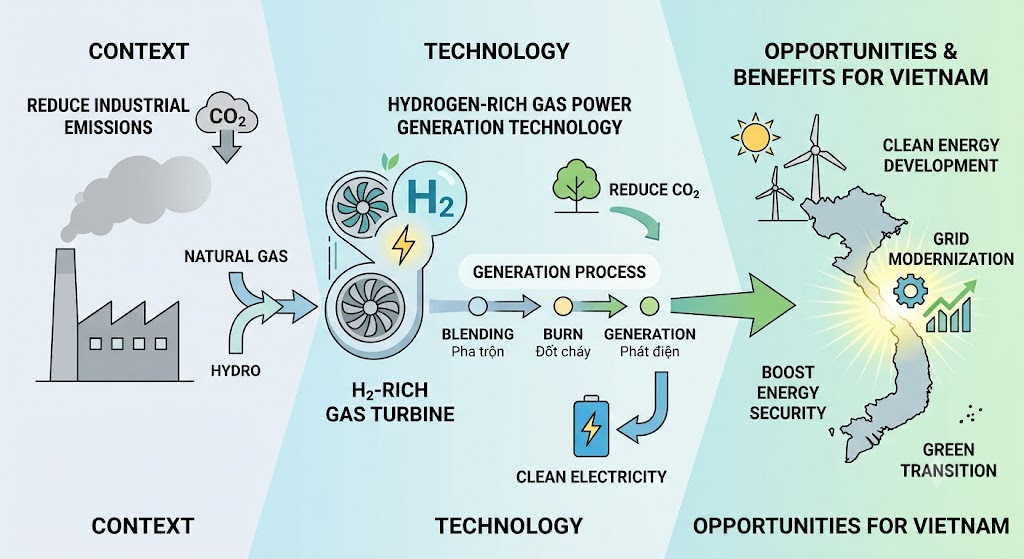
In 2026, China achieved significant milestones in this field. CIMC Enric and Shandong Kemei jointly launched the "CIMC-16V-HEG" hydrogen-rich gas power generation module, specifically designed for hydrogen-rich tail gas power applications. At the same time, multiple power generation projects using hydrogen-rich tail gas from steel and ferroalloy plants have been successfully commissioned, demonstrating the feasibility and effectiveness of this technology. For Vietnam, this presents an opportunity to harness this "forgotten" resource, reducing emissions while creating economic value.
II. China's Success in Hydrogen-Rich Gas Power Generation
Real-world projects in China have proven that hydrogen-rich gas power generation technology is ready for commercial application and is delivering clear economic and environmental benefits.
1. The "CIMC-16V-HEG" Specialised Power Module
On July 22, 2026, CIMC Enric and Shandong Kemei launched the "CIMC-16V-HEG" hydrogen-rich gas power generation module. This product is designed to handle various hydrogen-rich gas streams, including coke oven gas, industrial by-product gas, hydrogen-blended natural gas, pure hydrogen, and biomass hydrogen-rich gas.
The module has overcome technical challenges such as "backfire, detonation, uneven cylinder power distribution, and low power generation efficiency" – common issues when burning hydrogen-rich gas. The product ensures safe, efficient, and stable operation for power plants.
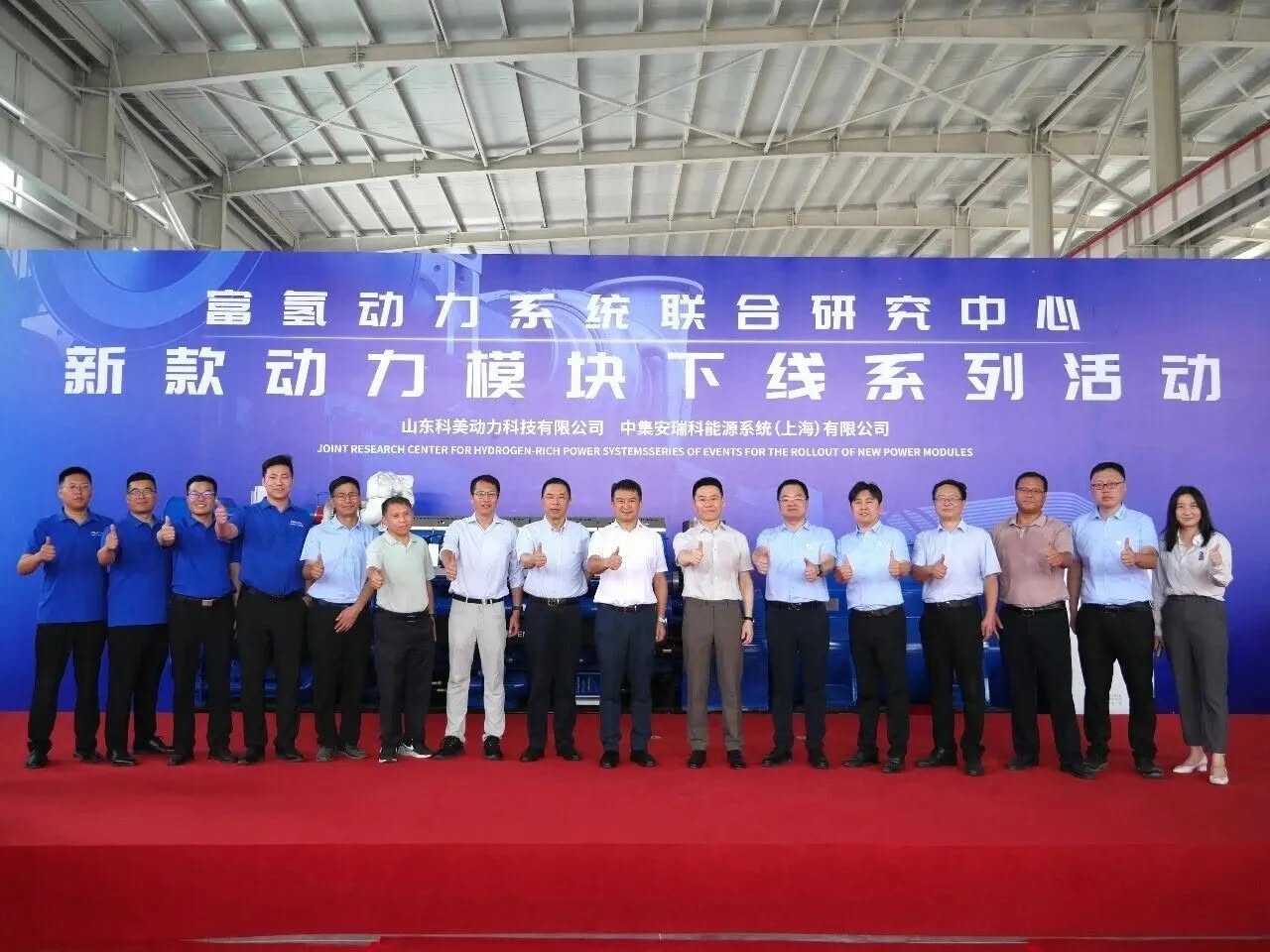
On July 22, 2026, CIMC Enric and Shandong Kemei launched the "CIMC-16V-HEG" hydrogen-rich gas power generation module
2. Jiangxi Hydrogen-Rich Tail Gas Power Project
In March 2026, a hydrogen-rich tail gas power project in Jiangxi Province was officially put into operation. The project uses hydrogen-rich tail gas from blast furnaces and converters – a fuel with low calorific value, complex composition, and fluctuating pressure, which has long been a challenge for efficient utilisation.
The project is equipped with 8 containerised 1,000 kW generator sets (8 MW total capacity) , operating under a "self-generation, self-consumption" model. The results are impressive:
-
Annual power generation: over 55 million kWh
-
Standard coal savings: approximately 15,000 tonnes/year
-
CO₂ emission reduction: approximately 39,300 tonnes/year
3. Inner Mongolia Ferroalloy Hydrogen-Rich Tail Gas Power Project
In January 2026, the first phase (6 MW) of the hydrogen-rich tail gas power project of Fengzhen Guoan Ferroalloy Co., Ltd. in Inner Mongolia was successfully commissioned. The project uses hydrogen-rich tail gas from submerged arc furnaces, installing 5 x 1,500 kW generator sets.
Results achieved:
-
Annual power generation: approximately 48 million kWh
-
Electricity cost savings: approximately RMB 19.2 million/year
-
CO₂ emission reduction: approximately 33,700 tonnes/year
III. Hydrogen-Rich Gas Sources in Vietnam: "Gold Mines" Being Overlooked
Similar to China, Vietnam has significant potential to utilise hydrogen-rich waste gas from key industries. The main sources of hydrogen-rich gas include:
1. Steel Production
The steel industry is the largest source of hydrogen-rich gas. During iron and steel production, the following gases are generated:
-
Coke Oven Gas (COG): Contains 50-60% H₂, the richest hydrogen source
-
Blast Furnace Gas (BFG): Contains 2-5% H₂, along with CO and CO₂
-
Basic Oxygen Furnace Gas (BOFG): Contains 1-2% H₂
Vietnam is currently expanding its steel industry with large-scale projects. Nam Dinh Province is developing a 9.5 million tonnes/year green steel project. This scale creates enormous potential for hydrogen-rich gas recovery.
2. Chemical and Fertiliser Industry
Ammonia, nitrogen fertiliser, and basic chemical plants are major hydrogen consumers and also sources of hydrogen-rich gas. Vietnam National Chemical Group (Vinachem) has already begun recovering excess hydrogen for hydrogen peroxide (H₂O₂) production and CO₂ capture from urea and ammonia production.
3. Oil Refineries
Oil refineries in Vietnam (such as Binh Son and Nghi Son) use hydrogen in hydrotreating and hydrocracking processes. These processes generate hydrogen-rich tail gas, currently partly used as fuel for furnaces, but the higher-value power generation potential remains largely untapped.
IV. Economic and Environmental Benefits of Installing Hydrogen-Rich Gas Power Generators in Vietnam
Based on actual results from Chinese projects, installing hydrogen-rich gas power generators in Vietnamese plants could deliver significant benefits.
1. Economic Benefits
Assuming a steel plant in Vietnam with an annual production capacity of 1 million tonnes of steel could install an 8 MW power generation system (similar to the Jiangxi project):
| Item | Estimated Value |
|---|---|
| Annual power generation | >55 million kWh |
| Electricity cost savings | ~VND 30-40 billion/year |
| Waste gas treatment cost savings | ~VND 5-10 billion/year |
| Waste heat revenue | ~VND 2-5 billion/year |
| Total annual benefits | ~VND 37-55 billion/year |
With an estimated total investment of VND 200-250 billion, the payback period is expected to be 5-7 years.
2. Environmental Benefits
-
CO₂ emission reduction: ~39,300 tonnes/year for an 8 MW project
-
Resource utilisation instead of flaring or venting
-
Reduction of harmful gas emissions such as CO, H₂S, NOx
-
Contribution to Vietnam's national emission reduction targets
3. Strategic Benefits
-
Energy security enhancement: Reduced dependence on the national grid
-
Competitiveness improvement: Lower production costs, meeting international green standards
-
Green transition acceleration: Positioning enterprises in the sustainable development trend
-
Model creation for other industries: Scalable nationwide
V. Conclusion and Recommendations
Hydrogen-rich gas power generation projects in China have proven this to be a feasible, effective technology delivering dual economic and environmental benefits. Vietnam has full potential to adopt this technology, particularly in:
-
Steel production (coke oven gas, blast furnace gas)
-
Chemicals and fertilisers (excess synthesis gas)
-
Oil refining (hydrotreating tail gas)
To realise this potential, the following recommendations are made:
-
Promote technology cooperation: Partner with Chinese companies such as CIMC Enric and Shandong Kemei for technology and equipment transfer.
-
Develop supportive policies: The government should establish incentive mechanisms and investment preferences for hydrogen-rich gas power projects.
-
Accelerate pre-feasibility studies: Enterprises should assess gas sources, scale, and economic viability.
-
Build demonstration projects: Implement pilot projects at steel and chemical plants to create replicable models.
With its outstanding benefits, hydrogen-rich gas power generation technology is poised to become a critical solution in Vietnam's green energy transition and carbon reduction strategy in the years ahead.