

NEDO's International Hydrogen Programs and Policy Recommendations for Vietnam
Date: August 2, 2026
VAHC R&D Team
1. Overview of NEDO's International Hydrogen Strategy
Japan is a global pioneer in hydrogen strategy, targeting 3 million tons of hydrogen per year by 2030 and 20 million tons by 2050. Due to limited domestic energy resources, Japan has prioritized building cross-border supply chains by partnering with countries rich in renewable resources to import hydrogen and its derivatives, especially through the Green Innovation Fund.
NEDO plays a central role in advancing international hydrogen programs through:
-
R&D and technology demonstration funding: Programs like the "Competitive Hydrogen Supply Chain Technology Development Project" (P23004) support the development of production, storage, transportation technologies, and international standardization.
-
Bilateral and multilateral international cooperation: NEDO organizes joint workshops, signs MoUs, and participates in global initiatives.
-
Promoting standardization and policy coordination: NEDO participates in programs like IEA H2TCP Task 50 to compare costs and carbon intensity of hydrogen supply chains, laying the foundation for international standards and facilitating global trade.

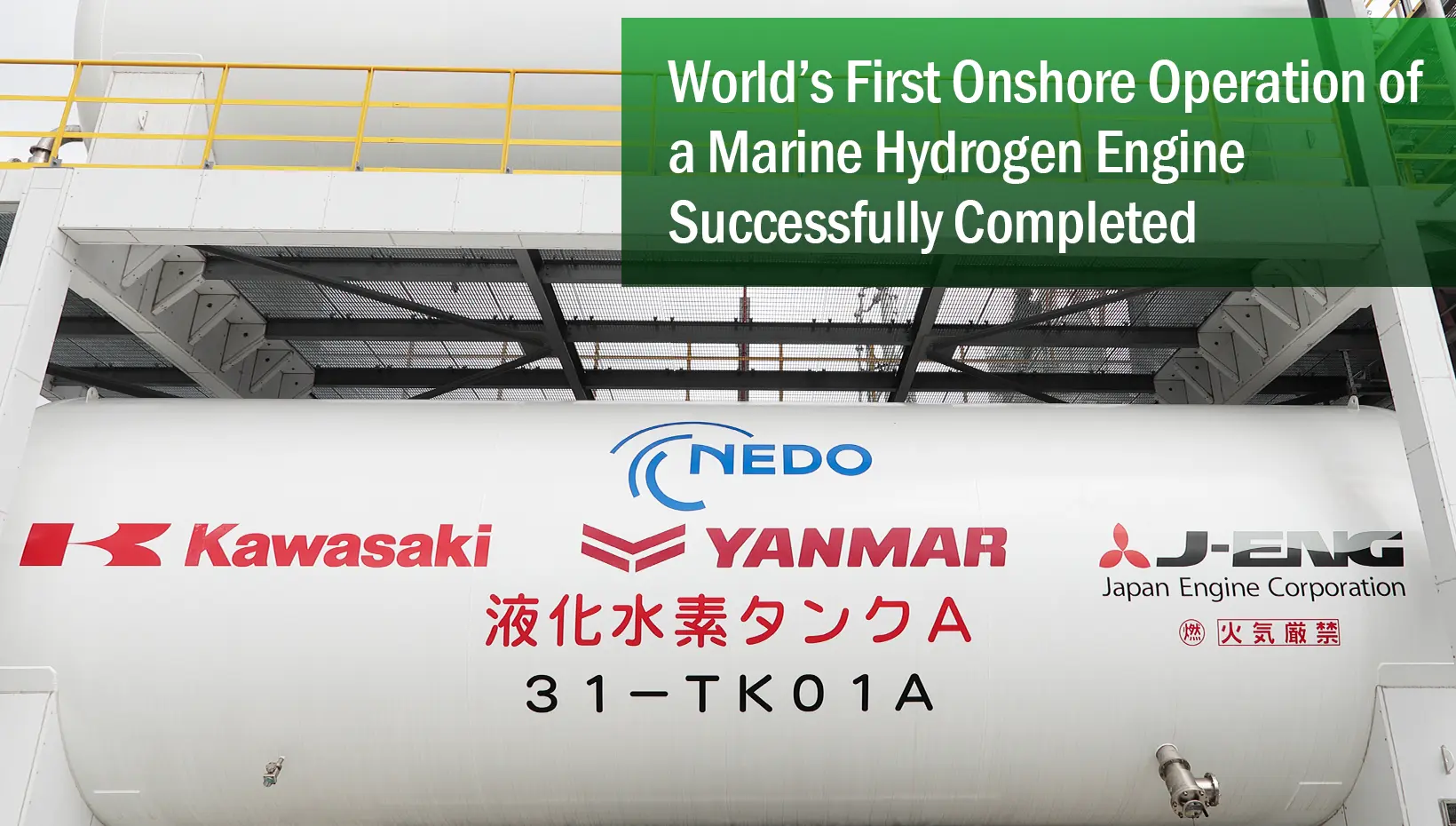
Ribbon-cutting ceremony at the launch event. From left: Masaru Hirose, President and Representative Director, Yanmar Power Solutions Co., Ltd.; Shintaro Matsumoto, Executive Director, NEDO; Takuya Fukumoto, Deputy Director-General for GX Policy, Ministry of Economy, Trade and Industry (METI); Jun Kohno, Senior Deputy Director-General, Maritime Bureau, Ministry of Land, Infrastructure, Transport and Tourism (MLIT); Motohiko Nishimura, Senior Managing Executive Officer and President, Energy Solution & Marine Engineering Company, Kawasaki Heavy Industries, Ltd.; and Ken Kawashima, President, Japan Engine Corporation. March 2026
2. Key International Partners of Japan in the Hydrogen Sector
2.1. New Zealand: Japan-New Zealand Hydrogen Corridor
In March 2026, a consortium including Obayashi, Kawasaki Heavy Industries, Mitsui O.S.K. Lines, and Chiyoda established the Japan-New Zealand Hydrogen Corridor. The project studies the feasibility of producing green hydrogen from New Zealand's geothermal and hydroelectric resources and exporting it to Japan as liquid hydrogen or ammonia, with commercial operations expected to begin in the early 2030s .
2.2. India: Joint Green Hydrogen Auctions
India and Germany have agreed to conduct joint auctions of green hydrogen derivatives under the H2Global mechanism, with similar agreements expected to be signed with Japan. SECI (Solar Energy Corporation of India) serves as the lead agency, leveraging its experience from renewable energy auction programs. Japan's participation in this mechanism could open opportunities for third-party producers to participate in the auctions, aligning with its goal to establish a global hydrogen supply network.
2.3. Canada: Liquid Hydrogen Supply Chain
In April 2026, Kawasaki Heavy Industries signed an MoU with the Edmonton Region Hydrogen Hub (Alberta, Canada) to study a liquid hydrogen supply chain from Canada to Japan. Alberta's advantages include low-cost natural gas, CCS, and existing infrastructure, making it a promising source of low-cost, low-carbon hydrogen.
2.4. Germany: Strategic Cooperation from R&D to Market
The Japan-Germany Energy Partnership held an expert workshop in Tokyo (March 2026) with participation from METI, Germany's Federal Ministry for Economic Affairs, the H2Global Foundation, and the Japan Hydrogen Association (JH2A). Discussion topics included financial mechanisms to stimulate the hydrogen market, joint research between leading institutes of both countries, and liquid hydrogen supply chain development.
2.5. Malaysia: Japan-Malaysia Hydrogen Hub (JMH2)
In July 2026, Universiti Kebangsaan Malaysia (UKM) and the University of Yamanashi (Japan) established the Japan-Malaysia Hydrogen Hub (JMH2) under Japan's J-PEAKS program. The hub is located at UKM's Fuel Cell Institute (SELFUEL) and is expected to serve as an ASEAN regional platform for collaborative research, researcher and student mobility, professional training, industry engagement, and commercialization of clean energy technologies. The hub aims to expand its cooperation network across ASEAN by 2029 .
2.6. USA
NEDO participated in VerdeXchange 2026 (Los Angeles, May 5-6, 2026), presenting Japanese hydrogen and ammonia projects and discussing cooperation with US stakeholders.
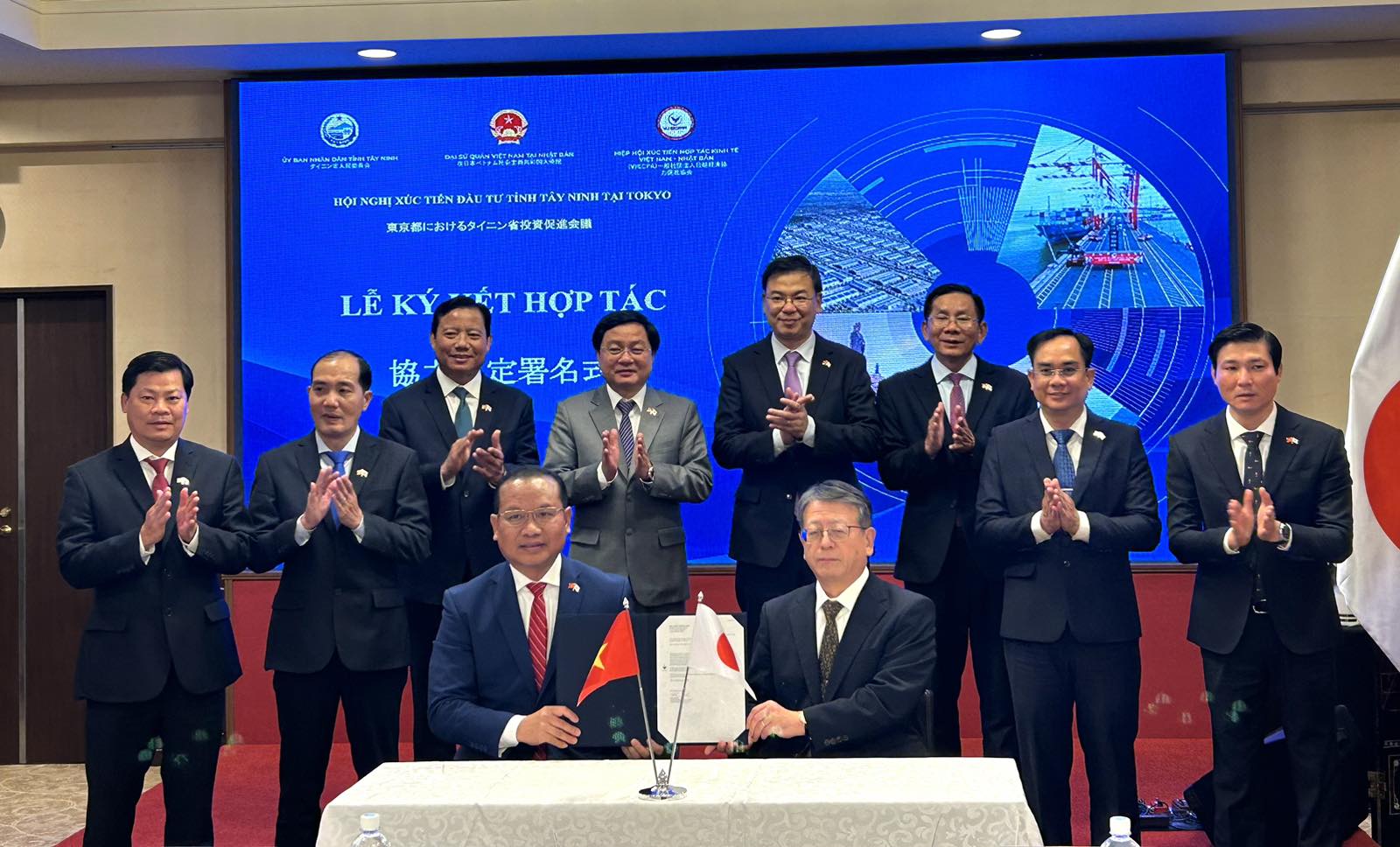
MOU exchange between Obayashi Group and Tay Ninh Economic Zone Management Board on supporting Japanese enterprises in hydrogen energy conversion industrial park. November 2025 at Vietnam Embassy in Japan. NEDO sponsored about 10 million US$ to Obayashi project in Kizuna Rental Factory in Tay Ninh province.
3. Key NEDO Programs for International Cooperation
3.1. Green Innovation Fund – Large-Scale Hydrogen Supply Chain Project
This project, with a budget of approximately $2 billion, is designed to demonstrate the entire supply chain for liquefied hydrogen . Key activities include:
-
Liquefied Hydrogen Supply Chain Commercialization Demonstration: Led by Japan Suiso Energy (JSE), with Kawasaki Heavy Industries building the world's largest liquefied hydrogen carrier (40,000 m³). The project includes a commercial-scale liquefied hydrogen terminal in Ogishima, Kawasaki City, featuring one of the world's largest storage tanks (50,000 m³), marine cargo handling equipment, hydrogen liquefaction equipment, and loading facilities. The first demonstration of loading and unloading and voyages at sea is planned by 2030 .
-
MCH (Methylcyclohexane) Supply Chain Demonstration: Led by ENEOS Corporation.
-
Direct MCH Electrosynthesis Technology Development: Led by ENEOS Corporation.
-
Hydrogen Co-firing and Single-fuel Power Generation Demonstration: Led by JERA and Kansai Electric Power .
3.2. Competitive Hydrogen Supply Chain Technology Development Project (P23004)
This program focuses on simplifying safety systems for hydrogen refueling stations and conducting foundational research to rationalize safety systems . It also supports the development of hydrogen production, storage, and transportation technologies, and international standardization. The program is open to enterprises, universities, and research organizations from countries cooperating with Japan.
3.3. IEA Hydrogen TCP Task 50: Cost and Carbon Intensity Analysis
IEA Hydrogen Technology Collaboration Programme (H2TCP) Task 50 is an international project running from 2024 to 2026, comparing the cost and carbon intensity of various global hydrogen supply chains . The main objectives are :
-
Comparing existing cost models: Revealing common features and discrepancies in the approach and results of various cost models.
-
Identifying cost drivers and hot spots: Pinpointing technologies and areas with significant cost reduction potential.
-
Assessing GHG emission intensity: Incorporating GHG emission intensity into techno-economic assessments, identifying potential carbon leakage in global hydrogen trading routes.
-
Providing policy recommendations: Delivering recommendations regarding R&D areas and projects that can significantly reduce the cost of hydrogen supply chains.
Task 50 brings together research institutes and companies from around the world, including Japan, to improve international consistency in cost and emission assessments .
4. Policy Recommendations for Vietnam
Building on the experiences of countries already cooperating with Japan, VAHC proposes the following recommendations:
| Recommendation | Specific Actions | Potential Partners |
|---|---|---|
| 1. Sign an MoU with the Yamanashi Prefecture and NEDO | Leverage the existing interest from Yamanashi Prefecture, which has already expressed readiness to cooperate with Vietnam in technology transfer, engineer training, and business connections . Propose pilot projects in provinces with high renewable energy potential such as Quang Tri . | Yamanashi Prefecture, NEDO, METI, MOIT |
| 2. Participate in NEDO's Green Innovation Fund Projects | Submit proposals for collaborative R&D or demonstration projects, particularly in the areas of green hydrogen production and supply chain development . | NEDO, Japanese corporations (Kawasaki Heavy Industries, ENEOS, JERA, Mitsui) |
| 3. Participate in IEA H2TCP Task 50 | Contact IEA and NEDO to confirm the possibility of participating as an observer or full member. Send experts to Task 50 meetings and workshops to update methodology and international standards . Develop a national database on hydrogen cost and carbon intensity to meet Task 50 requirements and export standards . | IEA Hydrogen TCP, NEDO, MOIT |
| 4. Establish cooperation with the University of Yamanashi and Kyushu University | Build on existing cooperation with Kyushu University's International Research Centre for Hydrogen Energy (IRCHE) to establish a hydrogen research laboratory at the National Innovation Center (NIC) in Vietnam, support human resource training, and organize scientific workshops on hydrogen in Japan and Vietnam . Sign an MoU with the University of Yamanashi's HYDROGENIUS center for collaborative research, scholar and student exchange. | University of Yamanashi, Kyushu University, NIC, VAHC |
| 5. Join the Japan-Malaysia Hydrogen Hub (JMH2) network | Following the successful JMH2 model established between Malaysia and Japan in July 2026 , Vietnam could seek to join this expanding ASEAN network or establish a similar bilateral research and training hub with Japanese partners. | UKM, University of Yamanashi, VAHC |
| 6. Participate in the H2Global auction mechanism with Japan and Germany | Leverage Japan's ongoing discussions with Germany on applying the H2Global auction mechanism. Negotiate to position Vietnam as a supplier in bilateral or regional auction rounds . | H2Global Foundation, METI Japan, MOIT |
5. Conclusion
Japan is building a global hydrogen network with strategic partners across the Asia-Pacific, Europe, and North America. Vietnam, with its abundant renewable energy potential and strategic location, can become a key link in Japan's hydrogen supply chain. However, this requires urgent action:
-
Signing MoUs with NEDO and Japanese partners to formally begin the cooperation process.
-
Participating in funding and R&D programs, particularly NEDO's Green Innovation Fund projects and IEA H2TCP Task 50.
-
Building a hydrogen export corridor to Japan, learning from the Japan-New Zealand model .
If Vietnam delays, competitors like India, Canada, and New Zealand will capture the supplier position for the Japanese market. The current momentum, with the Yamanashi Prefecture's high-level delegation visiting Vietnam in May 2026 and expressing readiness to cooperate , presents a golden opportunity that should be seized immediately.