
Vietnam Green Finance Conference 2026: Where Green Capital Connects Investment Opportunities and Lessons from GIFT City on Transition Finance
August 08, 2026
Annie Nguyễn, VAHC Secretariat
Introduction: The Challenge of Mobilizing Capital for Green Growth
On August 6, 2026, the Vietnam Green Finance Conference 2026, themed "Where Green Capital Connects Investment Opportunities," took place in Ho Chi Minh City. The event was co-organized by the Executive Agency of Ho Chi Minh City International Financial Center (VIFC-HCMC), Nam A Bank, FiinGroup, and the Vietnam Office of the Global Green Growth Institute (GGGI).
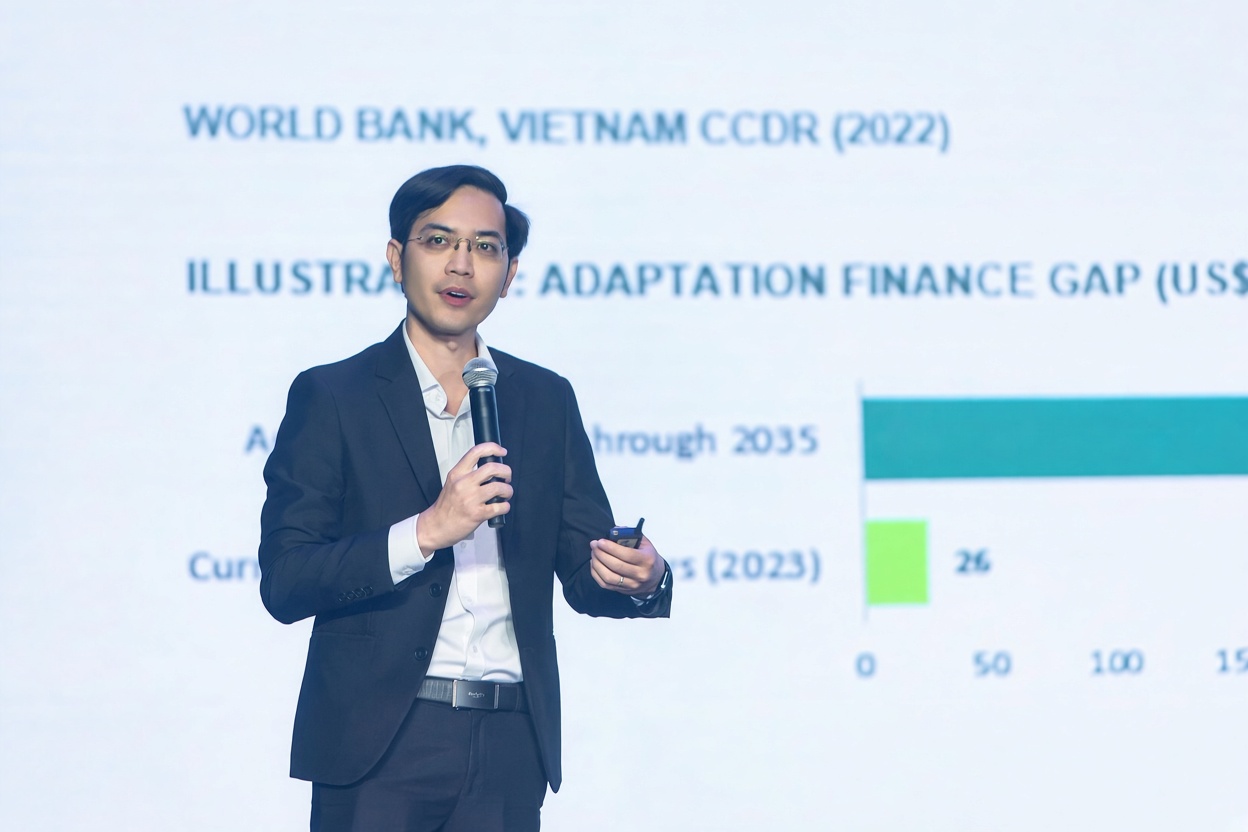
Associate Professor, Dr. Nguyen Huu Huan, Vice Chairman of the Executive Agency of the Vietnam International Financial Center in Ho Chi Minh City (VIFC-HCMC), introduced VIFC to the delegates.
The event came at a critical time for Vietnam to realize its sustainable development goals. Total investment needed to achieve green growth and net-zero emissions by 2050 is estimated at approximately 670-700 billion USD, far exceeding the capacity of the state budget and requiring strong mobilization of private and international capital.
The conference gathered over 200 delegates from government agencies, international financial institutions, development banks, investment funds, and enterprises. Discussions revealed a key reality: while capital demand is enormous, the biggest bottleneck lies not in the scarcity of funds, but in the quality and absorptive capacity of projects. Many domestic projects are not designed or packaged to meet the stringent standards of international investors, and Vietnam lacks long-term financial instruments such as infrastructure bonds and project bonds.
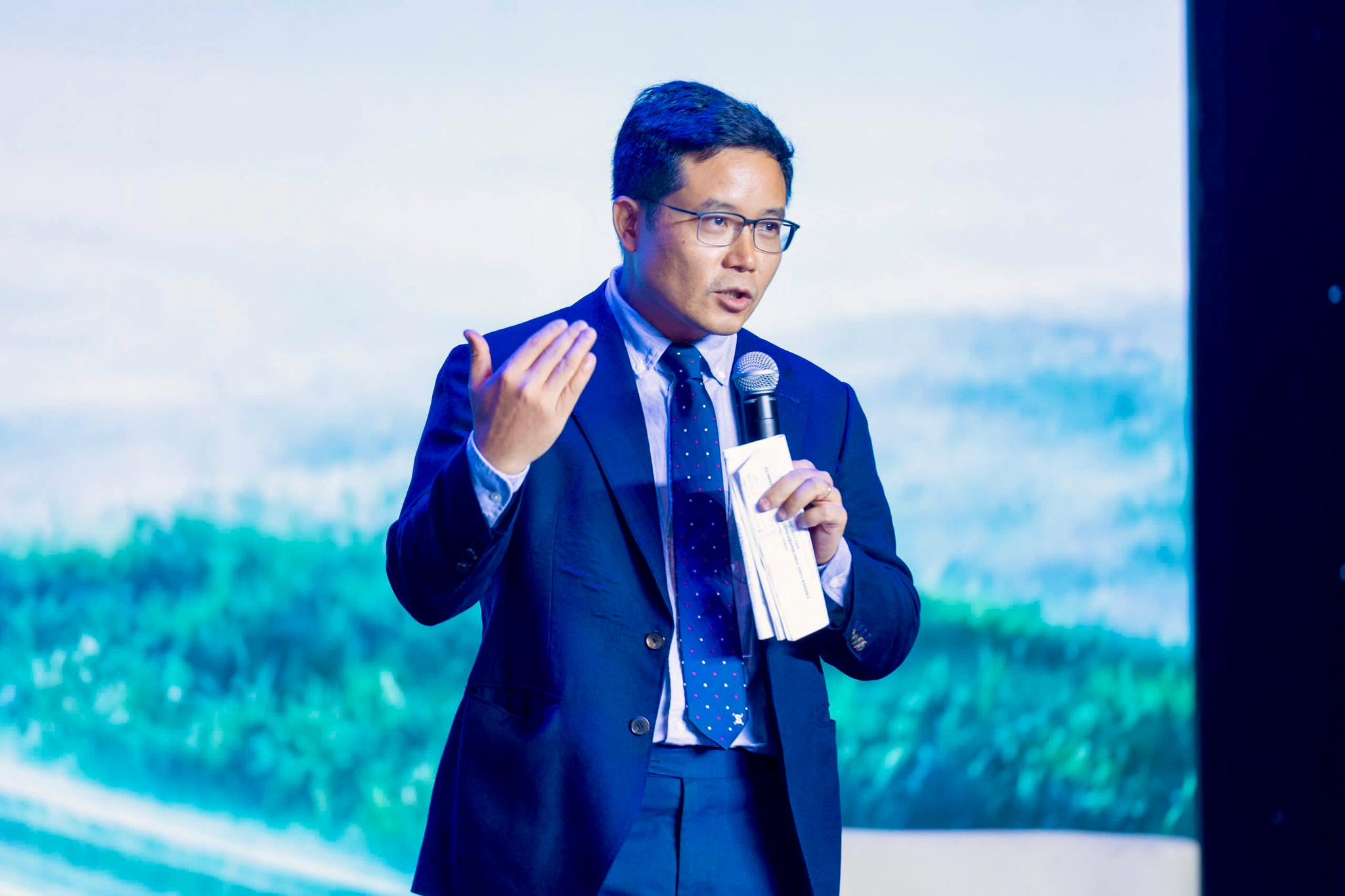
Mr. Nguyen Quang Thuan, Chairman of FiinGroup, presented at the conference.
Despite the enormous capital demand, the biggest bottleneck lies not in the scarcity of funds, but in the quality of projects. As Mr. Paul Xavier, expert from the International Finance Corporation (IFC), and Mr. Nguyen Quang Thuan, Chairman of FiinGroup, pointed out, many domestic projects have not been designed and packaged to meet the stringent standards of foreign investors. Projects need to demonstrate solid economic and financial efficiency and stable cash flows before being labeled "green."
Another barrier is that Vietnam lacks long-term financial instruments such as infrastructure bonds and project bonds to turn viable ideas into investable assets that investors can hold.
VIFC-HCMC: The "Key" to Connecting Green Capital
Given these challenges, the Ho Chi Minh City International Financial Center (VIFC-HCMC) is expected to play a pivotal role. VIFC-HCMC's vision is to become a leading green and transition finance hub in Southeast Asia for emerging markets by 2030. To achieve this, the center will focus on establishing a "one-stop-shop" mechanism for green projects, building a pipeline of globally accredited green projects, and issuing a "Green Rulebook" expected by the end of 2026.
A specific initiative is the "Green Supply Chain Finance" model, developed by Nam A Bank, FiinGroup, IFC, and SECO, which will be integrated into the VIFC ecosystem. This model uses transactional data and supply chain cash flow rather than physical collateral, helping small and medium enterprises (which account for 98% of Vietnamese businesses) access capital more easily.
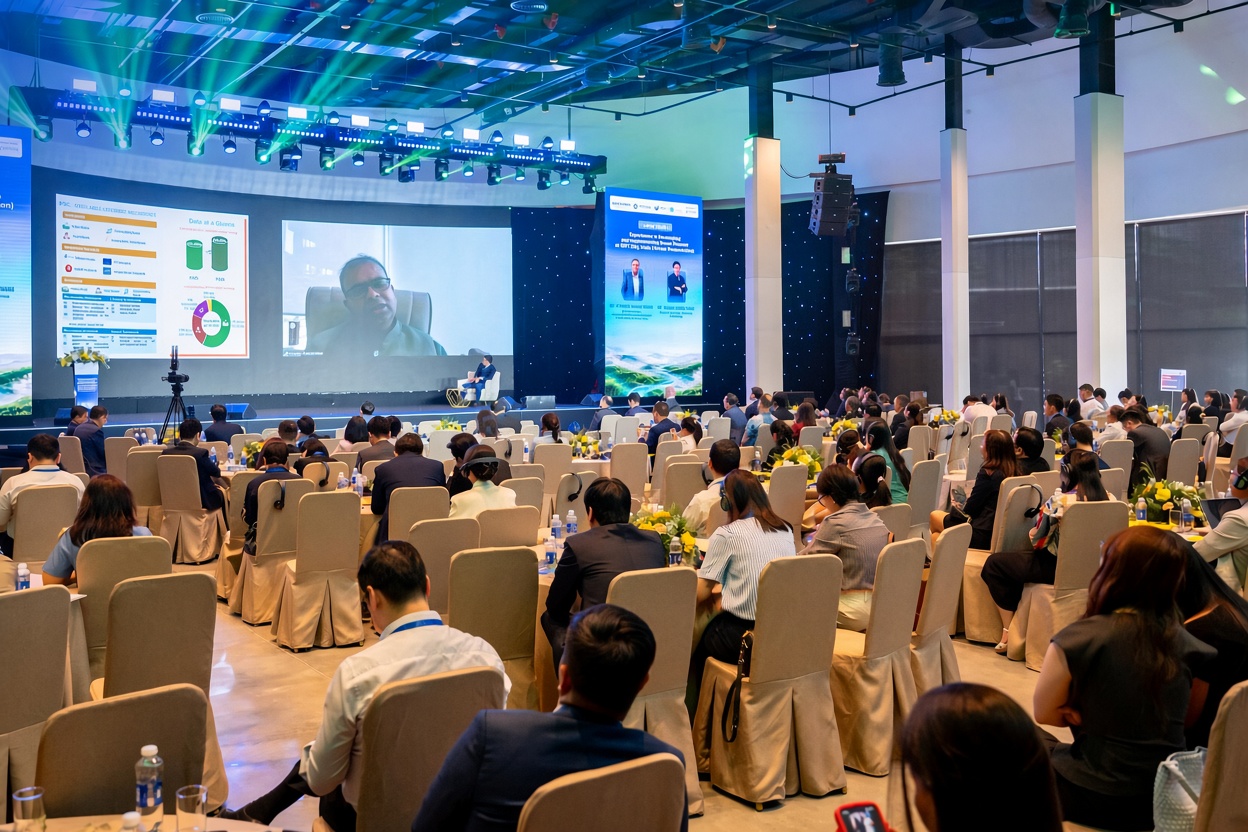
Mr. Nguyen Quang Thuan, Chairman of FiinGroup, moderated an online discussion with Mr. Pradeep Ramakrishnan, Managing Director and CEO of the International Financial Services Centres Authority (IFSCA) of India.
Perspectives from GIFT City: Experience in Green and Transition Finance
A special highlight of the conference was the virtual presentation by Mr. Pradeep Ramakrishnan, Managing Director and CEO of the International Financial Services Centres Authority (IFSCA) of India, who heads the GIFT City International Financial Services Centre in Gujarat.
Content of Mr. Ramakrishnan's presentation at the forum:
He shared practical experiences in building a green finance ecosystem and transition finance models – not only financing fully "green" projects like renewable energy but also supporting hard-to-abate industries such as steel, cement, and chemicals in their transition to a low-carbon economy.
Key points from his presentation included:
Transition Finance Framework: IFSCA has established an Expert Committee on Climate Finance and published a report on the transition finance framework for GIFT IFSC. Rather than building a separate taxonomy, IFSCA accepts recognized global standards such as EU Taxonomy, ASEAN Taxonomy, ICMA, and Climate Bonds Standard to facilitate participation by international investors.
Diverse Financial Instruments: GIFT IFSC is developing financial products including transition bonds, sustainability-linked bonds (SLBs), green bonds, and blended finance models.
Scale of Capital Flows: Mr. Ramakrishnan revealed that nearly 70% of India's External Commercial Borrowings (ECBs) are currently routed through GIFT City, with total bond issuances at IFSC reaching nearly 70 billion USD – of which approximately 17 billion USD was raised through green bonds.
Future Direction: Beyond the bond market, IFSCA is promoting the development of the equity capital market at GIFT City, enabling Indian companies to list in foreign currency and attract global capital.
Analysis from VAHC: Has GIFT City Financed Hydrogen Projects in India?
Financing has been provided:
At GIFT City, financing mechanisms for green hydrogen have been established and are being implemented:
Establishment of a Specialized Subsidiary: IREDA (Indian Renewable Energy Development Agency) has established its subsidiary, IREDA Global Green Energy Finance IFSC Limited, at GIFT City, licensed by IFSCA as a finance company in September 2024. This company focuses on providing foreign currency loans for renewable energy, green hydrogen, and clean energy equipment manufacturing projects.
Cost Advantage: The main objective of foreign currency lending is to help project developers save on hedging costs, estimated at approximately 250-350 basis points. This makes Indian green hydrogen projects more competitive in the global market.
First Project: IREDA has financed the first green ammonia project, marking its entry into the green hydrogen sector.
Support for Hydrogen Exporters: Through its subsidiary at GIFT City, IREDA will facilitate export-oriented green hydrogen producers in accessing foreign currency loans.
Ongoing negotiations and expansion plans:
In February 2026, IFSCA organized a high-level roundtable at GIFT City with the Ministry of New and Renewable Energy (MNRE) on "Mobilizing International Capital for India's 500 GW Renewable Energy Target." At this meeting, IREDA leadership presented plans to expand into emerging sectors including green hydrogen, storage, electric vehicles, transmission, and offshore projects.
GIFT City has been actively financing green hydrogen projects in India, with specific financial mechanisms established through IREDA's subsidiary. The first step was the green ammonia project, and discussions are ongoing to expand the scale of financing. This is a model that VIFC-HCMC can learn from: rather than focusing only on traditional green finance, a flexible transition finance framework and tools to reduce the cost of capital for new technologies like hydrogen are needed.
Nam A Bank: Securing Green Capital at the Conference
During the conference, Nam A Bank signed a green credit agreement worth 20 million USD with the Swiss Investment Fund for Emerging Markets (SIFEM AG). This capital will be used to finance small and medium enterprises, women-owned enterprises, and projects in green transition, renewable energy, green transportation, and high-tech agriculture. Since the beginning of 2026, Nam A Bank has mobilized approximately 350 million USD from international financial institutions.
Conclusion
The Vietnam Green Finance Conference 2026 successfully connected stakeholders, identified key bottlenecks, and proposed concrete solutions. The participation of VIFC-HCMC with the strategic advisory role of FiinGroup, lessons from GIFT City on the transition finance model, and according to VAHC's analysis, the integration of hydrogen financing, along with the commitment from Nam A Bank, demonstrate a coordinated effort to turn green growth aspirations into reality. The race to mobilize capital for the energy transition, with green hydrogen as a key focus, has truly begun.
References:
-
IFSCA Expert Committee Report on Transition Finance (2024)
-
IREDA Press Release, "CMD Advocates for Innovative Financing to Bridge Green Hydrogen Cost Gap" (13/09/2024)
-
IFSCA Official LinkedIn, Round Table on Mobilizing Capital for India's 500 GW Renewable Energy (27/02/2026)
-
Economic Times, "70% of India's ECBs routed via GIFT City" (19/03/2026)
-
VietnamPlus, Vietnam News reports on VIFC-HCMC and green finance initiatives (2026)
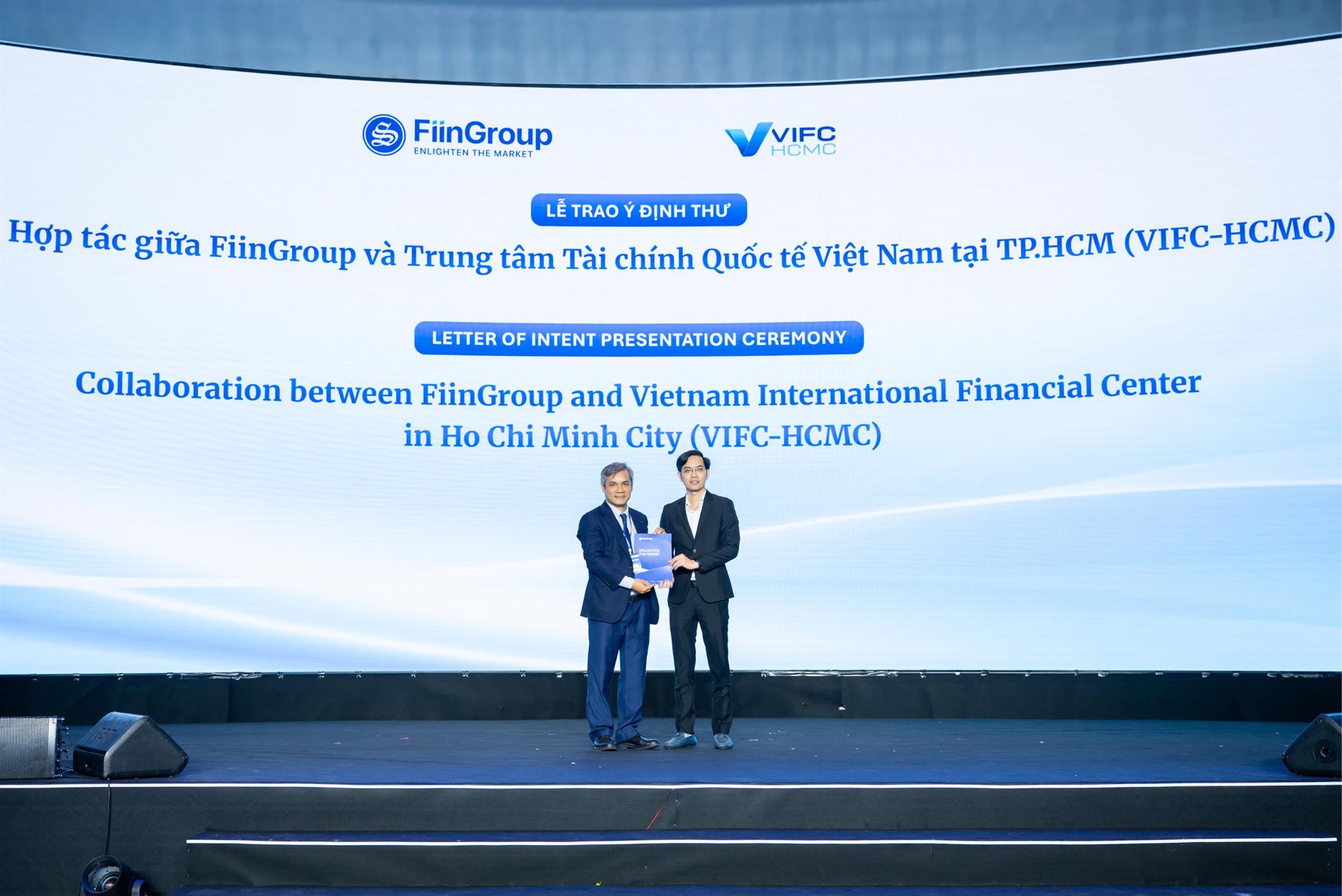
Mr. Nguyen Huu Hieu, General Director of FiinGroup, presented a Letter of Intent to Associate Professor, Dr. Nguyen Huu Huan, Vice Chairman of VIFC, expressing FiinGroup's intention to cooperate with VIFC.
India's Green Hydrogen Development Strategy
National Green Hydrogen Mission
India has launched the National Green Hydrogen Mission with an ambitious target: achieving 5 million tonnes of renewable hydrogen production annually by 2030, while capturing 10% of the global commercial market share by that time. This mission is implemented through the main support program called SIGHT (Strategic Interventions for Green Hydrogen Transition).
Domestic Demand Creation Tools
SECI (Solar Energy Corporation of India) is implementing large-scale domestic tenders to create stable demand for green hydrogen production:
Green Ammonia Tender: SECI has launched a program to procure 739,000 tonnes of green ammonia annually starting from 2024.
Green Methanol Tender: In May 2026, SECI opened a tender for 500,000 tonnes of green methanol per year under 10-year contracts. Methanol is produced from green hydrogen and captured CO₂, which SECI will then distribute to domestic industrial customers.
India's International Cooperation
1. Cooperation with Germany
India and Germany have established a strategic partnership in the hydrogen sector across multiple levels:
Framework Agreements: The two countries have signed the India-Germany Green Hydrogen Roadmap and cooperation agreements on technology and innovation. In January 2026, Prime Minister Modi and German Chancellor Friedrich Merz witnessed the signing of an agreement on integrating hydrogen into gas infrastructure and establishing an "India-Germany Center of Excellence" for renewable energy.
Joint H2Global Auction: The most significant step: India has agreed to hold a joint auction with Germany under the H2Global mechanism, allowing Indian producers to participate in a double-auction mechanism to supply hydrogen derivatives to the European market with guaranteed long-term contracts. Similar agreements are expected to be signed with the Netherlands and Japan.
2. Cooperation with Japan
Joint Declaration on Hydrogen/Ammonia Ecosystem: In August 2025, India and Japan signed a Joint Declaration to promote cooperation in research, investment, and project implementation in clean hydrogen and ammonia, including transportation and applications across various sectors. The two sides will establish a Hydrogen/Ammonia Task Force to report on progress.
Annual Summit: At the 16th summit (July 2026), the two countries reaffirmed support for the clean ammonia project in Odisha and expanded cooperation in green hydrogen, solar photovoltaic technology, and nuclear energy.
Actual Supply Agreements: In July 2026, ACME Cleantech signed agreements to supply over 400,000 tonnes of green ammonia per year to IHI Corporation and 100,000 tonnes of green methanol per year to Mitsubishi Gas Chemical over 10 years.
India's Hydrogen Train
On July 17, 2026, Prime Minister Narendra Modi officially inaugurated India's first hydrogen-powered train named "NaMo Green Rail" on the Jind-Sonipat route in Haryana.
Notable Technical Specifications:
-
10-car train, capacity of 2,600 passengers, operating 2 trips per day on a 90 km route.
-
Hydrogen fuel cell powertrain system with 1,200 kW capacity, described as the world's most powerful hydrogen train. Operating speed of 75 km/h, maximum design speed of 110 km/h.
-
Designed and manufactured entirely in India with a project cost of approximately 12 million USD.
-
The largest hydrogen storage and refueling station in the Indian railway sector was built at Jind, with a capacity of approximately 3,000 kg.
Statements by Prime Minister Modi:
Speaking at the inauguration ceremony, Prime Minister Modi emphasized:
"This is a very important day for India's self-reliance and sustainable development."
"Not only is it India's zero-emission hydrogen train, but it is also a highly successful example of the 'Make in India' initiative... In the near future, infrastructure related to hydrogen trains will be developed. New factories will be established to meet the needs of the hydrogen train network. In other words, this train will create many new employment opportunities for the youth of Haryana."
Vietnam-India Cooperation Opportunities
Vietnam and India have agreed to promote cooperation in renewable energy, biofuels, green hydrogen, energy storage systems, and new energy technologies, following the results of the State visit of General Secretary and President To Lam to India (May 5-7, 2026).
Specific Areas of Cooperation:
Exchange of Experience in Legal Framework Development: Vietnam can learn from India's model: competitive bidding mechanisms (SIGHT), domestic demand creation tools, and transition finance models like H2Global to attract investment.
Promoting Investment from Indian Corporations: During the visit, Minister of Industry and Trade Le Manh Hung worked with major Indian corporations. AMCE Group expressed interest in cooperating on renewable energy, green hydrogen, and green ammonia; the Essar Group was encouraged to study investment in green hydrogen, sustainable aviation fuel (SAF), and biofuels in Vietnam.
Cooperation in Specific Projects: Vietnam can consider cooperation with Indian developers in green hydrogen, ammonia, and methanol production for export or regional market supply.
Science and Technology Cooperation: Through channels such as the India-Germany "Center of Excellence," Vietnam can access training programs and technology transfer in electrolysis, fuel cells, and energy storage.
References:
-
Chemical Industry Digest (2026) – Joint India-Germany-Netherlands-Japan auction
-
Reuters (2026) – India's hydrogen train
-
News On AIR (2024, 2026) – India-Germany cooperation, ACME-Japan agreements
-
ThePrint (2026) – AM Green green ammonia project
-
WION (2026) – PM Modi's speech on hydrogen train
-
World Energy (2026) – Germany-India cooperation
-
S&P Global (2025) – India-Japan Joint Declaration
-
MoIT Vietnam (2026) – General Secretary To Lam's visit to India
-
FuelCellChina (2026) – Analysis of H2Global mechanism and methanol tender
-
Khaleej Times (2026) – Hydrogen train technical information
-
Asianet Newsable (2026) – MoU on integrating hydrogen into gas infrastructure
-
Saur Energy (2026) – India-Japan Summit