

Economic Analysis of Modern Airships for Freight and Passenger Transport in Vietnam's Major Cities and Trans-Vietnam Routes
July 24, 2026
Le Ngoc Anh Minh
The concept of using modern airships for freight and passenger transport in major urban centres and across Vietnam is gaining attention as the search for green logistics solutions intensifies. However, an objective assessment of economic viability requires analysis based on real technical specifications and costs, benchmarked against Vietnam's infrastructure and demand profile.
Technology and Operational Specifications
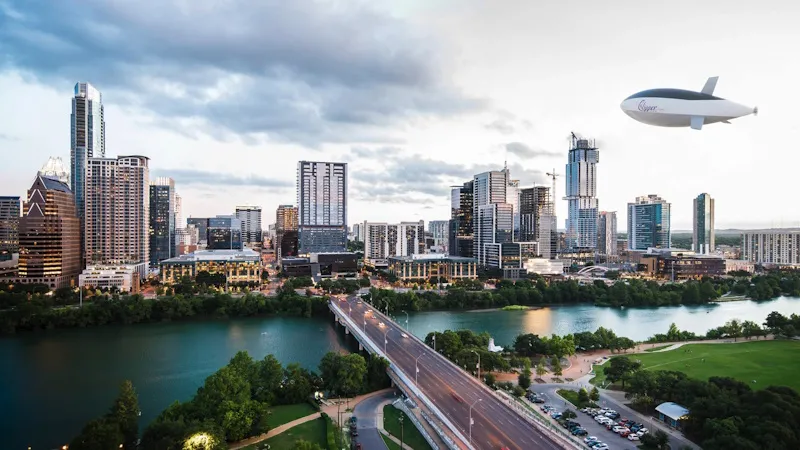
Next-generation transport airships, such as the H2 Clipper, are massive machines designed to address global logistics bottlenecks. A typical airship can achieve cruising speeds of approximately 280 km/h, a range of up to 9,650 km, and a payload capacity of up to 225 tonnes. The key differentiator from other transport modes is its Vertical Take-Off and Landing (VTOL) capability – requiring no runway – and its 100% carbon-free operation when using green hydrogen.
Cost and Economic Efficiency Analysis
Compared to existing transport modes, airships occupy a middle ground in terms of cost:
-
Vs. Road and Sea Freight: H2 Clipper's estimated transport cost is approximately $0.177–0.247 per tonne-mile. This is higher than maritime shipping, but offers speeds 7 to 10 times faster – a critical advantage for high-value or time-sensitive cargo.
-
Vs. Air Freight: This is where airships show their greatest strength. H2 Clipper's transport costs are 30% to 50% lower than current wide-body cargo aircraft, while carrying 4 times the payload. Hydrogen transport costs via airship could be as low as $1.37 per tonne over 800 miles (~1,287 km).
Vietnam's Context: Opportunities and Challenges
Vietnam is a promising market, but presents unique challenges.
Opportunities:
-
High Logistics Costs: Vietnam's logistics costs account for nearly 21% of GDP, higher than most ASEAN countries, indicating an urgent need for more efficient transport solutions.
-
Unique Geography: With a long, narrow terrain featuring mountainous regions and islands, airships can connect areas lacking road, rail, or airport infrastructure.
-
North-South Economic Corridor: The approximately 1,600 km trans-Vietnam route is a prime candidate where airships can leverage speed advantages over road transport and cost advantages over air freight.
Challenges:
-
Ground Infrastructure: Requires construction of dedicated take-off/landing stations with significant capital investment – particularly challenging in densely populated cities like Hanoi and Ho Chi Minh City.
-
Weather Factors: Airships are difficult to operate in severe weather conditions – a challenge in Vietnam's tropical monsoon climate with frequent typhoons.
-
Psychological and Safety Barriers: Despite significant technological advances, the historical legacy of the Hindenburg disaster remains a psychological barrier for passenger acceptance.
-
Regulatory Framework: Vietnam currently lacks a legal framework for this type of transport, requiring time for development and promulgation.
Conclusion: Viability in Specific Segments
Modern airship technology has clear economic potential, but is not a comprehensive replacement for all transport modes. In Vietnam, economic viability is most achievable when focused on specific segments:
-
High-value, time-sensitive cargo: Electronics, pharmaceuticals, fresh flowers, etc., between Hanoi and Ho Chi Minh City or to regional destinations, where speed and lower-than-airfreight costs are competitive advantages.
-
Industrial and energy project logistics: Transporting bulky equipment (wind turbines, heavy machinery) to remote areas lacking infrastructure.
-
Tourism and island connectivity: Premium passenger services or connecting major islands like Phú Quốc and Côn Đảo where airports are small or non-existent.
As of 2026, projects like H2 Clipper remain in development and testing phases. Application in Vietnam will require additional time for technology maturation and prerequisite conditions to be met. Nevertheless, this is a direction worthy of close attention from Vietnamese policymakers and logistics enterprises, especially as countries like Russia have already incorporated airships into their transport development strategies through 2035.