

WISDOM MOTOR PROPOSES HYDROGEN MOBILITY PILOT IN VIETNAM: FROM GREEN PORT MODEL TO ASEAN PRODUCTION HUB
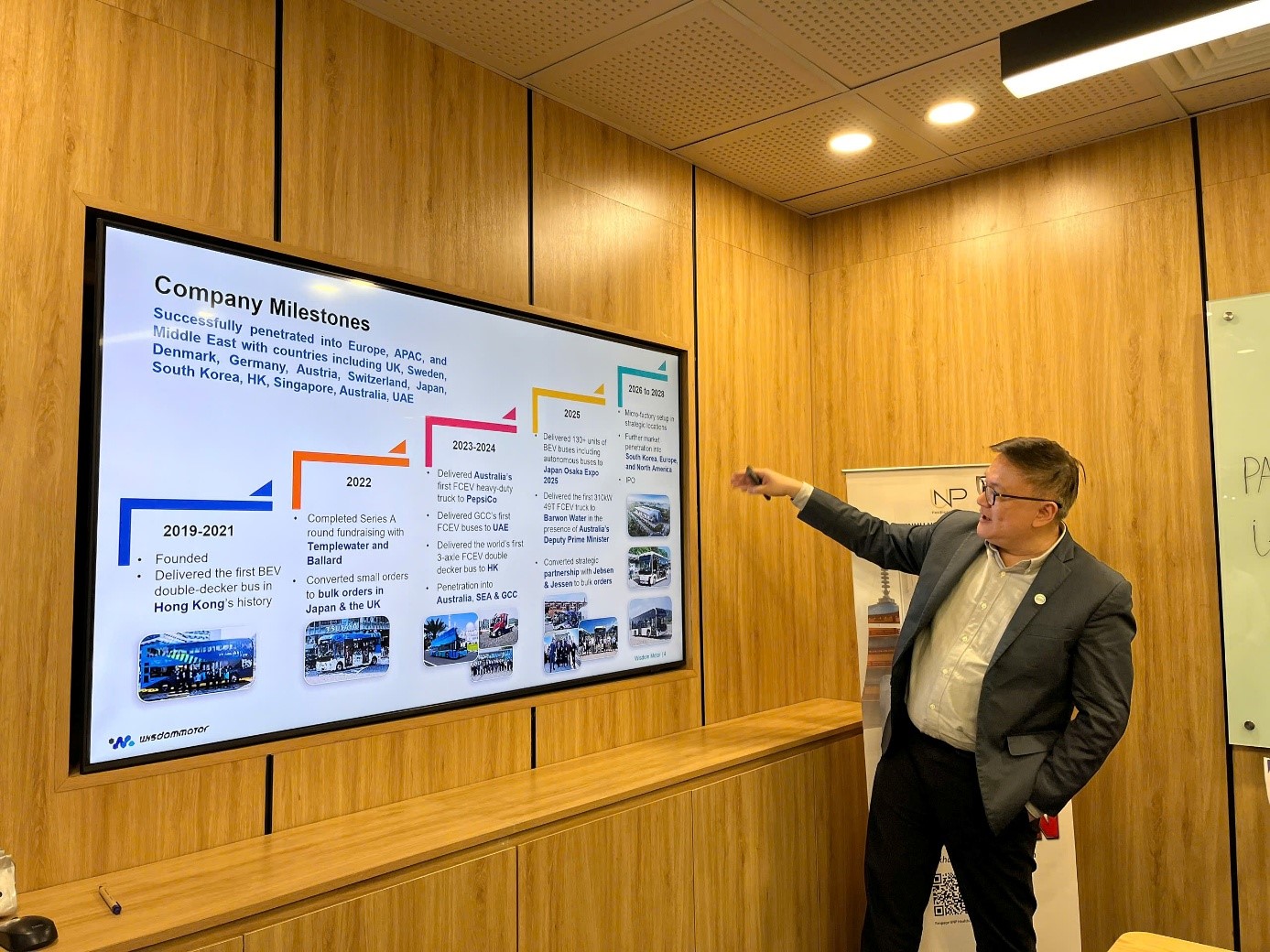
On February 5, 2026, at the seminar titled “Renewable Hydrogen and Circular Energy Solutions for Vietnam and ASEAN’s Green Mobility Future: The Real Thing”, held at Serepok Phan Chu Trinh Building (175 Phan Chu Trinh, Binh Thanh District, Ho Chi Minh City), Wisdom Motor Group presented a comprehensive strategy for deploying hydrogen-powered transportation in Vietnam.
The event was hosted by the Vietnam–ASEAN Hydrogen Club (VAHC) in collaboration with Wisdom Motor Group and UNP Healthcare Vietnam, bringing together policymakers, industry leaders, technology providers, and sustainability stakeholders.
In his presentation, Mr. Ivan Lim, Global Senior Director of Wisdom Motor Group, outlined a three-pillar strategy:
-
A hydrogen mobility pilot project in Vietnam,
-
Development of an integrated hydrogen ecosystem, and
-
Positioning Vietnam as a regional hydrogen hub for ASEAN.
1. Hydrogen Mobility Demonstration – Green Port Pilot
Wisdom Motor proposed launching a Hydrogen Mobility Demonstration Project, beginning with a Green Port Pilot model at a major Vietnamese port (with Phuoc An Port suggested as a potential location).
Key Objectives:
-
Evaluate the technical and operational feasibility of hydrogen fuel cell electric vehicles (FCEVs)
-
Deploy zero-emission fleets in real-world logistics environments
-
Generate operational data to inform policy and scaling strategies
Initial Scope:
-
Deployment of at least two FCEVs (hydrogen buses or heavy-duty trucks)
-
Operation within port areas and connected urban routes
-
A five-year implementation timeline including installation, operation, monitoring, and evaluation
The project is designed as a public–private partnership involving:
-
Technology providers (Wisdom Motor)
-
Local partners (import, assembly, maintenance)
-
Green finance institutions
-
Government authorities
-
Port operators
This structured pilot approach aims to reduce risk while building regulatory, operational, and financial readiness.
2. Integrated Hydrogen Ecosystem: From Waste to Mobility
A distinctive aspect of Wisdom Motor’s strategy is its ecosystem-based approach, focusing not only on vehicles but also on hydrogen supply infrastructure.
Two hydrogen production pathways were proposed:
(1) Hydrogen from Waste – Universal Pyrolysis
-
Feedstock: municipal solid waste, plastics, tires, biomass, and electronic waste
-
Oxygen-free thermal pyrolysis process
-
Syngas production followed by hydrogen separation
-
Solid-state hydrogen storage for enhanced safety (no need for high-pressure compression)
This model offers multiple benefits:
-
Addressing urban waste challenges
-
Producing localized clean energy
-
Reducing dependence on imported fuels
(2) Hydrogen from Renewable Energy
-
Wind, solar, and hydropower-based electricity
-
Containerized electrolyzer systems
-
Modular ammonia-to-hydrogen and methane-to-hydrogen units
Containerized systems allow flexible deployment, lower upfront infrastructure costs, and scalability for future expansion.
3. Implementation Roadmap (2026–2030)
Wisdom Motor outlined a phased development plan:
Phase I – 2026
-
Signing of Memorandum of Understanding (MoU)
-
Establishment of project management structure
-
Financial model finalization
-
Procurement agreements
-
Vehicle production initiation
Phase II – 2027–2029
-
Delivery and commissioning of vehicles
-
Operational and maintenance training
-
Collection of real-world performance data
-
Pilot deployment aligned with major international milestones (including APEC 2027 in Vietnam)
Phase III – 2030
-
Project scaling
-
Expansion of fleet size
-
Completion of hydrogen supply ecosystem
-
Replication in additional ports and urban centers
4. Strategic Value for Vietnam
Wisdom Motor emphasized that this initiative extends beyond a transportation pilot—it represents a strategic industrial opportunity.
Environmental Impact
-
Reduction of CO₂ and local air pollutants in port areas
-
Contribution to Paris Agreement commitments
-
Establishment of a flagship green port model
Industrial Development
-
Technology transfer in FCEV systems
-
Local assembly and supply chain development
-
Potential export of hydrogen mobility solutions to ASEAN markets
Energy Security
-
Reduced fossil fuel imports
-
Strengthened domestic energy resilience
-
Development of a national green hydrogen industry
Financial Leverage
-
Mobilization of international green finance
-
Reduced public budget burden through PPP structures
-
Lower investment risk via phased pilot deployment
5. Long-Term Vision: Vietnam as ASEAN Hydrogen Gateway
According to the strategy presented:
-
By 2027: Successful implementation of at least two hydrogen pilot projects in Vietnam
-
By 2030: Creation of over 500,000 green jobs and USD 50 billion in economic value
-
By 2035: Deployment across 25+ provinces or ports, with more than 1,000 FCEVs in operation
Wisdom Motor envisions Vietnam not merely as a consumer market, but as a regional manufacturing and innovation hub for hydrogen mobility in ASEAN.
6. Strategic Message
Mr. Ivan Lim concluded with a clear message:
Hydrogen mobility is no longer experimental or futuristic. The technology is ready. What is required now is structured pilot implementation, public–private collaboration, and strong policy commitment.
The proposed port pilot serves as a controlled, high-impact entry point—a practical regulatory sandbox enabling Vietnam to accelerate toward zero-emission heavy transport while building industrial capacity.
Conclusion
The proposal presented by Wisdom Motor at the February 5, 2026 seminar goes beyond vehicle deployment. It outlines a comprehensive strategy integrating:
-
Circular energy systems
-
Domestic hydrogen production
-
Public–private cooperation
-
National industrial positioning
If executed effectively, this model could mark a pivotal step for Vietnam in entering the hydrogen mobility era while strengthening its strategic role within ASEAN’s emerging hydrogen economy.