
Vietnam's Opportunities to Export Green Hydrogen and Green Ammonia to Japan
VAHC Secretariat
July 14, 2026
Vietnam is at an opportunity to become a production and export hub for green hydrogen and green ammonia to Japan, while developing the domestic market through collaboration with Japanese partners and investors. This is the assessment of the Vietnam - ASEAN Hydrogen Club (VAHC) based on competitive advantages and clean energy cooperation trends between the two countries.
Japan – A Pioneer with Enormous Hydrogen and Ammonia Demand
Japan was the first country in the world to issue a national Hydrogen Strategy (in 2017). The strategy aims for the 3E+S goals: energy security, environmental sustainability, economic efficiency, and safety. Notably, Japan has identified energy security as an urgent challenge, as 94% of its energy supply depends on imported fossil fuels.
In its revised Hydrogen Strategy (June 2023), Japan set ambitious targets:
-
Increase hydrogen and ammonia supply to 3 million tonnes by 2030, 12 million tonnes by 2040, and 20 million tonnes by 2050
-
Reduce hydrogen supply cost from the current 100 JPY/Nm³ to 30 JPY/Nm³ by 2030 and 20 JPY/Nm³ by 2050
-
Attract over 15,000 billion JPY (approximately 107.5 billion USD) in investment into hydrogen and ammonia supply chains over the next 15 years
This opens significant opportunities for exporting countries, including Vietnam, as Tokyo must seek stable clean fuel supplies from abroad.
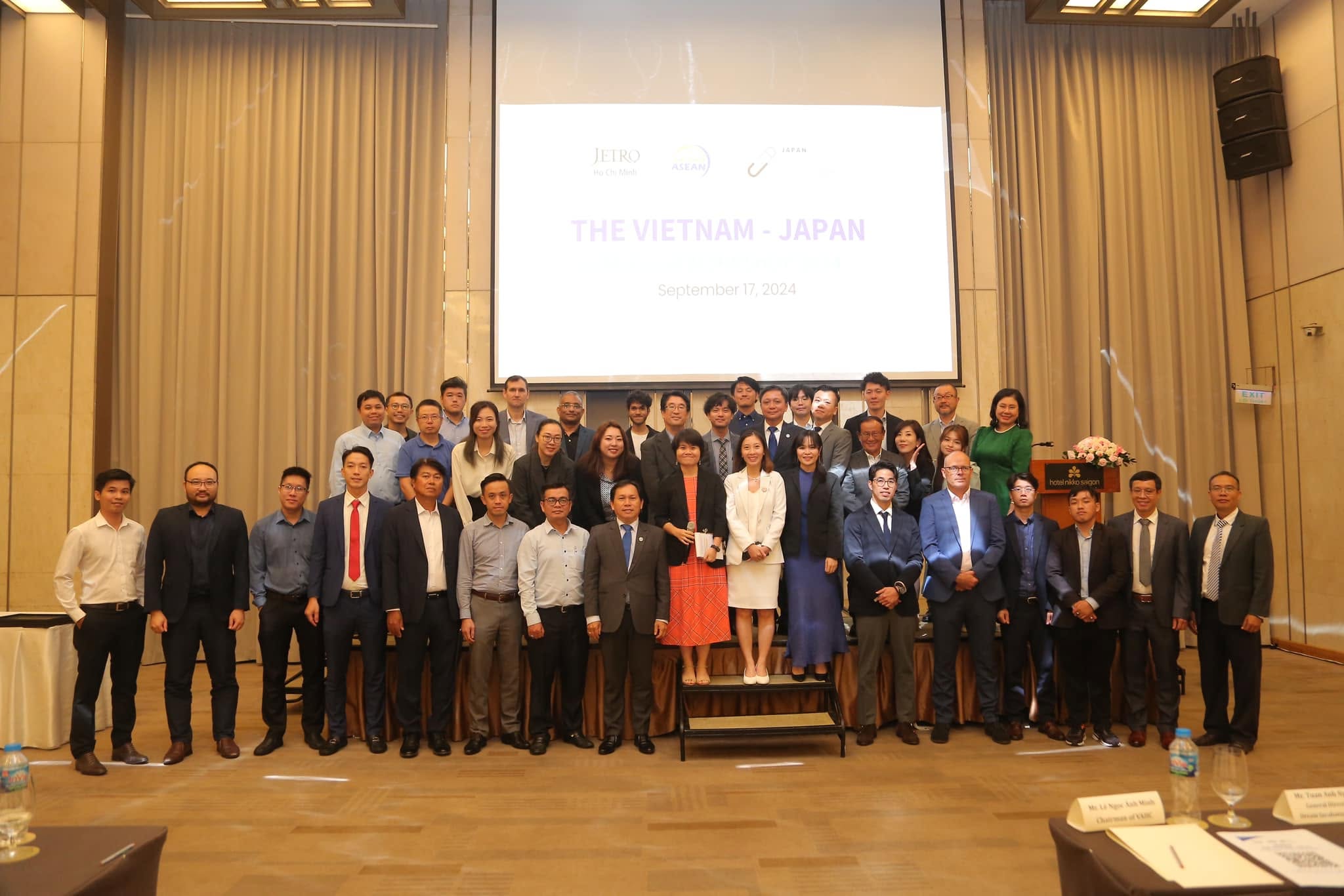
Vietnam Japan Hydrogen Workshop by VAHC, JETRO and JH2A in Sept, 2024
IEA Global Hydrogen Review 2025 Assessment of Vietnam's Hydrogen Potential
According to the Global Hydrogen Review 2025 by the International Energy Agency (IEA), for the first time the agency dedicates a separate chapter to assessing hydrogen potential in Southeast Asia. Vietnam, Indonesia, and Malaysia are identified as three "emerging stars" with the ability to shape the region's hydrogen market in the coming decade.
Domestic Hydrogen Demand
In 2024, hydrogen demand in Southeast Asia reached 4 million tonnes, accounting for almost 4% of global demand. Vietnam accounts for approximately 15% of regional demand, ranking third after Indonesia and Malaysia. Current demand is concentrated primarily in ammonia production (nearly half of demand), refining, and methanol production.
Vietnam's Competitive Advantages
According to IEA analysis, Vietnam possesses a rare combination of advantages to develop a hydrogen industry:
-
Abundant coastal renewable energy resources, particularly offshore wind and solar potential
-
Rapidly growing domestic hydrogen demand in the refining, fertilizer, and steel sectors
-
Favorable geographical position to export hydrogen, ammonia, or synthetic fuels to high-demand Northeast Asian markets such as Japan, South Korea, and Singapore
The IEA assesses that Vietnam has "sufficient potential to become a hydrogen production and transit hub for the Indochina Peninsula."
Notable Projects
The IEA notes that the Tra Vinh green hydrogen project is the only large-scale project in the region to have reached final investment decision (FID), with a capacity of 24,000 tonnes of renewable hydrogen per year to produce 182,000 tonnes of ammonia per year. Total announced low-emissions hydrogen project capacity in Southeast Asia by 2030 reaches approximately 480,000 tonnes per year, concentrated primarily in Indonesia and Malaysia.
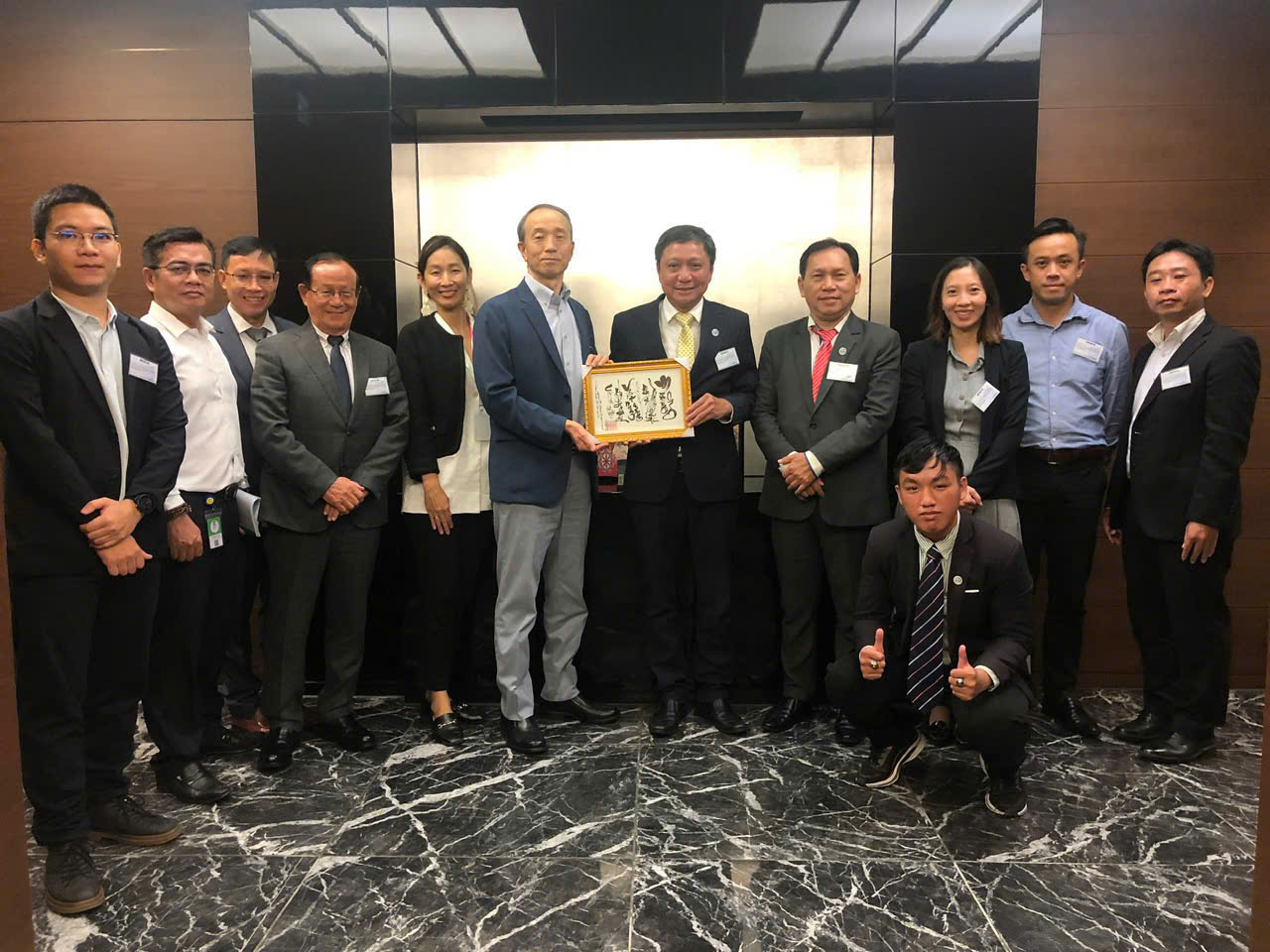
Official working session between VAHC and Consul General of Japan Masuo Ono at the Japanese Consulate General in Ho Chi Minh City.
Export Opportunities through AZEC and JCM Initiatives
AZEC (Asia Zero Emission Community): This is a Japanese government initiative proposed in 2022, aiming to simultaneously achieve decarbonization, economic growth, and energy security in Asia through diverse pathways tailored to each country's conditions. Under AZEC, Japan is promoting over 350 cooperation projects in partner countries, including Vietnam, in renewable energy, hydrogen and ammonia, and CCUS. AZEC Ministers have agreed that hydrogen and ammonia can play a significant role in decarbonizing thermal power generation, the transport sector, and hard-to-abate industries.
JCM (Joint Crediting Mechanism): This is a system between Japan and partner countries to disseminate advanced decarbonization technologies. Green hydrogen and ammonia projects in Vietnam could receive carbon credits through JCM, generating additional revenue and enhancing financial viability. Keidanren (Japan Business Federation) has recommended expanding JCM's scope to include technologies such as hydrogen, ammonia, synthetic fuels, and CCUS, while promoting rule standardization among AZEC countries to facilitate credit trading.
Specific Cooperation Projects and Prospects
Obayashi Corporation
Obayashi has been granted USD 10 million by NEDO (New Energy and Industrial Technology Development Organization) to implement a green hydrogen project in Tay Ninh. Obayashi has practical experience operating a green hydrogen chain from domestic production to successful trial transport from New Zealand to Fiji, and has plans for trial transport of hydrogen to Singapore and Japan. Mr. Rinkou Aki, Obayashi representative, stated that Vietnam can develop into a green hydrogen supply point if pilot projects are allowed to deploy quickly.
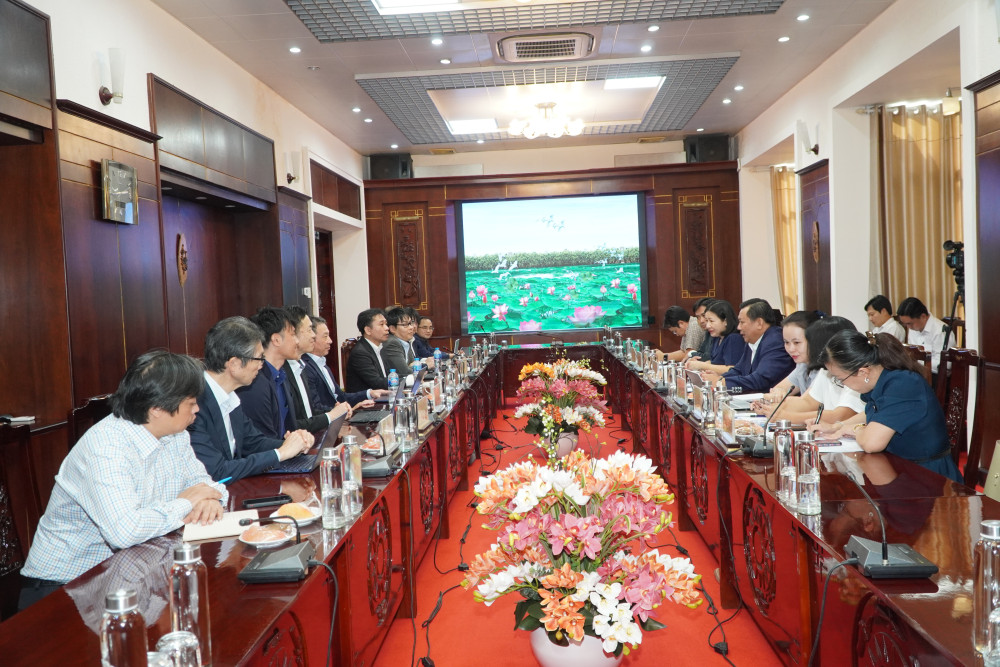
Leaders of Tay Ninh Province received a delegation from NEDO and Obayashi Corporation to discuss investment in a green hydrogen plant in Tay Ninh, 2025.
PetroVietnam Gas (PV Gas)
PV Gas is promoting green hydrogen and green ammonia production projects in Ba Ria - Vung Tau. JOGMEC and PetroVietnam have renewed their Memorandum of Understanding (MOU) to include hydrogen, ammonia, and CCS/CCUS, and signed a Joint Study Agreement (JSA) to promote projects.
Large-scale Projects from India – A Model for Vietnam
ACME Group has signed agreements to supply 405,000 tonnes/year of green ammonia to IHI Corporation and 100,000 tonnes/year of green methanol to Mitsubishi Gas Chemical from plants in Odisha, India. Mitsubishi Gas Chemical (MGC) signed a 10-year purchase agreement with ACME from the Paradip facility in Odisha. The product complies with EU RFNBO standards and future IMO regulations. VAHC assesses that this model can be replicated in Vietnam with similar projects.
Domestic Market Development
VAHC emphasizes a strategy of developing the domestic market alongside exports, through:
-
Partnership with JETRO, METI, JICA: These agencies support business matching, technology transfer, and research funding. The Japanese Consul General in HCMC has expressed support for VAHC activities and willingness to connect with Japanese government agencies.
-
Domestic value chain development: VAHC is promoting initiatives such as the green hydrogen-ammonia value chain and the ASEAN public-private cooperation network. Goals include promoting technology exchange, technical training, pilot projects, and attracting international investment.
-
Strategic positioning of localities: Ha Tinh province is actively calling for investment from Japan in new energy, hydrogen and ammonia sectors, leveraging the deep-water Vung Ang - Son Duong port and its position connecting the East-West economic corridor.
Conclusion and Recommendations
Vietnam needs to soon establish a legal and policy framework for hydrogen, including safety standards, investment incentives, and green finance mechanisms to attract private sector participation. Vietnam's Hydrogen Energy Development Strategy (Decision 165/QD-TTg) sets targets of producing 100,000 - 500,000 tonnes of hydrogen per year by 2030 and 10 - 20 million tonnes per year by 2050.
Mr. Le Ngoc Anh Minh, Chairman of VAHC, emphasized: "Vietnam has advantages in natural resources and logistics (already having a national hydrogen strategy, with hydrogen technology listed as a national strategic technology, and a carbon credit exchange already established) to become a regional hydrogen hub, but needs to 'move fast but steadily,' combining international cooperation with domestic technology localization. During the 2025-2035 period, the focus should be on attracting investment, technology transfer, and demonstration projects from Japan, South Korea, Germany, and Australia to rapidly build a domestic hydrogen value chain."
With a clear roadmap, strong international cooperation, and technology localization, VAHC believes Vietnam has the potential to become a leading green hydrogen nation in Southeast Asia.