

Vietnam – Japan Hydrogen Cooperation: Was Hydrogen Part of Prime Minister Sanae Takaichi’s Visit?
April 29, 2026 by VAHC Secretariat
Short answer
Hydrogen is relevant in Vietnam–Japan energy cooperation, but it was not a central standalone topic in Prime Minister Sanae Takaichi’s visit to Vietnam from May 1 to 3, 2026. Instead, it is embedded within a broader clean energy transition framework.
1. During the visit: energy was the focus, hydrogen was part of the “green package”
High-level discussions between Vietnam and Japan focused on:
- Green energy transition
- Energy security
- Clean energy development frameworks in Asia
Key priority areas included:
- Offshore wind power
- Liquefied natural gas as a transition fuel
- Carbon capture and storage technologies
- Ammonia and low-carbon fuels
Within this structure, hydrogen appears, but not as an independent headline topic.
Conclusion: hydrogen is present at the strategic level, but not highlighted separately in the visit agenda.
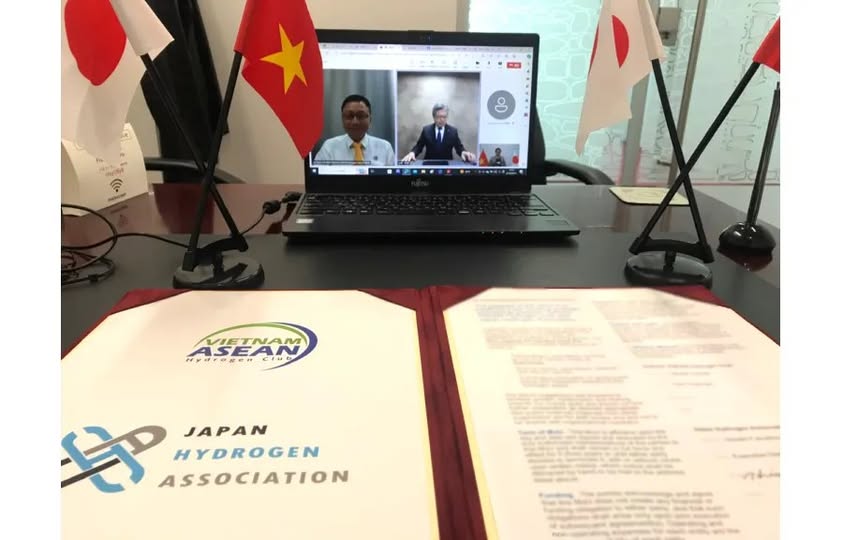
Vietnam ASEAN Hydrogen Club (VAHC) signed MoU with Japan Hydrogen Association (JH2A) on April 1, 2026
2. Hydrogen is already a real pillar of Vietnam–Japan cooperation
Although not emphasized at the political level, hydrogen cooperation is already active at implementation level:
- Vietnam actively seeks cooperation with Japan on:
- hydrogen technologies
- workforce training
- policy and regulatory frameworks
- Hydrogen is included in bilateral cooperation alongside:
- semiconductors
- environmental technologies
- renewable energy development
This shows:
- Hydrogen is no longer a conceptual topic
- It has entered the project development and industrial stage
- Cooperation is mainly driven by enterprises and pilot projects rather than diplomacy
3. Why hydrogen was not highlighted in the visit
There are three main reasons:
(1) Hydrogen is a deep infrastructure technology
- Requires projects, contracts, and long-term investment frameworks
- Not suitable for short political declarations
(2) Japan promotes an integrated energy package
Japan does not promote hydrogen alone, but as part of a system including:
- liquefied natural gas
- ammonia
- hydrogen
- carbon capture technologies
Hydrogen is one component in a larger energy system strategy.
(3) Vietnam prioritizes practical early-stage energy needs
- Electricity supply
- Energy security
- Gas and grid infrastructure
Hydrogen is positioned as a next-phase solution.
4. The real strategic role of hydrogen in Vietnam–Japan cooperation
Hydrogen is part of three long-term strategic objectives:
(1) Industrial decarbonization
- Green steel production
- Green ammonia
- Green chemical industries
(2) Long-duration energy storage
- Seasonal storage of renewable energy
- Stabilization of renewable-based power systems
(3) Global ammonia export chain
- Hydrogen is often converted into ammonia for transport efficiency
- Japan is expected to be a key importer
5. How Japan is positioning hydrogen in Vietnam
Japan plays three key roles:
(1) Long-term buyer
- Secures hydrogen and ammonia supply for its decarbonization targets
(2) Financier
- Japanese development banks and trading houses
- Long-term project financing structures
(3) Technology provider
- Ammonia combustion systems
- Electrolysis technologies
- Integrated hydrogen energy systems
As a result, Japan is involved across the entire value chain, not only as a buyer.
6. Vietnam’s position in the hydrogen value chain
Advantages:
- Strong renewable energy potential (wind and solar)
- Strategic geographic location near Japan, Korea, and Europe
- Existing oil and gas infrastructure
Limitations:
- No domestic hydrogen market yet
- Lack of carbon pricing mechanisms
- No clear national hydrogen aggregator
Vietnam currently functions mainly as:
a resource provider and project host rather than a system controller
7. Hydrogen strategy: green or blue?
Green hydrogen (from renewable electricity)
Advantages:
- Aligned with net-zero targets
- Attractive to international financing
- Suitable for export markets
Challenges:
- High production cost
- Dependence on renewable grid stability
- Lack of guaranteed buyers
Blue hydrogen (from natural gas with carbon capture)
Advantages:
- Lower cost
- Leverages existing gas infrastructure
- Faster deployment potential
Challenges:
- Carbon capture uncertainty
- Risk of long-term fossil fuel lock-in
Recommended strategy:
- 2025–2030: blue hydrogen + ammonia development
- 2030–2040: scaling green hydrogen for export markets
8. Typical large-scale hydrogen project model
A representative project includes:
- 1 GW electrolyzer capacity
- 2–3 GW renewable energy supply
- Ammonia production facility for export
Investment scale:
Approximately 4–6 billion USD
Production cost:
Around 3.5–5 USD per kg of hydrogen
Key requirement:
- Long-term offtake agreements
- International financing support
- Stable regulatory framework
Most importantly:
Hydrogen projects are not “build then sell” models, but:
“secure buyer first, then invest” structures
9. Conclusion
During Prime Minister Sanae Takaichi’s visit:
- Hydrogen was not a headline topic
- But it is embedded within broader clean energy cooperation
In Vietnam–Japan relations:
Hydrogen represents:
- A long-term energy transition component
- A key industrial decarbonization pathway
- A future cross-border energy trade system (especially via ammonia)
Strategic takeaway
Hydrogen is not just an energy topic.
It is:
a mechanism for restructuring global industrial and energy trade systems over the next 20–30 years
Within this structure:
- Japan: system design, finance, and market creation
- Vietnam: resources, land, and geographic positioning
- Global technology providers: engineering and execution
The key strategic question for Vietnam is not whether to develop hydrogen, but:
What role Vietnam wants to play in the emerging hydrogen value chain: system participant or raw resource supplier?