

VAHC submits hydrogen policy report to Ministry of Industry and Trade: Proposing roadmap and initiatives to position Vietnam as a top-tier hydrogen nation in ASEAN
Annie Nguyễn – 23/06/2026
On 23 June 2026, the Vietnam ASEAN Hydrogen Club (VAHC) officially submitted to the Ministry of Industry and Trade (Department of Oil and Coal) a policy report containing policy recommendations and initiatives aimed at positioning Vietnam as one of the leading countries in Southeast Asia for hydrogen society development.
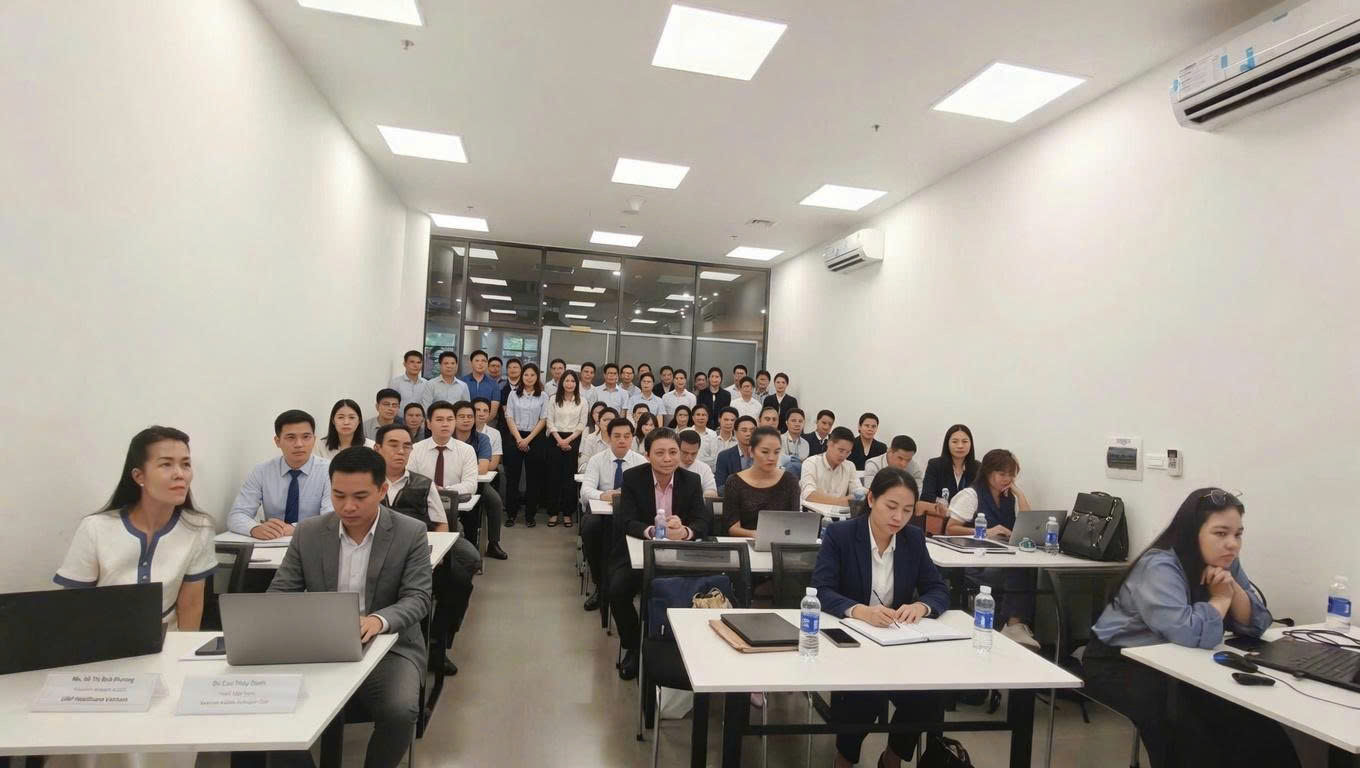
The report is built upon the outcomes of the Vietnam Hydrogen Legal and Regulatory Forum 2026, organised by VAHC on 29 May 2026, along with research and policy dialogues with domestic and international partners.
Legal Gaps – The Biggest Barrier to Vietnam's Hydrogen Industry
Although Vietnam has issued the Hydrogen Energy Development Strategy to 2030, with a vision to 2050 (Decision No. 165/QĐ-TTg) targeting 100,000–500,000 tonnes of green hydrogen per year by 2030 and 10–20 million tonnes by 2050, and has included green hydrogen production, storage, transport and distribution systems in the National Strategic Technology Products List (Decision No. 21/2026/QĐ-TTg), VAHC notes that the specialised legal framework for hydrogen is still in its formative stage.
According to the report, hydrogen projects in Vietnam are currently facing multiple challenges: the lack of a unified legal classification for hydrogen within the legal system; the absence of clear licensing and management mechanisms for hydrogen projects; the lack of specialised technical standards and regulations; and the absence of a clean/low-carbon hydrogen certification framework, as well as legal guidance for hydrogen/ammonia in import-export, logistics and carbon trading.
Notably, a survey of approximately 930 enterprises revealed that while about 58.5% of businesses consider hydrogen important or very important for the medium and long term, approximately 80% have not used hydrogen and 68% have no significant implementation activities. The three largest barriers identified include: cost, infrastructure and technology; policy and institutions (lack of a clear legal framework and standards); and social-market factors.
Proposed 3‑Phase Hydrogen Development Roadmap
Drawing on the experiences of frontrunner countries such as South Korea, Japan and China, VAHC proposes a three‑phase hydrogen development roadmap for Vietnam:
Phase 1 – Targeted Start‑up (2026‑2030): Complete the minimum legal framework and standards, including issuing a Framework Decree on hydrogen energy and the TCVN "H₂ core set" based on ISO/TC 197. Concurrently, implement 5‑10 "bankable" pilot projects in areas such as H₂‑diesel retrofitting, grey hydrogen replacement in industry, hydrogen refuelling stations, hydrogen therapy, and hydrogen in agriculture. Form 2‑3 hydrogen hubs linked to industrial and port clusters such as Cái Mép – Thị Vải, Dung Quất, and Nghi Sơn.
Phase 2 – Selective Expansion (2030‑2040): Develop a network of pipelines, storage facilities and hydrogen refuelling stations along corridors linking power, heavy industry and port logistics. Expand the number of hydrogen hubs to 5‑7. Master the domestic equipment supply chain, from electrolyser modules, refuelling station skids, composite cylinders, to a portion of fuel cell stacks.
Phase 3 – System Optimisation and Regional Integration (2040‑2050): Achieve an output of 10‑20 million tonnes of hydrogen per year. Diversify hydrogen pathways: green, blue, biomass/waste‑to‑hydrogen, and natural hydrogen. Gradually become a regional hydrogen/ammonia hub, exporting not only molecules but also equipment, services and standards.
Specific Recommendations to the Ministry of Industry and Trade
VAHC proposes five priority solution groups:
First, develop and issue a Framework Decree on hydrogen energy to establish a unified legal classification for hydrogen across three layers: hazardous, flammable industrial gas; hazardous chemical under GHS; and new energy carrier interconnected with electricity, gas and carbon markets.
Second, complete the TCVN "H₂ core set" based on ISO/TC 197 and the experiences of South Korea, Japan and China, ensuring technical safety and international compatibility, and providing a foundation for bankable hydrogen projects.
Third, establish a National Hydrogen and Low‑Carbon Fuels Coordination Committee to act as the "conductor" coordinating inter‑ministerial implementation of the Hydrogen Strategy and specific action programmes.
Fourth, develop a National Hydrogen Workforce Development Programme, in coordination with research institutes, universities and international partners, to train engineers, specialists and technicians to meet the needs of the emerging hydrogen industry.
Fifth, establish a National Hydrogen Project Bank to manage and track potential hydrogen projects, serving as a basis for capital mobilisation, international cooperation and advancing projects toward Final Investment Decision (FID).
Hydrogen – A Triple Opportunity for Vietnam
VAHC identifies hydrogen as a simultaneous strategic opportunity on three pillars for Vietnam: ensuring energy security and supporting the Net Zero 2050 target; maintaining and upgrading the competitiveness of existing industries, especially major emitting sectors (steel, fertilisers, refining‑petrochemicals); and gradually building export capacity for both hydrogen/ammonia products and related equipment, services and standards.
However, to turn strategy into tangible results, Vietnam needs to act swiftly, as regional countries including Indonesia, Malaysia, Thailand and Singapore are actively implementing hydrogen strategies and projects. This is a crucial window for Vietnam to assert a pioneering position in the region.
VAHC is committed to continuing its role as a bridge and partner alongside the Ministry of Industry and Trade and relevant stakeholders in realising Vietnam's sustainable hydrogen development goals.
You can receive this report by sending request to contact@vahc.com.vn
Source: Report from the Vietnam Hydrogen Legal and Regulatory Forum 2026 – Vietnam ASEAN Hydrogen Club (VAHC), 29 May 2026; VAHC; PCGroup; United Hydrogen, UNIHYS; forum documents and presentations.