

THE WORLD'S "HYDROGEN ARTERIES" ARE TAKING SHAPE
Le Ngoc Anh Minh - September 6, 2026
From Fukushima–Fukuoka, Java, China to Vietnam's borders and Europe: The race to build hydrogen transport infrastructure has begun.
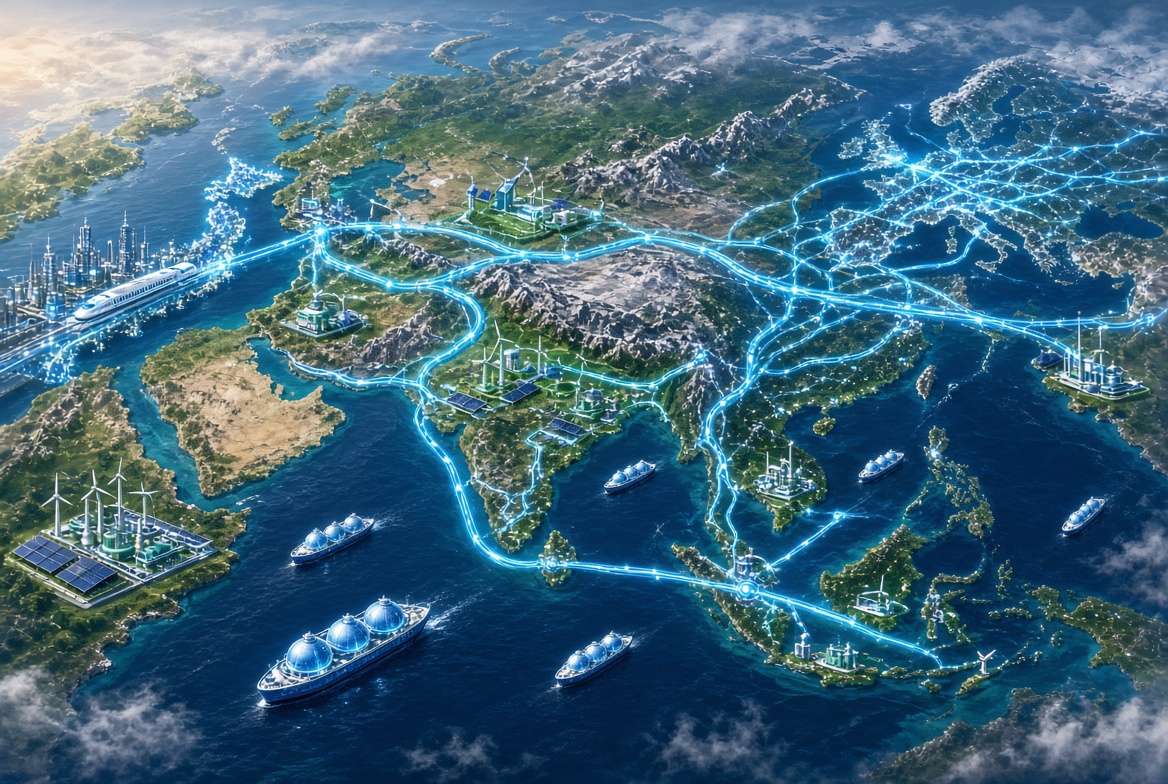
For many years, the big question for the hydrogen industry was: How can we produce hydrogen at a competitive cost? But now, another question is becoming equally important: How do we deploy hydrogen for long-haul transport at scale, with real trucks, real cargo, real refuelling stations, and stable commercial demand? The answers are gradually emerging in many countries:
BUILDING "HYDROGEN CORRIDORS" – THE HYDROGEN ARTERIES OF THE NEW ECONOMY.
From Japan, South Korea, China, India, Indonesia to Germany and Europe, hydrogen mobility is shifting from isolated demonstration projects to transport corridors designed as complete ecosystems. These are places where: Energy → Hydrogen → Storage → Refuelling Stations → Trucks → Logistics → Industry → Ports → Borders → International Trade are all connected. And this could be the critical transition that moves hydrogen from a "technology of the future" to the economic infrastructure of the present.
1. JAPAN: ESTABLISHING A "HYDROGEN ARTERY" FROM FUKUSHIMA TO FUKUOKA
Japan is leading the way in forming a long-haul hydrogen transport network. One notable initiative is the Hydrogen Main Corridor, connecting Fukushima in the Northeast to Fukuoka in the Southwest, passing through major economic centers like Tokyo, Nagoya, and Osaka. This corridor stretches approximately 1,300 km, with plans to deploy a large number of fuel-cell hydrogen trucks and a network of refuelling stations along the route.
What is remarkable is not just the length. Japan is attempting to simultaneously solve the three biggest challenges of hydrogen mobility:
-
No trucks → no demand for hydrogen.
-
No hydrogen → no reason to deploy trucks.
-
No stations → trucks cannot run long distances.
Therefore, instead of developing each component separately, Japan is building a hydrogen corridor ecosystem. This mindset is crucial: Don't build hydrogen stations first and then look for trucks; don't buy trucks first and then look for hydrogen. The entire ecosystem must be designed together. This is the thinking behind a "hydrogen artery."
2. SOUTH KOREA: TRANSFORMING THE HIGHWAY NETWORK INTO A HYDROGEN "BACKBONE"
If Japan is building a national hydrogen artery, South Korea is leveraging a different advantage: a modern highway network + a strong automotive industry + fuel-cell technology + a hydrogen station system. One of the most important transport axes is the Gyeongbu Expressway, the north-south highway connecting the Seoul area with Daejeon, Daegu, and Busan. This is also a strategic transport axis linking key centers: Seoul Metropolitan Area → Daejeon → Daegu → Busan, and onwards to industrial zones, logistics hubs, and seaports. South Korea is gradually integrating hydrogen stations into its existing transport network while promoting hydrogen for commercial vehicles. In particular, the focus is shifting strongly towards:
-
Heavy-duty trucks
-
Buses
-
Logistics vehicles
-
Commercial vehicles
-
Port transport
-
Long-haul transport
This is a significant shift. Hydrogen mobility cannot rely solely on passenger cars. Trucks that run daily, over long distances and with heavy loads, are what can create stable, large-scale hydrogen demand. South Korea is therefore shaping a very notable model: Automotive manufacturing, Fuel cells, Hydrogen, Highways, Refuelling stations, Commercial fleet, Logistics demand = Hydrogen Mobility Backbone.
3. CHINA: HYDROGEN CORRIDORS MOVING TO REAL-WORLD OPERATIONS
If Japan and South Korea are building the foundation, China is pushing deployment on a massive scale. In 2025, China put into operation an inter-provincial hydrogen corridor for heavy-duty trucks, connecting the region: Chongqing → Guizhou → Guangxi → Qinzhou Port, with a total length of about 1,150 km. The corridor connects industrial centers, logistics hubs, and seaports, while developing hydrogen stations along the route. The most important point: Hydrogen trucks have begun to be used in real-world long-haul logistics. This shows that China is moving hydrogen from a "demonstration project" to "commercial logistics infrastructure."
4. ESPECIALLY FOR VIETNAM: HYDROGEN TRUCKS HAVE ALREADY RUN FROM SOUTHWEST CHINA TO VIETNAM
This is perhaps the most strategically significant piece of information for Vietnam. In June 2026, a heavy-duty hydrogen fuel-cell truck departed from Neijiang, Sichuan, traveling through Southwest China's hydrogen transport network, passing through: Sichuan → Chongqing → Guizhou → Guangxi → Vietnam, completing a journey of approximately 1,250 km in about 50 hours, carrying computer components.
This has significance far beyond a test run. It proves that a hydrogen vehicle can complete a long-haul logistics journey from deep within China's interior to the border region and onwards into Vietnam. In other words: Hydrogen logistics has begun to reach ASEAN.
5. SOUTHWEST CHINA IS FORMING A HYDROGEN NETWORK
It's not just the Chongqing–Guizhou–Guangxi route. Southwest China is developing additional corridors connecting Guizhou–Yunnan–Kunming, serving industries and logistics with heavy transport needs such as: Steel, Coal, Ore, Construction materials, Industrial raw materials, Long-haul logistics. If you look at the map, a notable structure is emerging:
Sichuan → Chongqing → Guizhou → Guangxi → Vietnam
and another branch:
Yunnan → Guizhou → Kunming
This is not yet a complete "China–ASEAN hydrogen super-corridor." But the first links are forming. And Vietnam lies right at a strategic connection point.
6. INDIA: FROM PILOT PROJECTS TO A HYDROGEN HIGHWAY NETWORK
India is emerging as a particularly important hydrogen mobility market. Through its National Green Hydrogen Mission, India has begun deploying pilot hydrogen bus and truck projects on several real-world routes. Routes under study and deployment include axes like:
-
Delhi – Agra
-
Ahmedabad – Vadodara – Surat
-
Pune – Mumbai
-
Thiruvananthapuram – Kochi
and many other industrial and logistics routes. By July 29, 2026, the Indian government announced a new expansion with:
-
70 hydrogen vehicles, including: 43 trucks and 27 buses
-
Supported by: 16 hydrogen refuelling stations
-
On: 21 transport routes across multiple Indian states.
What is noteworthy is that India is not just testing one technology. Programs are examining both: Fuel Cell Electric Vehicles (FCEV) and Hydrogen Internal Combustion Engine (H₂-ICE). This is a practical approach. Instead of waiting for a single technology to mature, India is testing multiple solutions under its real-world transport conditions. With its enormous logistics market size, if hydrogen captures a significant share of India's heavy transport, hydrogen demand could rise dramatically.
7. INDONESIA: JAVA BEGINNING TO FORM A GREEN HYDROGEN CORRIDOR
In July 2026, Indonesia announced plans to develop a Green Hydrogen Corridor approximately 194 km long, connecting: Jakarta → Karawang → Patimban. This is a very significant route because it connects three hubs: Jakarta – the economic center and demand hub, Karawang – the industrial center, Patimban – the seaport and logistics hub. This is the ideal structure for a hydrogen corridor. Hydrogen is produced and supplied for: industry, transport, logistics, seaports, rather than being developed as an independent energy project. Indonesia is showing a different direction: It is not necessary to build a trans-national hydrogen highway from the start. One can begin with an industrial-logistics corridor with real demand, then expand it into a network.
8. GERMANY AND EUROPE: THE ENTIRE ECOSYSTEM MOVING TOWARDS 2030
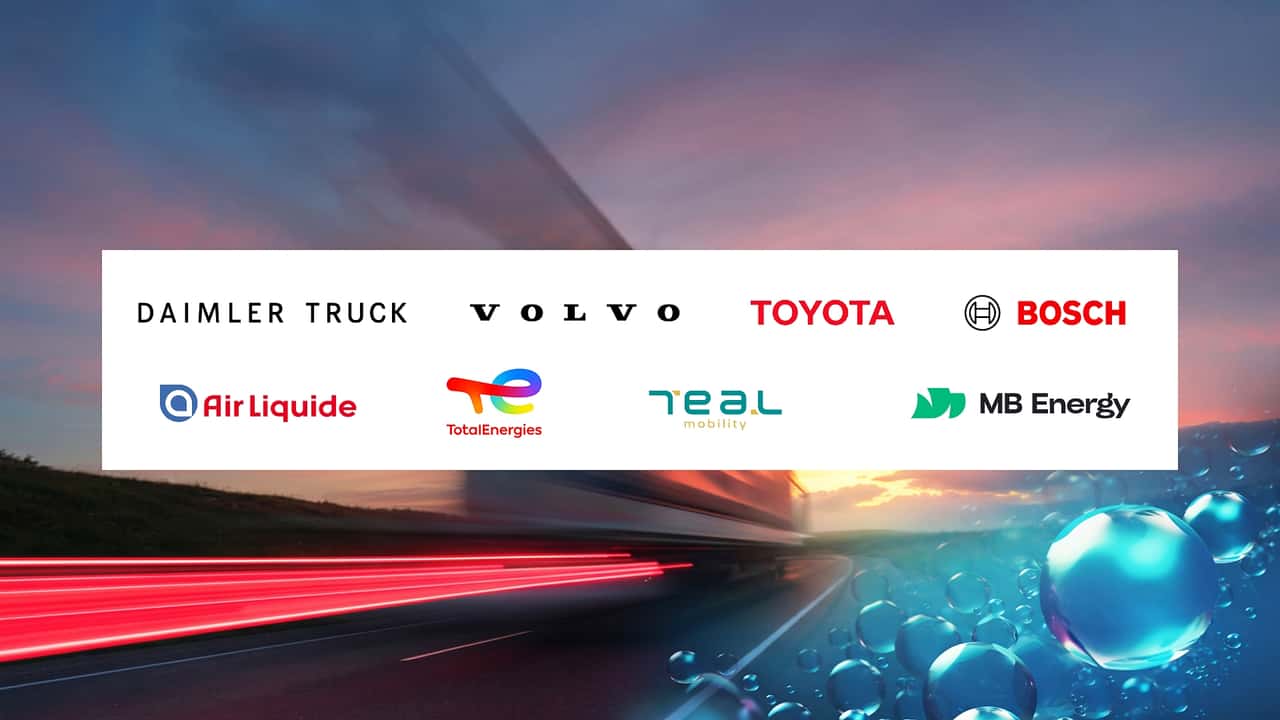
A new dynamic is emerging in Europe. In Germany, many major corporations across the hydrogen mobility value chain are collaborating to accelerate hydrogen trucks and refuelling networks towards 2030. The prominent group of companies includes: Daimler Truck, Volvo, Toyota, Bosch, Air Liquide, TotalEnergies, Teal Mobility, MB Energy. The most important point is not the individual company names. The key point is: THIS TIME, THE ENTIRE VALUE CHAIN IS BEING CONNECTED: Vehicle manufacturers, Fuel-cell technology, Hydrogen suppliers, Energy companies, Refuelling stations, Infrastructure, Logistics are all working together towards a scalable hydrogen transport ecosystem. This is a massive shift. It is no longer just asking: "Can hydrogen trucks work?" But rather: "How can thousands of hydrogen trucks run every day on real logistics routes with real demand?" That is the question of a commercial market.
9. SIX MARKETS – ONE TREND
If you place the initiatives side-by-side, the picture becomes very clear.
JAPAN – Fukushima → Tokyo → Nagoya → Osaka → Fukuoka: A hydrogen main artery across Japan.
SOUTH KOREA – Seoul → Daejeon → Daegu → Busan: A hydrogen mobility backbone based on the highway network and industrial centers.
CHINA – Sichuan → Chongqing → Guizhou → Guangxi → Vietnam: A long-haul hydrogen logistics route already operating across borders.
INDIA – Delhi–Agra, Ahmedabad–Surat, Pune–Mumbai, Kerala and many other routes: An expanding network of hydrogen truck/bus pilots.
INDONESIA – Jakarta → Karawang → Patimban: A green hydrogen corridor connecting economy, industry, and seaports.
GERMANY / EUROPE – Truck manufacturers + Hydrogen suppliers + Energy companies + Refuelling infrastructure: A hydrogen mobility ecosystem being assembled for 2030.
10. THE HYDROGEN CORRIDOR COULD BE THE ECONOMIC MODEL OF THE NEXT GENERATION
In the early stages, the hydrogen industry asked: How much hydrogen can we produce? Then: What is the cost of hydrogen? But now, a more important question is becoming: "HOW MUCH STABLE HYDROGEN TRANSPORT DEMAND CAN WE CREATE?" For example: 500 hydrogen trucks running on fixed routes, carrying real cargo, refuelling at designated stations, using hydrogen from contracted suppliers, serving factories and ports. That is a HYDROGEN DEMAND ANCHOR. Such a demand anchor can create an investment basis for: Hydrogen plants, Renewable electricity, Storage systems, Hydrogen stations, Trucks, Logistics fleets, Industrial customers. At that point, hydrogen begins to become an investment infrastructure with a defined demand flow.
11. AND THIS IS VIETNAM'S STRATEGIC OPPORTUNITY
Vietnam is in a unique position.
-
To the North: China, with its developing hydrogen corridors from Sichuan–Chongqing–Guizhou–Guangxi, which have already established a real connection to Vietnam.
-
To the East: Japan and South Korea, with very strong capabilities in: hydrogen vehicles, fuel cells, equipment, technology, and the automotive industry.
-
To the West: India, which is expanding hydrogen mobility on its national transport routes.
-
To the South: Indonesia and ASEAN, which are developing hydrogen corridors linked to industry, seaports, and logistics.
Meanwhile, Vietnam possesses: seaports, industrial zones, manufacturing centers, strong logistics demand, long-haul freight transport, significant renewable energy potential, and a strategic location connecting CHINA – VIETNAM – ASEAN.
12. WHERE COULD VIETNAM START?
Several corridors could be studied based on the hydrogen logistics corridor model.
-
NORTHERN ROUTE: Lang Son → Hanoi → Hai Phong. Connecting: border gate → logistics → industry → seaport. Or: Lao Cai → Hanoi → Hai Phong, linked to China–Vietnam trade routes.
-
SOUTHERN ROUTE: HCMC → Binh Duong → Dong Nai → Ba Ria – Vung Tau. Connecting: manufacturing → industry → logistics → seaport → hydrogen.
-
LONG-TERM: Hanoi → Central Vietnam → HCMC could be studied as a North–South Hydrogen Highway for heavy transport.
It is not necessary to start with thousands of vehicles. One could begin with: 1 corridor, 1 group of logistics customers, 1 hydrogen source, a few refuelling stations, a small hydrogen truck fleet, and then expand.
13. THE HYDROGEN RACE IS NO LONGER JUST ABOUT BUILDING PLANTS
In the next phase, the competitive advantage may belong to the country that builds the most effective hydrogen transport ecosystem. A successful hydrogen corridor needs: Hydrogen supply, Competitive energy, Refuelling stations, Vehicles, Cargo demand, Logistics operators, Industrial customers, Seaports, Border connections. When everything works together, hydrogen is no longer just a fuel. Hydrogen becomes infrastructure, and infrastructure creates markets.
14. THE WORLD IS DRAWING THE HYDROGEN MAP – VIETNAM SHOULD NOT STAND OUTSIDE
From: Fukushima → Fukuoka to Jakarta → Patimban, from Sichuan → Chongqing → Guizhou → Guangxi → Vietnam to Seoul → Busan, and from Delhi → Agra to Germany → the European network, a new model is emerging. The Hydrogen Economy might not start with a giant project. It might begin with ONE ROAD. A road that connects:
Energy → Hydrogen → Refuelling Stations → Trucks → Cargo → Industry → Ports → Borders → International Markets.
That is when hydrogen transforms from an energy technology into:
A NEW "ECONOMIC ARTERY."
And for Vietnam, the most important question is perhaps no longer: "When will hydrogen trucks arrive in Vietnam?" Because one truck has already made the journey from Southwest China into Vietnam. The bigger question is: "WHEN WILL VIETNAM BUILD ITS FIRST HYDROGEN LOGISTICS CORRIDOR – AND CONNECT IT TO CHINA, ASEAN, AND THE GLOBAL HYDROGEN ECONOMY?"
The race has begun. Routes are being formed. Hydrogen stations are appearing. Hydrogen vehicles are starting to run long distances. And the first "hydrogen arteries" of the future economy are slowly being linked together.