
STRATEGIC ANALYSIS: CAI MEP HA LOGISTICS CENTER AND THE POTENTIAL INTEGRATION OF GREEN HYDROGEN AND AMMONIA INFRASTRUCTURE
VAHC Secretariat | April 25, 2026
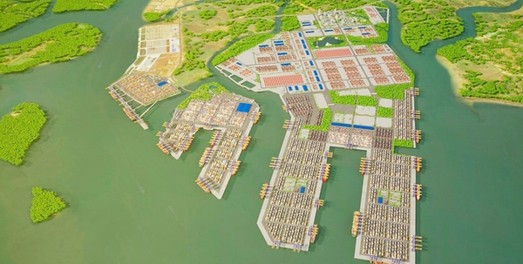
The Cai Mep Ha Logistics Center is being positioned as a key expansion component of the Cai Mep – Thi Vai deep-sea port complex in Ba Ria – Vung Tau (now part of the expanded Ho Chi Minh City metropolitan region). This area is one of the most strategically important logistics hubs in Vietnam and among the leading deep-water port clusters in ASEAN.
In the context of the global energy transition, the integration of green hydrogen and ammonia into port and logistics infrastructure is no longer experimental but is becoming a core design principle for next-generation logistics systems.
1. Project scale, planning status, and investment structure
Based on current planning and investment proposals:
- The Cai Mep Ha logistics zone is planned at approximately 1,600–1,700 hectares, integrated within the broader Cai Mep – Thi Vai port expansion framework
- Total investment for port and logistics infrastructure in the initial phases is estimated at around VND 50 trillion (approximately USD 2 billion)
- The project is being implemented in phases, with infrastructure development continuing toward post-2030 completion timelines
- Phase 1 focuses on foundational infrastructure, logistics yards, port connectivity, and transport systems
In terms of investors, the project follows an open consortium-based structure involving:
- Domestic state-linked and private entities participating in infrastructure development components (including SCIC, Geleximco, ITC in related FTZ-linked proposals)
- Domestic logistics and industrial infrastructure developers
- Future participation of international investors in operational and expansion phases
The investment structure is designed to align with an integrated port–logistics–free trade zone development model.
2. Functional zoning of the Cai Mep Ha logistics center
The Cai Mep Ha project is not designed as a conventional container yard expansion but as a multi-functional integrated logistics system:
(1) International container logistics zone
- Long-haul transshipment and container handling for Europe, the US, and intra-Asia routes
- Direct integration with the Cai Mep – Thi Vai deep-sea port system
- Container logistics services, ICDs, warehousing, and distribution centers
(2) Industrial and energy logistics zone
- Serving industrial clusters in Ba Ria – Vung Tau, Dong Nai, and Ho Chi Minh City
- Integrated supply chains for oil and gas, chemicals, and heavy industry
- Potential role as a regional energy logistics hub
(3) Free Trade Zone (Cai Mep Ha FTZ)
- Duty-free and customs-optimized trade zone
- Attracting FDI in logistics, manufacturing, and high-value industrial services
- A regulatory sandbox for trade in goods and emerging energy commodities
(4) Future energy logistics zone (strategic direction)
- Infrastructure for green ammonia import and handling
- Hydrogen production based on renewable energy (electrolysis)
- Storage and distribution systems for hydrogen and ammonia serving industry and transport
3. Strategic advantages of Cai Mep Ha
Compared to other logistics developments, Cai Mep Ha benefits from three structural advantages:
(1) Location within Vietnam’s largest deep-sea port cluster
- Cai Mep – Thi Vai is among the few ASEAN port systems capable of direct deep-sea shipping routes to Europe and the US
- It is already an established global container port cluster
- The system has high operational efficiency and international connectivity
(2) Direct linkage to Vietnam’s largest industrial region
- Ho Chi Minh City: financial, commercial, and logistics center
- Dong Nai: large-scale manufacturing and industrial production base
- Ba Ria – Vung Tau: oil & gas, energy, and heavy industry hub
This creates a fully integrated industrial–energy–consumption ecosystem, generating stable demand for logistics and clean energy.
(3) Mature logistics and port infrastructure ecosystem
- Existing international port operations are already in place
- Strong inland waterway and road connectivity
- Established logistics networks reduce greenfield development risk
4. Hydrogen and ammonia integration potential
Based on international benchmarks (Rotterdam, Hamburg, Antwerp, Kawasaki), hydrogen plays three key roles in modern port-logistics systems:
(1) Decarbonization of logistics operations
- Container cranes, RTG systems, and port handling equipment electrified or hydrogen-powered
- Internal port trucks and logistics vehicles powered by hydrogen or hybrid systems
- Tugboats and service vessels using hydrogen or ammonia fuels
(2) Hydrogen as a new logistics commodity
- Hydrogen becomes a tradable energy commodity
- Green ammonia acts as a carrier for hydrogen transportation and storage
- Ports evolve into energy import, conversion, and distribution hubs
(3) On-site hydrogen production integration
- Offshore wind energy in southern Vietnam
- Large-scale solar deployment in industrial and logistics zones
- Electrolysis-based hydrogen production facilities
- Integrated hydrogen storage and distribution within FTZ areas
5. Integration with FTZ Cai Mep Ha and Ho Chi Minh City IFC
Cai Mep Ha Free Trade Zone (FTZ)
- Under development as a large-scale special economic and trade zone
- Focused on logistics, manufacturing, and international trade facilitation
- Designed as a policy sandbox for trade and energy innovation
Ho Chi Minh City International Financial Center (IFC)
- Under institutional and legal development
- Aims to become a regional financial hub
- Potential to finance:
- logistics infrastructure
- hydrogen and ammonia projects
- carbon markets and green finance instruments
This creates an integrated structure linking:
financial capital – logistics infrastructure – clean energy systems.
6. Strategic conclusion
Cai Mep Ha is uniquely positioned to evolve into:
- The largest integrated logistics and energy hub in Southern Vietnam
- A key import and distribution center for green hydrogen and ammonia in the region
- A core node in ASEAN’s low-carbon logistics network
- A fully integrated system combining deep-sea port operations, FTZ mechanisms, and international financial services
If developed with early-stage integration of hydrogen and ammonia infrastructure, Cai Mep Ha will not only be a logistics expansion project but a strategic platform reshaping Vietnam’s long-term industrial, energy, and trade competitiveness in the global low-carbon economy.
INTERNATIONAL REFERENCE SECTION: GREEN PORTS AND HYDROGEN-INTEGRATED LOGISTICS HUBS – LESSONS FOR CAI MEP HA
In the context of the global energy transition and supply chain restructuring, many international seaports and logistics centers are shifting from the traditional “cargo-only port” model toward an “integrated logistics–energy hub” model. In this transformation, hydrogen and ammonia play an increasingly important role not only as operational fuels but also as strategic infrastructure components.
The following international experiences provide relevant references for the development direction of the Cai Mep Ha Logistics Center (Ba Ria – Vung Tau, Vietnam).
1. Port of Rotterdam (Netherlands) – integrated logistics and energy hub model
The Port of Rotterdam is a leading example of integrated logistics and energy infrastructure.
- Development of a large-scale hydrogen import hub serving Europe
- Construction of hydrogen pipeline systems directly connected to inland industrial zones
- Development of international hydrogen supply chains via ammonia and liquefied hydrogen
- Integration of port logistics with heavy industry and chemical sectors
A key feature is the transformation from a traditional transshipment port into a clean energy distribution hub, where hydrogen becomes a strategic commodity.
2. Port of Hamburg (Germany) – decarbonized logistics linked with hydrogen
Hamburg is developing a model that tightly integrates port operations with hydrogen industry development.
- Establishment of the Hydrogen Industry Hub Hamburg
- Development of hydrogen import infrastructure via maritime routes
- Application of hydrogen in port logistics operations, including:
- internal port trucks
- container handling equipment
- marine service vessels
- Integration with Germany’s national hydrogen strategy
This model demonstrates that ports are not only cargo transit points but also centers for clean energy consumption and distribution.
3. Port of Antwerp–Bruges (Belgium) – multi-energy industrial logistics hub
The Port of Antwerp–Bruges is undergoing a major transition from a petrochemical hub to a multi-energy hub.
- Development of international hydrogen import corridors
- Construction of ammonia cracking facilities for hydrogen extraction
- Development of large-scale hydrogen storage infrastructure
- Integration of hydrogen into:
- port logistics operations
- green petrochemical industries
- intra-industrial transport systems
This represents a “multi-energy logistics hub” model where hydrogen, petrochemicals, and electrification coexist within one ecosystem.
4. Port of Los Angeles – Long Beach (United States) – large-scale green logistics transformation
The Los Angeles–Long Beach port complex is implementing one of the largest green port transition strategies in North America.
- Target to decarbonize the entire port logistics chain
- Electrification of port equipment and transport systems
- Hydrogen and alternative fuel pilot programs for trucks and port equipment
- Development of clean energy and renewable infrastructure supporting port operations
This is one of the most comprehensive logistics decarbonization models globally, covering the entire supply chain.
5. Port of Kawasaki (Japan) – hydrogen integrated with national energy security
The Port of Kawasaki follows a model closely linked with Japan’s national energy strategy.
- Import of hydrogen in the form of ammonia and MCH
- Use of hydrogen for nearby power generation plants
- Application of hydrogen in port logistics operations
- Development of hydrogen supply chains between Australia and Japan
A key feature is the integration of port infrastructure with national energy security objectives.
STRATEGIC INSIGHTS FOR CAI MEP HA LOGISTICS CENTER
From international experiences, three key trends can be identified:
1. Transformation of logistics centers into “energy logistics hubs”
Cai Mep Ha has the potential to evolve not only as a container logistics center but also as:
- a clean energy transshipment node
- a hydrogen and ammonia import and distribution hub
- a bridge between industrial production, logistics, and energy systems
2. Decarbonization of logistics operations through hydrogen
Key transition areas include:
- container handling cranes and RTG equipment
- internal port trucks and transport vehicles
- tugboats and marine service vessels
The general trend is the replacement of diesel with electricity, hydrogen, and ammonia in logistics operations.
3. Early-stage integration of renewable energy and hydrogen infrastructure
Leading logistics hubs are designing energy infrastructure from the initial development phase, including:
- offshore wind energy in Ba Ria – Vung Tau
- large-scale solar energy in industrial and logistics zones
- onsite water electrolysis systems for hydrogen production
- hydrogen and ammonia storage facilities for logistics and industrial use
STRATEGIC IMPLICATIONS FOR CAI MEP HA
If aligned with international models, the Cai Mep Ha Logistics Center could:
- Become the largest integrated green logistics and energy hub in Southern Vietnam
- Directly connect with the Cai Mep – Thi Vai port system and coastal industrial zones
- Form an integrated value chain:
renewable energy → hydrogen → green logistics → exports → green finance
This approach would:
- Reduce long-term carbon transition costs
- Attract green FDI from Japan, South Korea, and Europe
- Enhance Vietnam’s competitiveness in global low-carbon supply chains