

South Korea Leads in Institutionalizing the Hydrogen Economy: A Comprehensive Analysis of the 2024 Hydrogen Act
Date: May 31, 2026
Annie Nguyễn
South Korea has officially brought into effect the "Act on Promotion of Hydrogen Economy and Hydrogen Safety Management" (abbreviated as the Hydrogen Act) as of February 1, 2024, with the latest amendment dated October 31, 2023.
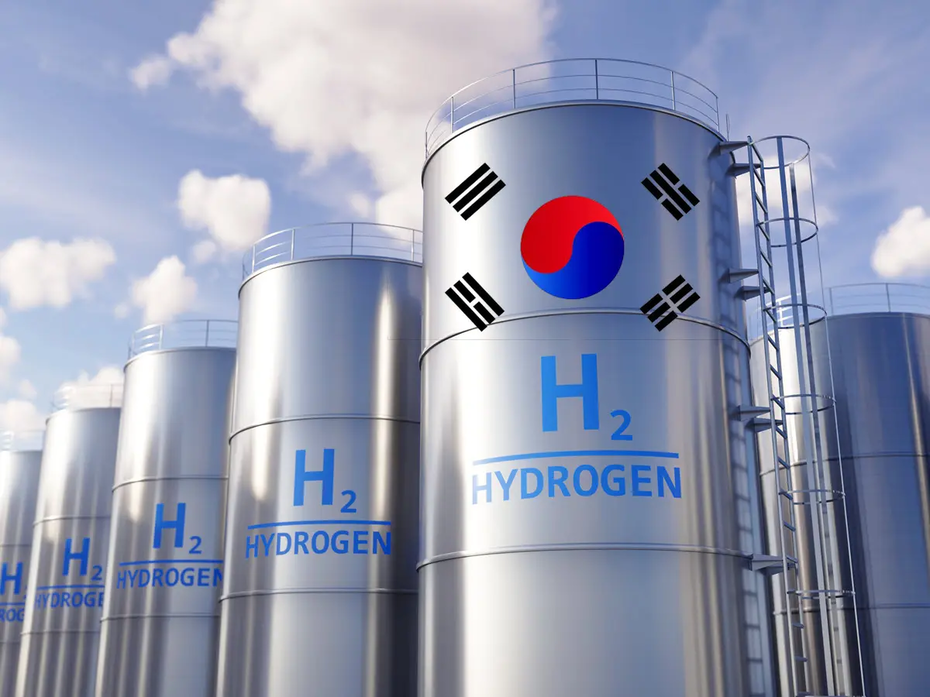
This is not merely a piece of legislation, but a comprehensive policy system aimed at transforming South Korea's entire economic and social landscape into the hydrogen energy era.
This article will analyze in detail the structure, core content, operational mechanisms, and strategic implications of this act, thereby drawing lessons for other countries, including Vietnam.
Purpose and foundational definitions
Article 1 of the Hydrogen Act clearly states its purpose: to contribute to the development of the national economy and ensure public safety by establishing a foundation to promote the transition to a hydrogen economy, systematically promoting the development of the hydrogen industry, and prescribing matters related to hydrogen safety management.
Article 2 provides key definitions.
The concept of "hydrogen economy" is understood as an economic-industrial structure that uses hydrogen as its main energy source, leading to fundamental changes in the entire economy, society, and people's daily lives.
The "hydrogen industry" covers the entire value chain: production, storage, transport, refueling, and sale of hydrogen; hydrogen-using devices such as fuel cells and hydrogen gas turbines; and the production of related products, parts, materials, and equipment.
One particularly important definition is "clean hydrogen" (Article 2, subparagraph 7-2, added on June 10, 2022).
Clean hydrogen is divided into three types: zero-carbon hydrogen – which emits no greenhouse gases during production; low-carbon hydrogen – which emits below a prescribed threshold; and low-carbon hydrogen compounds used for transport.
This classification creates a legal framework to encourage the production and use of truly green hydrogen, while allowing for transitional technologies.
Governance mechanism: Hydrogen Economy Committee and Basic Plan
The Hydrogen Act establishes a governance mechanism at the highest level.
Under Article 5, the Minister of Trade, Industry and Energy must establish a "Basic Plan for the Transition to a Hydrogen Economy."
This plan includes: basic policy directions, institutional improvement, foundation building, financial mobilization, plans for installing production and refueling facilities, hydrogen supply and demand plans, promotion of clean hydrogen, and integration of carbon neutrality goals.
Article 6 establishes the "Hydrogen Economy Committee" under the Prime Minister, with the Prime Minister serving as its Chair.
The Committee is tasked with deliberating on major policies and plans, coordinating between ministries, recommending legal improvements, promoting international cooperation, and resolving business difficulties.
Members include heads of relevant ministries and experts from businesses, universities, and research institutes.
The Committee has a Steering Committee (operational subcommittee) appointed by the Minister of Trade, Industry and Energy, and a Hydrogen Economy Implementation Promotion Team located within the Ministry.
This three-tier structure (Committee – Steering Committee – Promotion Team) ensures the highest political leadership, inter-ministerial coordination, and specific implementation capacity.
Support for hydrogen-specialized businesses and financial tools
Chapter 3 (Articles 9 to 18) is dedicated to fostering and developing "Hydrogen-Specialized Businesses."
A business confirmed as a hydrogen-specialized business (Article 11) is entitled to a range of benefits: technology development support, sharing of expensive equipment, priority access to specialized complexes, subsidies and preferential loans (Article 10), national and local tax reductions (Article 17), and the right to lease, use, or purchase public property through negotiated contracts (Article 18).
Notably, the Act allows the establishment of "Hydrogen-Specialized Investment Companies" (Articles 13 to 15).
Such a company must invest at least 50% of its capital in hydrogen-specialized businesses, and may borrow funds, pledge assets, or guarantee debts up to 30% of its capital with shareholder approval.
This is a powerful private capital mobilization mechanism, allowing the creation of investment funds focused on the entire hydrogen ecosystem.
Additionally, Article 16 allows state funds and equivalent funds to invest in hydrogen-specialized businesses or contribute capital to hydrogen-specialized investment companies, creating a public-private resource mix.
Infrastructure development and specialized complexes
Chapter 4 (Articles 19 to 25) regulates the installation of hydrogen refueling stations and related facilities.
Article 19 empowers the Minister of Trade, Industry and Energy to require operators of free economic zones, highway rest areas, industrial complexes, etc., to submit plans for installing hydrogen refueling facilities.
Article 21 requires state agencies, local governments, public institutions, and local public enterprises to submit plans for installing fuel cells.
Article 22 allows the Minister to designate "Hydrogen-Specialized Complexes" – areas where hydrogen businesses and support facilities are concentrated, eligible for funding, equipment, and support for developing and deploying hydrogen electric vehicles and fuel cells.
A specialized complex may have its designation revoked if it misuses support funds, fails to comply with designation conditions, or no longer meets standards (Article 23).
Article 24 permits pilot projects within a limited area for a specified period to foster the hydrogen industry, promote service dissemination, and other necessary purposes.
This pilot mechanism is crucial for testing new technologies and business models before nationwide expansion.
Clean hydrogen, hydrogen power generation, and market mechanisms
Chapter 4-2 (Articles 25-2 to 25-8, added on June 10, 2022, effective from May 31, 2027) is one of the most advanced parts of the Act.
Article 25-2 provides for the certification of clean hydrogen by level, based on CO2 emissions during production and import.
Certified clean hydrogen may display a certification label and receive administrative and financial support, with support levels varying by certification level.
Certification may be revoked if obtained by fraud, no longer meets standards, or if no production or import occurs within one year.
Article 25-3 requires producers, importers, and sellers of clean hydrogen to report production volume, import volume, sales volume, and buyers.
Article 25-4 allows the designation of clean hydrogen certification bodies (organizations or legal entities meeting facility standards).
Article 25-5 (effective May 31, 2027) empowers the Minister to require operators of hydrogen refueling stations and certain other business entities to sell or use clean hydrogen at a minimum prescribed ratio.
Article 25-6 regulates the purchase and supply of hydrogen-generated electricity.
The Minister may require electric utilities to purchase or supply hydrogen-generated electricity.
The Minister may open a competitive bidding market to select winning bidders among hydrogen power generation businesses.
Hydrogen power generators and purchasing/supplying entities must enter into contracts through the bidding market.
The annual purchase/supply volume is determined based on the Basic Plan, the electricity supply and demand plan, the status of hydrogen facility installation, and national greenhouse gas reduction targets.
Article 25-7 allows the designation of a bidding market operator (a hydrogen business or electricity transaction-related organization meeting standards).
Article 25-8 provides for non-compliance penalties for entities subject to clean hydrogen sales or use obligations if they fail to comply.
The penalty is calculated as 150% of the difference between the market price of the highest-grade clean hydrogen and the market price of conventional hydrogen in the relevant year, multiplied by the shortfall.
This mechanism creates a strong economic incentive for compliance while fostering a liquid and transparent clean hydrogen market.
Foundational support for the hydrogen economy
Chapter 5 (Articles 26 to 35) focuses on foundational support activities.
Article 26 requires the government to establish policies for training specialized technical human resources, including building a training system, business-university cooperation, training for future promising fields, and retraining of field personnel.
Article 27 allows for the promotion of standardization projects for hydrogen-related products, technologies, and services.
Article 28 provides for the compilation and management of hydrogen industry statistics.
Article 29 encourages international cooperation and support for overseas expansion, including international exchanges, international standardization, exhibitions, and overseas marketing.
Article 30 promotes technology development, including trend surveys, R&D, IP rights protection, and commercialization.
Article 31 focuses on building social consensus through public awareness raising, education, and promotion of a hydrogen-friendly culture.
Article 31-2 (added October 31, 2023) designates November 2 of each year as "Hydrogen Day" for commemorative events to build social consensus.
Article 32 allows for the establishment and operation of an integrated information management system for the hydrogen industry and hydrogen projects.
Article 33 designates a "Hydrogen Industry Promotion Agency" (which may be an organization, institution, or legal entity) to carry out policy support, performance analysis, surveys, training, standardization, R&D, and business networking.
This agency may conduct profit-generating business projects to cover its costs.
Article 34 designates a "Hydrogen Distribution Agency" to manage distribution, transactions, price stability, supply and demand, monitoring, inspection, guidance, and promotion of fair distribution order.
Article 35 designates a "Hydrogen Safety Agency" to research safety standards, develop technology, provide education, promote safety, engage in international cooperation, and prevent accidents.
These three specialized agencies (promotion, distribution, safety) form a professional, independent, and accountable enforcement apparatus.
Safety management – an indispensable pillar
Chapters 6 (Articles 36 to 49), 7, and 8 provide very detailed regulations on safety management, permits, inspections, and penalties.
Article 36 requires anyone wishing to manufacture hydrogen products to obtain a permit from the local government (Mayor, County Head, or District Head).
A permit may be denied if it interferes with disaster prevention, lacks technical and financial capability, or fails to ensure safety according to the assessment of the Korea Gas Safety Corporation.
Article 37 sets out disqualification reasons (e.g., a person declared bankrupt without rehabilitation, a person convicted of gas safety-related crimes within the past two years).
Article 38 requires foreign manufacturers of hydrogen products to register with the Minister of Trade, Industry and Energy and undergo periodic re-registration.
Article 39 requires reporting of business commencement, suspension, and closure.
Article 40 governs the succession of business status in cases of transfer, inheritance, or merger.
Article 41 requires businesses to establish "Safety Management Regulations" covering production processes, internal inspection methods, with the opinion of the Korea Gas Safety Corporation, and to submit them to local government.
Article 42 requires the appointment of a "Safety Manager" and reporting of such appointment; in case of dismissal or resignation, a new Safety Manager must be appointed within 30 days.
Article 43 requires completion inspection of hydrogen product manufacturing facilities before use.
Article 44 requires inspection of imported or domestically manufactured hydrogen products before sale or use, and prohibits the transfer, lease, or use of uninspected products.
Article 45 on safety assurance: the Minister or local government may collect products for inspection, demand recall, exchange, refund, and public notice if serious defects are found; mandatory labeling of manufacturer, production date, purpose, and usage instructions; and strict prohibition of hydrogen product modification.
Article 46 requires participation in safety education.
Article 47 requires hydrogen fuel-using facilities to meet standards, undergo completion inspection before use, and undergo periodic inspections.
Article 48 allows the Gas Technical Standards Committee to prescribe detailed standards (specific specifications, numerical values, test methods), which must be approved by the Minister and publicly notified.
Article 49 provides for permit revocation, business suspension, or restriction for up to six months for violations such as: obtaining a permit by fraud, failing to commence business within one year, causing serious harm, violating technical standards, failing to appoint a Safety Manager, failing to pass completion inspection, failing to pass product inspection, or failing to comply with a recall order.
For foreign manufacturers, the Minister may revoke registration or restrict imports for up to six months if registration was obtained by fraud, standards are no longer met, products are sold or used without inspection, or recall orders are not followed.
Price regulation, insurance, and prohibited acts
Article 50 requires hydrogen sellers to report selling prices to the Minister, and the Minister may disclose selling prices (without infringing trade secrets) to enhance transparency. Sellers must post prices on a price board.
Article 51 requires hydrogen product manufacturers and importers to take out insurance to cover damage from accidents.
Article 52 strictly prohibits: selling hydrogen short of the metered quantity (beyond allowable error); selling hydrogen by artificially increasing volume (e.g., by applying heat); installing or modifying business facilities for fraudulent purposes; and stopping, reducing production, or restricting outbound shipments or sales without justifiable cause.
Inspections, penalties, and criminal provisions
Article 53 grants inspection powers: requiring reports and document submission; on-site inspections of business and manufacturing facilities; officials must present identification.
Article 54 requires a hearing before revoking confirmation of a hydrogen-specialized business, revoking designation of a specialized complex, revoking clean hydrogen certification, revoking designation of a certification body, revoking designation of a bidding market operator, revoking designation of the specialized agencies, revoking registration of foreign manufacturers, or revoking permits by local government.
Article 55 prescribes fees for permit, registration, certification, inspection, and education procedures.
Article 56 allows partial delegation or entrustment of authority to local governments and to the specialized agencies, certification bodies, market operators, and the Korea Gas Safety Corporation.
Article 57 stipulates that non-civil servant members of committees, officers and employees of certification bodies, market operators, specialized agencies, and entrusted entities are deemed public officials for the purpose of applying bribery provisions.
Chapter 8 (Articles 58 to 62) prescribes penalties.
Article 58: imprisonment for up to 5 years or a fine of up to 50 million won for modifying hydrogen products for sale, selling short-delivered hydrogen, selling hydrogen by artificially increasing volume, or installing fraudulent facilities. Imprisonment for up to 3 years or a fine of up to 30 million won for stopping or reducing production or restricting outbound shipments or sales without justifiable cause.
Article 59: imprisonment for up to 2 years or a fine of up to 20 million won for obtaining clean hydrogen certification by fraud; refusing or obstructing inspection; obtaining designation as a certification body by fraud; performing certification without being designated; failing to report clean hydrogen sales and use results; manufacturing hydrogen products without a permit. Imprisonment for up to 1 year or a fine of up to 10 million won for changing permitted matters without a permit; failing to comply with technical facility standards; using manufacturing facilities without passing completion inspection; selling or using uninspected products; transferring, leasing, or displaying uninspected products for sale. Imprisonment for up to 6 months or a fine of up to 5 million won for failing to label as required.
Article 60: fine of up to 5 million won for failing to appoint a Safety Manager or failing to report dismissal; fine of up to 3 million won for failing to comply with a recall or public notice order.
Article 61: provides for joint penalty provisions for legal entities and individuals (if a representative or employee violates, the legal entity or individual is also liable for a fine, unless they exercised reasonable supervision).
Article 62: administrative fines of up to 10 million won for: unlawfully using the name "Hydrogen-Specialized Investment Company"; displaying a counterfeit clean hydrogen certification label; failing to submit Safety Management Regulations; using a hydrogen fuel facility without passing completion inspection; using a facility without periodic inspection; failing to report or falsely reporting selling prices; failing to post prices. Administrative fines of up to 3 million won for: failing to report minor changes; failing to report business commencement, suspension, or closure; failing to report succession; failing to comply with an order to change Safety Management Regulations; violating Safety Management Regulations; failing to appoint a temporary representative for the Safety Manager; failing to participate in safety education; failing to have employees attend safety education; installing a hydrogen fuel-using facility not meeting standards; failing to take out insurance; failing to report or falsely reporting under inspection requests.
Overall assessment and lessons for Vietnam
South Korea's Hydrogen Act is one of the most comprehensive and advanced legal frameworks in the world for developing a hydrogen economy.
Its greatest strength is its systematic nature: it goes beyond merely encouraging technology, building a complete ecosystem from central governance (Committee chaired by the Prime Minister), strategic planning (Basic Plan), financing and investment mechanisms (hydrogen-specialized investment companies, state funds), infrastructure development (mandatory refueling station and fuel cell installation), market promotion (clean hydrogen certification, power bidding, sales and use obligations), business support (confirmation of hydrogen-specialized businesses, tax benefits, public property), human resource training, standardization, international cooperation, social consensus building (Hydrogen Day), and especially a very stringent safety management system detailed down to individual products and facilities, with severe penalties.
The mechanism of three specialized agencies (promotion, distribution, safety), designated according to clear standards and allowed to conduct profit-generating projects to cover their costs, is a highly flexible and sustainable enforcement model.
Provisions taking effect in 2027 (clean hydrogen certification, sales and use obligations, penalties) demonstrate a long-term vision and clear implementation roadmap, avoiding market shock.
For Vietnam, this is an extremely valuable reference.
Vietnam has a Hydrogen Energy Development Strategy to 2030 with a vision to 2050, but still lacks a comprehensive and detailed legal framework like South Korea's Hydrogen Act.
Specific lessons include: the need for a national hydrogen coordination body at a very high level (Prime Minister or Deputy Prime Minister); the need to develop a national basic plan with quantitative targets and roadmaps; the need for a mechanism to confirm hydrogen-specialized businesses for applying incentives; the need for venture funds or specialized investment companies to mobilize private capital; the need for mandatory installation of hydrogen refueling stations at industrial complexes and highway rest areas; the need for a bidding mechanism for hydrogen-generated electricity; the need to establish technical standards, regulations, and safety management systems from the outset; and the need for an implementation roadmap with specific milestones.
South Korea's Hydrogen Act is not without challenges.
Implementation requires significant administrative resources, very close inter-ministerial coordination, and compliance costs for businesses may be high, especially safety and certification requirements.
However, for an economy heavily dependent on energy imports like South Korea, and with the ambition to become a global leader in the hydrogen market, this is a sound strategic move.
In summary, South Korea's 2024 Hydrogen Act is a legislative masterpiece, providing a comprehensive, consistent, and highly feasible framework for transforming the entire economy into the hydrogen energy era.
Countries that are developing hydrogen strategies, including Vietnam, should study this model closely, especially the governance mechanisms, market mechanisms, and safety management system, in order to design a legal framework appropriate to their own national contexts.