

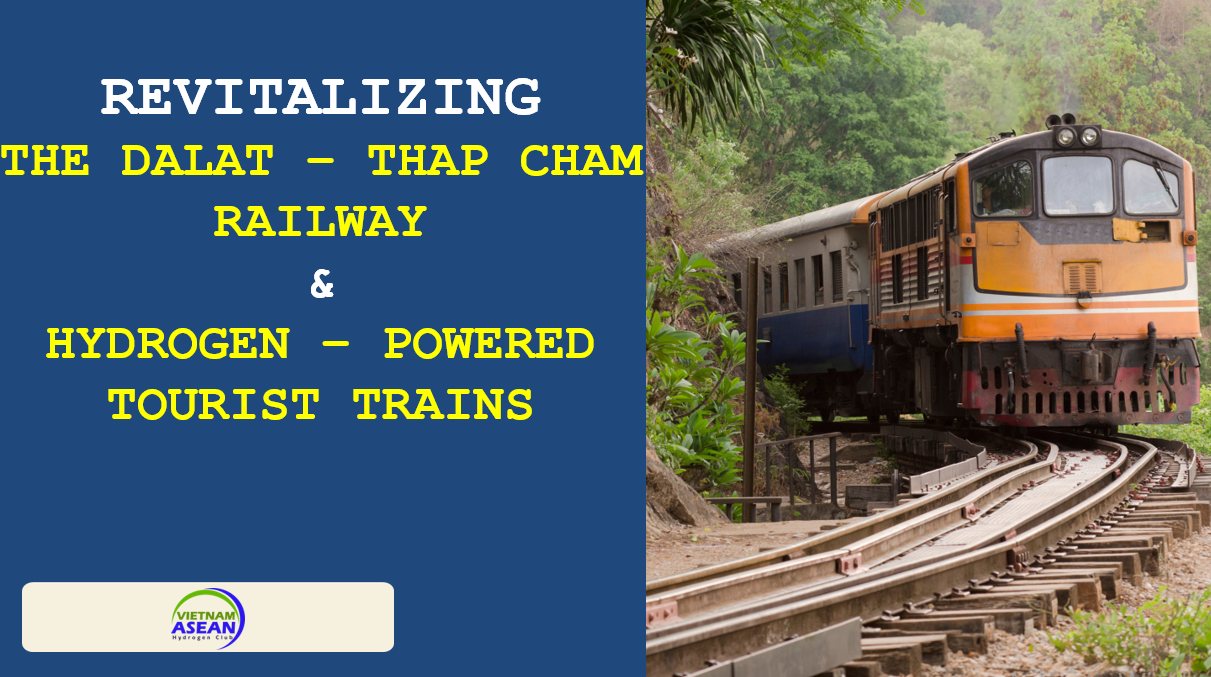
Revitalizing the Da Lat – Thap Cham Railway with Hydrogen-Powered Tourist Trains
A Net-Zero Rail Tourism Model for Vietnam
January 16, 2026
1. Project Background and Rationale
The Da Lat – Thap Cham railway is one of the most iconic railway lines built during the French colonial period in Indochina, renowned for its rack-and-pinion sections, dramatic mountain–coastal landscapes, and outstanding engineering heritage. After decades of inactivity, this historic line represents a unique opportunity to combine heritage preservation, clean mobility, and sustainable tourism.
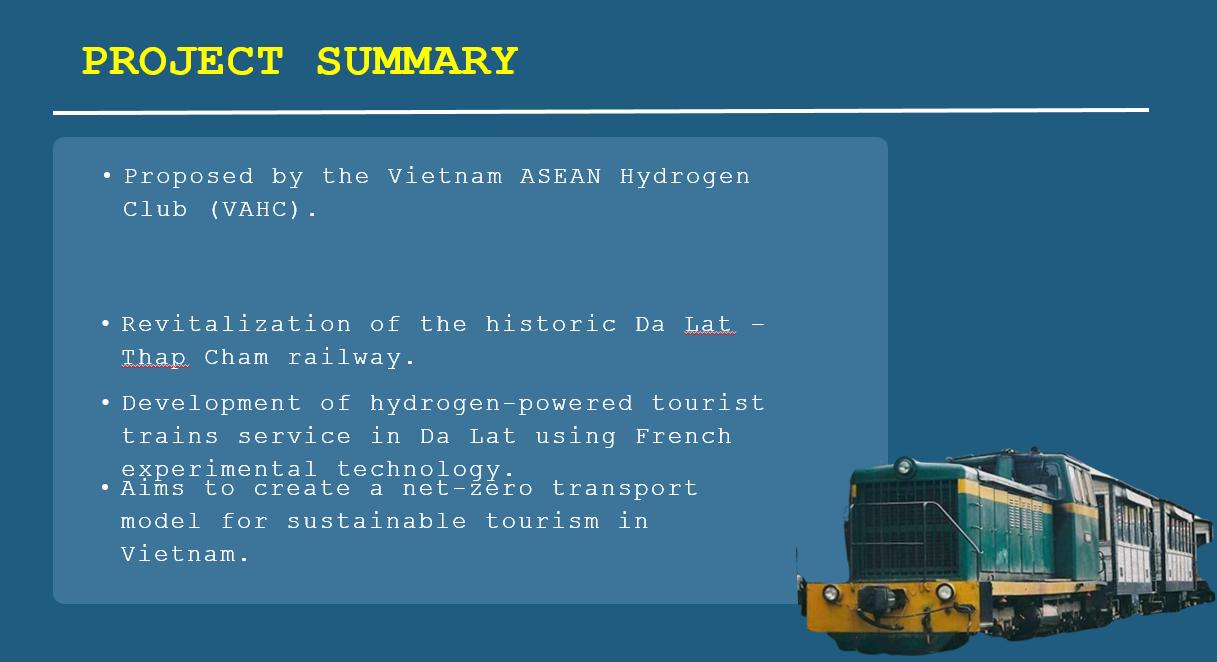
This concept project, proposed by the Vietnam ASEAN Hydrogen Club (VAHC) aims to revive the historic railway while introducing hydrogen-powered tourist trains, positioning Da Lat as a flagship destination for green transport and climate-friendly tourism in Southeast Asia.
2. Strategic Objectives
The project goes beyond infrastructure restoration and targets several long-term strategic goals:
-
Integrate railway heritage conservation with advanced hydrogen technology
-
Demonstrate zero-emission hydrogen rail solutions under real operating conditions in Vietnam
-
Strengthen EU–Vietnam cooperation in hydrogen, rail systems, and clean mobility
-
Create a replicable pilot model for green rail tourism across Vietnam and ASEAN
3. Project Structure: Three Core Components
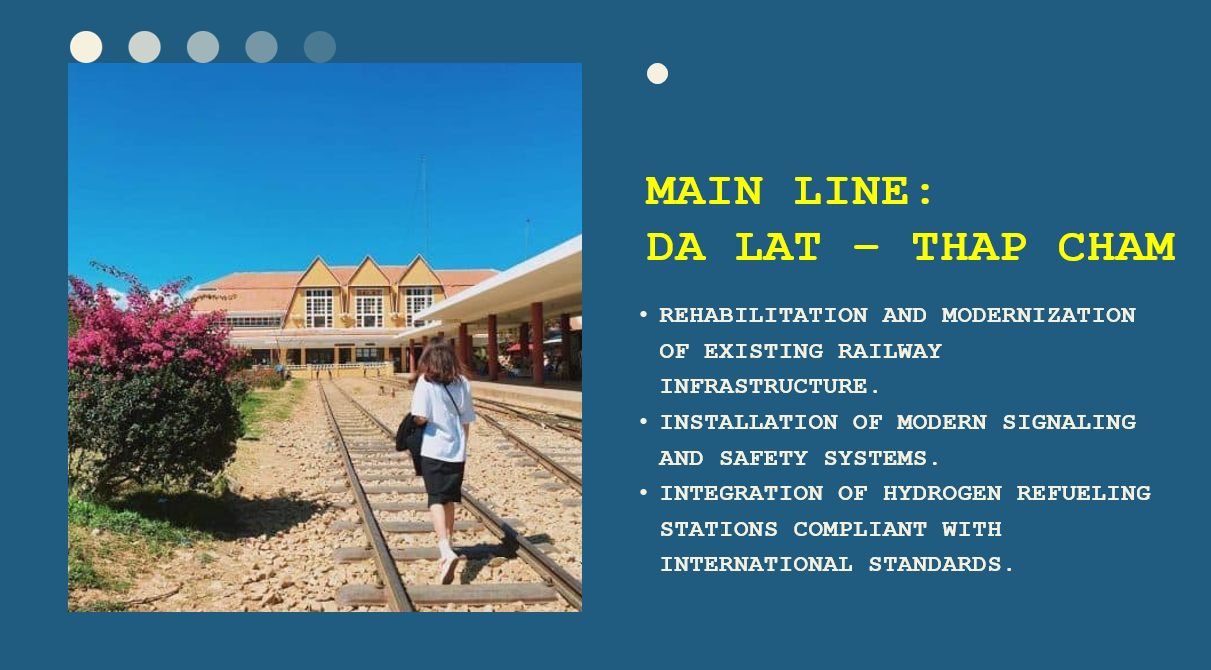
(1) Da Lat – Thap Cham Main Line
-
Rehabilitation and modernization of existing rail infrastructure
-
Upgrading signalling, safety, and operational systems to modern standards
-
Integration of hydrogen refuelling facilities compliant with international safety norms
(2) Da Lat Urban & Tourism Rail Loop
-
Deployment of French hydrogen-powered demonstration trains on shorter routes
-
Connectivity to lakes, tea plantations, Lang Biang highlands, and cultural–ecological attractions
-
Educational value, allowing visitors to experience clean energy technologies firsthand
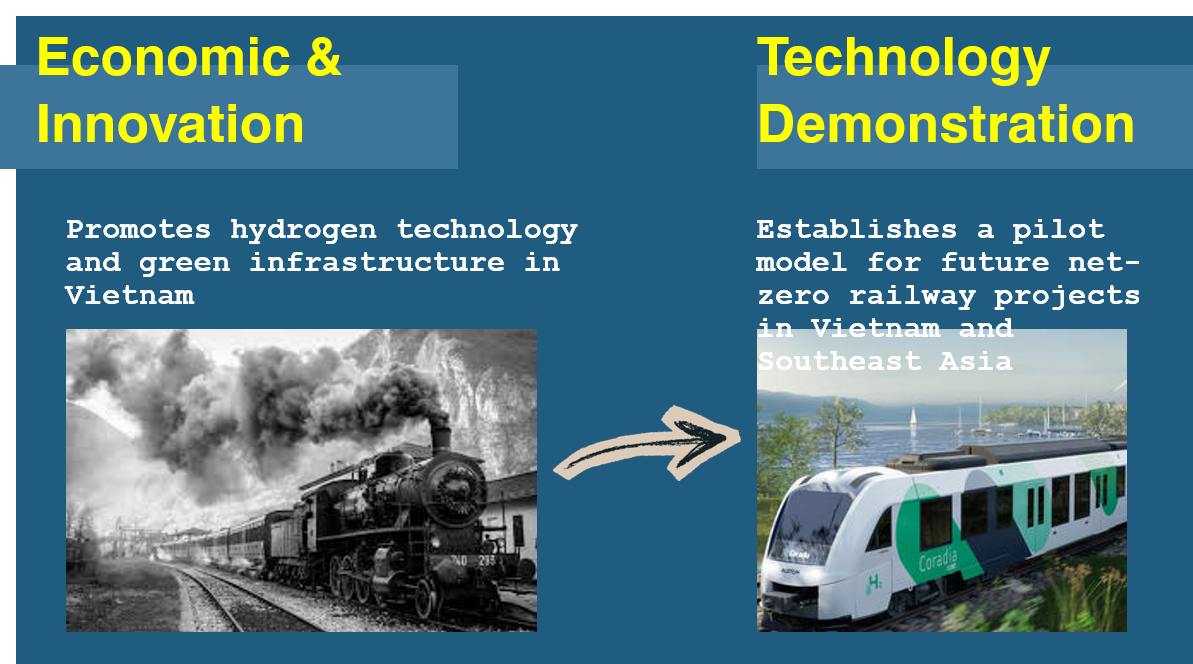
(3) Technology Demonstration & Innovation Platform
-
Pilot operation of hydrogen trains with performance and safety monitoring
-
Smart energy management systems tracking efficiency, emissions, and reliability
-
Evaluation of scalability from pilot deployment to commercial operation
4. Why Hydrogen Rail Is Well-Suited to Da Lat
Hydrogen propulsion offers distinct advantages for heritage and tourist railways:
-
Zero local CO₂ emissions
-
Quiet operation, preserving natural landscapes and visitor experience
-
No need for full electrification infrastructure along mountainous routes
-
Well suited to steep gradients and tight curves typical of the Da Lat line
Leveraging French/German/Austrian hydrogen train technology enables Vietnam to directly benefit from European expertise in hydrogen rail development and safety standards.
5. Partnerships and Stakeholders
-
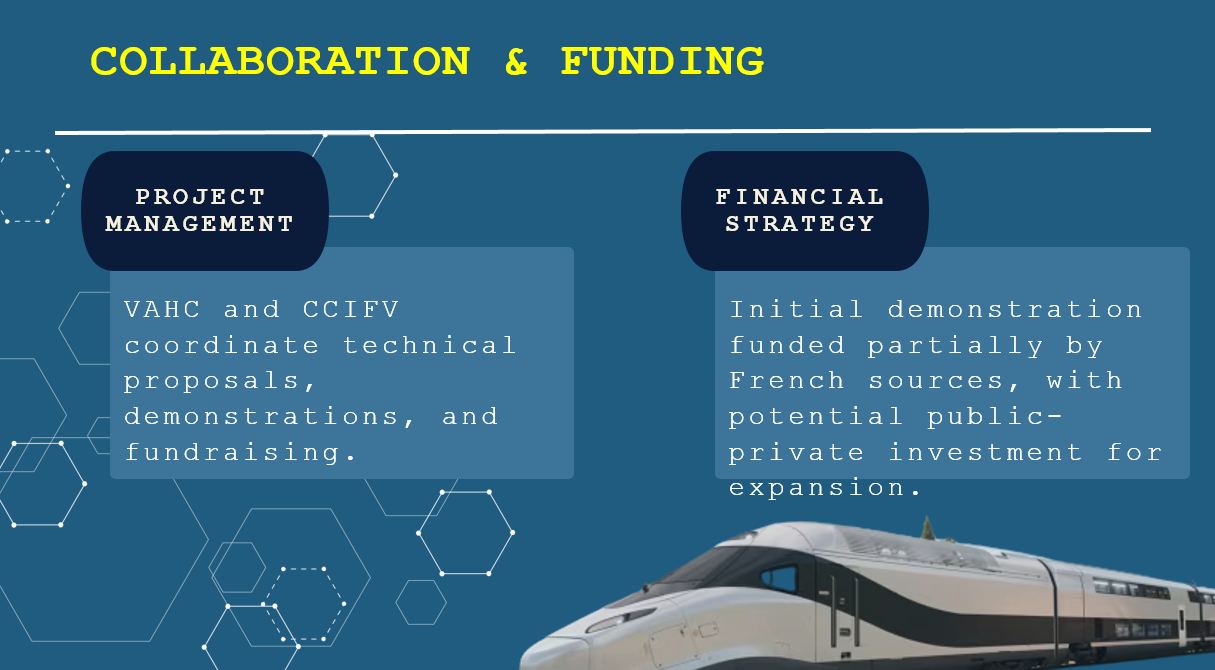
VAHC & EU partners: Project coordination, stakeholder engagement, policy dialogue, and financing facilitation
-
French/EU partners: Hydrogen train manufacturers, technology providers, and green finance institutions
-
Vietnamese authorities: Policy support, land access, and alignment with national hydrogen and transport strategies
-
Public–Private Partnerships (PPP): Investment framework for phased scaling of the main line
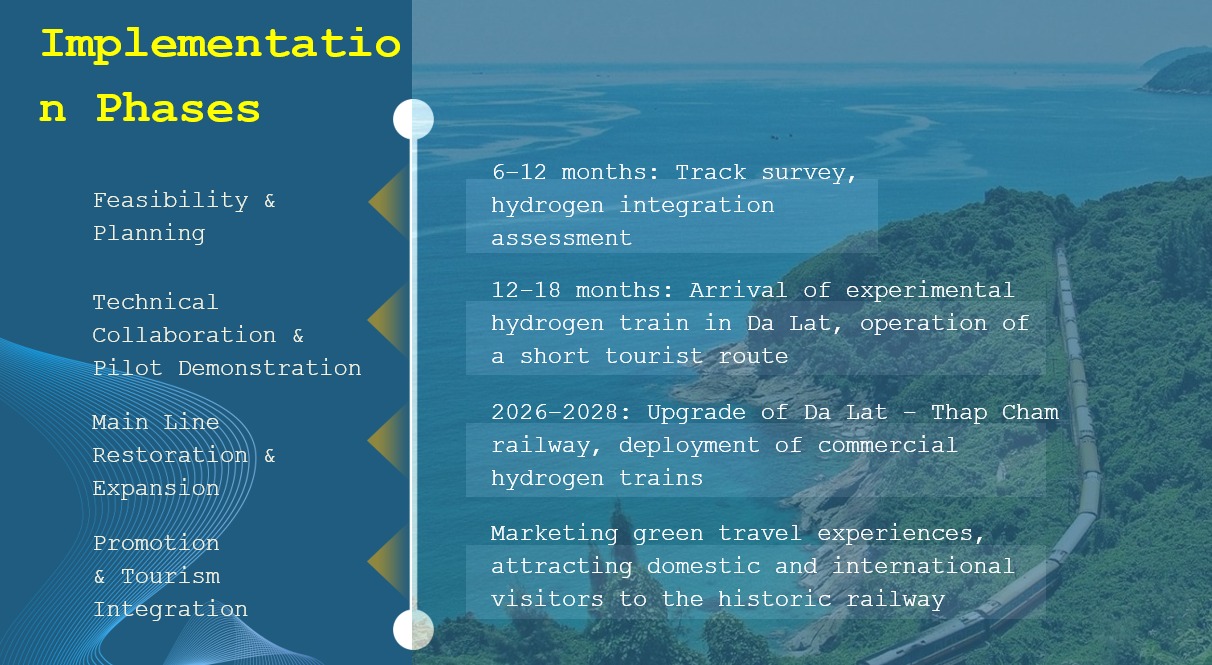
6. Indicative Implementation Roadmap
-
6–12 months: Feasibility studies, route surveys, hydrogen integration assessments
-
12–18 months: Pilot operation of hydrogen trains on selected Da Lat tourist routes
-
2026–2028: Full rehabilitation of the Da Lat – Thap Cham line and commercial hydrogen train deployment
-
Subsequent phases: Tourism integration, branding, and regional replication
7. Expected Impacts
-
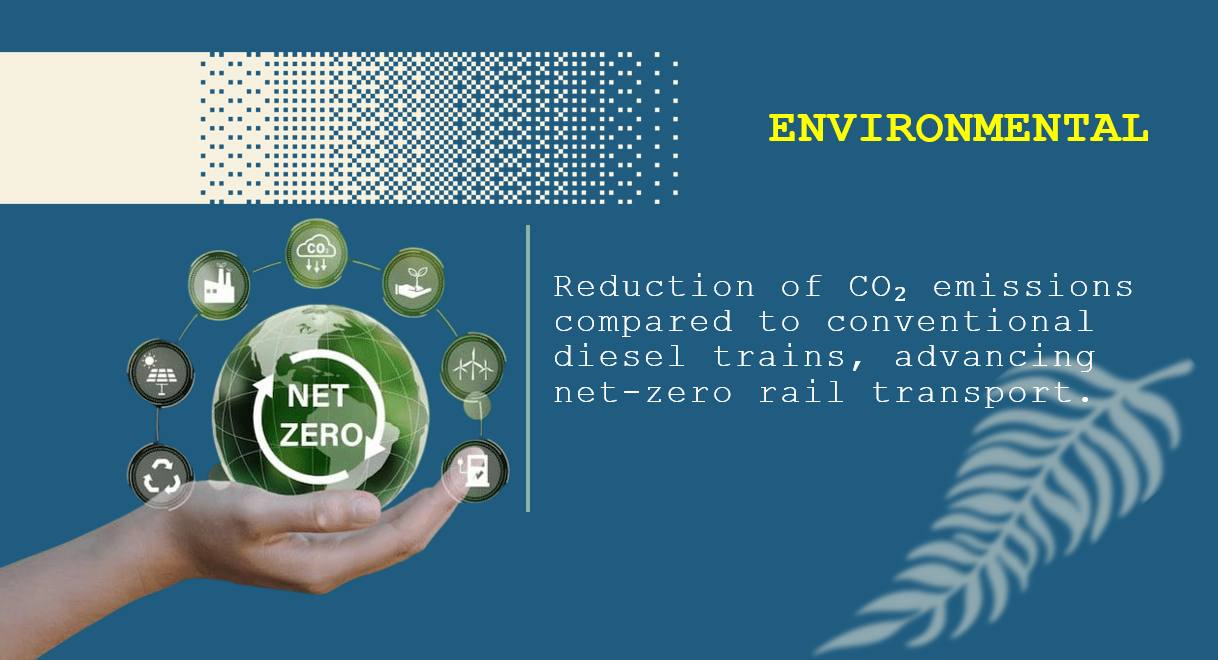
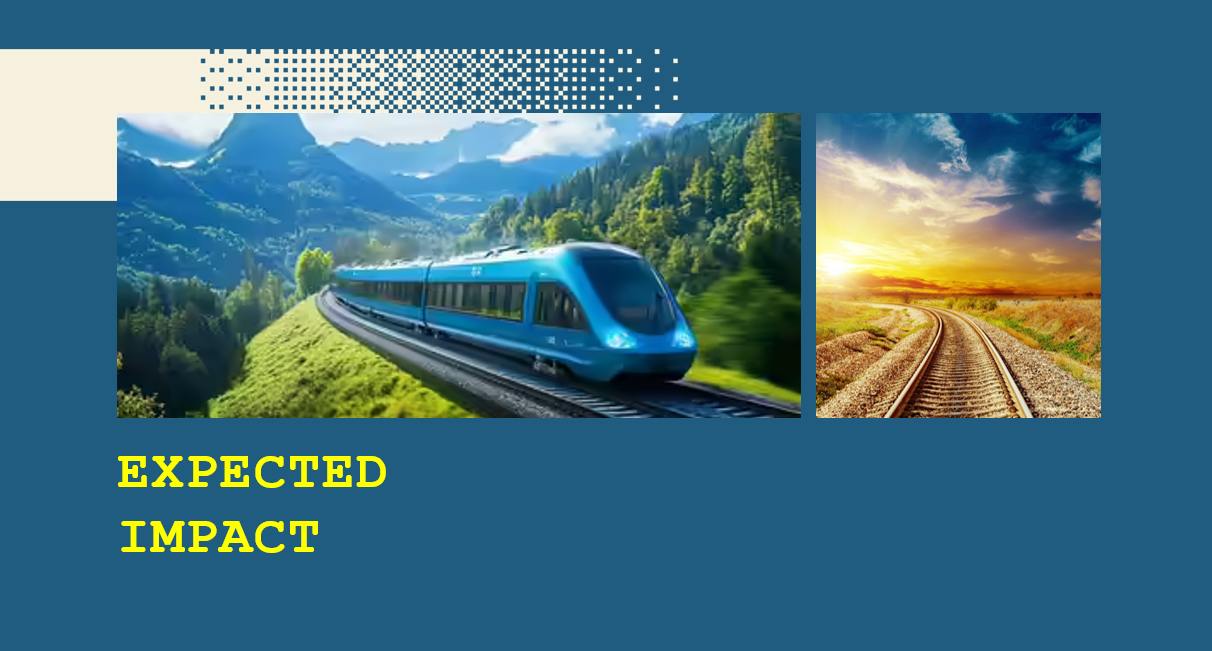
Environmental: Significant emissions reduction compared with diesel rail, supporting net-zero goals
-
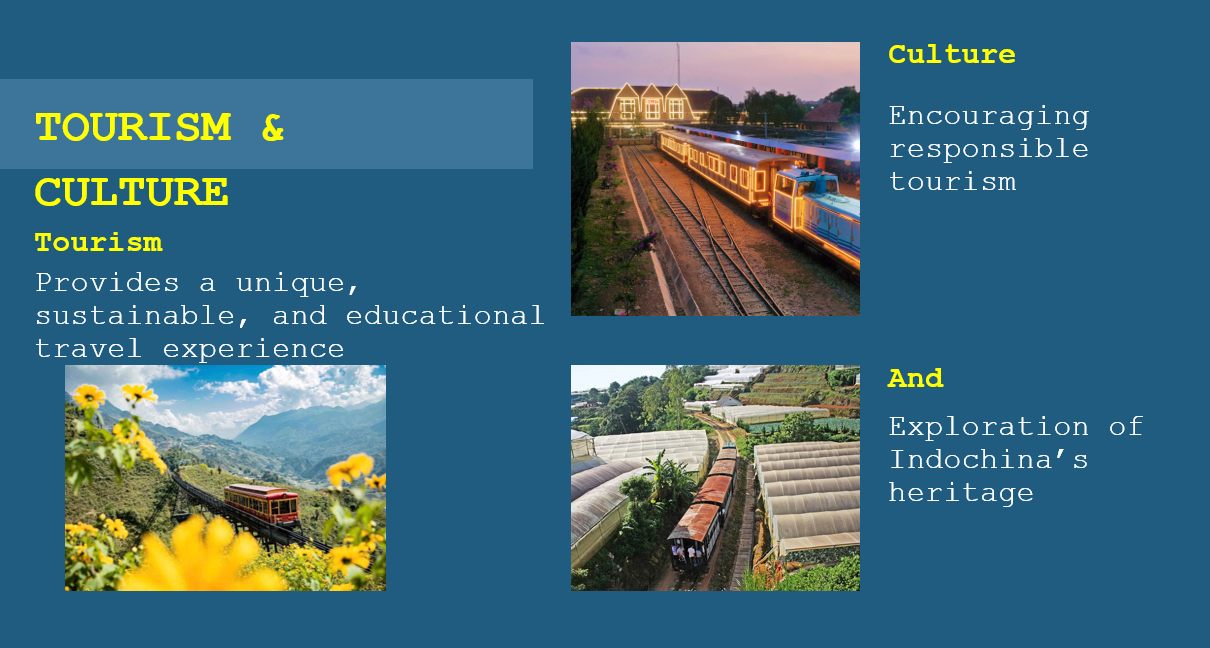
Tourism & culture: Creation of a unique green tourism product anchored in railway heritage
-
Innovation & economy: Positioning Vietnam as a regional showcase for hydrogen mobility and clean transport solutions
8. Conclusion
The hydrogen-powered revival of the Da Lat – Thap Cham railway represents a rare convergence of heritage preservation, clean technology, and sustainable development. If successfully implemented, the project could become a symbol of Vietnam’s pragmatic and forward-looking approach to the energy transition, while strengthening long-term France–Vietnam cooperation in hydrogen and green mobility.