

PROPOSAL TO ADD HYDROGEN AND AMMONIA-POWERED VEHICLES AND VESSELS TO DECISION 876/QĐ-TTG: A COMPREHENSIVE ROADMAP FOR HEAVY TRUCKS, LONG-DISTANCE BUSES, TRAINS, MOTORCYCLES, AND SHIPS
June 09, 2026 | VAHC Secretariat
Introduction
Decision No. 876/QĐ-TTg dated July 22, 2022, by the Prime Minister of Vietnam approving the Action Program on Green Energy Transition and Reduction of Methane Emissions in the Transport Sector sets a target that by 2050, 100% of road motor vehicles, railway locomotives and carriages, and inland waterway vessels will be converted to use electricity and green energy. However, this document completely fails to mention hydrogen vehicles (Hydrogen Fuel Cell Vehicles – FCVs) and ships powered by hydrogen or ammonia, even though these technologies are being aggressively advanced by pioneering countries worldwide.
This article proposes adding four types of hydrogen vehicles (heavy-duty trucks, long-distance buses, trains, and two-wheelers) as well as ships (hydrogen fuel cell, hydrogen internal combustion engine, ammonia, and H2-diesel retrofit) to Decision 876, accompanied by preliminary calculations of economic efficiency and emission reductions when converting 10% of motorcycles to hydrogen.
I. Gap in Decision 876/QĐ-TTg
Decision 876 focuses mainly on battery electric vehicles (EVs) and biofuels, completely ignoring hydrogen technology. EVs cannot fully solve the following challenges: long-haul heavy trucks (excessively long charging time, too heavy batteries), intercity buses, trains on non-electrified lines, two-wheelers requiring higher energy storage than ordinary e-bikes, and large ships. Therefore, hydrogen and its derivatives (ammonia) must be added to the roadmap.
II. Proposal to Add Four Types of Hydrogen Vehicles
A. Hydrogen Heavy-Duty Trucks (HDV)
In China, during the first 11 months of 2025, 13 projects delivered actual hydrogen trucks for coal transport, seaport container logistics, and inter-provincial corridors. In December 2025, Rongcheng Xinneng delivered 65 hydrogen trucks to Tianjin Port.
Proposed roadmap: By 2030, 10% of newly manufactured heavy-duty tractors to be hydrogen; by 2040, 50% in provinces with renewable energy advantages; by 2050, 100%.
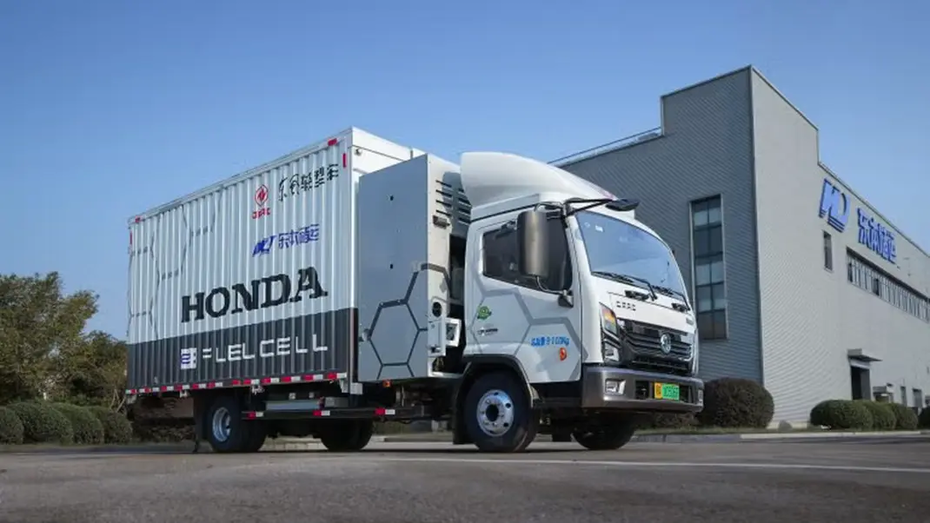
Dongfeng H2 fuel cell heavy truck using fuel cell technology of Honda
B. Long-Distance Hydrogen Buses (Intercity Coaches)
China has operated hydrogen bus routes in Beijing, Shanghai, and Guangdong with a range of 300-400 km per refueling.
Proposed roadmap: By 2030, 15% of intercity buses to be hydrogen; by 2040, 50%; by 2050, 100%.
C. Hydrogen Trains
China has operated a hydrogen locomotive in Guizhou, pulling over 4,500 tons with a range of 140-150 km per refueling. CRRC is developing a 200 km/h hydrogen passenger train.
Proposed roadmap: By 2030, pilot 10 hydrogen train routes; by 2040, replace 50% of diesel locomotives; by 2050, 100%.
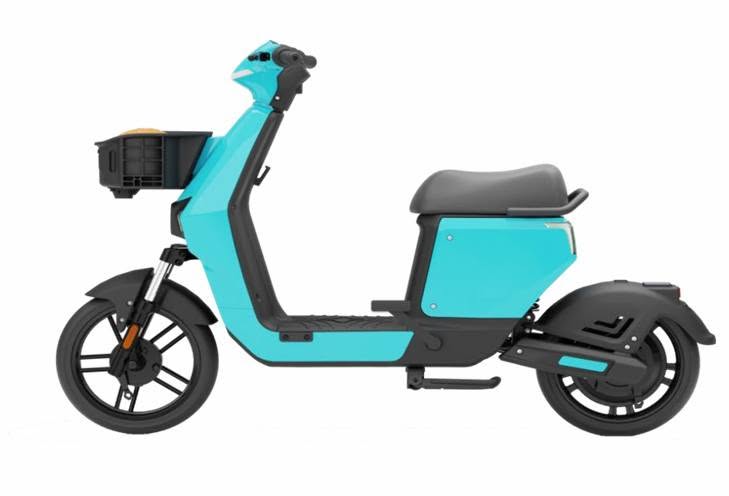
Two wheeler hydrogen fuel cell by United Hydrogen
D. Hydrogen Two-Wheelers (Motorcycles/Scooters)
Motorcycles account for 60-70% of vehicles in Vietnam. Hydrogen motorcycle technology already exists in China, with top speed of 160 km/h, range of 300 km, and refueling time of 2 minutes.
Preliminary calculation: 10% of motorcycles converted to hydrogen
-
Total number of motorcycles in Vietnam: 45 million (2025)
-
10% conversion: 4.5 million motorcycles
-
Hydrogen consumption: 0.2 kg/100 km, each motorcycle 5,000 km/year → 45,000 tons of hydrogen/year
Clean hydrogen production market: Requires an electrolyzer plant with capacity of ~250 MW, investment of US$500-750 million. Can be located in Ninh Thuan, Binh Thuan, Central Highlands to utilize renewable electricity.
Storage and transport market: Transport cost 8.5-9 RMB/kg within 100 km radius. Logistics market size: approximately 550-600 million RMB/year (1,900-2,000 billion VND).
Refueling station market: 900 stations needed (each serving 5,000 motorcycles). Total investment ~US$2.25 billion (52,000 billion VND). Annual operating revenue US$2.25 billion, gross profit ~US$1.8 billion/year.
Emission reduction: 4.5 million gasoline motorcycles emit 1.125 million tons of CO₂/year. Switching to green hydrogen eliminates this entirely, while also reducing PM2.5, NOₓ, and HC.
III. Proposal to Add Hydrogen and Ammonia-Powered Ships
Waterway transport (inland and maritime) emits significant amounts. Hydrogen and ammonia technologies for ships have developed strongly:
A. Hydrogen Fuel Cell Ships
-
64 TEU container ship "Dong Fang Qing Gang" (China) entered commercial operation in May 2026, reducing 700 tons of CO₂/year.
-
4,000-ton bulk carrier by GMI Rederi (Norway) equipped with fuel cell modules totaling +3 MW.
-
Proteus Energy (Singapore) developing fuel cell systems for coastal vessels, 75 kW per stack.
B. Ammonia-Powered Ships (hydrogen derivative)
Ammonia emits no CO₂, is easily liquefied, and has high energy density.
-
VINSSEN (Korea) + Samsung Heavy + Amogy developing 1 MW "Ammonia-to-Power Pack" system.
-
WinGD, Wärtsilä, Daihatsu have developed dual-fuel ammonia engines and received first orders.
C. Hydrogen Internal Combustion Engine (HyICE) Ships
-
H4PERION project (Horizon Europe) demonstrating on the ocean-going vessel Aurora Botnia with RCCI engine achieving 55% efficiency and near-zero emissions.
-
800-ton inland vessel in Shanghai using Liquid Organic Hydrogen Carrier (LOHC), expected to launch in 2026.
D. Retrofit Technology – Hydrogen Injection Assist for Existing Diesel Engines
This solution is particularly suitable for Vietnam's large aging fleet.
-
Newlight company completed factory acceptance tests for hydrogen retrofit on 2-stroke and 4-stroke engines, certified by RINA.
-
H2-diesel dual fuel system reduces diesel consumption by 50-70%, correspondingly reducing CO₂, PM, SOx.
Proposed additional roadmap for waterway and maritime:
-
2026–2030: Develop technical standards; pilot 10 domestic hydrogen fuel cell ships, 5 ammonia-powered ships; retrofit 100 offshore fishing vessel and workboat engines with H2-diesel dual fuel.
-
2031–2040: Expand newbuild hydrogen/ammonia ships; build liquid hydrogen and ammonia receiving stations at 3-5 major ports (Haiphong, Da Nang, Cai Mep – Thi Vai).
-
2041–2050: 100% of domestic, coastal, and workboats converted; 50% of Vietnam-flagged international fleet to meet zero-carbon standards.
IV. Proposed Amendments to Decision 876/QĐ-TTg
The following additions are required:
-
Section 3 (Transition Roadmap): Add subsections for hydrogen vehicles and hydrogen/ammonia ships with specific milestones as above.
-
Section 4 (Tasks and Solutions): Assign MOST, MOIT, MOC to research and transfer technology for hydrogen production, storage, transport; build refueling stations; manufacture hydrogen vehicles and ships; support H2-diesel retrofit.
-
Section 5 (Financial Mechanisms): Exempt import duties on electrolyzers, refueling stations; provide interest rate support for hydrogen vehicle/ship manufacturers; establish hydrogen/ammonia infrastructure development fund from state budget and PPP.
-
Appendix: Add task "Develop national program for hydrogen vehicle and ship development 2026-2035" chaired by MOC.
V. Conclusion
Adding heavy trucks, long-distance buses, trains, two-wheelers, as well as hydrogen and ammonia-powered ships to Decision 876/QĐ-TTg is essential for Vietnam to catch up with global trends. Calculations show that converting just 10% of motorcycles to hydrogen would create a market of 45,000 tons of hydrogen/year, 900 refueling stations with total investment of US$2.25 billion, annual revenue of US$2.25 billion, annual profit of US$1.8 billion, and reduce 1.125 million tons of CO₂/year. H2-diesel retrofit technology allows utilizing the existing fleet to achieve rapid emission reductions at low cost. International cooperation with Korea, Norway, China, and Singapore will help Vietnam pilot and scale up models, realizing the net-zero emissions commitment by 2050.