SAIGON ZERO‑EMISSION WATER METRO
Electric & Hydrogen Ferry System for Ho Chi Minh City
(Project Concept Proposal — Stakeholder Roles Clarified)
Date: March 15, 2026
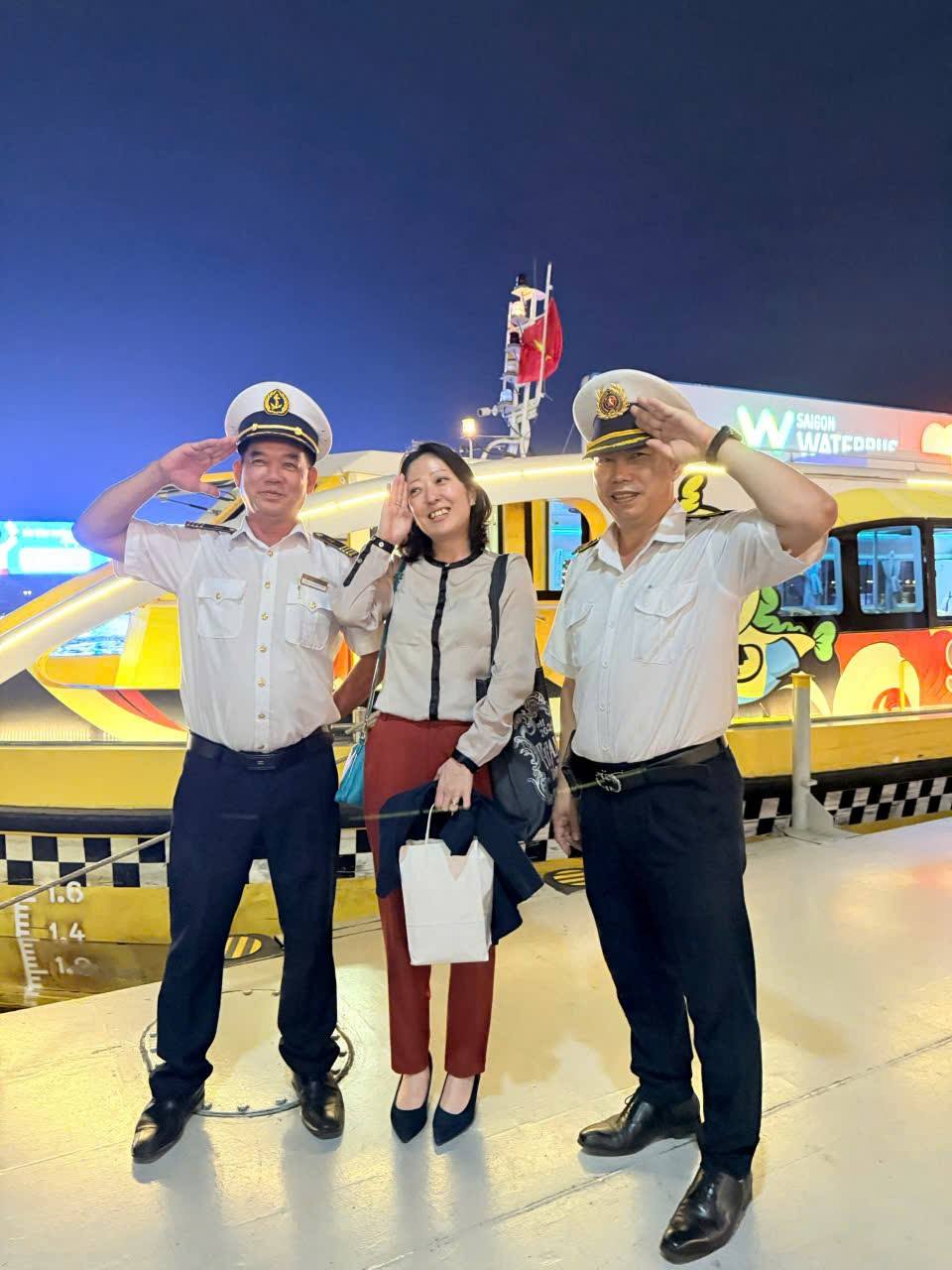
Photo taken in 2025, Saigon Waterbus captain and representative of Zero Carbon (Hydrogen) Division of Kawasaki Heavy Industries at Saigon Waterbus Bach Dang Terminal
1. Vision & Strategic Context
Ho Chi Minh City is one of Southeast Asia’s fastest‑growing megacities, challenged by traffic congestion, air pollution, and climate change impacts. With over 1,000 km of creeks and rivers, the city has a distinct advantage to build a modern water transit system.
The Saigon Zero‑Emission Water Metro concept envisions an interconnected network of green hydrogen ferries operating on the Saigon River and key canals to link urban districts with regional transport destinations. A strategic priority is a route connecting the city center with Long Thanh International Airport, aiming to be the first airport‑linked water metro line in Southeast Asia.
The project supports:
- Vietnam’s Net Zero 2050 commitment
- Ho Chi Minh City’s sustainable transport strategy
- It aims to become a landmark attraction along the Saigon River
2. Strategic Priority Corridor
Bach Dang Wharf → Long Thanh International Airport Corridor:
- Waterway connection via Saigon, Nha Be, and Dong Nai rivers
- Transfer hub at Nhon Trach/Aqua City
- Approx. length: 22–40 km
- Travel time: ~35–45 minutes by high‑speed ferry
- Last‑mile connections: electric buses, autonomous shuttles, or dedicated public transport
Strategic benefits:
- Faster access to Long Thanh Airport
- Reduces urban road congestion
- Strengthens connectivity and tourism development
3. Saigon Water Metro Network
- Core Line (Phase 1): Bach Dang Wharf → District 4 → District 7 → Thu Duc City
- Airport Connection: Bach Dang Wharf → Nha Be → Nhon Trach → Airport
- Inner‑city Canal Lines:
• Nhieu Loc – Thi Nghe Canal
• Tau Hu – Ben Nghe Canal - Future Expansion: Can Gio eco‑tourism route, Thanh Da Peninsula line, Binh Duong industrial corridor
4. Fleet Design & Operations
Initial Fleet:
- 10–15 zero‑emission vessels
- 50–120 passengers per ferry
- Shallow‑draft catamaran design
- Low noise and disability‑accessible
- Smart operations with real‑time fleet management and integrated e‑ticketing
5. Technology Concept
Phase 1 – Electric Ferries:
- Lithium‑ion battery + solar‑augmented energy
- Wharf charging stations
- Mature European technologies
Phase 2 – Green Hydrogen Ferries:
- Fuel‑cell hydrogen + hybrid electric systems
- Green hydrogen refueling infrastructure
- Advanced clean maritime technology (Japan & Northern Europe)
Role of hydrogen: enables long‑range zero‑emission operations, flexible refueling, and supports renewable energy integration.
6. Smart Infrastructure
- Modular floating piers
- Renewable energy‑powered terminals
- Hydrogen refueling stations
- Big data and AI for operational optimization
7. Environmental & Economic Impact
Environmental:
- Zero direct CO₂ emissions
- Estimated reduction: ~15,000–20,000 tCO₂ annually
Transport: eased road congestion; enhanced airport connectivity
Economic: green job creation, climate investment attraction, riverside tourism growth
8. Strategic Partners & Roles
CLB Hydrogen Việt Nam ASEAN
Role:
- Co‑creative partner in project concept development
- Facilitates access to hydrogen technologies, hydrogen vessel systems, and supply chains
- Mobilizes capital and international technology partners for green hydrogen infrastructure
- Supports identification of operation partners and investor networks, particularly in hydrogen mobility, fuel supply, and hybrid marine technology domains
CLB Hydrogen Việt Nam ASEAN acts as a strategic hydrogen enabler — connecting the project to global hydrogen ecosystems, clean maritime tech partners, climate funders, and R&D stakeholders in ASEAN.
City & Regulatory Bodies
- Urban transport planning
- Regulatory permits and city integration
- Traffic, environmental and safety compliance
International Technology & Vessel Partners (Potential)
- Japanese hydrogen vessel technology providers (e.g., Mitsui O.S.K. Lines)
- European electric ferrybuilders (e.g., Damen Shipyards)
- Northern European hybrid system experts (e.g., Norled)
Funding & Finance Institutions (Potential)
- Japan International Cooperation Agency (JICA): FS & infrastructure
- Asian Development Bank (ADB): PPP structuring and concessional finance
- Green Climate Fund (GCF): climate grants
- EU Support Mechanisms (Horizon Europe, Innovation Fund, InvestEU, AFIF): research, pilot, clean transport infrastructure
These mechanisms allow mixed financing (grants, concessional loans, PPP) to reinforce project viability.
9. Implementation Roadmap
Phase 1 (0–12 months):
- Feasibility Study (FS)
- Environmental assessments
- MoUs with technology & hydrogen partners
Phase 2 (12–24 months):
- Pilot operation: 5 electric ferries
- Construction: 4 renewable energy piers
Phase 3 (24–36 months):
- Full fleet deployment (10–15 ferries)
- Green hydrogen production & refueling system
- Integration with Long Thanh transport network
10. Strategic Significance
This project will:
- Establish Ho Chi Minh City as a zero‑emission water transport hub in Southeast Asia
- Serve as a demonstration model for hydrogen mobility in maritime transport
- Provide a climate‑adaptive transit corridor
- Pioneer one of the world’s first airport‑linked water metro systems
11. Call for Project Owners & Developers
The concept invites project owners or developers with proven capabilities in:
✔ Water transport operations and maritime services
✔ Tourism development and hospitality infrastructure
✔ Integrated urban transport ventures
Interested entities are invited to engage in partnership, contributing domain expertise, project leadership, local operations, and investment capacity. CLB Hydrogen Việt Nam ASEAN will support linking project owners with hydrogen technology providers, capital partners, and operational consortiums.
12. Contact Information
For project inquiries and partnership opportunities:
VAHC Secretariat
Email: contact@vahc.com.vn