
JCM and Financial Mechanisms Supporting Decarbonization Projects in Vietnam – Presentation by Nippon Koei at Hydrogen Workshop 2026
Date: April 2026
Venue: Saigon Hotel, Ho Chi Minh City
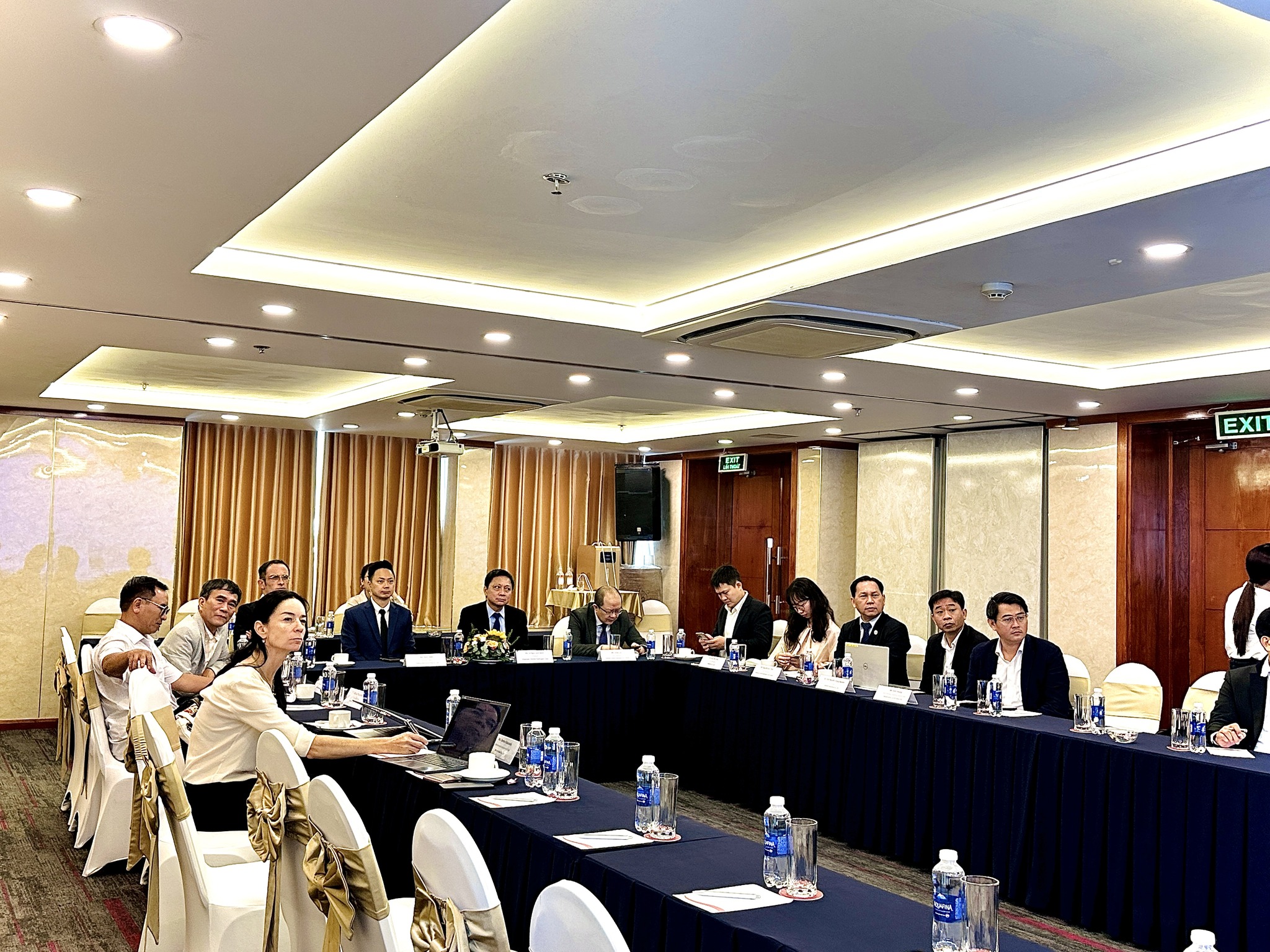
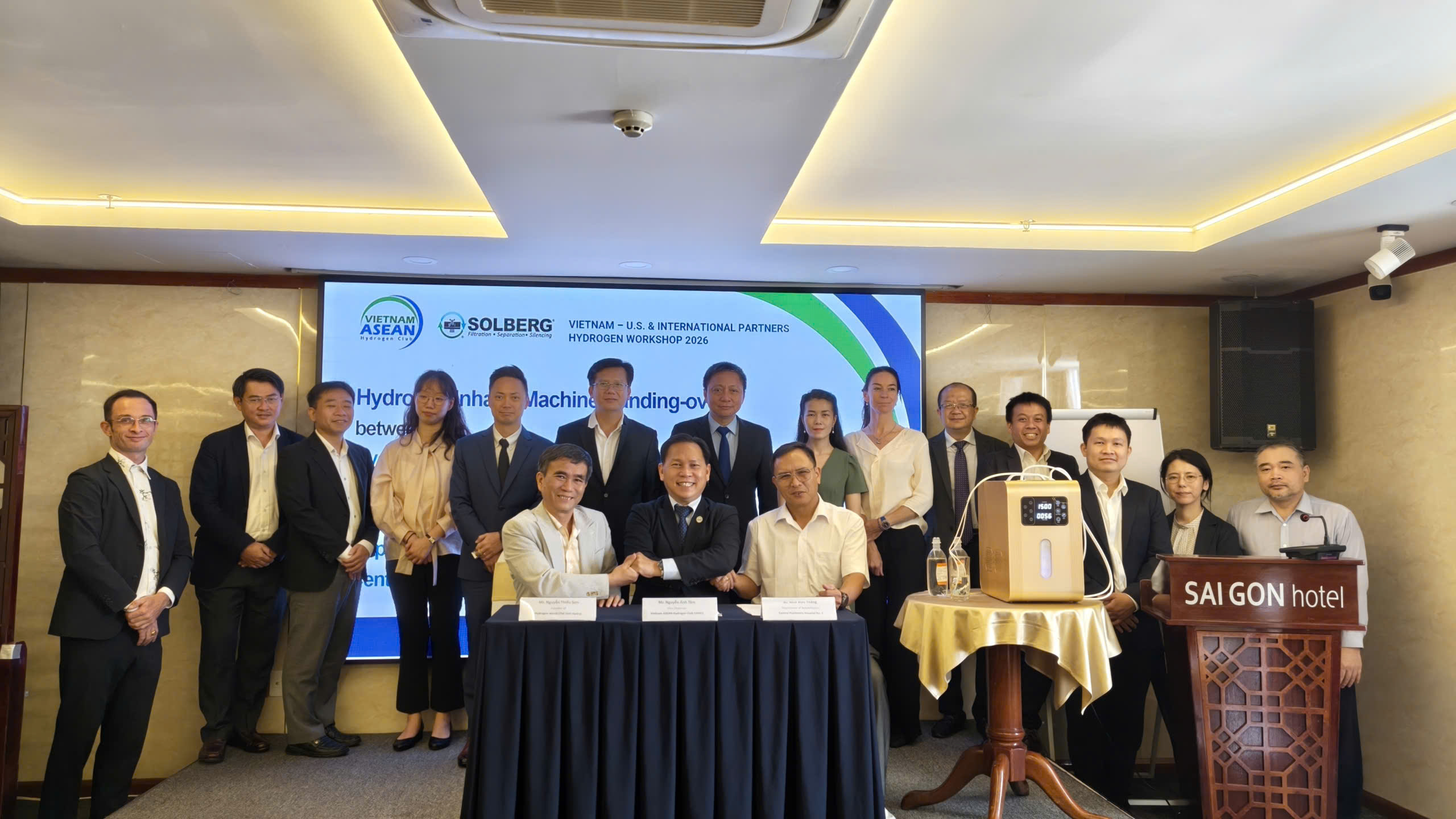
Event: Vietnam-America Hydrogen Workshop 2026 – "Advanced Hydrogen Technologies and the Semiconductor Supply Chain – Vietnam & ASEAN" (Session on Climate Finance and Hydrogen Technologies)
Opening: One of Japan’s Leading Consultants on Decarbonization
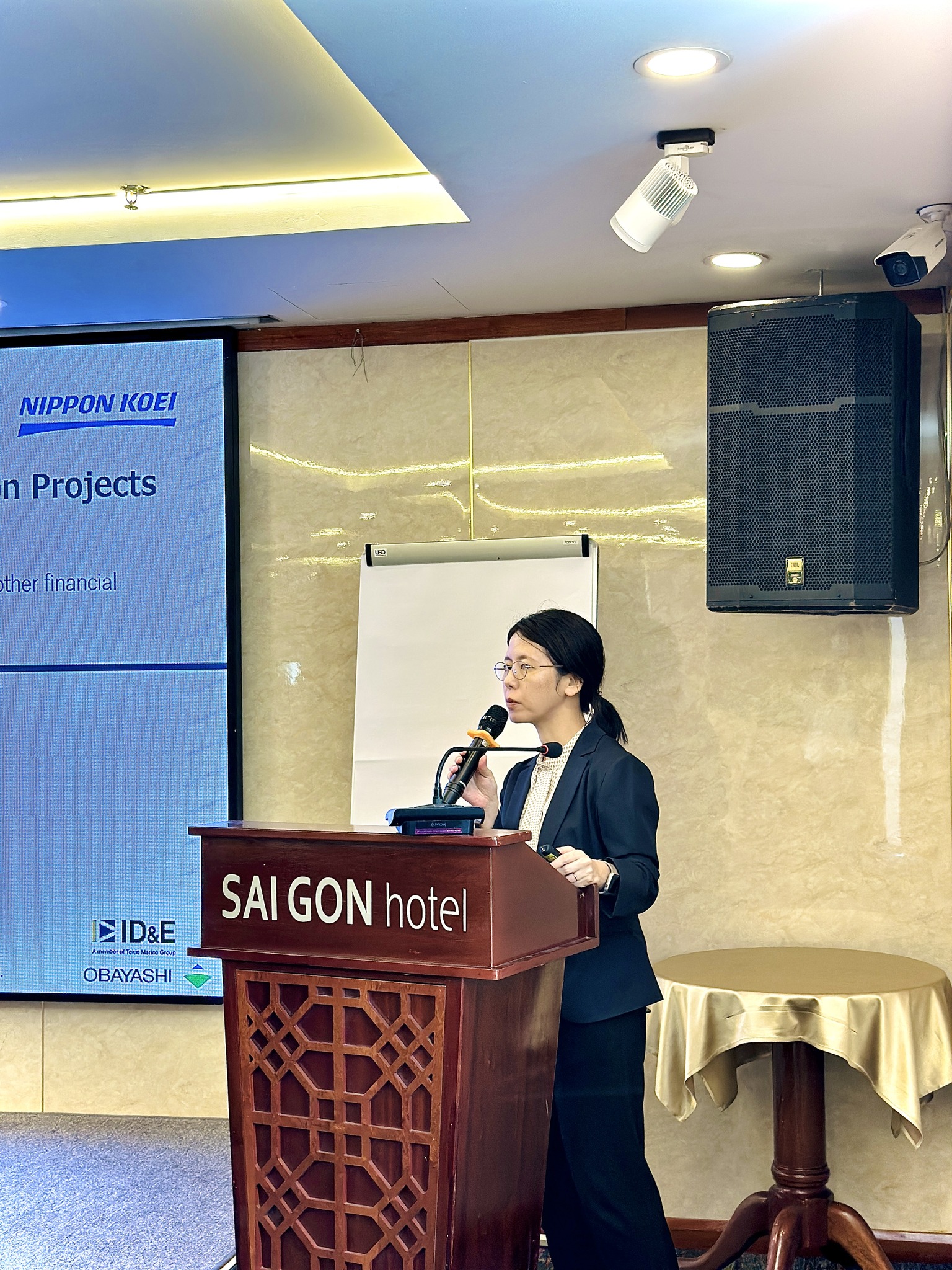
Immediately following the discussion on new hydrogen technologies, Ms. Tomoe Takeda, Manager in Charge of JCM Projects, International Environment Department of Nippon Koei Co., Ltd., took the stage. She opened with a clear message:
"Vietnam has huge potential in renewable energy and hard-to-abate industries. But technology alone is not enough – the right financial mechanisms are essential. Today, I will introduce the JCM fund and other support schemes from the Japanese government, specifically applicable to green hydrogen projects."
Nippon Koei is one of Japan's largest engineering consulting firms, with over 5,500 orders per year, operating in 160 countries, and holding the No. 1 sales position among civil engineering consulting firms in Japan.
Part 1: What is JCM? – Joint Crediting Mechanism between Japan and Vietnam
Ms. Takeda explained that JCM (Joint Crediting Mechanism) is a bilateral scheme between Japan and partner countries (including Vietnam) that:
-
Facilitates the diffusion of leading low/zero-carbon technologies to reduce energy-related CO₂ emissions.
-
Evaluates GHG emission reductions and shares the credits: part for the host country, part for Japan to help achieve its national reduction targets.
The key incentive:
The Japanese government (Ministry of Environment – MOEJ) covers 20–50% of initial investment costs for JCM model projects.
Budget scale (FY2025–2028):
-
Total budget: approx. JPY 11 billion (~VND 2 trillion) over 3 years.
-
Each model project can receive up to JPY 2 billion (~VND 352 billion).
Part 2: Green Hydrogen Technologies are Eligible
Ms. Takeda emphasized that green hydrogen technologies are included in the list of eligible technologies, alongside:
-
Renewable energy (solar PV with BESS, wind, biomass power generation).
-
Energy saving (boilers, centrifugal chillers, pumps, energy management systems).
-
Electric/FCV buses.
Key condition for maximum support:
-
Cost-effectiveness for GHG reductions ≤ 4,000 JPY/tCO₂eq (approx. 704,000 VND/tCO₂eq).
-
Covered costs include: equipment, main construction work (excluding civil engineering), machinery, surveying, testing, administrative work, etc.
"Hydrogen-related technologies will be applicable – and we already have selected JCM model projects in Vietnam in renewable energy and energy efficiency," Ms. Takeda noted, citing examples from existing project lists.
Part 3: Implementation Structure – Role of Japanese Company and Local Partner
According to Ms. Takeda, the JCM model project structure involves three main parties:
-
Japanese company (project representative): Manages the project, reports monitoring results (MRV), receives subsidy from MOEJ.
-
Local partner (factory, industrial park in Vietnam): Supervises equipment installation, operation, and monitoring.
-
Equipment manufacturers: Supply, install, and inspect the technology.
Real-world examples in Vietnam:
Nippon Koei has been actively facilitating JCM and decarbonization projects through City-to-City Collaboration schemes, including:
-
City-to-City Collaboration for Decarbonized Society in Hue area.
-
Environmental infrastructure promotion in Hanoi City.
-
Green-Smart Industrial Park development between Kobe City and Dong Nai Province.
-
Technical cooperation for Eco-Industrial Park guidelines in HCMC and Ba Ria–Vung Tau (under Decree 35/2022/ND-CP), with pilot initiatives on renewable energy, circular economy, and smart meters.
Part 4: Other Financial Support Schemes
Ms. Takeda briefly introduced additional financing tools from Japanese and international sources:
-
JFJCM (Japan Fund for the Joint Crediting Mechanism) managed by ADB.
-
Support from METI (Ministry of Economy, Trade and Industry of Japan).
-
JICA technical cooperation and city-to-city collaboration programs.
"We don't stop at JCM. Our goal is to create a flexible financial ecosystem that helps hydrogen and renewable energy projects in Vietnam access preferential capital easily."
Conclusion and Call for Cooperation
Ms. Tomoe Takeda concluded with a concrete offer:
*"Vietnam has many industrial parks, steel plants, waste treatment facilities, and significant biomass potential. Hydrogen technologies, renewable energy, and energy-saving solutions can absolutely be deployed through JCM, with financial support covering up to 50% of initial investment costs. We are ready to work with Vietnamese partners to develop the first model projects."*
She also noted that the typical timeline from project decision (FID) to commercial operation is 12–18 months, depending on scale.
Contact information:
contact@vahc.com.vn
Reported by: VAHC Secretariat
*Source: Nippon Koei presentation file (April 2026) and Vietnam-America Hydrogen Workshop 2026 program*