
INTERNATIONAL WORKSHOP "HYDROGEN SOLUTIONS FOR AGRICULTURE, ENVIRONMENT, AND CARBON MARKET" – DETAILED REPORT
Date: July 29, 2026
By VAHC Secretariat
OPENING
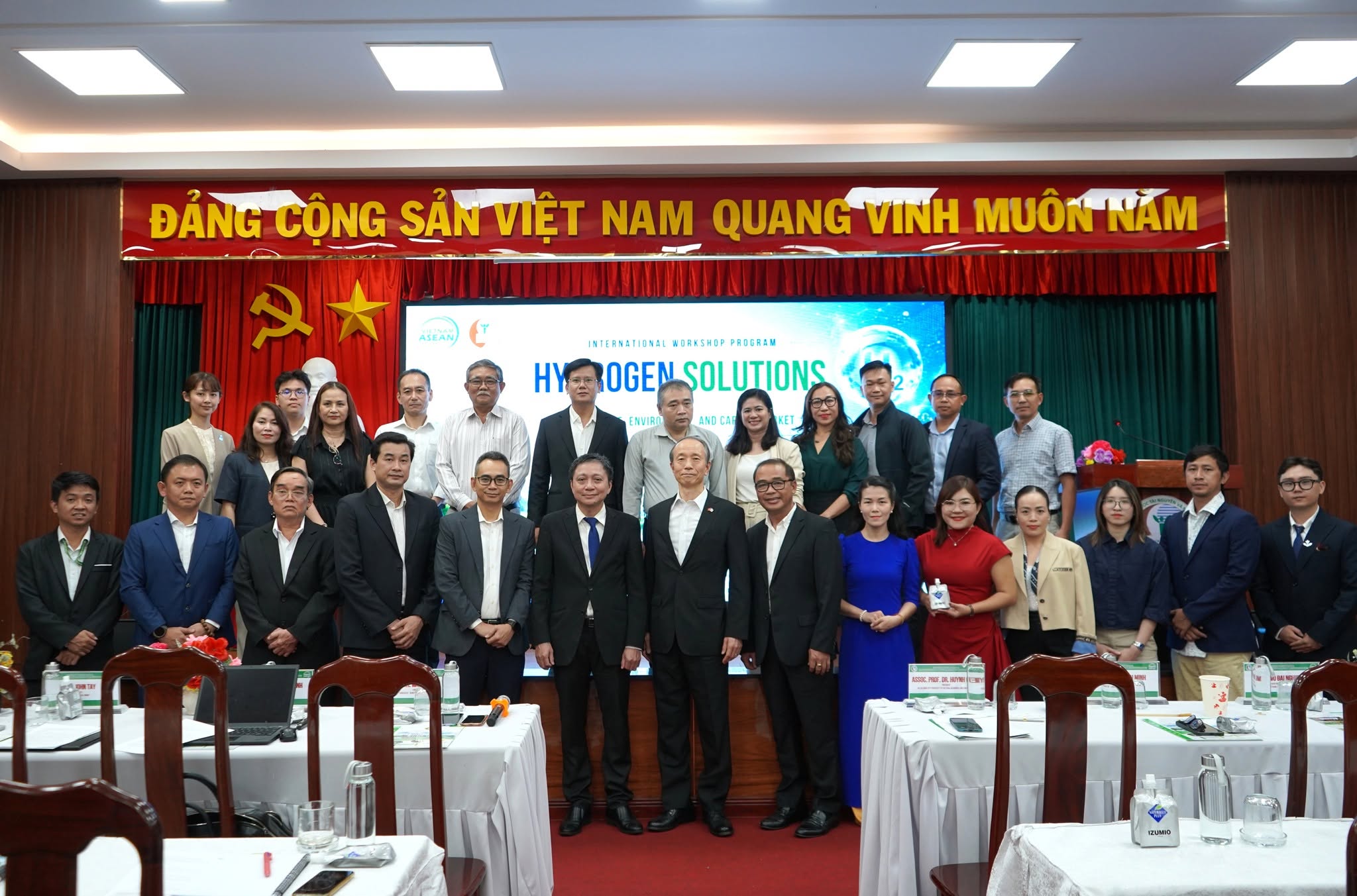
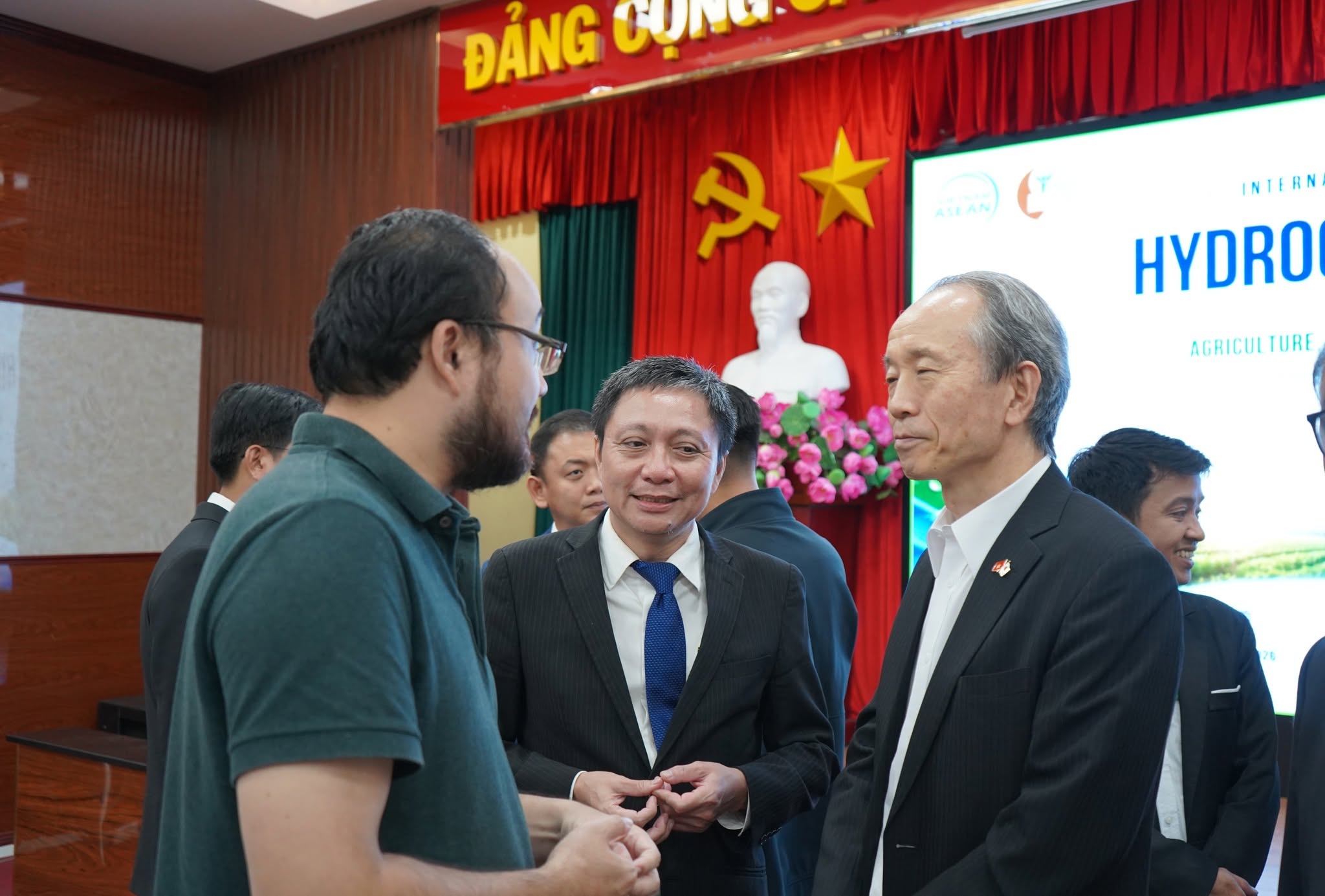
On July 29, 2026, at Ho Chi Minh City University of Natural Resources and Environment (HCMUNRE), the International Workshop on "Hydrogen Solutions for Agriculture, Environment, and Carbon Market" co-hosted by HCMUNRE and VAHC officially took place. The event brought together a large number of scientists, leading experts, domestic and international businesses, and diplomatic representatives from Japan, Malaysia, and South Korea. The workshop was organized to promote hydrogen applications in agriculture, environment, and carbon market development in Vietnam, while strengthening international cooperation in clean energy.
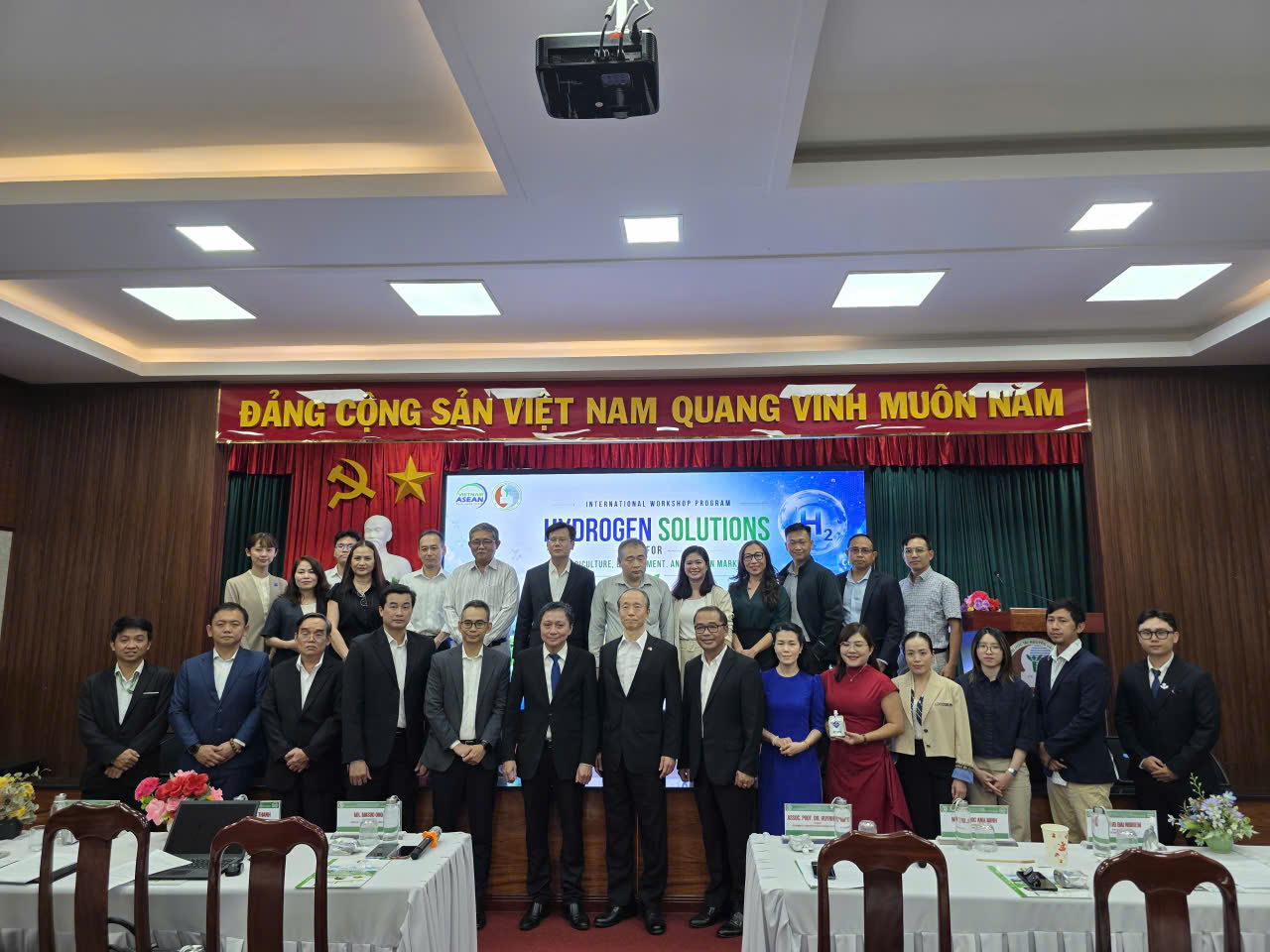
OPENING SESSION – WELCOME REMARKS
Assoc. Prof. Dr. Huynh Quyen – Rector of HCMUNRE
In his opening speech, Assoc. Prof. Dr. Huynh Quyen emphasized the important role of hydrogen in sustainable development and greenhouse gas emission reduction strategies, particularly for Vietnam's agriculture and environment sectors. He noted that HCMUNRE has always been a pioneer in researching and applying green technology solutions, including hydrogen. He expressed his hope that the workshop would open up many opportunities for research cooperation and practical applications among participants.
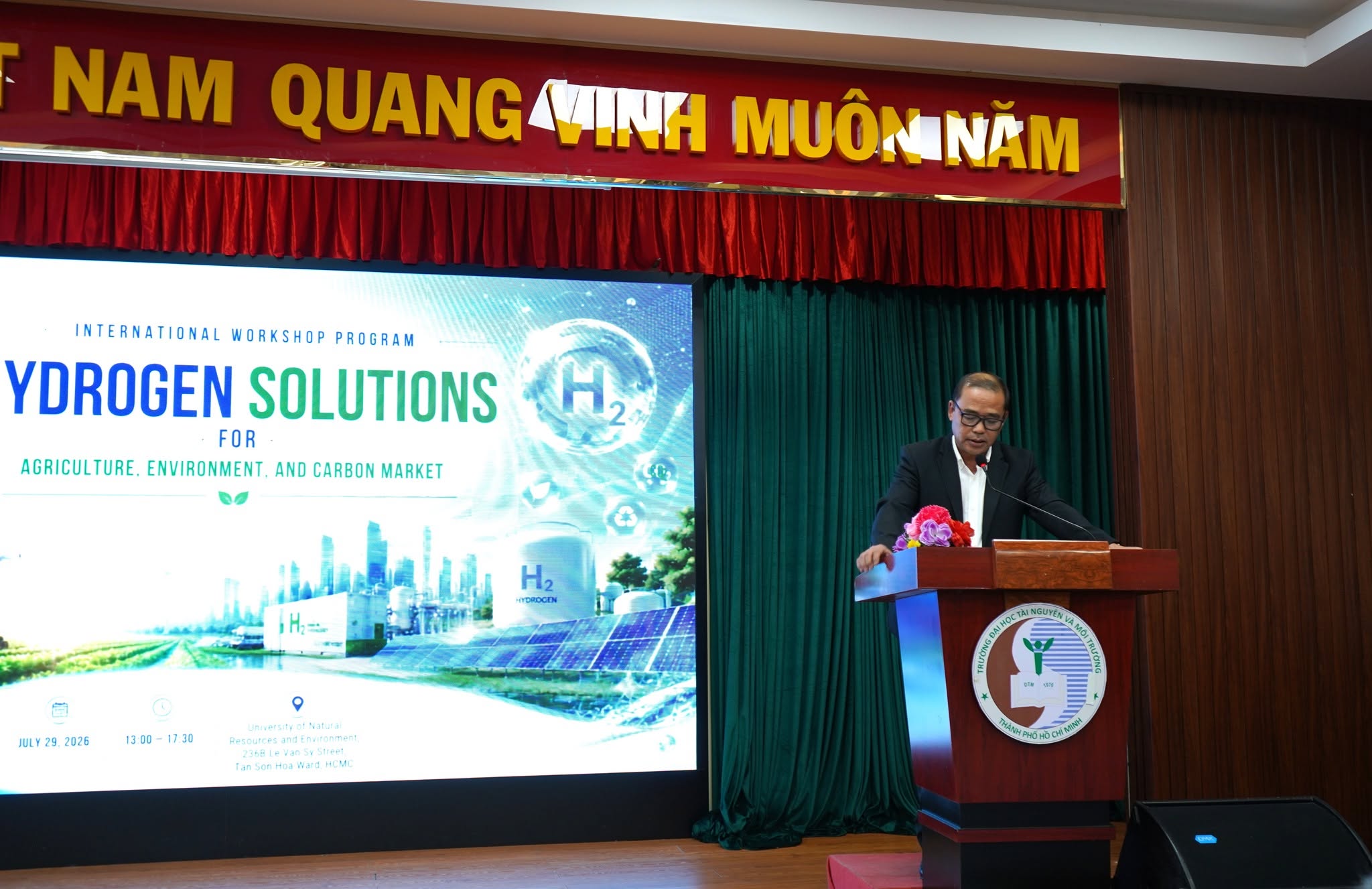
Associate Professor, Dr. Huynh Quyen, President of HCMUNRE delivered his opening speech
Mr. Le Ngoc Anh Minh – Chairman of the Vietnam ASEAN Hydrogen Club (VAHC)
Mr. Le Ngoc Anh Minh shared VAHC's vision of promoting the development of Vietnam's hydrogen ecosystem and the ASEAN region. He emphasized that Vietnam has great potential in developing renewable energy for green hydrogen production, especially wind and solar power. VAHC is committed to accompanying businesses and research institutes in policy development, technology transfer, and human resource development for Vietnam's hydrogen industry.
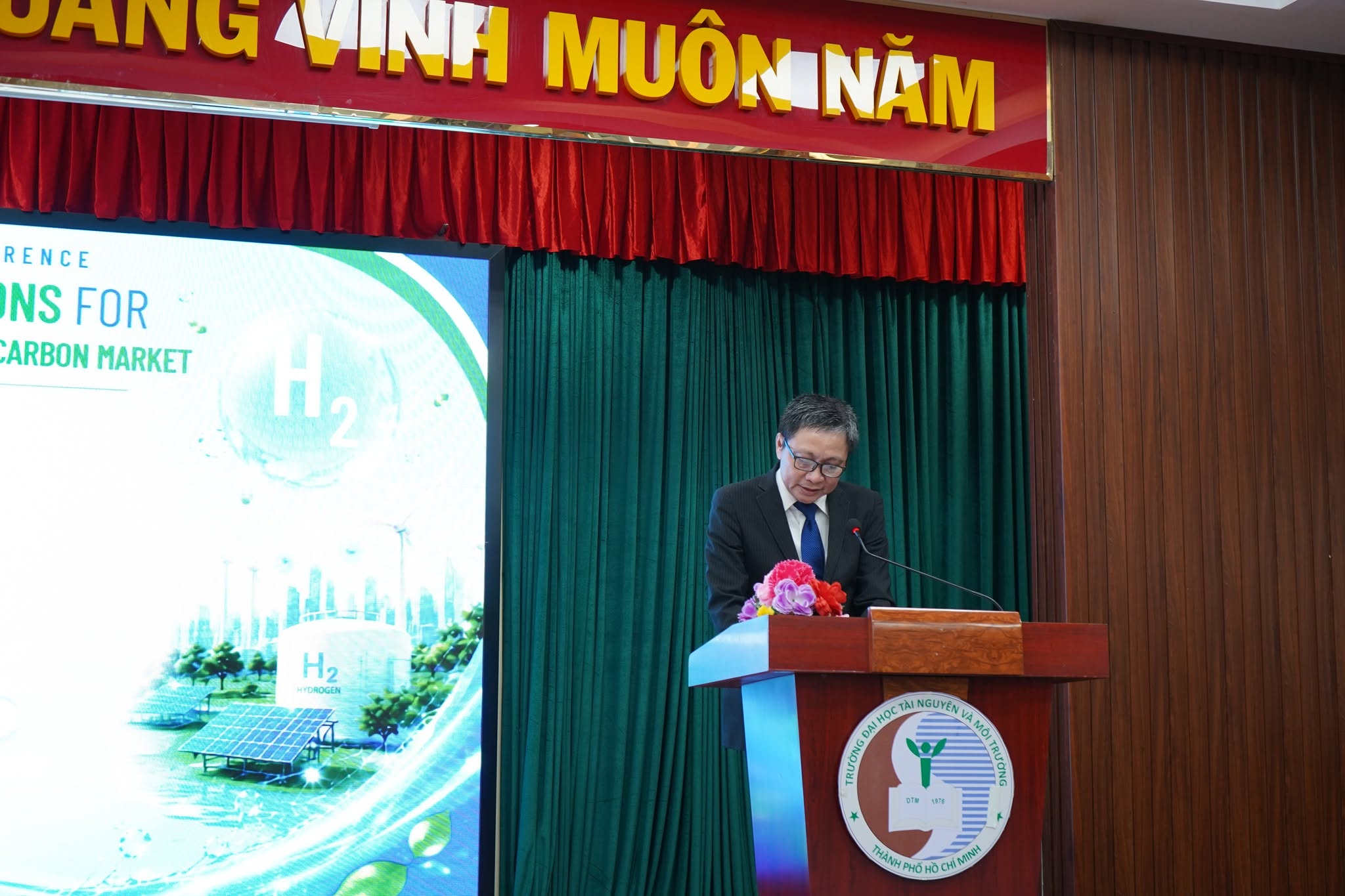
Mr. Le Ngoc Anh Minh, Chairman of VAHC delivered his welcoming speech
Mr. Masuo Ono – Consul General of Japan in Ho Chi Minh City
Mr. Masuo Ono affirmed the strategic partnership between Japan and Vietnam in clean energy. He introduced Japan's support policies for hydrogen projects in Southeast Asia, including technical cooperation, human resource training, and financial support. He expressed confidence that hydrogen would be an important catalyst for energy transition in Vietnam and the region.
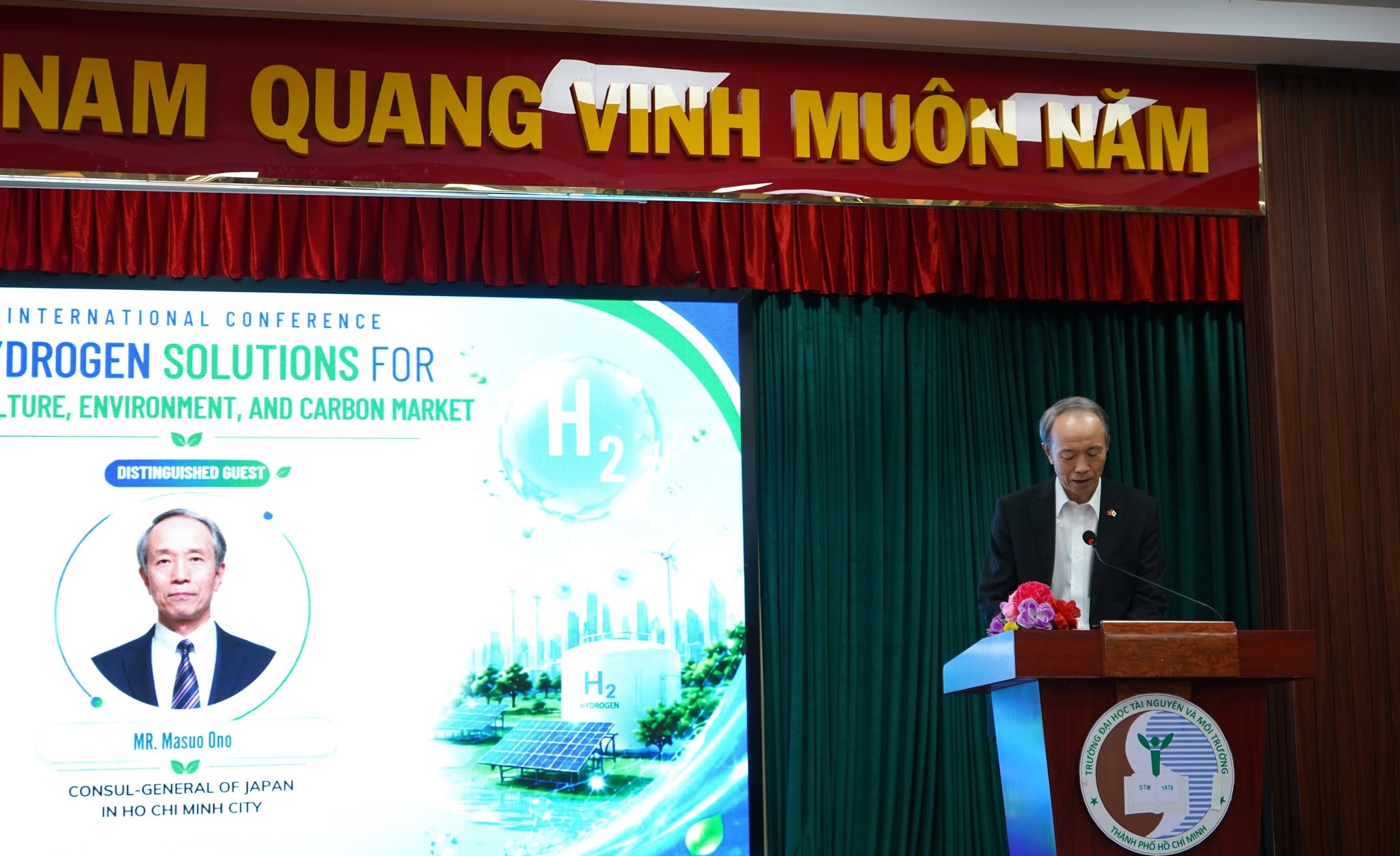
Mr. Masuo Ono, Consul-General of Japan in HCMC delivered his opening remarks
SESSION 1: HYDROGEN, ENVIRONMENT, AND CARBON CREDITS – OPPORTUNITIES AND INTEGRATION ROADMAP
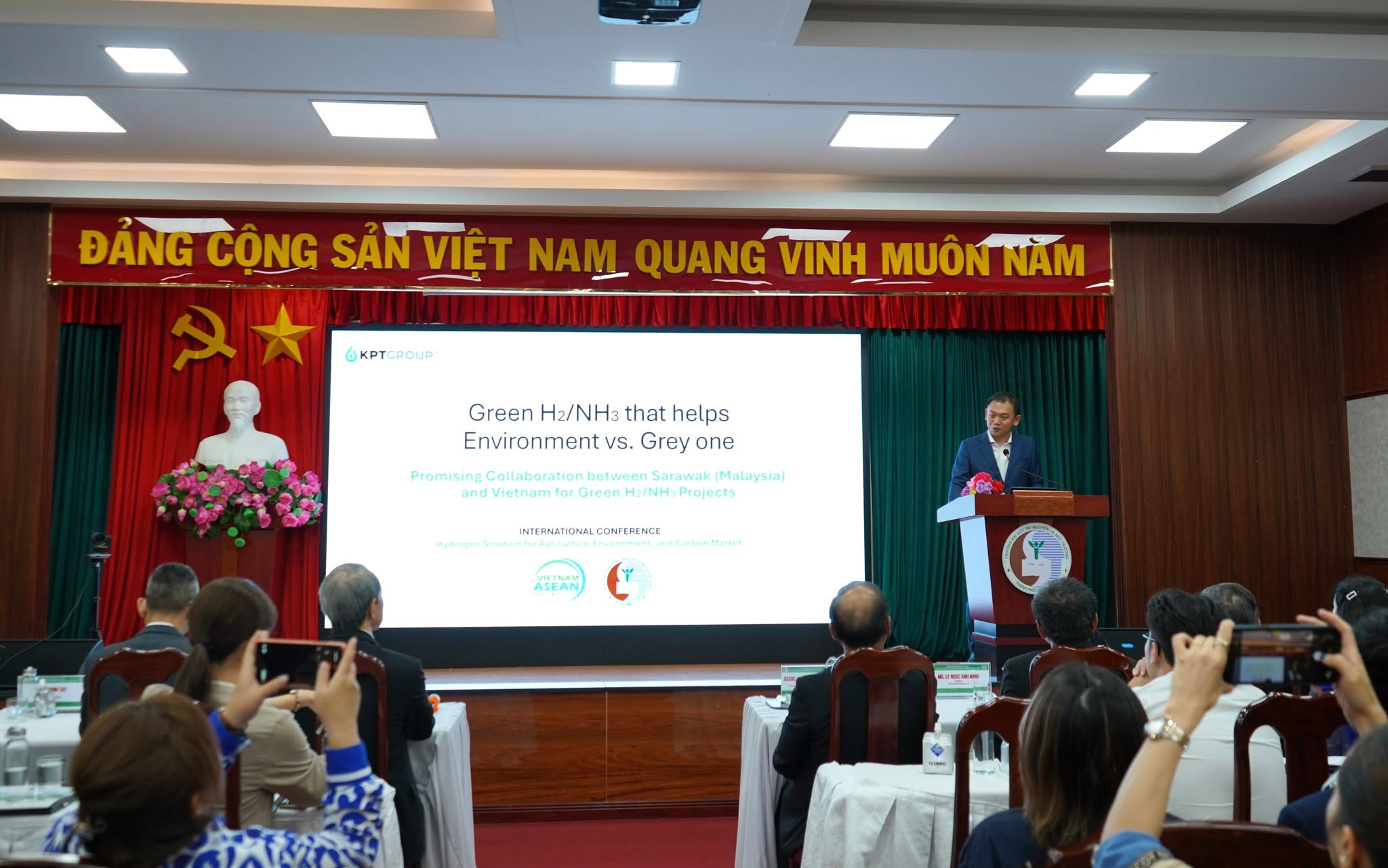
1. Mr. John Tay – CEO of KPT Chemical Group (Malaysia)
Topic: Green Hydrogen and Ammonia that help the environment vs. grey ones and promising collaboration between Sarawak, Malaysia and Vietnam provinces for Green Hydrogen and Ammonia projects
Mr. John Tay introduced an overview of KPT Chemical Group – a Malaysian enterprise established in 2009, with offices in Vietnam and global operations with annual revenue exceeding 500 billion VND. The Group specializes in chemical solutions, clean energy, and logistics services for modern industry.
Green Hydrogen vs. Grey Hydrogen Comparison:
Mr. Tay pointed out the core differences between the two types of hydrogen:
-
Grey Hydrogen: Produced from natural gas through steam methane reforming (SMR), emitting approximately 10-15 kg CO₂/kg H₂, low cost (~$1.8/kg) but causes serious environmental pollution.
-
Green Hydrogen: Produced from water electrolysis using renewable energy, near-zero emissions, currently higher cost (~$4-8/kg) but rapidly decreasing due to technological advances and economies of scale.
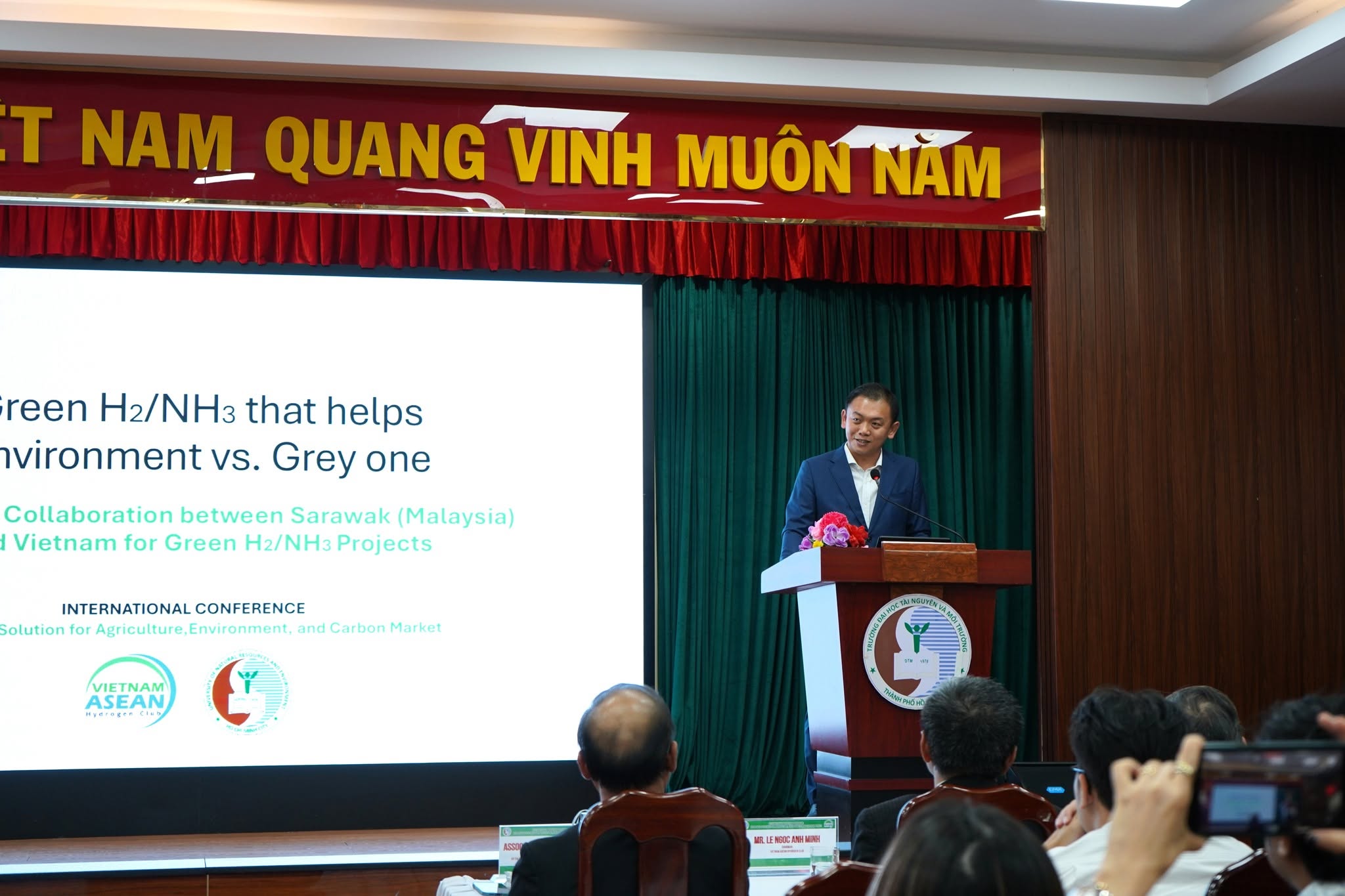
Mr. John Tay, CEO of KPT Chemical Group
Green Ammonia vs. Grey Ammonia Comparison:
Mr. Tay presented a detailed comparison table of environmental impacts:
| Criteria | Green Ammonia (NH₃) | Grey Ammonia (NH₃) |
|---|---|---|
| CO₂ Emissions (Lifecycle) | 0.1-0.3 t CO₂/t NH₃ | 1.6-2.2 t CO₂/t NH₃ |
| Global Warming Potential (GWP) | Very Low | High |
| Air Pollutants | Very Low | Moderate to High |
| Water Consumption | Low to Moderate | Moderate to High |
| Resource Sustainability | High | Low |
Conclusion: Switching from grey to green ammonia can reduce lifecycle CO₂ emissions by 90-95%.
Green Hydrogen and Ammonia Application Potential in Carbon Reduction:
Mr. Tay presented an application table with potential emission reduction:
-
Steel Production (DRI): Replace coal with Green H₂ → 90-95% CO₂ reduction
-
Ammonia Production: Replace Grey H₂ with Green H₂ → 95-100% CO₂ reduction
-
Power Generation: Co-firing H₂/NH₃ replacing coal/gas → 20-100% CO₂ reduction
-
Maritime Transport: Replace FO with Green NH₃ → 90-100% CO₂ reduction
-
Sustainable Aviation Fuel (SAF): Replace Jet fuel with Green H₂ → 70-90% CO₂ reduction
-
Heavy Trucks, Buses, Rail: H₂ fuel cells replacing diesel → 80-100% CO₂ reduction
-
Industrial Heat: H₂ replacing coal/LPG → 80-100% CO₂ reduction
Introduction to Sarawak – Malaysia's Green Hydrogen Hub:
Mr. Tay introduced Sarawak, Malaysia's largest state with an area of 124,450 km² and population of approximately 2.53 million. Sarawak possesses enormous renewable energy potential, especially hydropower (over 20,000 MW), and has been selected as Malaysia's green hydrogen development hub.
Sarawak Hydrogen Development Roadmap:
-
2017-2018: Sarawak began investing in green hydrogen research, mandating Sarawak Economic Development Corporation (SEDC) Energy.
-
2019: Launched pilot hydrogen production plant and refueling station in Kuching for public transport.
-
February 26, 2024: Signed heads of agreement for dedicated large-scale Bintulu hydrogen hub at Borneo Energy Transition Conference.
-
June 10, 2024: Formally launched official joint-venture Sarawak H2 Hub project between SEDC Energy and Gentari.
-
2025-2026: Advanced regional policies via Sarawak Hydrogen Economy Roadmap and expanded local infrastructure like Autonomous Rapid Transit (ART) hydrogen facilities.
Specific Projects in Sarawak:
-
Darul Hana H2 Plant: Sarawak's first public hydrogen refueling station, capacity 150 kg/day, currently in commissioning phase.
-
Rembus Hydrogen Plant: Minimum 5 tonnes H₂/day capacity, serving Kuching Urban Transportation System (KUTS) and Automated Rapid Transit (ART) – the world's first network-scale hydrogen-powered ART system.
-
Sarawak Electrolyser Assembly & Distribution Facility (SEA-DF): Collaboration between SEDC Energy and Lestari H2 Gaas, Malaysia's first electrolyser assembly facility. Target: producing electrolysers consuming under 40 kWh/kg H₂ (compared to industry standard 50-60 kWh/kg).
KPT Group's Role and Cooperation Opportunities with Vietnam:
Mr. Tay introduced KPT Group as a bridge promoting cooperation between Vietnam and Sarawak. On January 8, 2026, KPT Group organized a roadshow on Solid State hydrogen transportation solutions in Ho Chi Minh City with SEDC Energy and PECC2 participation. Future cooperation activities include:
-
Establishing deeper partnerships in Green H₂/NH₃ between Vietnam and Sarawak
-
Leveraging strengths of both countries to contribute to the global hydrogen economy
-
Investing in Green NH₃ storage terminals, Green H₂ & NH₃ production, hydrogen mobility projects, R&D centers with universities in both countries
2. Dr. Tran Thanh Tam – Deputy Head of Research & International Relations Department, HCMUNRE
Topic: Assessing the Potential of Hydrogen Applications for Carbon Crediting in Vietnam's Agricultural and Environmental Sectors
Dr. Tran Thanh Tam opened by introducing Vietnam's legal framework for the carbon market. The Law on Environmental Protection 2020 (Article 139) established the legal mandate for carbon markets. Decree No. 29/2026/ND-CP (February 2026) provides detailed regulations on carbon markets and carbon credits in Vietnam, including provisions on validation, measurement, reporting, and verification (MRV).
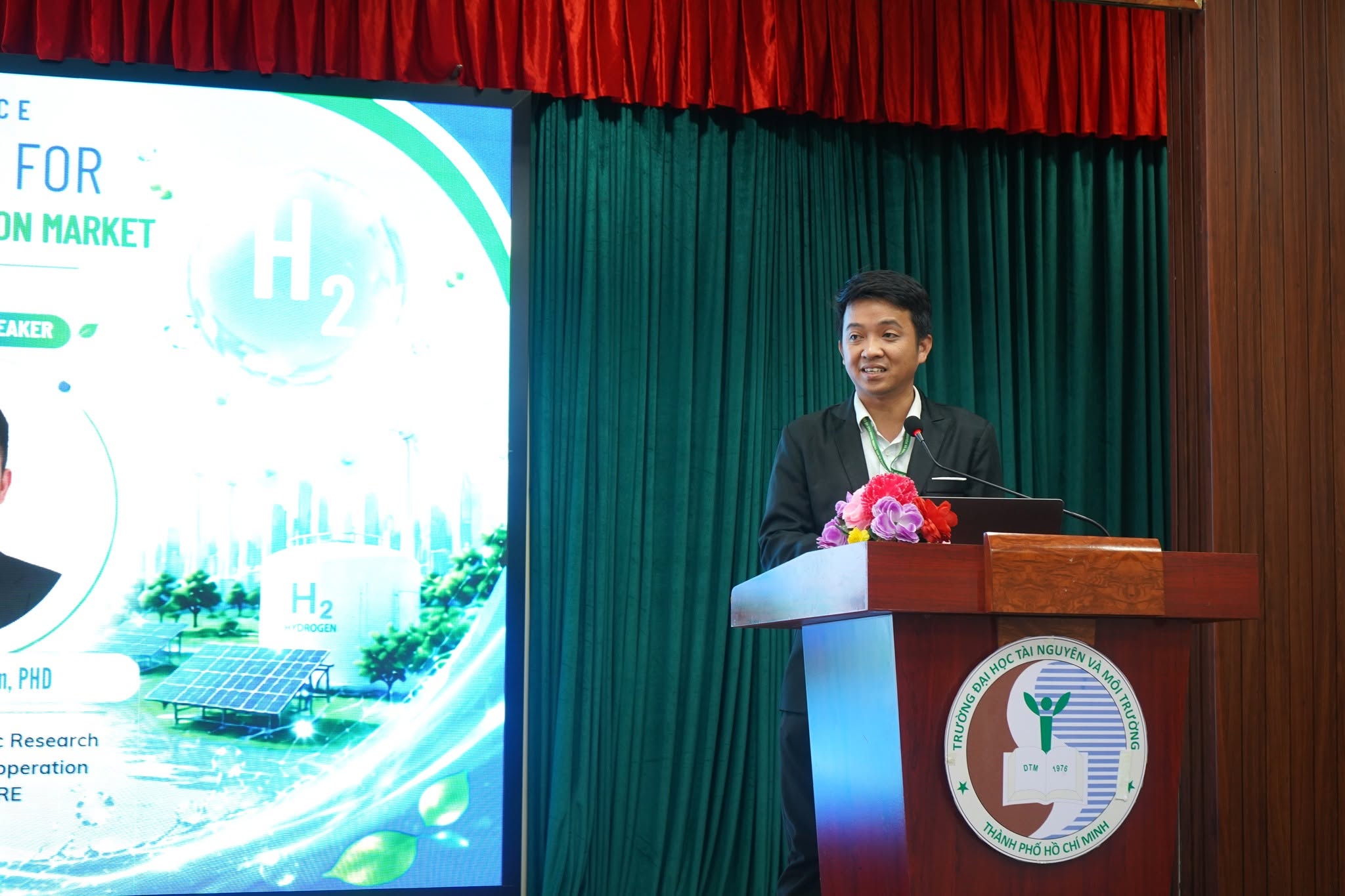
Dr. Tran Thanh Tam, Vice Head of Scientific Research and International Cooperation Dept of HCMUNRE
Three Main Hydrogen Application Models for Carbon Credit Creation:
Model 1: Green Ammonia Replacing Grey Ammonia in Fertilizer Production
-
The Problem: Traditional nitrogen fertilizers rely on Grey Ammonia produced via Steam Methane Reforming (SMR), which has a large carbon footprint (approximately 2.05 tCO₂/t NH₃).
-
Solution: Use water electrolysis (PEM/Alkaline) powered by renewable energy to produce Green Hydrogen, then synthesize into Green Ammonia.
-
Vietnam Scale Simulation: Replacing 30% of Vietnam's annual nitrogen fertilizer consumption (approximately 2 million tons) with Green Ammonia can cut over 1.23 million tons of CO₂ annually.
-
Carbon Credit Standards: CDM AM0012, Gold Standard
-
Emission Reduction: 95-97% of production emissions
Model 2: Hydrogen-Rich Water (HRW) in Rice Cultivation
-
The Problem: Paddy rice cultivation is a major source of methane (CH₄) emissions due to anaerobic microorganisms decomposing organic matter under flooded conditions.
-
Solution: Use hydrogen-rich water in irrigation, stimulating methanotrophic bacteria (methane-oxidizing), suppressing anaerobic methanogenesis.
-
Mechanism: HRW changes soil microbial communities, promoting bacteria that use methane as carbon and energy source.
-
Emission Reduction: 40-50% of field methane emissions (~2.16 tCO₂-eq/ha/season)
-
Carbon Credit Standards: VCS VM0042 (Improved Land Management), GS AWD (Alternate Wetting and Drying)
-
Additional Benefits: Increased rice yield (research by Wu et al., 2020 showed HRW helps rice plants better resist abiotic stress)
Economic Analysis for HRW Model on 10,000 ha Scale:
| Parameter | Low Carbon Price ($10/tCO₂) | High Carbon Price ($25/tCO₂) |
|---|---|---|
| Area | 10,000 ha, 2 crops/year | 10,000 ha, 2 crops/year |
| Carbon Credits | 43,200 tCO₂/year | 43,200 tCO₂/year |
| Carbon Revenue | $0.432 million/year | $1.080 million/year |
| Rice Yield Increase (Wu, 2020) | $3.840 million/year | $3.840 million/year |
| Payback Period (IRR) | 5.8 years (14.5%) | 4.2 years (21.8%) |
Model 3: Biogas Methanation from Livestock Waste
-
The Problem: Biogas from livestock waste contains 30-50% CO₂, reducing calorific value and causing emissions when burned or released.
-
Solution: Use green hydrogen to methanate CO₂ in biogas (Sabatier reaction: CO₂ + 4H₂ → CH₄ + 2H₂O), converting CO₂ to biomethane, increasing fuel value and creating carbon credits.
-
Emission Reduction: 100% CO₂ recovery in biogas (~1.0 tCO₂/t biogas)
-
Carbon Credit Standards: CDM ACM0022, Gold Standard CCU
Integration Roadmap to 2050:
Dr. Tam presented a long-term agricultural emission reduction roadmap:
-
2026-2028: Pilot projects, establishing standards and legal frameworks
-
2029-2035: Expansion, commercial application
-
2036-2050: Comprehensive development, contributing to Net Zero targets
Policy Recommendations:
-
MARD and MONRE should coordinate to establish carbon accounting standards and emission reduction factors for agricultural hydrogen, complying with Decree No. 29/2026/ND-CP.
-
Develop a national science and technology program on hydrogen applications in agriculture.
-
Establish public-private partnerships to mobilize investment resources.
-
International cooperation to access technology and carbon finance.
3. Ms. Phuong Ho – Assistant to CEO, UNP Healthcare Vietnam (Japanese Company)
Topic: Applications of Hydrogen-Rich Water (Izumio) in Health Support and Environmental Protection: Scientific Evidence and Development Proposals for Vietnam
Ms. Phuong Ho opened with the message: "Hydro is not just the story of energy. Hydro is also the story of health and sustainable development."
Introduction to UNP Healthcare Vietnam and UNIVA CAPITAL Group:
UNP Healthcare Vietnam was established on November 1, 2022, as a member of UNIVA CAPITAL Group – a group with 72 member companies operating in 17 business sectors across 16 countries and territories. UNP Healthcare Vietnam specializes in importing and distributing exclusive products from Japan, including Izumio – Japan's No. 1 hydrogen-rich water brand.
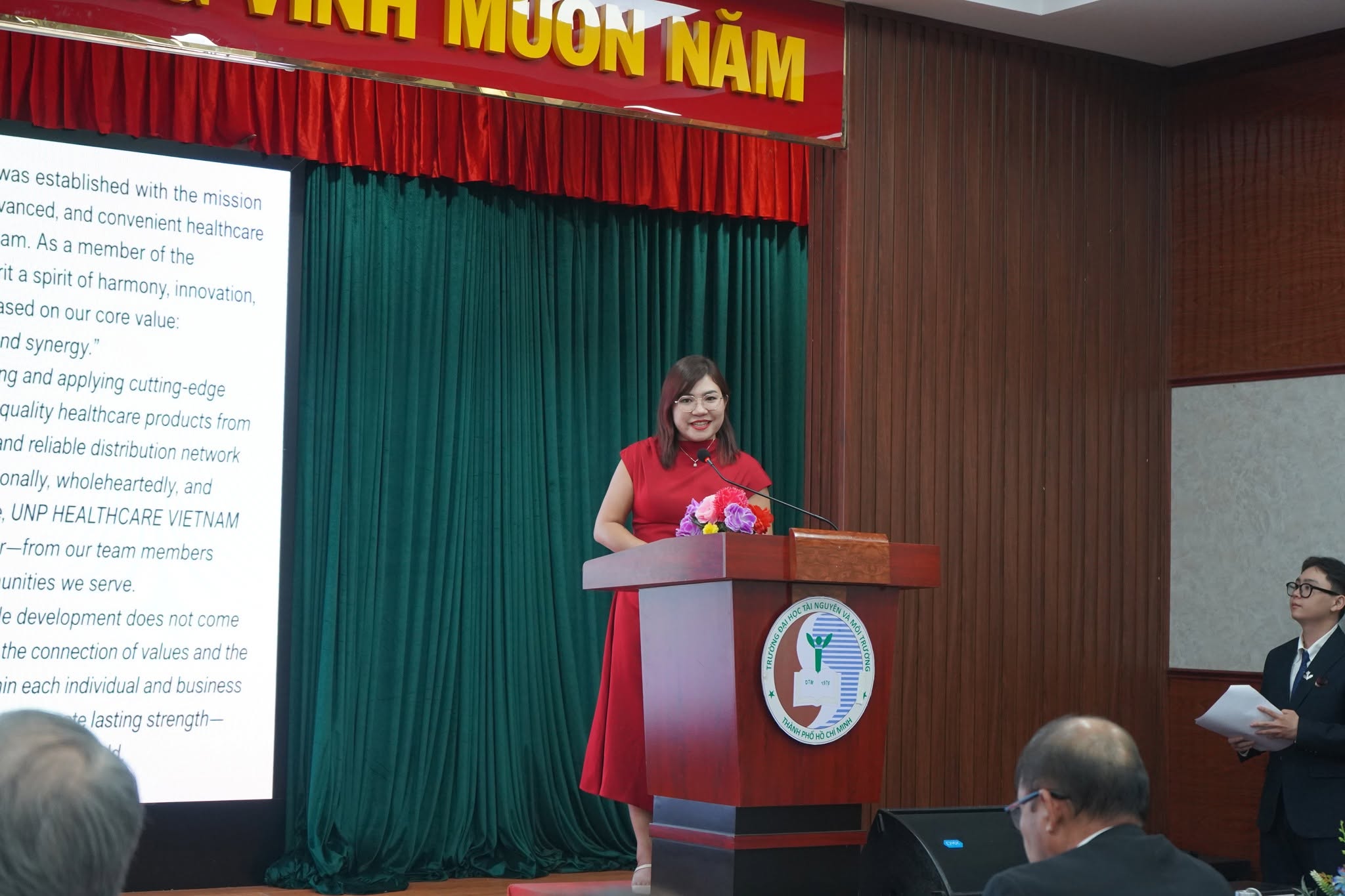
Ms. Ho Thi Bich Phuong, Assistant to CEO of UNP Healthcare Vietnam
Scientific Basis of Molecular Hydrogen (H₂):
Ms. Ho presented an overview of molecular hydrogen in medicine and health:
-
H₂ can penetrate cell membranes, reaching every nook and cranny of cells, eliminating harmful Reactive Oxygen Species (ROS) at their source.
-
Over 2,000 scientific publications on molecular hydrogen have been published.
-
Numerous human clinical trials have been conducted in fields including: oxidative stress, metabolic syndrome, cardiovascular disease, neurological disorders, diabetes, and post-exercise recovery.
IZUMIO Product – Hydrogen-Rich Water:
-
Launched in Japan in 2007, No. 1 brand in Japan's hydrogen water market (2010-2024) with over 300 million units distributed.
-
Hydrogen dissolution concentration: 3.3 ppm (highest among similar products).
-
Redox potential: -570 to -700 mV (strong reducing power).
-
Manufacturing technology: Membrane dissolution – a special membrane permeable to gases but not liquids.
-
Packaged in 4-layer aluminum pouches with high shielding protection, packed upside down to minimize hydrogen gas escape.
-
Factory certified with Health Supplement GMP and FSSC22000 (International Food Safety).
Scientific Evidence of Health Benefits:
-
Muscle Growth: Research on db/db mice showed hydrogen water mice had higher muscle mass, lower visceral fat and subcutaneous fat compared to control group.
-
Metabolic Syndrome Improvement in Humans: Randomized, double-blind, placebo-controlled trial on 60 subjects with metabolic syndrome over 24 weeks with high-concentration HRW (>5.5 mmol H₂/day). Results:
-
Reduced BMI
-
Reduced LDL cholesterol
-
Reduced blood glucose and HbA1c
-
Reduced inflammatory markers (TNF-α, IL-6)
-
Improved blood pressure control factors (ACE)
-
Reduced risk of new coronavirus infection
-
-
Cancer Treatment Support: Research by Professor He Q. (Nature Communications, 2018, Vol.9, Article 4241) showed high hydrogen concentration helps shrink tumors in photothermal therapy.
Development Proposals for Vietnam:
-
Promote clinical research in Vietnam: Need clinical data from Vietnamese population to build scientific evidence suitable for local conditions.
-
Build a comprehensive hydrogen ecosystem: Not just energy but also health, agriculture, environment, and carbon market.
-
Public-private partnership: Combine resources from businesses, research institutes, and government to develop multi-sector hydrogen applications.
Ms. Ho concluded with the message: "Stronger Together – Building the Hydrogen Future."
SESSION 2: HYDROGEN APPLICATIONS IN SUSTAINABLE AGRICULTURE AND RURAL DEVELOPMENT
4. Dr. Nguyen Phuc Thanh – Branch Director, Kanadevia Corporation (Japan)
Topic: Hydrogen Solution Towards A Green Future And Sustainable Development
Dr. Nguyen Phuc Thanh introduced Kanadevia Corporation (formerly Hitachi Zosen Corporation). The Group is headquartered in Osaka, Japan, with 42 subsidiaries and branches globally, operating in environmental systems, biogas plants, operation & maintenance, and energy.
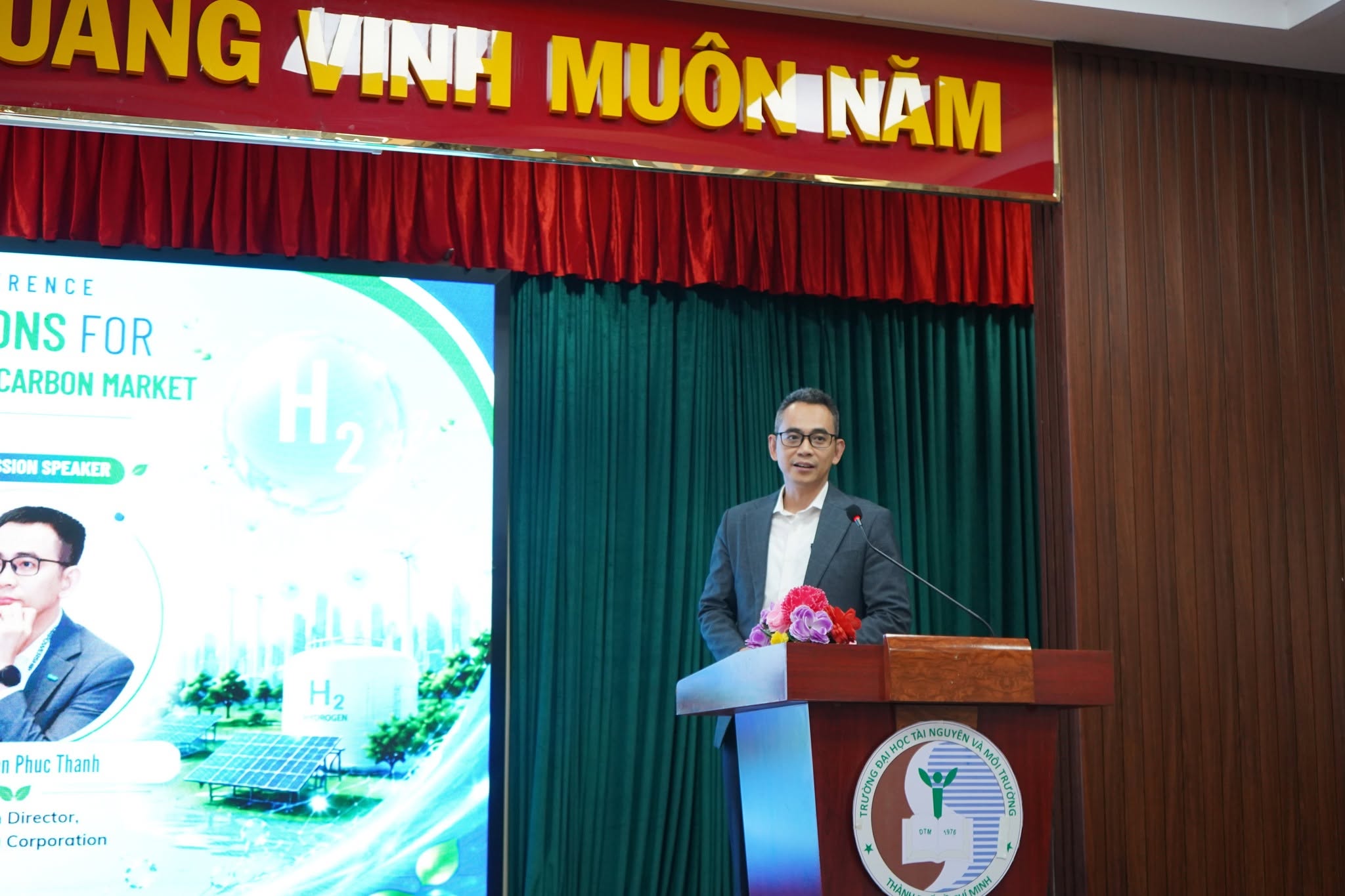
Dr. Nguyen Phuc Thanh, Branch Director of Kanadevia Corporation Vietnam
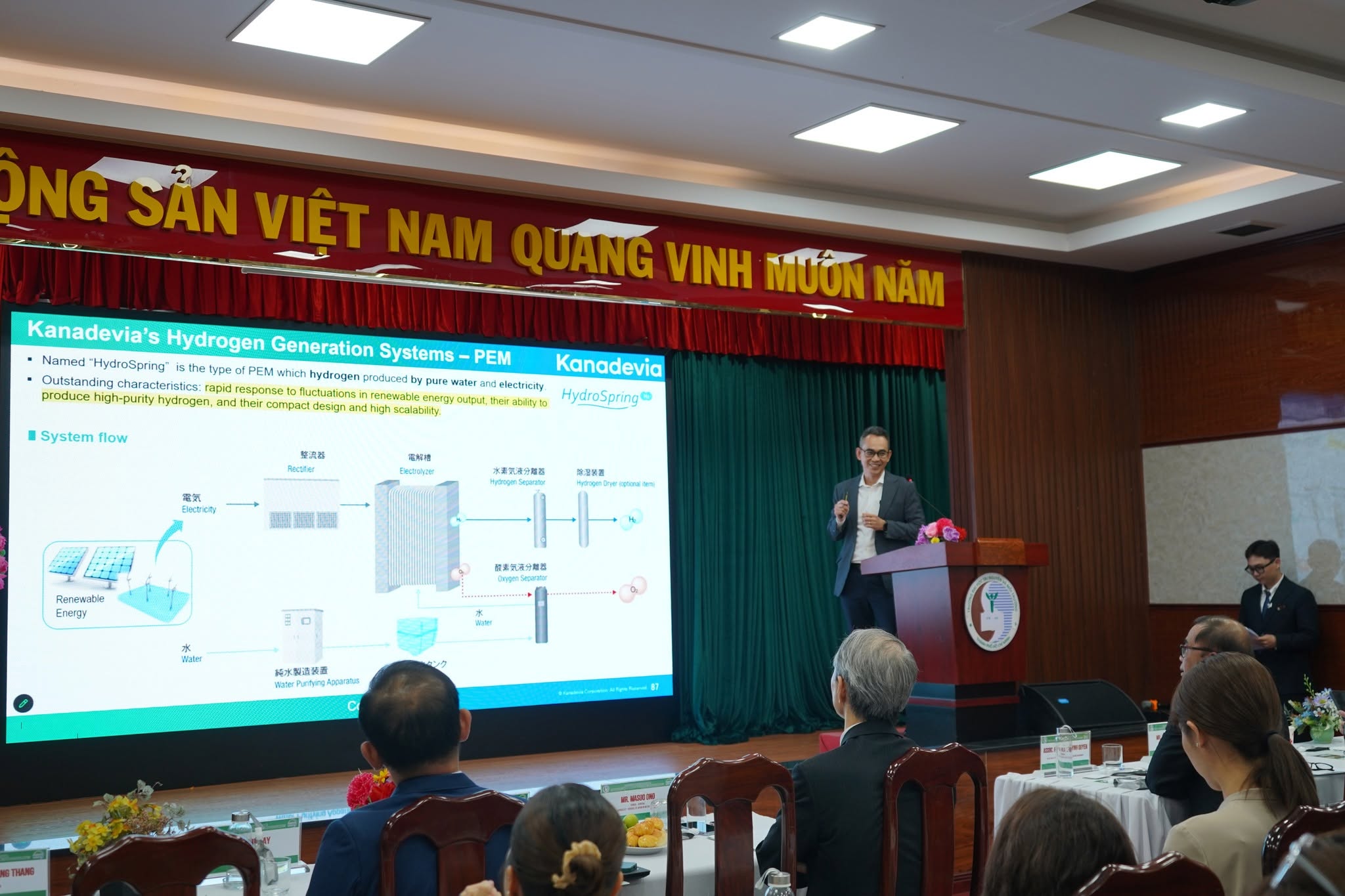
Kanadevia's Hydrogen Generation System – HydroSpring (PEM):
-
This is a Proton Exchange Membrane (PEM) electrolysis system producing hydrogen from pure water and electricity.
-
Outstanding characteristics:
-
Rapid response to fluctuations in renewable energy (critical characteristic when integrating with wind and solar power)
-
High-purity hydrogen production
-
Compact design and high scalability
-
-
System operation: Pure water is fed into electrolysis cells; through the PEM membrane and DC voltage, water is split into H₂ at the cathode and O₂ at the anode. Hydrogen is then dried, purified to 99.999% purity, and stored or used.
Kanadevia's Development History in Hydrogen:
-
2000: Began fuel cell and electrolysis technology research.
-
2018: Developed and commercialized small-scale PEM system.
-
2024: Decided to establish mass production factory. Project supported by METI under "GX Supply Chain Construction Support Program."
-
2025: Operated 6 MW project (approximately 1,126 Nm³/h) at Suntory HD Hakushu Factory (beverage), using hydrogen for boilers (demonstration). Project supported by NEDO's Green Innovation Fund.
-
2026: Broke ground on 1 GW/year PEM production factory in Yamanashi Prefecture.
-
2029: Expected completion, capacity 1 GW/year.
1 GW PEM Production Factory in Yamanashi:
| Information | Details |
|---|---|
| Construction Site | Yamanashi Prefecture, Japan |
| Production Models | PEM Electrolyzer Stacks |
| Capacity | Over 1 GW per year |
| Scheduled Completion | March 2029 |
Kanadevia is affirming its pioneering position in electrolyzer production in Japan, aiming to supply large-scale green hydrogen to domestic and regional markets.
Kanadevia's Decarbonization Technologies:
Dr. Thanh introduced diverse carbon reduction technologies:
-
PEM electrolysis system (HydroSpring)
-
Biogas and biomethane systems
-
Waste-to-energy systems
-
Carbon capture technology
Contact Information in Vietnam:
-
Hanoi Branch: 8th Floor, Sun Red River Building, 23 Phan Chu Trinh, Hanoi
-
Dr. Nguyen Phuc Thanh – Hanoi Branch Director
-
Email: nguyen_p@kanadevia.com
-
Phone: 090 2625 600
-
-
Ms. Luong Thi Mai Huong – Sales Manager
-
Email: huongltm@kanadevia.com
-
Phone: 091 3039 909
-
5. Dr. Bui Viet Tuan Anh – Korea Institute of Machinery and Materials (KIMM) – Online from South Korea
Topic: Life Cycle Assessment of Hydrogen Produced by Solid Oxide Electrolysis Cell (SOEC) Systems
Dr. Bui Viet Tuan Anh opened by posing two central questions:
-
Is hydrogen produced from SOEC really clean?
-
If there is environmental impact, which factor contributes most?
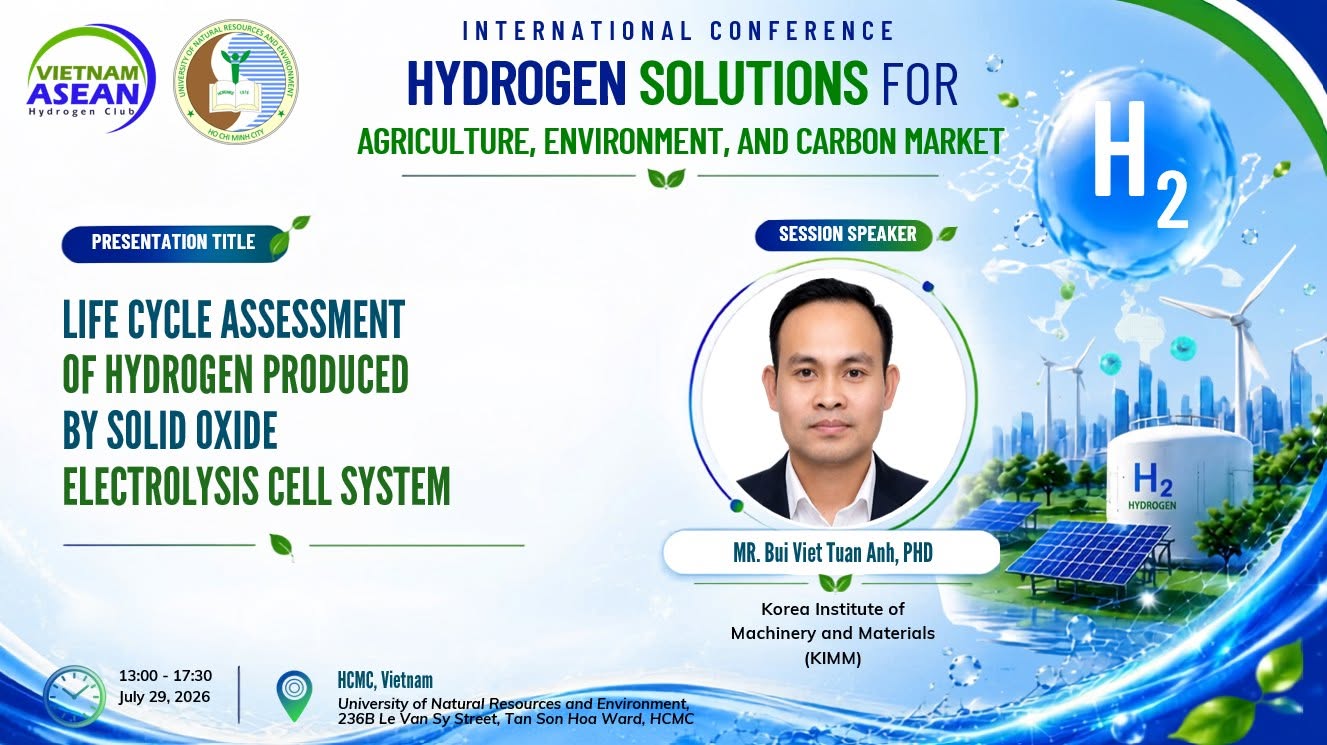
Dr. Bui Viet Tuan Anh, Researcher from Korea Machinery and Materials Institute
Background and Motivation:
-
Today, global hydrogen production is still dominated by fossil fuels; low-emission hydrogen remains below 1% (IEA, 2025).
-
Hydrogen produced by electrolysis is considered the cleanest.
-
Among electrolysis technologies, SOEC is one of the most attractive due to high efficiency and less catalyst requirement.
Objectives:
-
Quantify the environmental impact of 1 kg hydrogen produced by a 20-kW high-power SOEC system.
-
Identify the dominant contributor to environmental impact and suggest solutions.
SOEC System Specifications:
| Parameter | Unit | Value |
|---|---|---|
| Electrical Efficiency | % | 81.5 |
| Electricity Input | kW | 21.2 |
| Steam Input | kg/h | 10.18 |
| Hydrogen Output | kg/h | 0.52 |
| HEX Effectiveness | - | 0.92 |
| System Lifetime | years | 20 |
SOEC Stack Specifications:
| Parameter | Unit | Value |
|---|---|---|
| Operating Temperature | °C | 715 |
| Cell Current Density | A/cm² | 1.0 |
| Cell Area | m² | 0.01 |
| Cell Voltage | V | 1.3 |
| Number of Cells | - | 145 |
| Stack Lifetime | years | 5 |
LCA Methodology:
-
Method: ReCiPe 2016 Endpoint (Hierarchist) V1.13
-
Library: Converted ecoinvent 3.6
-
Scope: Cradle-to-grave (from resource extraction to disposal)
-
Indicators: 18 midpoint indicators, converted to 3 endpoint damages (Human Health, Ecosystem, Resource Scarcity)
Manufacturing Results:
In the SOEC equipment manufacturing phase, the highest contributors were:
-
SOEC Stack Module: 32% (highest material and energy costs)
-
Air and Steam Supply System (blowers, valves, piping): 23.3%
-
Heaters: 19.2%
Full Lifecycle LCA Results:
| Phase | Impact (Pt) | Percentage |
|---|---|---|
| System Manufacturing | 0.0195 | 0.58% |
| Operation – Electricity | 2.718 | 80.90% |
| Operation – Steam | 0.618 | 18.45% |
| Disposal | 0.000249 | 0.007% |
| Total | 3.35 | 100% |
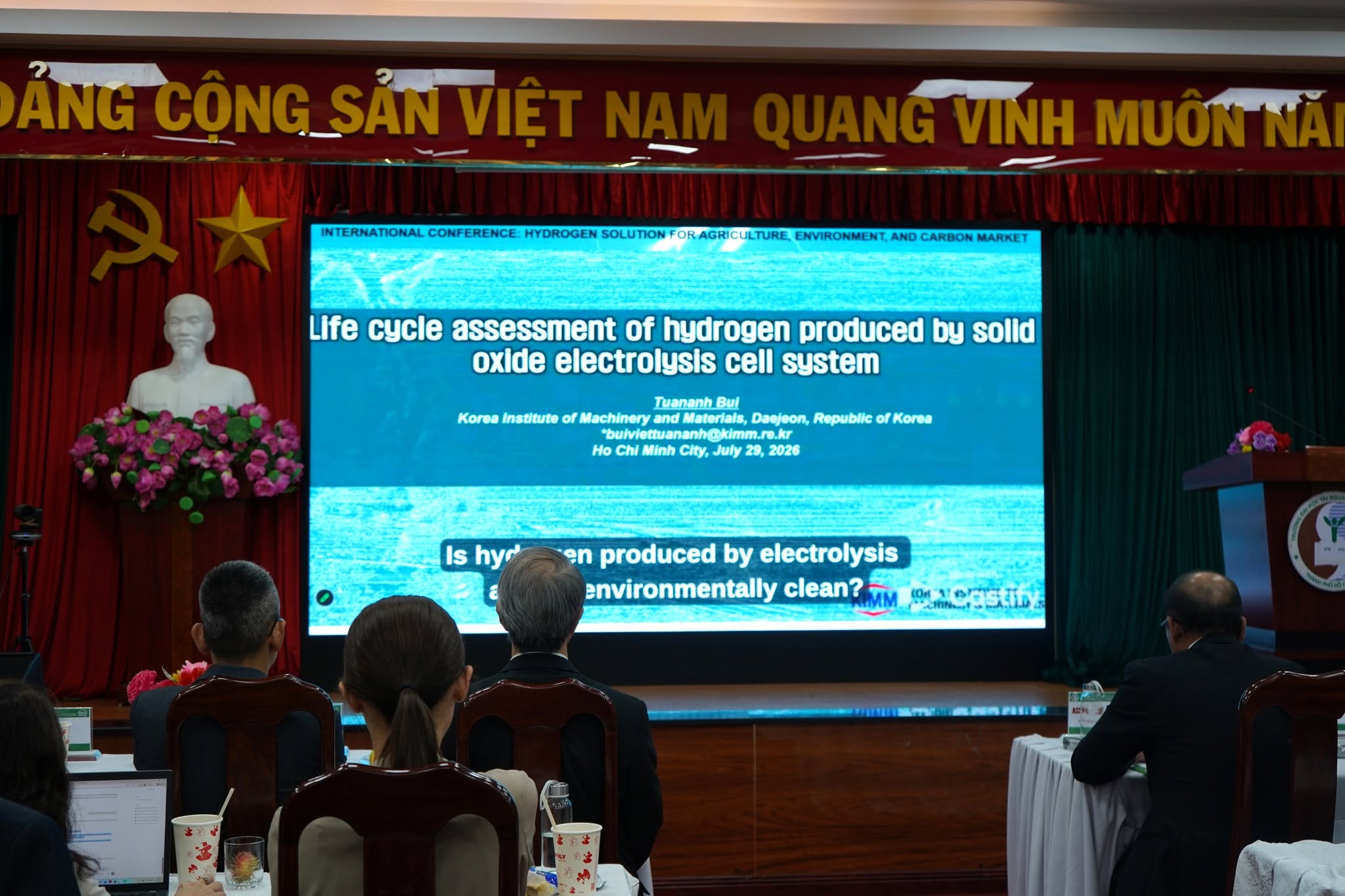
Critical Conclusion: Electricity dominates environmental impact (approximately 81%), followed by steam (18%). In contrast, manufacturing and disposal phases have very small impacts.
Comparison with Conventional Hydrogen Pathways:
Based on IEA Global Hydrogen Review 2024 data:
-
Fossil routes (SMR without CCUS): 10-15 kg CO₂/kg H₂ (dominated by direct process emissions)
-
SMR + CCUS: 4-7 kg CO₂/kg H₂
-
Electrolysis (from mixed grid): Depends on electricity carbon intensity
-
Electrolysis (from renewables): Very low, dominated by upstream emissions from equipment manufacturing
Key Takeaway: SOEC is not automatically low-carbon – it becomes low-carbon only with clean electricity and low-carbon steam.
Case Study: Using Different Electricity Sources
Dr. Tuan Anh presented simulation results using three different electricity sources:
-
Mixed Electricity – Korean Grid: Total impact 3.35 Pt
-
Photovoltaic (PV): Impact reduced to 1.14 Pt (66% reduction)
-
Nuclear: Impact reduced to 0.13 Pt (96% reduction)
Detailed Analysis:
-
With PV electricity: Two main contributors are electricity (44%) and steam (54%). Impact shifts from climate/fossil depletion to land use, ecotoxicity, and metal depletion.
-
With nuclear electricity: Electricity accounts for 77% of impact, but significant impacts appear from ozone depletion and ionizing radiation.
Research Conclusions:
-
Electrolysis is not a "miracle machine" that automatically produces clean hydrogen – it simply converts electricity into hydrogen.
-
The environmental impact of SOEC hydrogen is therefore governed mainly by the carbon intensity of the electricity used.
-
Switching from mixed-grid electricity to PV and nuclear power reduced total impact by approximately 66% and 96% respectively, confirming that clean hydrogen comes mainly from clean electricity.
Strategic Implications for Vietnam: To produce truly clean hydrogen, Vietnam needs to ensure electricity for electrolysis comes from renewable energy (wind, solar) or low-carbon sources. Additionally, the cost and impact of steam production should be considered – waste heat from industrial processes could be utilized to improve overall efficiency.
6. Dr. Cao Thuy Oanh – Head of R&D Team, VAHC; Lecturer, Van Hien University
Topic: From Energy Transition to Rural Development Model Transformation: Lessons from South Korea for Vietnam
Dr. Cao Thuy Oanh opened her presentation with the message: "Energy is no longer only the power sector's story. Rural areas are at the crossroads."
Current Status: Agricultural Electrification and Carbon Emissions:
Dr. Oanh cited a 2025 study in South Korea: Electricity use in agriculture generated 7.3 million tCO₂e in 2020. This shows a system cannot truly be "smart" if it is only intelligent in productivity but not in energy.
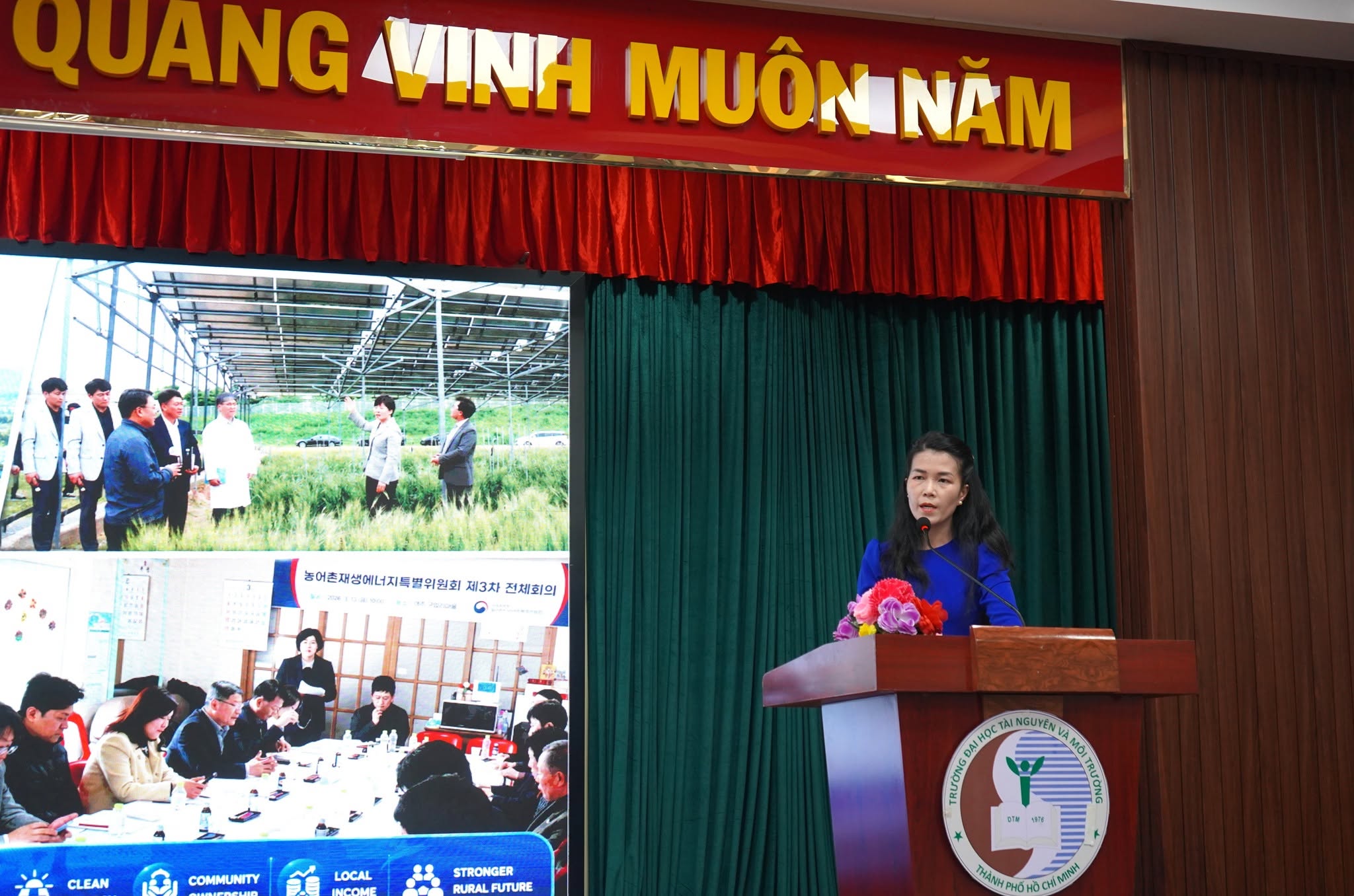
Dr. Cao Thuy Oanh, Head of R&D Team, VAHC, Lecturer at Van Hien University
High-emission groups identified:
-
Pumps and irrigation
-
Greenhouses and climate control systems
-
Cold storage and preservation
-
Processing and primary processing of agricultural products
Why Hydrogen? Not All Energy Needs Can Be Met by Electricity Alone:
-
Hard-to-electrify sectors or processes (heat, fuel, high operational intensity)
-
Long-duration storage and balancing by converting renewable electricity into hydrogen
-
Connecting renewable power with transport, industry, buildings, and local infrastructure
-
Supplying feedstock for production chains, including fertilizer and processing applications
Korea's Policy Turning Point: From Emission Reduction to Turning Energy into Rural Income
May 2026: Korea's Ministry of Agriculture, Food and Rural Affairs (MAFRA) launched a Task Force on Energy Transition for Agriculture and Rural Areas.
New Economic Model: "One Field, Multiple Value Streams"
Dr. Oanh emphasized: "Future farmers do more than sell crops; they can sell energy and environmental services."
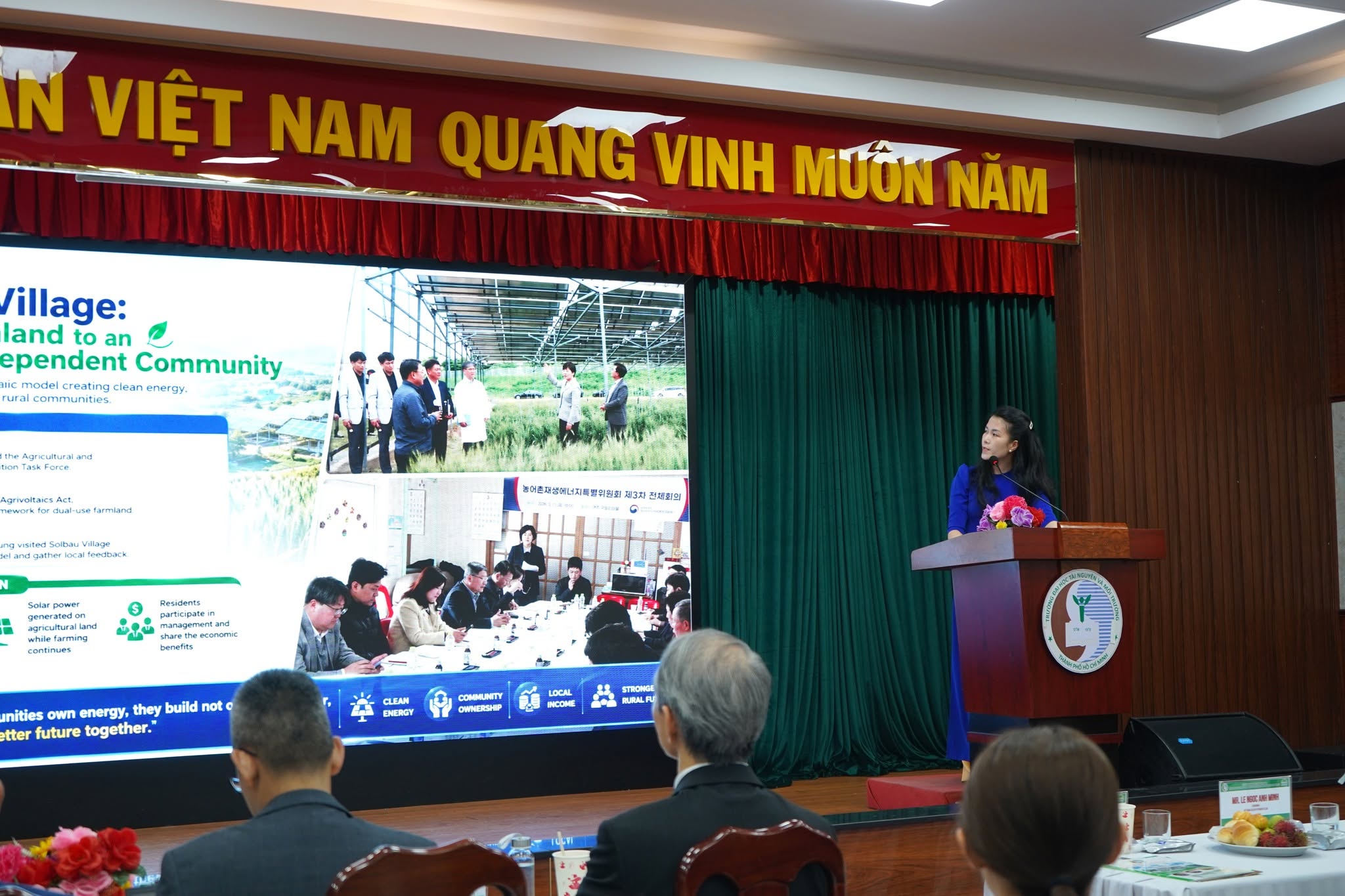
Case Study: Solbau Village – From Farmland to an Energy-Independent Community
Timeline:
-
April 27, 2026: MAFRA established the Agricultural and Rural Energy Transition Task Force.
-
May 7, 2026: Korea enacted the Agrivoltaics Act, creating a legal framework for dual-use farmland.
-
May 13, 2026: Minister Song Miryung visited Solbau Village to examine the model and gather local feedback.
Operational Model:
-
Village-owned agrivoltaic cooperative
-
Solar power generated on agricultural land while farming continues
-
Residents participate in management and share economic benefits
Measurable Results:
-
96% of residential and agricultural electricity demand met (686 MWh generated / 706 MWh annual demand)
-
Community income approximately 102 million KRW/year
-
Used for: elderly welfare, transportation services, milk delivery, community programs
Key Lesson: The greatest achievement was not producing more electricity – it was creating local ownership, shared income, and stronger rural communities.
Mr. Hong Seong-su – Director of Solbau Agricultural Cooperative:
"Operating large-scale rice milling facilities requires a tremendous amount of electricity, creating a significant financial burden. The ongoing conflict in the Middle East has further reinforced our awareness of the importance of achieving energy self-sufficiency. At present, we generate approximately 55% of our annual electricity needs on our own, and we are actively exploring solutions to increase this figure to 100%."
Minister Song Miryung:
"Agriculture and rural areas possess abundant resources, including farmland, reservoirs, and production infrastructure. In addition, the Agrivoltaics Act—which enables the preservation of agricultural land while increasing farmers' income—has recently been passed by the National Assembly. The government will continue to promote the sustainable development of agriculture and rural communities by preserving the public value of these areas, while enhancing energy self-sufficiency, accelerating the energy transition, and improving the efficient use of electricity in both rural life and agricultural production. Through these efforts, we will continue to contribute to balanced regional development and the nation's overall energy transition."
Hydrogen City 2.0 – Korea Builds a Demand-Creating Ecosystem:
Dr. Oanh introduced Korea's Hydrogen City 2.0 strategy by the Ministry of Land, Infrastructure and Transport (MOLIT), announced in 2024.
12 Hydrogen Cities in 2024:
-
Pyeongtaek: Hydrogen complex city linked to urban, agricultural, and industrial sectors
-
Dangjin: Industrial-based hydrogen city with diversified hydrogen supply
-
Seosan: Integrated hydrogen city linked to industrial complexes, research institutes, and transport hubs
-
Boryeong: Global leading hub city connected to the world's largest blue hydrogen production facility
-
Buan: Green hydrogen city linked to green hydrogen production and energy self-sufficiency
-
Gwangju Dong-gu: Hydrogen city utilizing waste incineration plant landfill
By 2026, the project expanded to 15 cities and counties across South Korea.
Lessons for Vietnam:
Dr. Oanh emphasized: "What we should learn is not hydrogen technology, but how to organize a local development ecosystem."
Three Selection Principles for Pilot Clusters:
-
Start from regional challenges, not from technology names.
-
Ensure fair benefit distribution and community participation in ownership and governance.
-
Share risks, not only borne by investors.
Three Proposed Pilot Clusters for Vietnam:
Cluster 1 – Low-Carbon Rice:
-
Collect rice straw and residues
-
Reduce open-field burning
-
Produce biomass, biogas, or bio-based products
-
Establish MRV (Measurement, Reporting, Verification) for emissions
-
Test hydrogen only when there is stable feedstock and clear off-take markets
Cluster 2 – Circular Livestock:
-
Convert manure and farm residues into renewable biogas/biomethane
-
Recover and recycle nutrients from manure and digestate
-
Produce high-quality organic fertilizer
-
Test bio-hydrogen only when economically viable
-
Prioritize multi-product models to avoid dependence on hydrogen revenue alone
Cluster 3 – Greenhouses, Cold Storage & Peri-Urban Towns:
-
Reduce energy demand in buildings, greenhouses, cold storage and systems
-
Deploy solar PV and storage for clean and reliable energy
-
Use heat pumps, biomass, or other low-emission heating solutions
-
Apply hydrogen for transport, industrial heat, or long-duration storage where it adds value
-
Connect rural supply with urban demand – ideal for testing supply-demand linkage
Strategic Message:
"If energy only changes color, that is a technology transition. If income, ownership, and people's future all change, that is a development model transformation."
"If the 20th century was the era of electrifying rural areas, the 21st century will be the era of integrating clean energy, hydrogen, and the carbon economy to redefine the value of rural areas."
CLOSING SESSION & NETWORKING
The workshop concluded with a summary and thanks to delegates and speakers, followed by a direct networking session among participants. All participating parties agreed that:
-
Hydrogen plays an important role in emission reduction strategies for agriculture, environment, and rural development.
-
Legal frameworks and incentive policies need to be established to promote hydrogen applications in Vietnam.
-
International cooperation (especially with Japan, South Korea, and Malaysia) is key to accessing technology, capital, and experience.
-
Research and pilot projects on hydrogen application models suitable for Vietnam's conditions should be promoted, starting with small-scale pilot clusters before scaling up.
The workshop closed in an open and cooperative atmosphere, opening up many opportunities for research cooperation and hydrogen application projects in agriculture, environment, and carbon markets in Vietnam in the coming period.