Hydrogen Therapy: From Clean Energy to Health Treatment – Legal Lessons from Japan and Proposals for Vietnam
Annie Nguyễn
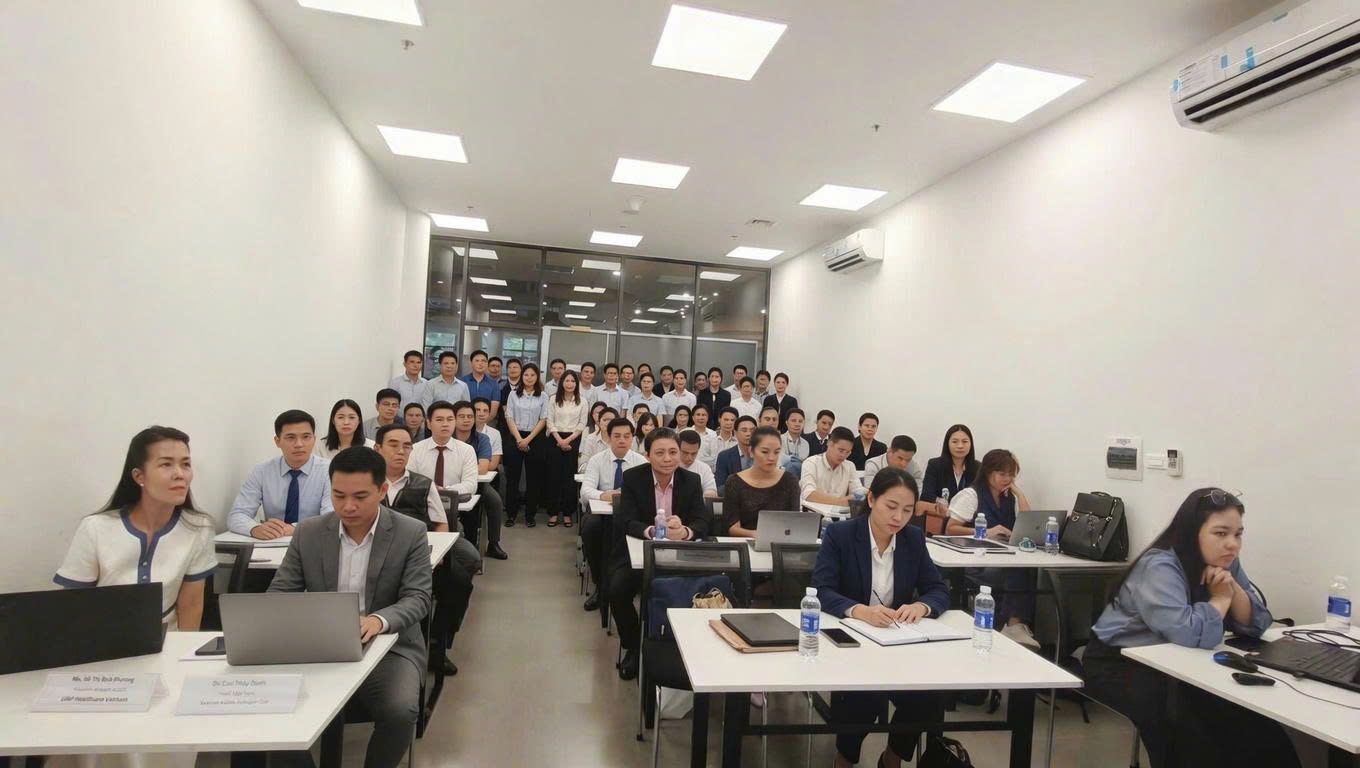
May 29, 2026 – Saigon Innovation Hub (SIHUB), Ho Chi Minh City
As part of the Vietnam Hydrogen Legal and Regulatory Forum 2026 organized by the ASEAN Vietnam Hydrogen Club (VAHC), Ms. Phuong Ho – representing UNPHC – delivered an in-depth presentation on the legal status of the hydrogen therapy industry in Japan and proposals for Vietnam.
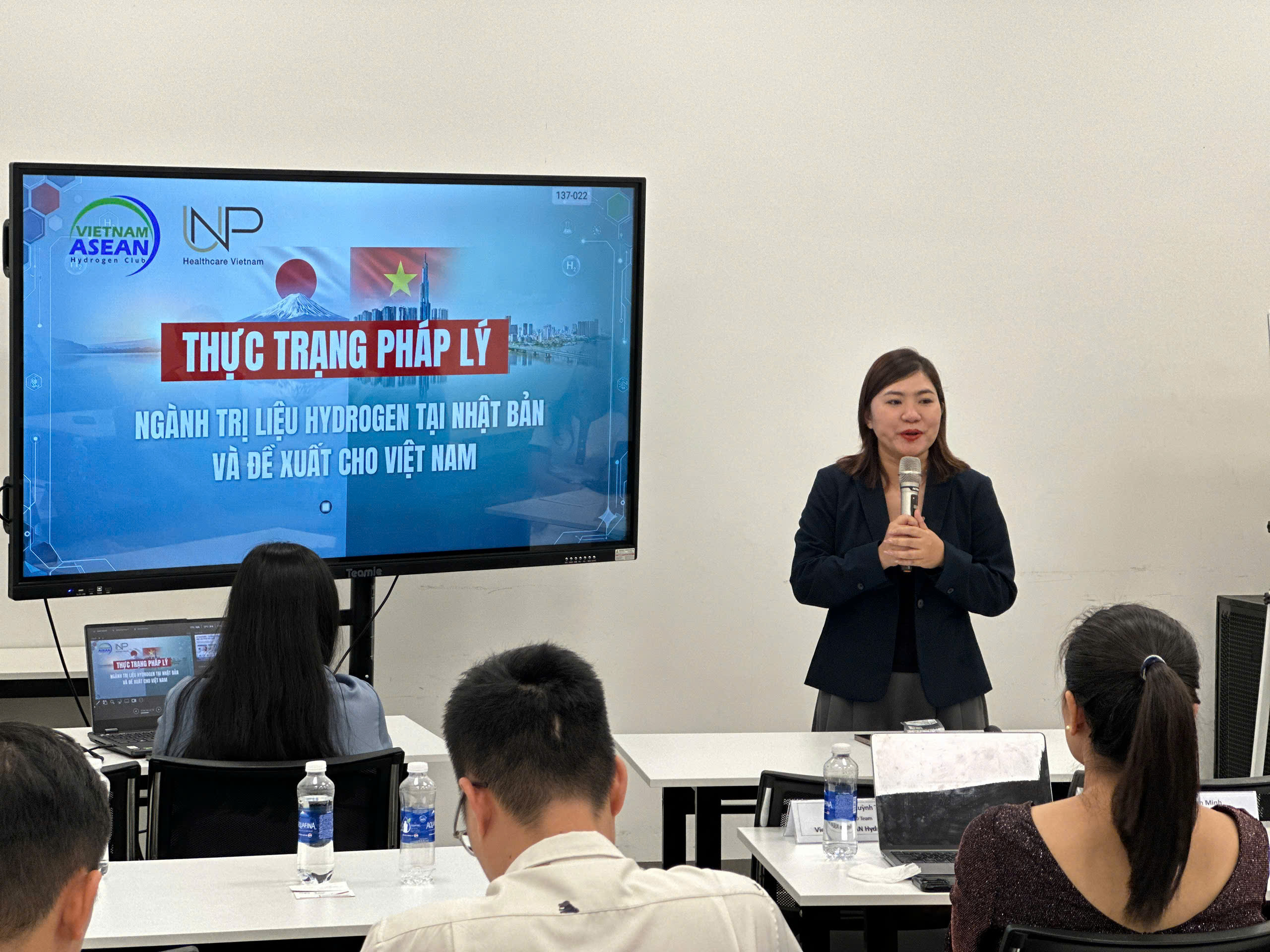
The presentation opened a new perspective: hydrogen is not only a clean energy source but also widely applied in healthcare and therapy, with Japan as a pioneer. From this, Ms. Phuong Hoang offered specific recommendations for Vietnam to build a legal framework for this promising field.
1. Concept of "Hydrogen Therapy" and Common Forms
Hydrogen therapy refers to the use of molecular hydrogen (H₂) for health support. Common forms include:
-
H₂ gas inhalation/massage: Supports relaxation and respiratory health.
-
H₂‑rich water drinking: Provides antioxidant effects, supports overall wellness.
-
Hydrogen bath: Relaxation, recovery support, skin care.
-
Health care devices: Hydrogen generators, recovery support equipment.
Research indicates three main potential benefits: selective antioxidant (neutralizing harmful free radicals), anti‑inflammatory, and cellular recovery support.
Ms. Phuong Hoang emphasized: "Most hydrogen applications are considered health support or recovery support, not widely recognized as formal medical treatments. Hydrogen is not a medicine and cannot replace medication."
2. Legal Framework in Japan – A Clear Pathway for Hydrogen Health Products
Japan has built a comprehensive legal framework for hydrogen health products based on four pillars:
Food Sanitation Act: Regulates water safety, factory quality control (GMP), non‑contaminating packaging.
Food Labeling Act: Requires clear name, ingredients, expiration date; transparency of hydrogen concentration at packaging.
Act against Unjustifiable Premiums and Misleading Representations: Prohibits exaggerated health claims; ensures actual hydrogen concentration matches labeling.
Pharmaceutical and Medical Device (PMD) Act: Defines product categories. Bagged hydrogen water is classified as food, not medicine; health claims (Food Function Claim – FFC) allowed only with scientific evidence.
Ms. Phuong Hoang cited IZUMIO (SHEFCO Kanuma Factory, Japan) – a globally distributed hydrogen water product. Its success rests on three factors: (1) safety certifications (ISO, GMP); (2) transparency of tested hydrogen concentration; (3) strict adherence to Japan's advertising regulations. The product also meets US FDA standards (21 CFR Section 165.110(b)).
3. Current Situation in Vietnam: Great Opportunity but Lacking Legal Framework
According to Ms. Phuong Hoang, Vietnam is in the early stages of hydrogen therapy. The market is new, but demand for proactive healthcare, anti‑aging, and recovery is growing rapidly.
Some Vietnam–Japan cooperation activities have emerged: scientific workshops, pilot studies, business collaborations. Specifically, UNP Healthcare Vietnam Co., Ltd. has self‑declared IZUMIO hydrogen‑rich drinking water (CO₂‑free) under current Vietnamese regulations.
However, Ms. Phuong Hoang pointed out serious legal gaps:
-
No clear legal definition: Unclear whether hydrogen therapy falls under medical devices, health products, or health services.
-
Risk of exaggerated advertising: Some entities promote hydrogen as a "cure‑all", "cancer treatment", or "medicine substitute" – misleading consumers, damaging market trust, and creating legal risks.
-
Lack of technical standards and testing: Vietnam has no standards for hydrogen concentration, inhaler devices, explosion safety, or clinical efficacy testing protocols. This hinders licensing, certification, advertising, and market management.
Notably, UNP Healthcare's self‑declaration (No. 06/UNP/2025) classifies the product as food – similar to Japan's approach – but Vietnam lacks a dedicated legal framework.
She stressed: "A legal framework, technical standards, and communication controls are urgently needed to develop hydrogen therapy in Vietnam safely, transparently, and sustainably."
4. Proposals for Vietnam
Drawing from Japan's experience, Ms. Phuong Hoang proposed four key solutions:
Complete the legal framework:
-
Define "hydrogen health care products" clearly – distinguishing them from food, functional food, and medical devices.
-
Issue specific regulations for product declaration, advertising, and circulation.
-
Follow Japan's model: bagged hydrogen water as food, not medicine; health claims only with scientific evidence.
Standardize technical specifications:
-
Develop national standards (TCVN) for hydrogen concentration in drinking water and inhaled gas.
-
Safety regulations for hydrogen generators, inhalers, and bath devices (electrical, pressure, explosion risks).
-
Minimum clinical efficacy testing protocols before health claims.
Promote scientific research:
-
Encourage clinical studies on hydrogen's health effects in the Vietnamese population.
-
Cooperate with Japan, which has thousands of publications and clinical trials on hydrogen therapy.
Ensure transparent management and communication control:
-
Prohibit advertising hydrogen as "medicine" or "treatment".
-
Require declaration of actual hydrogen concentration with independent testing.
-
Establish market surveillance and penalty mechanisms.
5. Conclusion
Ms. Phuong Hoang concluded with three lessons from Japan:
-
Technology development must go hand in hand with standards.
-
Innovation must be paired with safety control.
-
Commercialization must be based on scientific evidence.
For Vietnam, she proposed three pillars: legal framework – scientific research – transparent management. With proper preparation, Vietnam can seize the opportunity to become a bright spot in the hydrogen therapy sector, leveraging fast‑growing market demand and international cooperation with Japan.
"Hydrogen therapy is a new, promising field but full of legal challenges. With the right preparation, Vietnam can build a safe, effective, and sustainable hydrogen health ecosystem."