

Hydrogen Safety: From Verification to Harmonization – Lessons from South Korea and a Cooperation Proposal for Vietnam
PRESENTATION BY DR. HEE JUNG KIM (UNIHYS) AT THE VIETNAM-AMERICA HYDROGEN WORKSHOP 2026
Date: April 10, 2026
Location: Saigon Hotel, Ho Chi Minh City
Event: Vietnam-America Hydrogen Workshop 2026 – "Advanced Hydrogen Technologies and the Semiconductor Supply Chain – Vietnam & ASEAN"
Opening: Placing Safety at the Core of the Supply Chain
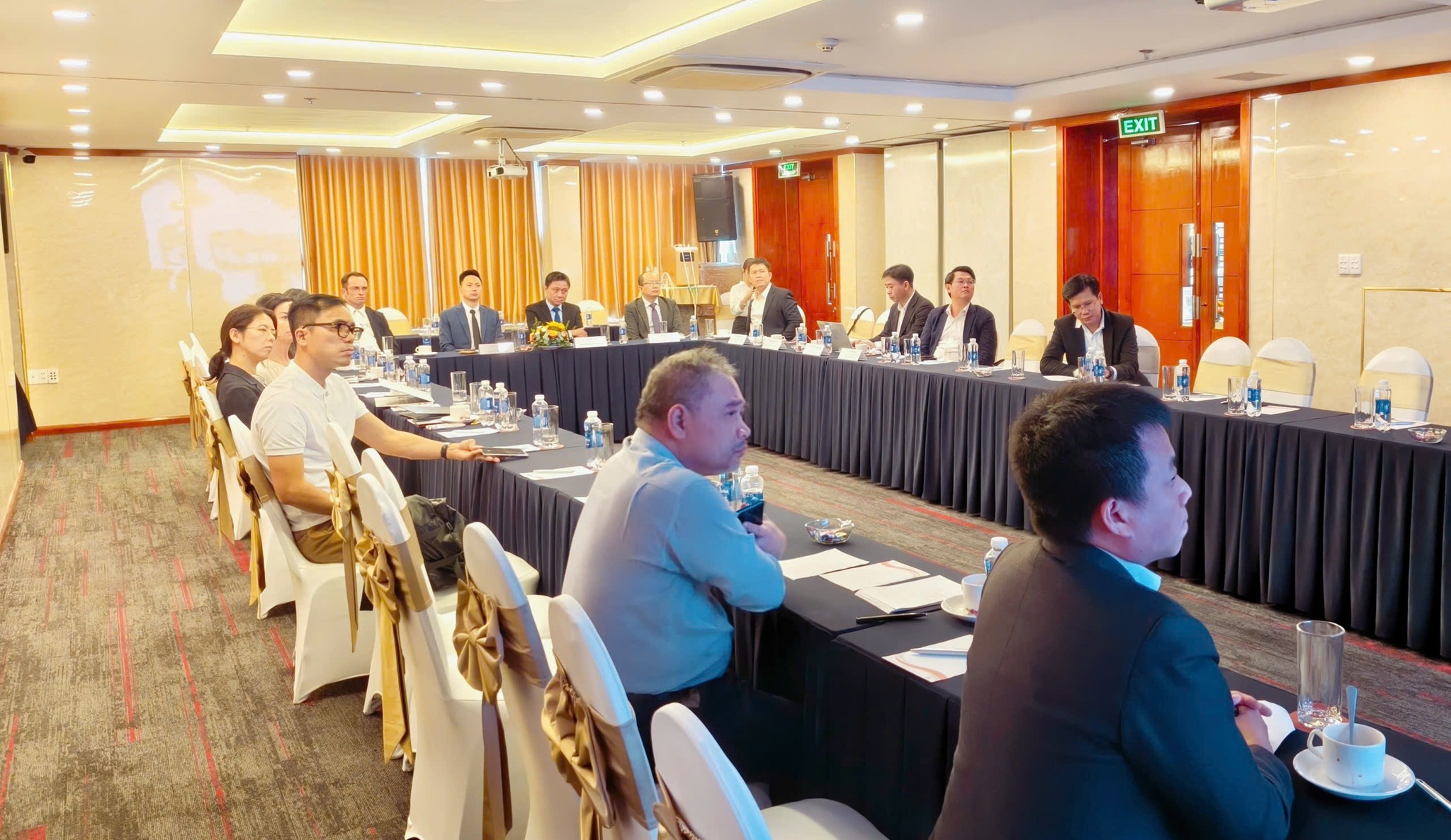
Immediately following Mr. Gary Siah's presentation (Solberg Manufacturing) on advanced cathode air filtration for fuel cells, Dr. Hee Jung Kim – representative of UNIHYS (United Institute of Hydrogen Technology, South Korea) – took the stage with a powerful opening statement:
"While we are discussing production technologies, financial investments, and market development, there is a fundamental question that few are asking: Is our hydrogen infrastructure truly safe to operate at industrial scale?"
She affirmed that safety is not a barrier to development but rather the very foundation for hydrogen to become a true pillar of clean energy – especially in sensitive sectors such as semiconductor manufacturing, where a single explosion or leak could disrupt global supply chains.
Part 1: Real-World Accidents – "Blind Spots" Coming from Minor Components
Dr. Kim began her main content by displaying on screen a series of actual hydrogen accidents that occurred in South Korea between 2020 and 2025. According to the Korea Gas Safety Corporation (KGS) Annual Gas Accident Report, these incidents did not originate from major components such as storage tanks or compressors, but rather from unexpectedly minor parts:
-
2020 – 70MPa Hydrogen Refueling Station: Fire and explosion caused by back-up ring deformation, thread wear, and improper tightening.
-
2021 – Manufacturing Facility: Leak and fire due to check-valve deformation.
-
2022 – Storage/Transfer Facility: Fire caused by pipe aging and component deterioration.
-
2024 – Manufacturing Facility: Explosion caused by residual hydrogen left inside a pipe during maintenance.
-
2025 – Hydrogen Bus: Fire and explosion in the rear section due to a leak after refueling.
-
2025 – Hydrogen Refueling Station: Explosive fire caused by a high-pressure valve/pipe leak.
The speaker emphasized: "These accidents were not due to flawed system design. They happened because we did not verify the lifecycle of each small component thoroughly enough – from back-up rings, threads, and check valves to the purge procedure for residual hydrogen before maintenance."
Part 2: The 5-Year Model – From Development to Mandatory Regulation
After analyzing the root causes, Dr. Kim introduced the national implementation roadmap that South Korea has successfully applied. This is a 5-year cycle mandatory for every new hydrogen technology:
Development → Test → Pilot Project → Field Monitoring → Survey → Performance Certification → Regulation
She provided a concrete example: the development of a 500bar hydrogen hose assembly (later adjusted to 450bar for the actual value chain). This project was carried out by UNIHYS, with support from a national R&D program.
"There are no shortcuts. A new technology must go through at least five years of testing, monitoring, and certification before it can become mandatory regulation. This may slow down deployment, but it saves us from future disasters."
Part 3: Global Standards – ISO/TC 197 and South Korea's KGS Code
Dr. Kim then shifted to standardization, stating clearly that ISO/TC 197 (International Technical Committee for Hydrogen Systems) is the common foundation that all countries – including Vietnam – should build upon.
She displayed the organizational structure of ISO/TC 197, which includes dozens of Working Groups (WGs), notably:
-
WG 19–23: Dispensers, valves, compressors, hoses, fittings for gaseous hydrogen fueling stations.
-
WG 31: O-rings – seemingly small but a major cause of leaks.
-
WG 36, 38: Refueling connection devices for high-pressure and cryo-compressed hydrogen vehicles.
-
WG 15: Stationary storage cylinders and tubes.
The key point Dr. Kim wanted to emphasize: South Korea has translated these ISO standards into a national safety code (KGS Code) , structured into three layers: Technical Specification (TS) , Test Method , and Replacement Cycle.
She introduced several representative KGS codes:
-
KGS AC417 (2025): Code for manufacturing composite cylinders for hydrogen vehicles.
-
KGS FP217 (2025): Code for hydrogen refueling by type of compressed hydrogen delivery.
-
KGS FU671 (2024): Code for the use of hydrogen gases.
*"Vietnam does not need to start from zero. Build upon ISO/TC 197, learn from how South Korea localized these standards, and adapt them to your local climate, infrastructure, and operational capacity."*
Part 4: Harmonization for Vietnam – The ODA Project and K-SafeGuide
This was the most anticipated part of the presentation, as Dr. Kim announced a concrete cooperation initiative between UNIHYS and Vietnam through an Official Development Assistance (ODA) program.
The project's goal, she said, is not to export South Korean standards unchanged, but to co-develop a safety ecosystem tailored to Vietnam's actual conditions.
The expected output of the project is a guidance document tentatively called K-SafeGuide (Korea-Vietnam Safety Guide) , which will include:
-
Potential risk prediction based on South Korea's real accident data, combined with field surveys of operating conditions at Vietnamese hydrogen refueling stations.
-
Periodic inspection procedures for each component – not based on theoretical estimates, but on verified real-world replacement cycles.
-
Incident response protocols when residual hydrogen is detected in pipes before maintenance – the root cause of the 2024 explosion in Gyeongbuk.
-
A performance certification system for high-pressure components (valves, hoses, fittings) before they are put into operation.
"We are not bringing a closed, rigid set of rules. We are bringing a methodology – a way of verifying, a way of testing, a way of training. And we want to do this together with Vietnamese engineers, operators, and regulators."
Conclusion and Call to Action
Dr. Kim concluded her presentation with three specific proposals for stakeholders in Vietnam and ASEAN:
-
Actively participate in ISO/TC 197 – not just as observers, but as contributing members, especially in working groups on valves, hoses, and fittings.
-
Adopt a verification method based on real-world accidents rather than relying solely on theoretical simulations. "Learn from small explosions to avoid a big one."
-
Allow a pilot project of K-SafeGuide at one or two hydrogen refueling stations in Ho Chi Minh City or in high-renewable-energy regions.
She reaffirmed her core message:
"Harmonization does not mean copying. Harmonization means smart adaptation. And verification does not mean a one-time inspection. Verification is a continuous lifecycle. Let us build a hydrogen future that is not only green, but truly safe."
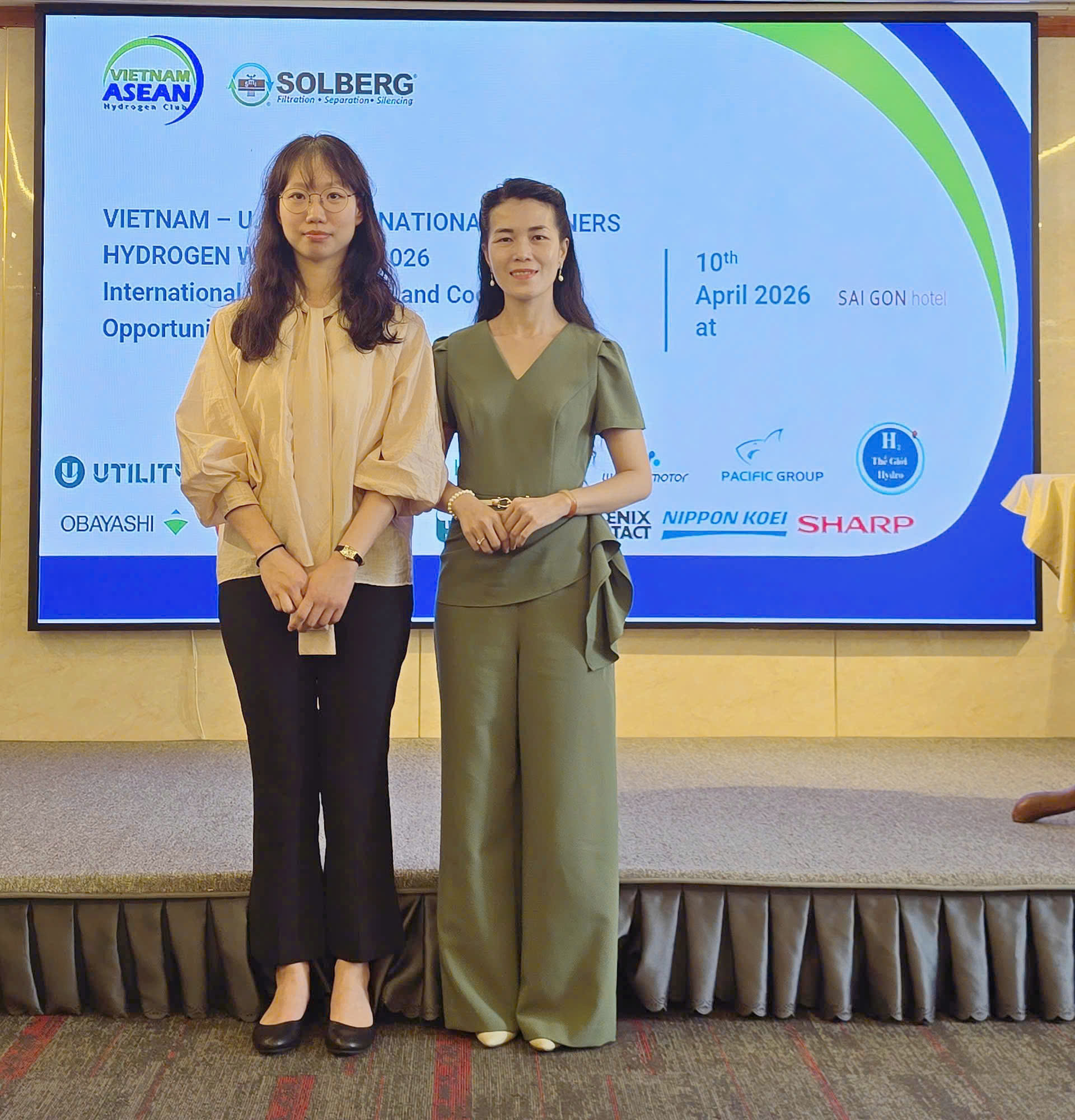
Dr. Kim ended her presentation by thanking the organizers and closing with a Vietnamese phrase: "Xin cảm ơn!" – receiving a long round of applause from nearly 100 attendees.
Q&A Highlights (Recorded)
Immediately after the presentation, several questions from Vietnamese delegates focused on:
-
The cost of implementing K-SafeGuide compared to developing new standards from scratch.
-
The feasibility of local workforce training for operation and inspection.
-
The update roadmap when ISO/TC 197 releases new versions.
Dr. Kim answered briefly: UNIHYS will send experts to Vietnam in Q3 2026 to conduct the first training course for VAHC partners and interested enterprises. She also committed to updating K-SafeGuide every six months in line with changes in international standards.
Written by: VAHC Secretariat
Sources: Presentation slides by Dr. Hee Jung Kim (UNIHYS) and the VAHC event program, April 10, 2026