
Hydrogen Energy Research in Vietnam
A Presentation by Dr. Phong D. Tran at the "Hydrogen Horizons" Workshop, March 31, 2026, USTH, Hanoi
April 3, 2026 by Annie Nguyễn
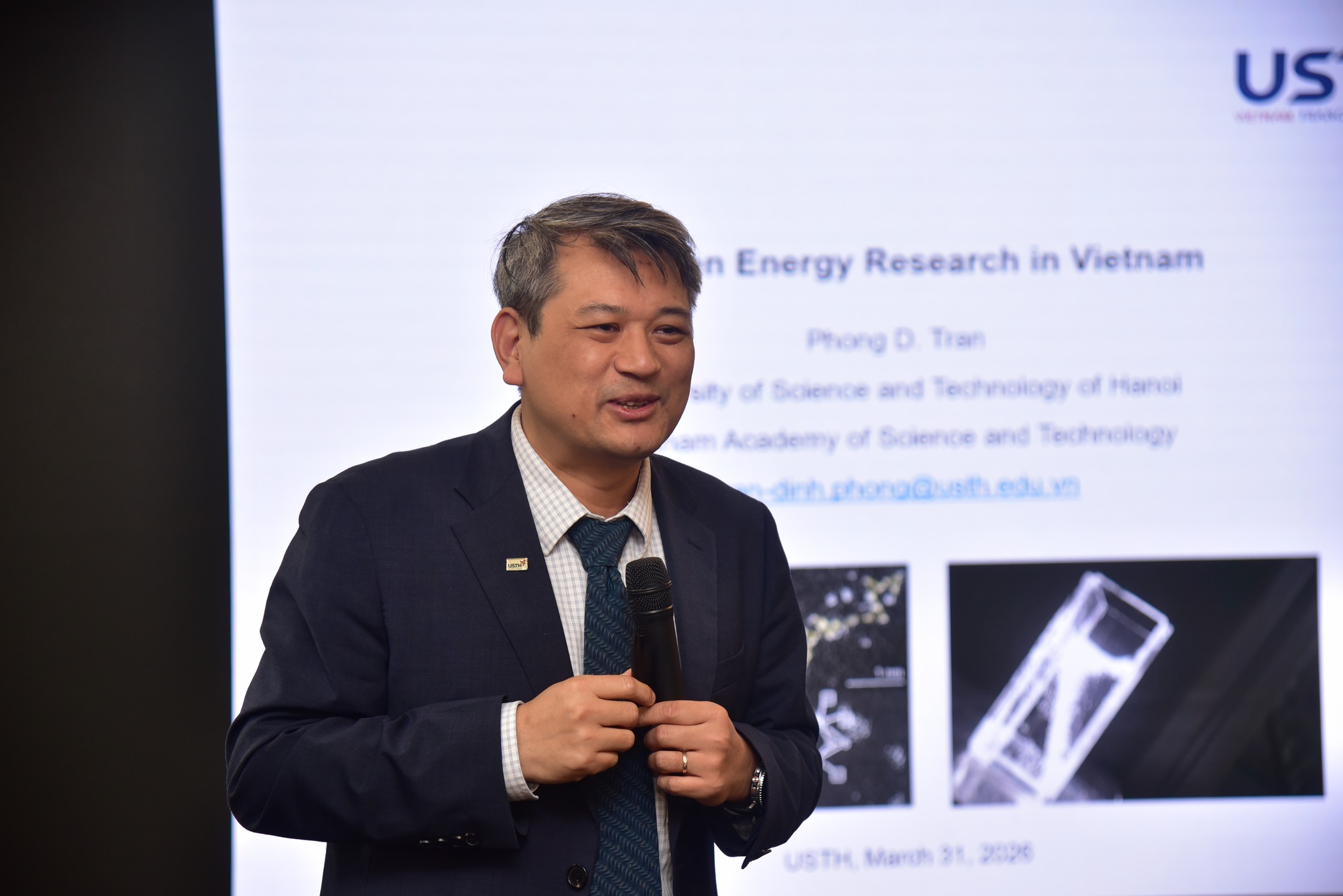
HANOI – On the morning of March 31, 2026, within the framework of the international workshop "Hydrogen Horizons - Advancing Vietnam-France Energy Collaboration" held at the University of Science and Technology of Hanoi (USTH), Dr. Phong D. Tran – Head of the Laboratory of Electrochemistry and Sustainable Catalysis (CECS) – delivered a keynote presentation titled "Hydrogen Energy Research in Vietnam".
Dr. Tran's report painted a comprehensive picture of Vietnam's strategy, research, and international cooperation in the field of hydrogen energy, with a particular emphasis on the role of Vietnam-France collaboration.
National Strategy – A Solid Foundation
Dr. Phong D. Tran opened his presentation by recalling a key milestone: Decision 165/QD-TTg issued on February 7, 2024 – the National Hydrogen Energy Development Plan to 2030 with a vision to 2050. According to this plan, Vietnam aims to build a hydrogen energy ecosystem based on renewable energy, including production, storage, and transportation for both domestic use and export.
By 2030, Vietnam targets a hydrogen production capacity of 100,000 to 500,000 tons per year, while mastering advanced green hydrogen production technologies and CO₂ capture technologies. Hydrogen will be applied in electricity generation, transportation, steel production, fertilizers, and petrochemicals.
Notably, under Decision 1131/QD-TTg (June 12, 2025) , Energy Technologies & Advanced Materials – including Li-ion batteries, solid-state batteries, fuels, and electrolysis – have been identified as one of 11 national strategic technologies requiring priority development.
CECS Laboratory – A Hydrogen Research Hub at USTH
Dr. Tran introduced his research unit: the Laboratory of Electrochemistry and Sustainable Catalysis (CECS) , established in July 2015. Currently, CECS has 7 permanent lecturer-researchers, 1 lab secretary, 2 postdoctoral researchers, 4 PhD students, and 2 master's students.
An impressive highlight is that more than 40 alumni of the laboratory are now working in developed countries such as the USA, France, Germany, Poland, Australia, Japan, and South Korea – forming a global academic cooperation network.
The strategic goal of CECS is to engineer viable devices for harnessing solar energy, including: artificial leaves (solar‑to‑H₂ conversion) and PEM fuel cells (H₂‑to‑electricity conversion).
Notable Achievement: Artificial Leaf with 2% Efficiency
Dr. Phong D. Tran proudly announced that the collaboration between CECS (USTH) and CEA-IRIG (France) has successfully developed an artificial leaf using a triple-junction silicon photovoltaic cell. Under 1 sun illumination, in pH 7 phosphate buffer, on a leaf surface of 1 cm², the system achieved a solar‑to‑hydrogen conversion efficiency of 2%. This result was published in the Journal of Science: Advanced Materials and Devices in 2022.
"This is an initial success, demonstrating that Vietnam can fully master the core technology of artificial leaves with the support of France," Dr. Tran emphasized.
However, he also candidly pointed out the biggest current challenge: the robustness of the electrolysis system and artificial leaf. Unpublished data by PhD student Dam (2025) shows that a PEM electrolyser operated at 2V with deionized water suffers performance degradation after many cycles. He confirmed that CECS is working closely with French partners to improve catalysts and proton exchange membranes.
International Cooperation – The Key to Success
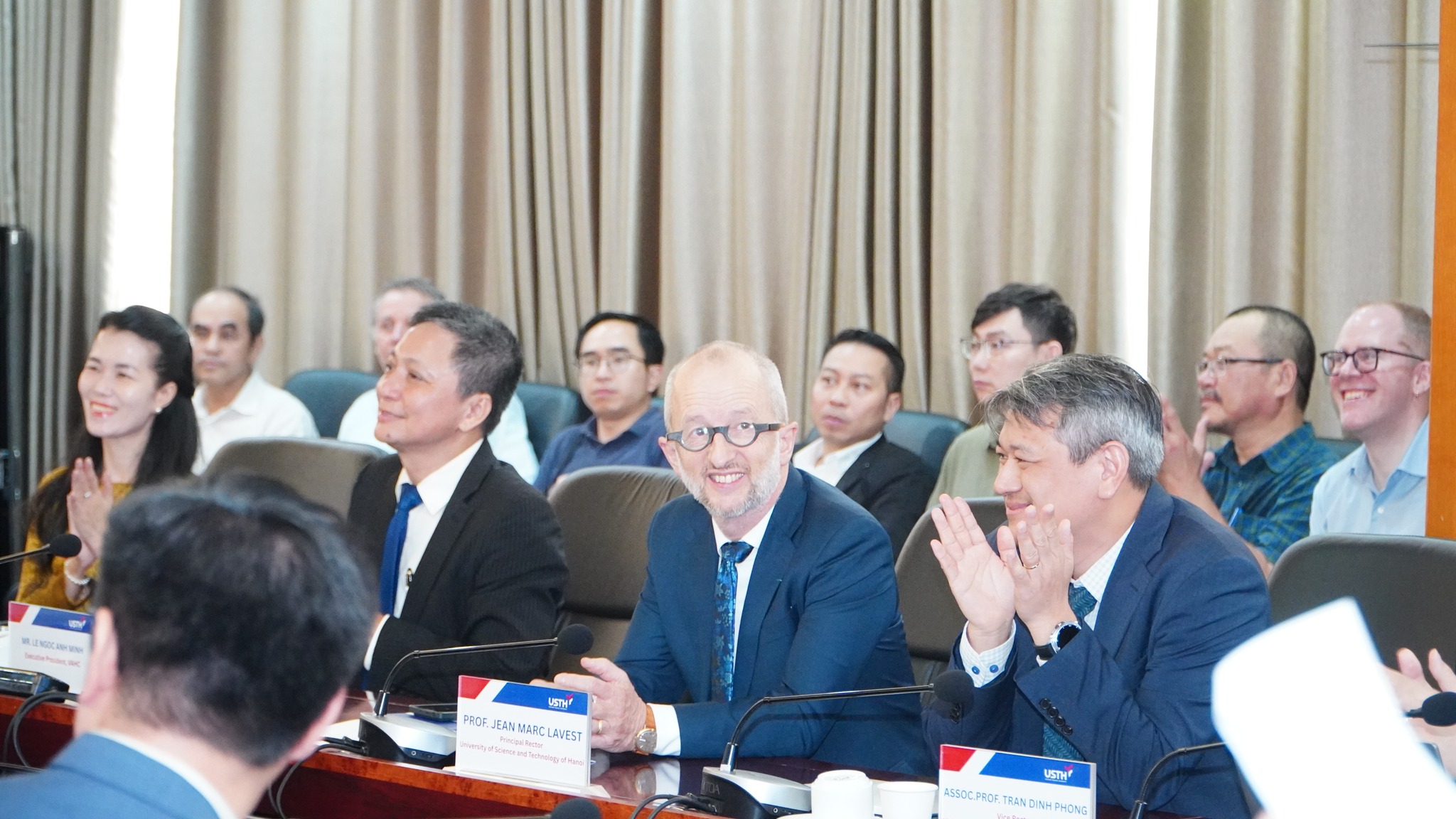
One of the highlights of the presentation was CECS's extensive cooperation network. Dr. Tran listed key partners:
-
France: Dr. Vincent Artero (UMR 5249), Prof. Catherine Amiens (UPR 8241), Prof. Gilles Lemercier (UMR 7312) – notably an international research project funded by CNRS for 2025-2029 involving 4 research groups and 26 scientists.
-
Other international partners: Prof. Hyuksu Han (Hanyang University, South Korea), Prof. Iratu Honma (Tohoku University, Japan), Dr. Chiam Sing Yang (IMRE@ASTAR, Singapore).
-
Domestic partners: Prof. Nguyen Quang Liem (Institute of Materials Science, VAST), Prof. Luc Huy Hoang (Hanoi National University of Education), Dr. Luu Anh Tuyen (Vietnam Atomic Energy Institute).
Dr. Tran also recalled the Grand Opening of the Green Hydrogen Hub Vietnam held on October 23, 2025, at the Vietnamese-German University in Ho Chi Minh City – a testament to the strong engagement of educational institutions and enterprises in realizing the green hydrogen ecosystem.
Conclusion and Call for Collaboration
Concluding his presentation "Hydrogen Energy Research in Vietnam" , Dr. Phong D. Tran made three specific calls to action:
First, he called on sponsors and enterprises to accompany experimental R&D projects, moving toward pilot demonstrations in Vietnam.
Second, he called on young scientists to join the Excellent Training Network on Hydrogen Energy initiated by USTH and its French partners.
Third, he urged policymakers of both countries to continue removing legal barriers and establishing testing frameworks and technical standards for green hydrogen.
"Vietnam-France cooperation in hydrogen energy is no longer a story of the future – it is action in the present, for a sustainable future for both nations and the world," Dr. Tran affirmed before concluding his presentation.
Workshop Closes with High Hopes
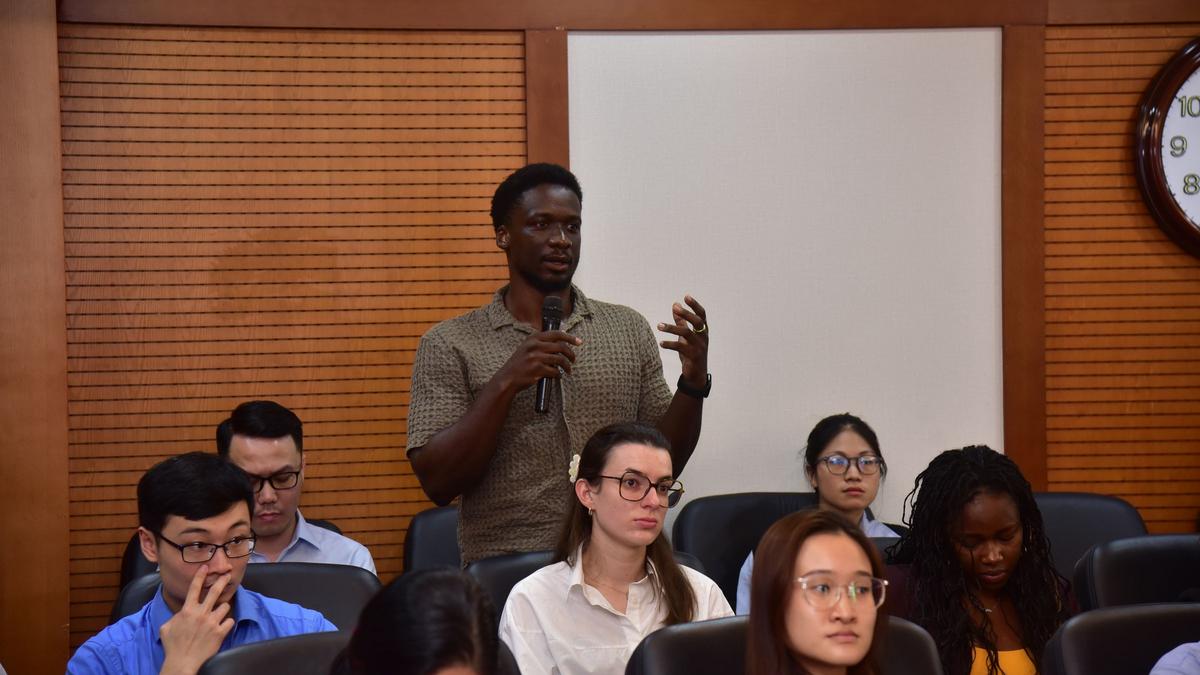
Immediately following Dr. Phong D. Tran's presentation, the workshop moved into a roundtable discussion with representatives from the Vietnam Petroleum Institute, the French Embassy in Hanoi, Energy companies, and renewable energy enterprises. The parties expected to establish a Joint Vietnam-France Working Group on Green Hydrogen to implement demonstration projects in the 2026–2028 period.
The workshop "Hydrogen Horizons - Advancing Vietnam-France Energy Collaboration" concluded at 11:30 AM the same day, leaving many expectations for a clean and sustainable energy future based on the foundation of Vietnam-France scientific and technological cooperation.
Reported by: VAHC Secretariat
Email: contact@vahc.com.vn