

Hydrogen Applications in Health Care and Recovery: A Biological Perspective on Supportive Hydrogen Therapy
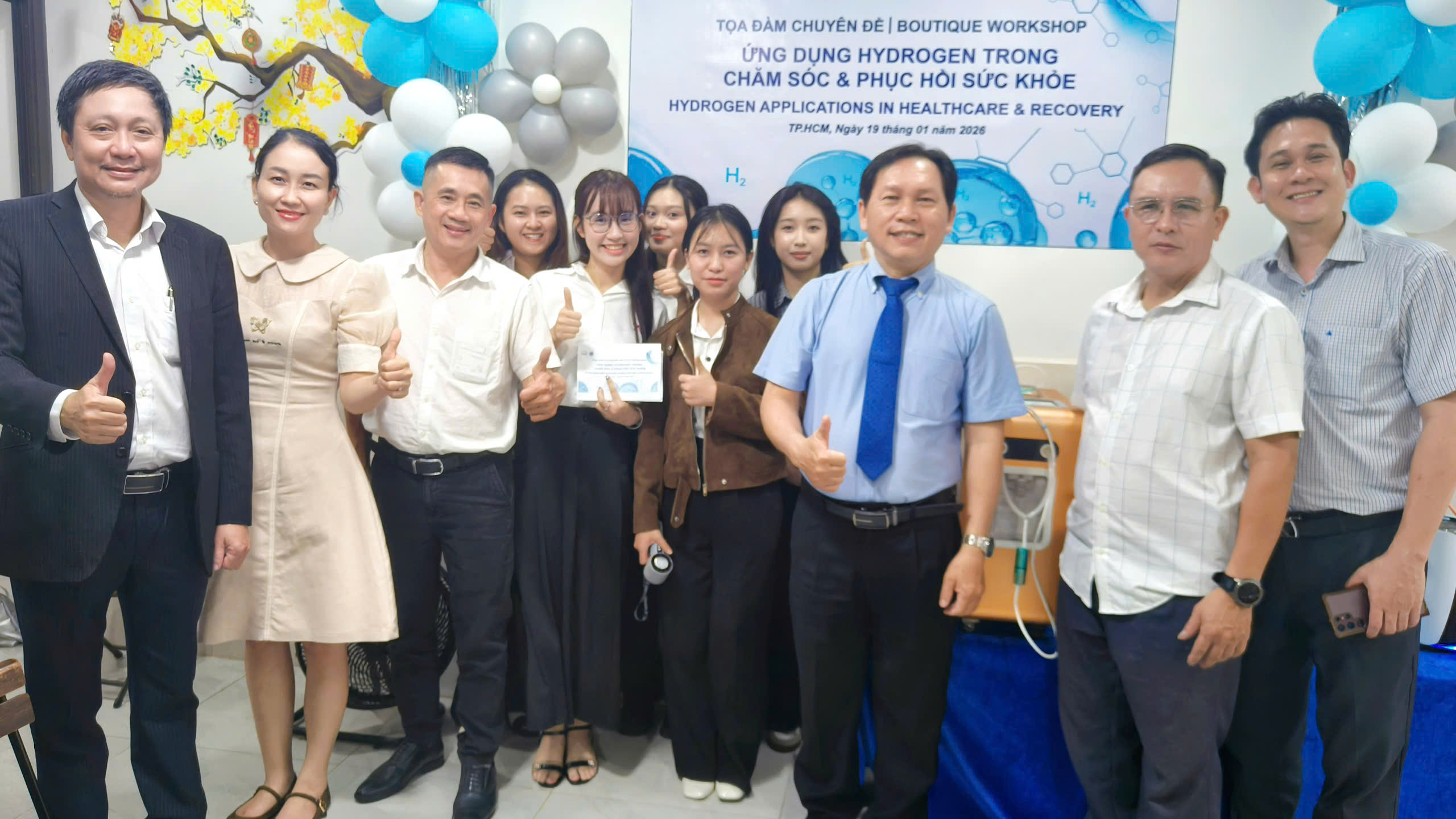
As part of the workshop “Hydrogen Applications in Healthcare”, held on 19 January 2026 at Hydrogen World Café, 18 Dang Tran Con Street, Ben Thanh Ward, Ho Chi Minh City, Mr. Nguyen Thieu Son, representative of Hydrogen World, delivered a presentation entitled “Applications of Hydrogen in Health Care and Recovery”. The presentation approached hydrogen therapy from a biological and wellness-oriented perspective, focusing on oxidative stress and preventive health care.

In his presentation, Mr. Nguyen Thieu Son emphasised that molecular hydrogen (H₂) should not be regarded as a medical treatment, but rather as a supportive health solution aimed at enhancing the body’s natural recovery mechanisms. He highlighted a paradigm shift from a disease-treatment model toward proactive health care and prevention, particularly relevant in modern societies facing increasing levels of stress and chronic health conditions.
A central theme of the presentation was oxidative stress, described as a “silent enemy” caused by modern lifestyle factors such as psychological pressure, environmental pollution and unhealthy habits. Excessive production of free radicals, when not neutralised effectively by the body, can damage cells and mitochondria, leading to premature ageing, reduced health resilience and the development of chronic diseases.
Mr. Nguyen Thieu Son explained that molecular hydrogen is a highly effective selective antioxidant. Due to its extremely small molecular size and light weight, hydrogen can rapidly diffuse into tissues and penetrate cellular mitochondria. There, it selectively neutralises harmful hydroxyl radicals (•OH) through chemical reactions that convert them into water, while leaving beneficial reactive oxygen species unaffected. This selective mechanism distinguishes hydrogen from conventional antioxidants such as vitamins C and E.
The presentation outlined the basic biological mechanisms of molecular hydrogen, including selective antioxidant activity, support in reducing chronic inflammation through modulation of inflammatory cytokines, and cellular protection at the mitochondrial level. These mechanisms, according to the presenter, help create favourable conditions for the body’s natural self-regulation and recovery processes.
Mr. Nguyen Thieu Son also referred to the growing body of global research on hydrogen, noting that approximately 2,000 scientific publications and more than 100 human clinical trials have been conducted worldwide, covering over 170 disease conditions associated with oxidative stress. He highlighted the landmark 2007 research by Professor Shigeo Ohta, which demonstrated hydrogen’s ability to selectively neutralise hydroxyl radicals, marking a turning point in hydrogen biomedical research.
From a practical perspective, the presentation discussed potential supportive applications of hydrogen for individuals experiencing chronic stress, sleep disorders, high physical workload, middle-aged and elderly populations seeking to maintain health, and people interested in anti-ageing and quality-of-life improvement. Personal experiences and user feedback were also shared to illustrate real-world adoption trends.
Addressing the Vietnamese context, Mr. Nguyen Thieu Son pointed out that hydrogen-based health applications remain at an early stage of development. While demand for proactive health care is rising due to an ageing population and increasing chronic diseases, challenges persist, including the lack of regulatory frameworks, limited domestic clinical research, high equipment costs and widespread misconceptions.
The presentation concluded with several proposed directions for Vietnam, including clearly positioning hydrogen as a supportive therapy, prioritising domestic research and trials, standardising equipment and information to avoid market distortion, building authentic user communities based on real value, and aligning hydrogen health applications with the national hydrogen development strategy.