

Green hydrogen for data centers: Vietnam's quantifiable advantages and strategic solutions
July 1, 2026 – VAHC Secretariat
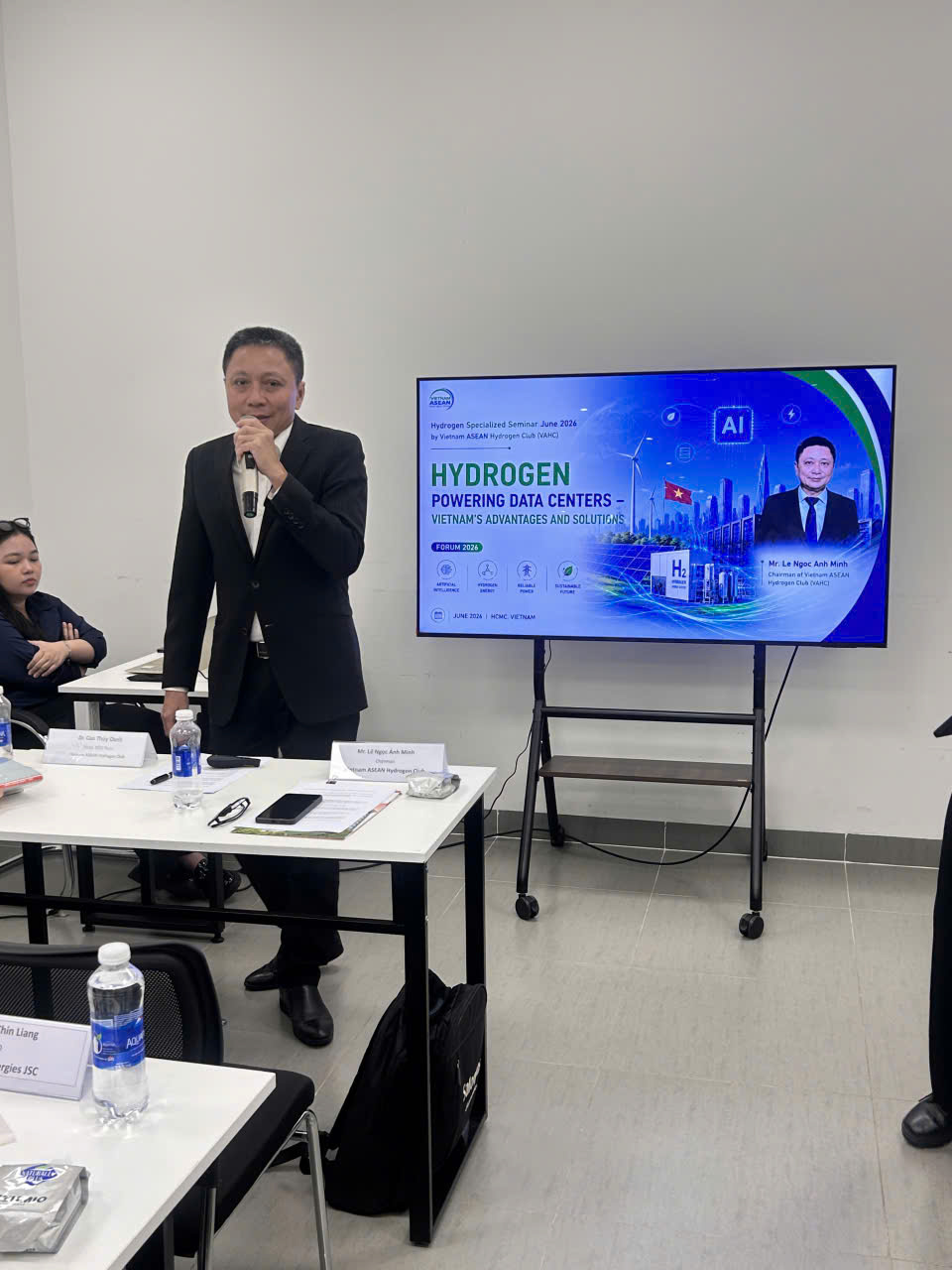
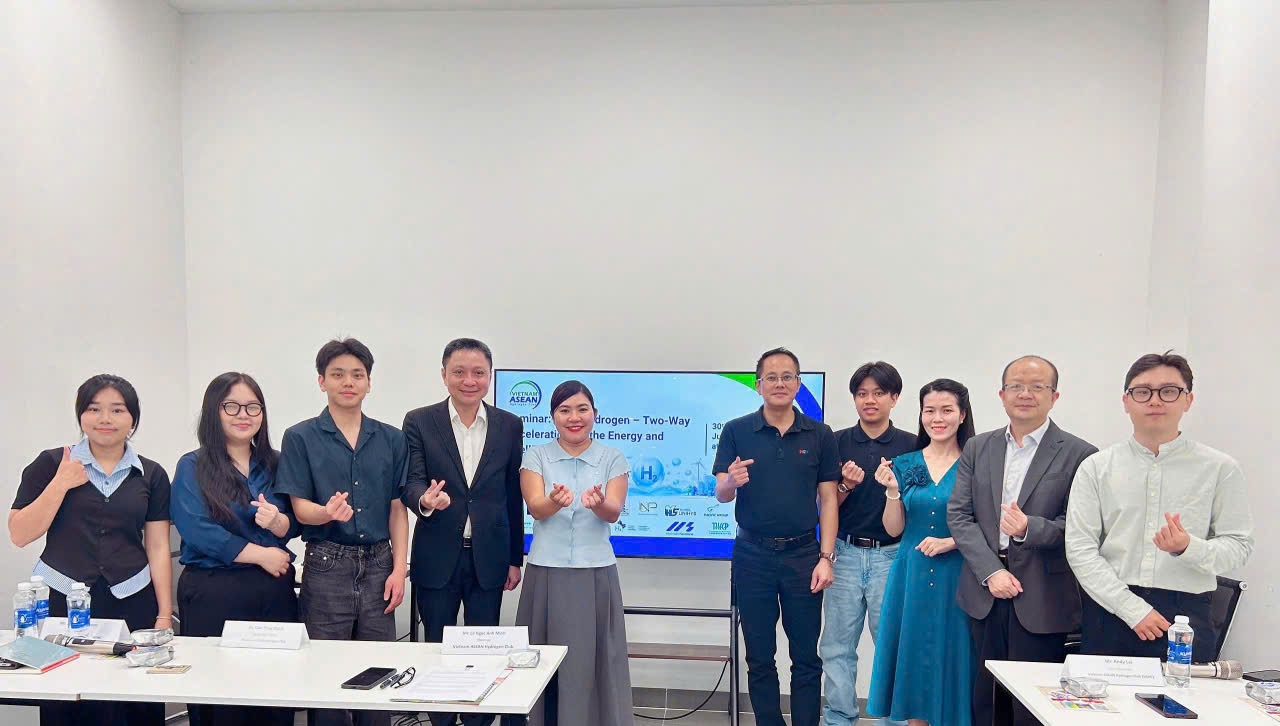
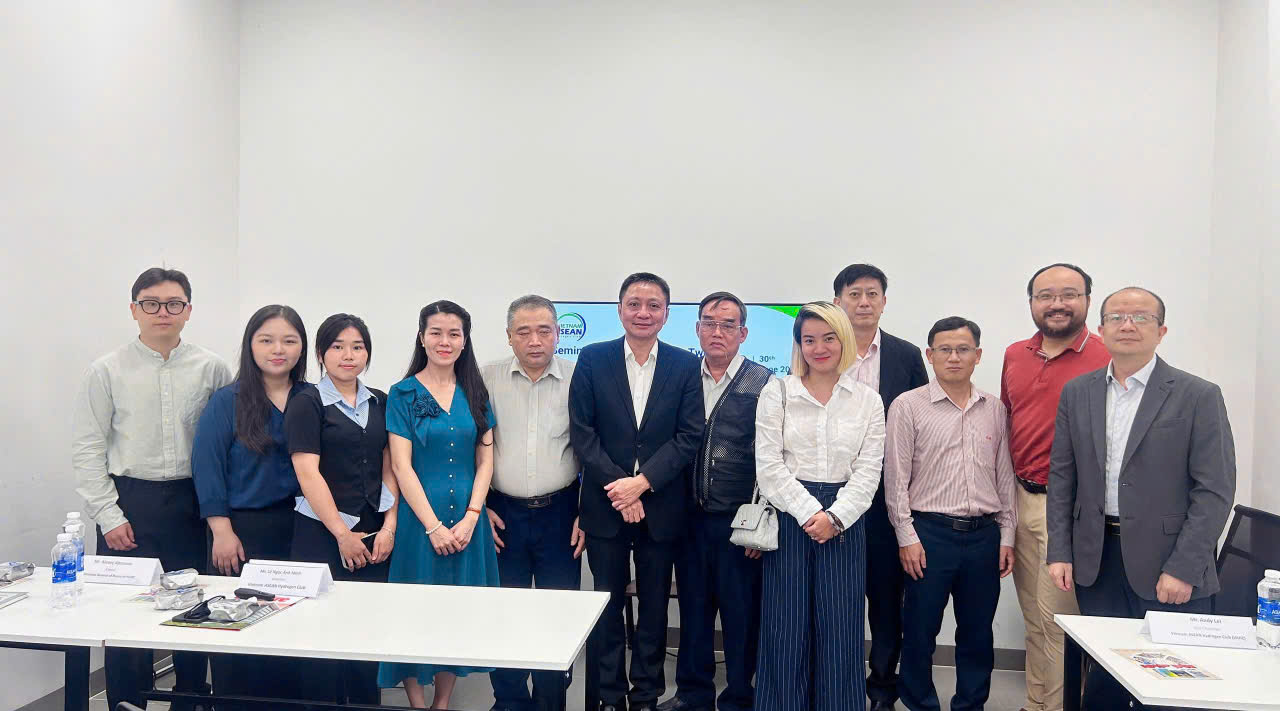
As the artificial intelligence race reshapes the global energy landscape, data centers – the core infrastructure of the digital economy – are increasingly thirsty for electricity. At the seminar "AI ⇄ Hydrogen: Two-Way Acceleration for the Energy and Intelligence Era" held on June 30 in Ho Chi Minh City, Mr. Le Ngoc Anh Minh – Chairman of the Vietnam ASEAN Hydrogen Club (VAHC), Executive President of Pacific Group – presented a key thesis: Hydrogen is not just a fuel of the future, but an energy solution of today for data centers in Vietnam and ASEAN. And Vietnam has clearly quantifiable advantages to lead in this field.
I. The scale of AI and data centers' energy thirst
Table 1: Growth in data center electricity demand – Global, ASEAN and Vietnam (2025–2030)
| Region | 2025 | 2030 | Growth | Unit |
|---|---|---|---|---|
| Global (electricity consumption) | 448 TWh | 945 TWh | +111% | TWh |
| Global (AI share) | ~15% | 40% | +25 pp | - |
| ASEAN (electricity consumption) | 9.8 TWh | 22 TWh | +124% | TWh |
| ASEAN (capacity) | 2.6 GW | 10.7 GW (2035) | +311% (to 2035) | GW |
| ASEAN (share of regional power) | ~1.2% | 2.3% | +1.1 pp | - |
| Vietnam (capacity) | 524.7 MW | 980 MW | +87% | MW |
| Vietnam (electricity consumption) | 734.6 MW | 1,542.8 MW | +110% | MW |
| Vietnam (absolute consumption) | ~3.2 TWh | 6.6 TWh | +106% | TWh |
| Vietnam (share of national power) | ~0.9% | 1.7% | +0.8 pp | - |
Sources: IEA, Southeast Asia Data Center Market Outlook, Revised PDP VIII
Vietnam is emerging as a significant data center hub in the region. Data center capacity is projected to grow from 524.7 MW (2025) to approximately 980 MW (2030) – an 87% increase in just five years. Industry electricity consumption is expected to rise from 734.6 MW (2025) to 1,542.8 MW (2030) under a high-growth scenario – a 110% increase. By 2030, Vietnam's data center electricity demand is estimated at approximately 6.6 TWh/year, equivalent to 1.7% of national electricity output.
II. Vietnam's unlimited renewable energy potential
Under the revised Power Development Plan VIII, Vietnam targets renewable energy (excluding hydropower) to account for 28–36% of total power capacity by 2030 and 74–75% by 2050. However, these figures reflect only a very small fraction of Vietnam's actual potential.
Table 2: Vietnam's renewable energy potential – planning vs. actual reality
| Energy Source | Technical Potential | Current Planning (2030) | Untapped Ratio | Remarks |
|---|---|---|---|---|
| Offshore wind | 1,068 GW | ~6 GW | >99% | Largest in SE Asia, 6x Vietnam's 2030 total power system capacity |
| Onshore/nearshore wind | 26,066–38,029 MW | (within planning) | Partially tapped | Considerable remaining potential |
| Solar power | >16,500 MW (est.) | 12,836 MW | Mostly untapped | Already exceeded planning targets by 2020 |
| Biomass/bioenergy | Very large | Not fully quantified | >90% | Abundant feedstock from agriculture and forestry |
| Geothermal | 269 hot water sites | 0 | 100% | >100°C at 4 sites, distributed nationwide |
| Tidal | 4.98–8.19 MW/m² (estuaries) | 0 | 100% | More predictable than wind and solar, stable output |
| Ocean currents | Largest W. Pacific coast | 0 | 100% | Speeds 1.05–1.26 m/s, turbine efficiency up to 99.6% |
Sources: UNDP, National Hydro-Meteorological Service (4/2025), Revised PDP VIII
Offshore wind: According to the UNDP and National Hydro-Meteorological Service assessment (April 2025), Vietnam's offshore wind technical potential (at 100m height, full EEZ) is estimated at up to 1,068 GW total technical capacity. Within 0–200 km range, potential is approximately 599 GW (261 GW fixed-bottom and 338 GW floating). This is the largest potential in Southeast Asia and among the highest in Asia. In contrast, the revised PDP VIII targets only approximately 6 GW of offshore wind by 2030 – representing less than 1% of the 1,068 GW potential. Over 99% of the remaining potential is completely unplanned and untapped.
Table 3: Offshore wind potential comparison – Vietnam vs. regional peers
| Country | Technical Potential (GW) | 2030 Target (GW) | Planned Exploitation Rate | Investment Cost (USD million/MW) |
|---|---|---|---|---|
| Vietnam | 1,068 | ~6 | <1% | 4.0–4.5 (fixed-bottom) |
| Japan | ~500 | 10 (offshore) | 2% | 5.0–6.0 (floating) |
| South Korea | ~300 | 14.3 (total) | 4.8% | 5.0–6.0 (floating) |
| Taiwan | ~100 | 5.5 | 5.5% | 4.5–5.5 |
| Philippines | ~70 | 2.0 | 2.9% | 4.5–5.5 |
Sources: UNDP (2025), IRENA, National Energy Plans
The region with the highest potential is the sea area from Ninh Thuận to Bà Rịa – Vũng Tàu, with average wind speeds of 8–10 m/s and wind power density of 500–900 W/m² at 100m height. The relatively shallow continental shelf of Vietnam allows the use of fixed-bottom foundations at lower costs than countries requiring floating foundations like South Korea and Japan.
Solar power: Vietnam's solar installation capacity has already grown from 86 MW (2018) to approximately 16,500 MW (2020) – exceeding long-term planning targets – demonstrating that actual potential is far greater than planned.
Geothermal: Vietnam has approximately 269 geothermal sources distributed nationwide: Northwest 79, North Central 42, South Central 67, Mekong Delta 53. Entirely untapped.
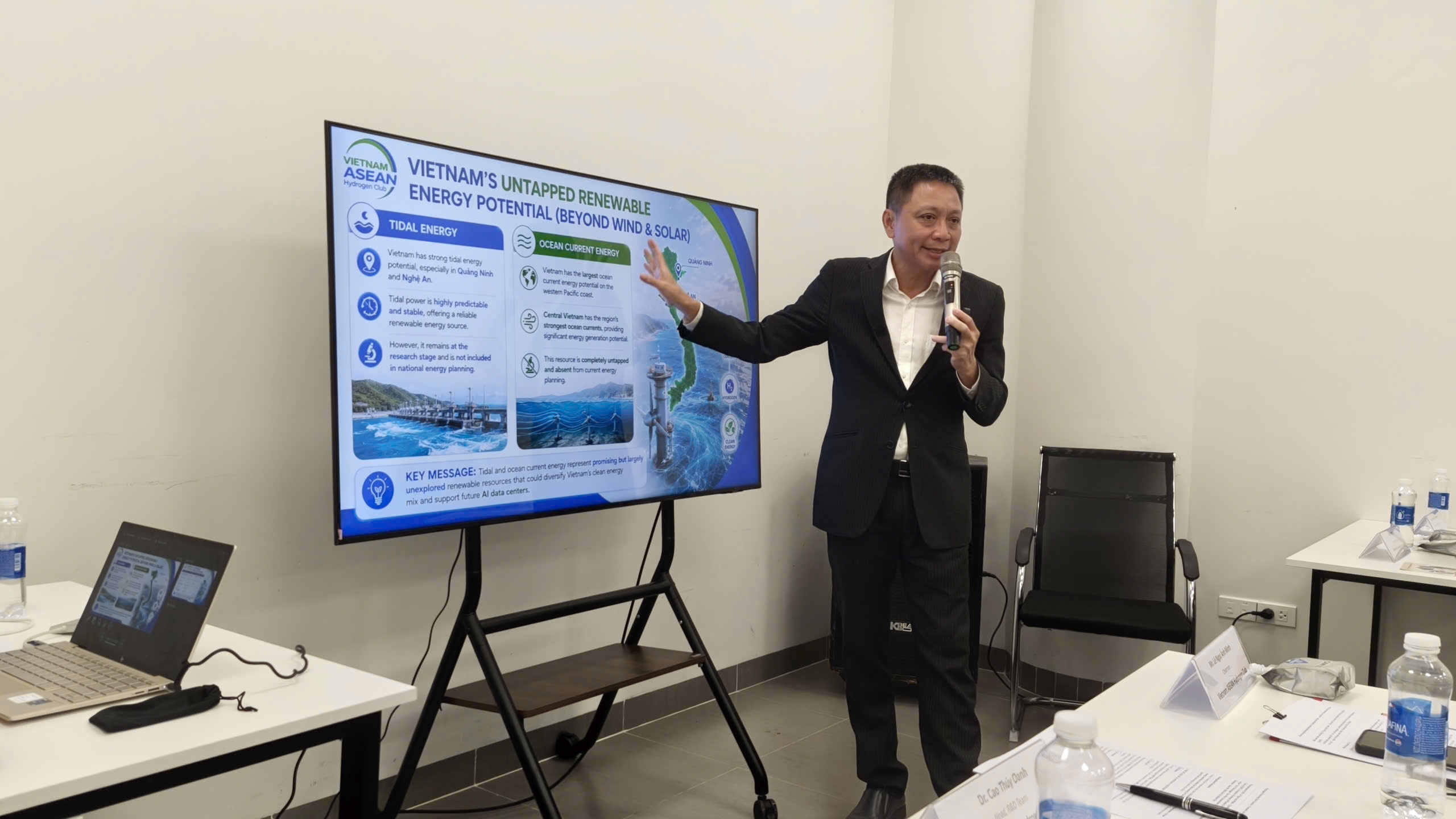
Tidal and ocean currents: Significant and completely unexploited potential, with Vietnam having the largest ocean current energy potential on the western Pacific coast.
The technical potential of offshore wind alone (1,068 GW) is nearly 6 times the total capacity of Vietnam's entire power system under the 2030 plan (approximately 183–236 GW). When combined with solar, biomass, geothermal, tidal, and ocean current sources, the potential for green hydrogen production to power data centers in Vietnam is virtually unlimited.
III. Competitive green hydrogen production costs
Table 4: Hydrogen production cost comparison by technology and outlook to 2030
| Hydrogen Type | Feedstock | Current Cost (2026) | Projected Cost (2030) | Advantage | Disadvantage |
|---|---|---|---|---|---|
| Grey hydrogen | Natural gas | 1.0–2.0 USD/kg | 1.5–2.5 USD/kg | Cheap, proven tech | High CO₂ emissions |
| Blue hydrogen | NG + CCS | 2.5–4.0 USD/kg | 2.0–3.0 USD/kg | 90% emissions reduction | High CCS cost |
| Green hydrogen (Vietnam) | Renewable power | 4.0–6.0 USD/kg | 2.5–3.5 USD/kg | Zero emissions, unlimited feedstock | Still relatively high cost |
| Green hydrogen (global) | Renewable power | 5.0–8.0 USD/kg | 3.0–4.0 USD/kg | Zero emissions | New tech, high CAPEX |
Sources: IRENA, BloombergNEF, VAHC analysis
With Vietnam's renewable electricity prices projected to reach approximately 5–6 US cents/kWh by 2030, green hydrogen could achieve a price of $2.5–3.5/kg – on par with or lower than fossil fuels in many markets.
IV. Hydrogen solutions for data centers
Table 5: Hydrogen demand for data centers in Vietnam by scenario
| Data Center Size | Capacity (MW) | H₂ Consumption (kg/day) | H₂ Consumption (tonnes/year) | Share of 1 Mt/year target (2030) |
|---|---|---|---|---|
| Small facility | 10 | 5,840 | 2,132 | 0.2% |
| Medium facility (typical) | 50 | 29,200 | 10,658 | 1.1% |
| Large facility | 100 | 58,400 | 21,316 | 2.1% |
| Target: 10% of total 2030 capacity | ~100 | 58,400 | 21,300 | 2.1% |
Assumptions: Fuel cell efficiency 60%, consumption 55 kWh/kg H₂, load factor 90%
Table 6: Backup power comparison – Diesel vs. hydrogen for 100 MW data center
| Metric | Diesel generator | Hydrogen fuel cell |
|---|---|---|
| Capital cost | 500–800 USD/kW | 2,000–3,000 USD/kW |
| Fuel cost (per hour) | ~5,000 L diesel (~5,000 USD) | ~58,400 kg H₂ (~175,000 USD at current price) |
| Projected fuel cost 2030 | ~6,000 USD/hour | ~120,000 USD/hour (H₂ at 3.5 USD/kg) |
| CO₂ emissions (per hour) | ~13 tonnes CO₂ | 0 tonnes CO₂ |
| Lifetime | 10,000–15,000 hours | 40,000–60,000 hours |
| Maintenance cost | High (combustion engine) | Low (no moving parts) |
Sources: IRENA, VAHC analysis
For seasonal storage, Vietnam's hydropower reservoirs can be integrated with electrolysis systems to store surplus renewable energy as hydrogen. With offshore wind capacity projected to reach 17,032 MW by 2035 and approximately 140 GW by 2050, hydrogen could store hundreds of GWh of seasonal energy – a solution lithium-ion batteries cannot replace.
V. Quantified policy proposals
Table 7: Policy proposals and specific targets for green hydrogen development for data centers in Vietnam
| Sector | Target | Deadline | Expected Resources | Responsible Bodies |
|---|---|---|---|---|
| Hydrogen production | 10% of total data center capacity (~100 MW) powered by hydrogen | 2030 | ~21,300 tonnes H₂/year | MOIT, VAHC |
| Infrastructure | Develop 10–20 MW onsite production stations; liquid hydrogen transport and storage systems | 2030 | 500–800 million USD | Private investors, MPI |
| DPPA mechanism | Deploy at least 10 DPPA contracts (total capacity ≥300 MW) | 2028 | - | MOIT, EVN, investors |
| R&D and pilots | VND 1,500 billion (~60 million USD) R&D fund; 3–5 pilot projects 5–10 MW scale | 2028 | 60 million USD (R&D fund); pilot CAPEX | MOST, VAHC, enterprises |
| Hydrogen production cost | Reduce below 3 USD/kg | 2030 | AI optimization for operations | MOIT, VAHC, producers |
| Workforce development | Train 3,000 engineers and specialists in hydrogen and clean energy | 2028 | Training expenses | MOET, VAHC, universities |

VI. Conclusion and strategic comparison
Table 8: Vietnam's competitive advantages in green hydrogen for data centers vs. regional peers
| Criteria | Vietnam | Singapore | Malaysia | Indonesia | Thailand |
|---|---|---|---|---|---|
| Offshore wind potential | 1,068 GW | Negligible | ~100 GW | ~200 GW | ~50 GW |
| Solar potential | Extremely high | Limited | High | Very high | Very high |
| Geothermal potential | 269 sites | None | Limited | Very large (volcanic) | Limited |
| Data center market size (2030) | ~980 MW | ~1,200 MW | ~800 MW | ~500 MW | ~600 MW |
| Projected green hydrogen cost (2030) | 2.5–3.5 USD/kg | 5–7 USD/kg | 4–5 USD/kg | 3.5–4.5 USD/kg | 4–5 USD/kg |
| Policy support framework | Developing (PDP VIII, Hydrogen Strategy) | Strong (Singapore Green Plan) | Moderate (Hydrogen agreement) | Developing | Moderate |
| Strategic location | ASEAN gateway, near shipping routes | Financial & tech hub | Near Singapore, shipping routes | Rich resource base | Manufacturing hub |
The numbers tell the full story:
-
Vietnam data center capacity: +87% (524.7 MW → 980 MW, 2025–2030)
-
Electricity consumption: +110% (734.6 MW → 1,542.8 MW, 2025–2030)
-
Offshore wind capacity: 17,032 MW (2035), ~140 GW (2050)
-
Green hydrogen production target: 100,000–500,000 tonnes/year (2030)
-
Electrolyser costs projected to decline 30–35% by 2030
Vietnam possesses all the necessary elements to become a green hydrogen production and application hub serving data centers across ASEAN. It is no longer a question of "whether" – but of "when" and "how" to act.
#Hydrogen #GreenHydrogen #DataCenters #VAHC #Vietnam #AI #EnergyTransition #RenewableEnergy #NetZero #ASEAN