

*H2Gen® – Revolutionary Hydrogen Production from Water Without Electricity, Decarbonizing Hard-to-Abate Industries*
PRESENTATION BY MR. MATTHEW DEGYANSKY (UTILITY GLOBAL) AT THE VIETNAM-AMERICA HYDROGEN WORKSHOP 2026
Date: April 10, 2026
Location: Saigon Hotel, Ho Chi Minh City
Event: Vietnam-America Hydrogen Workshop 2026 – "Advanced Hydrogen Technologies and the Semiconductor Supply Chain – Vietnam & ASEAN"

Opening: A Completely Different Technology
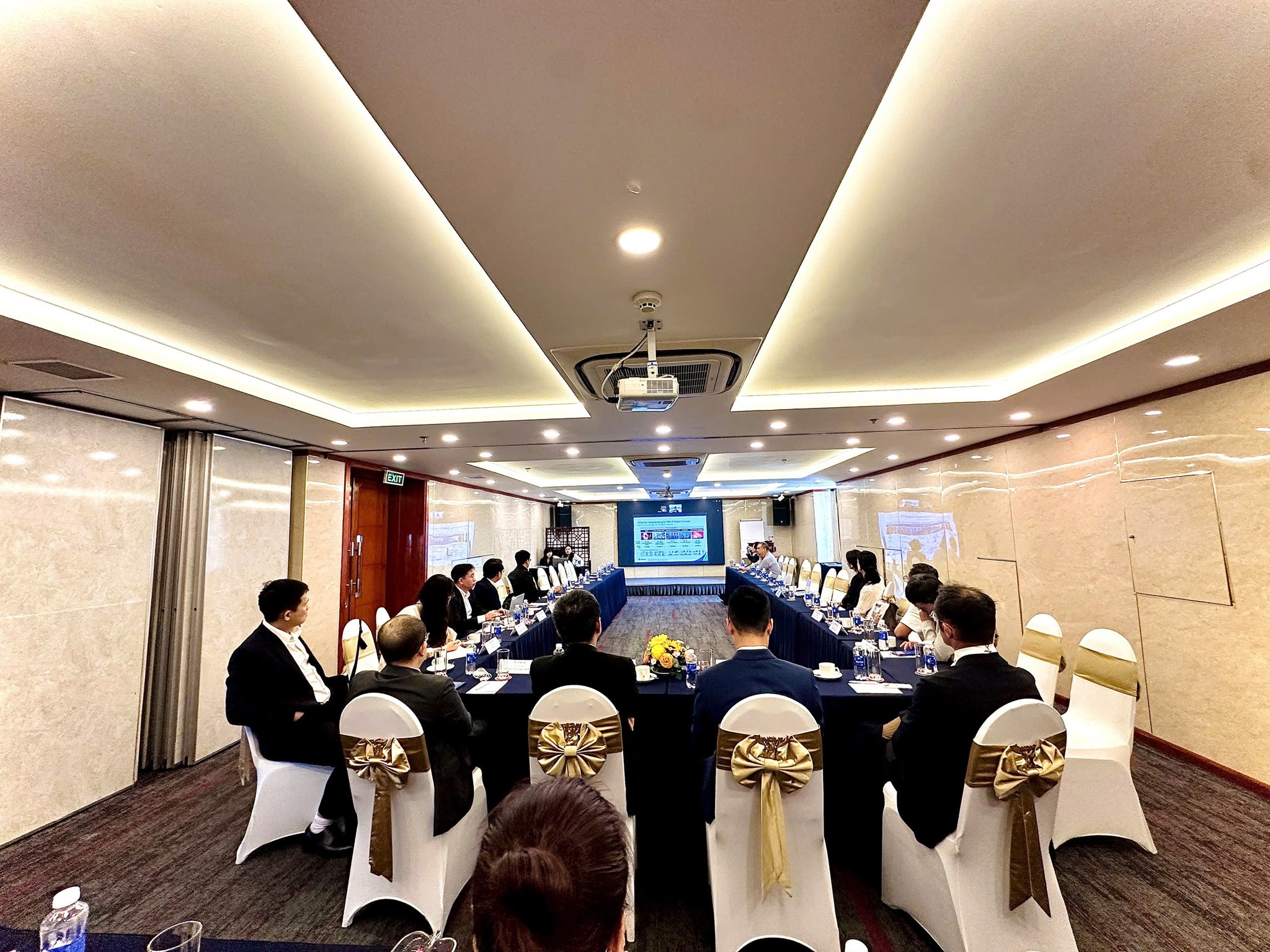
Immediately following Mr. Andy Lei's (VAHC) overview of Vietnam's hydrogen market, Mr. Matthew Degyansky – CEO of Drive On, LLC, representing Utility Global (USA) – took the stage. He opened with a striking statement:
"Most of you are familiar with electrolysis or steam methane reforming (SMR). Today, I introduce a completely different technology: H2Gen® – producing hydrogen from water without electricity. And it can decarbonize up to 50% of global emissions."
He emphasized that Utility Global focuses on hard-to-abate industries – which account for up to 50% of global emissions – including steel, low-carbon fuels, refining & petrochemicals, chemicals, and upstream oil & gas.
Part 1: Core Technology – Hydrogen from Water, No Electricity
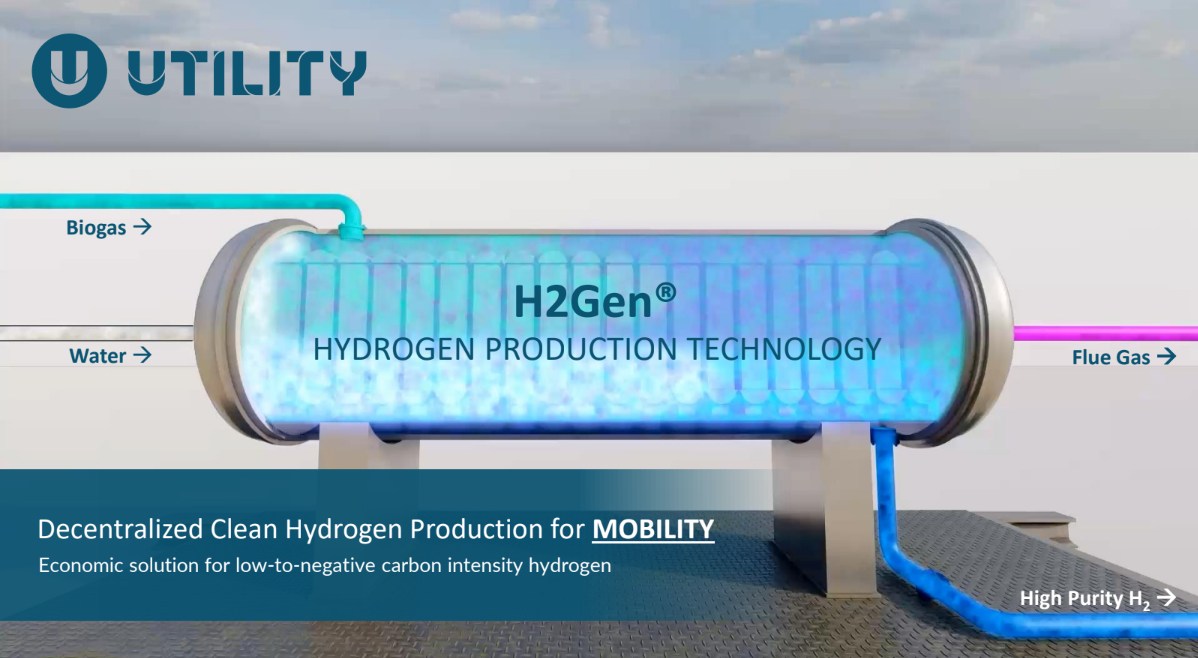
Mr. Degyansky explained the fundamental chemistry of H2Gen® with a simple diagram:
-
Anode reaction (feed gas side):
CO + O²⁻ → CO₂ + 2e⁻ -
Cathode reaction (hydrogen production side):
H₂O + 2e⁻ → H₂ + O²⁻
Key differentiators:
-
No electricity input – the reaction is driven by chemical energy from waste gas.
-
Hydrogen is produced without ever mixing with the feed gas thanks to a gas-tight electrolyte membrane.
-
No equilibrium limitations like the conventional Water-Gas Shift (WGS) reaction.
-
Can restart in minutes, while WGS requires up to 2 days.
"We compare H2Gen to WGS – and H2Gen is the clear winner in simplicity, flexibility, and cost."
Part 2: Scaling Up – From a 40-foot Container to 500 TPD Plants
Mr. Degyansky presented Utility's scaling strategy:
| Scale | Capacity | Application |
|---|---|---|
| Standardized Reactor | Factory-manufactured | Building block for all projects |
| Single Reactor Plant | 2–5 TPD H₂ | Biogas to mobility |
| Large Plants | 10–500 TPD H₂ | Steel, refining, chemicals |
First Project (Canada, 2024):
Modular 40-foot ISO container, factory-manufactured, small footprint, scalable.
"Frontier" Facility (Houston, 2025):
-
Commercial-scale H2Gen technology showcase campus.
-
Produces up to 50 kg H₂/day, simulating various feed gas compositions.
-
Allows customers to test before commercial deployment.
Part 3: Steel Industry – Decarbonizing Existing Blast Furnaces
Mr. Degyansky noted that steel accounts for approximately 7–9% of global CO₂ emissions. H2Gen® solves this by:
-
Re-injecting H₂ into the Blast Furnace:
Reduces coke consumption by ~10%, increases furnace productivity by up to 12%. -
Supplying H₂ to co-located DRI plants:
Replaces purchased natural gas, lowers cost and carbon intensity. -
Producing low-carbon fuels from H₂ and CO₂.
CO₂ advantage:
H2Gen produces a concentrated CO₂ stream (30–75%) from a single point, enabling far more economical carbon capture (CCUS) compared to traditional technologies that handle dilute streams (5–20%).
"We don't ask you to build new steel plants. We decarbonize your existing infrastructure – while maintaining or even lowering the levelized cost of steel."
Live Project – Brazil (ArcelorMittal):
-
3.0 TPD H₂ from blast furnace gas.
-
100% biochar-based – no carbon capture needed (biogenic source).
-
Replaces expensive natural gas, reduces operating costs.
Part 4: Refining & Petrochemicals – Monetizing Waste Gas
Mr. Degyansky pointed out that refineries and chemical plants often have off-gas or fuel gas that is flared or underutilized. H2Gen® converts these streams into:
-
98%+ pure hydrogen (no further purification needed)
-
~98% concentrated CO₂ – capture-ready
-
No power import required
Case Study – Low-Carbon Ethylene in Europe:
-
Partnering with a leading EU ethane producer.
-
90% CO₂ emission reduction (0.73 Mton/year).
-
Hydrogen cost below €3.0/kg – highly competitive.
H2Gen vs. SMR in Refining:
-
H2Gen is significantly simpler, with fewer components and smaller footprint.
-
Lower emissions, no electricity import.
Part 5: Biogas – Negative-Carbon Hydrogen for Mobility
Mr. Degyansky called this an "immediate opportunity" for Vietnam. H2Gen® can utilize biogas from landfills, dairy farms, wastewater treatment – sources that are often flared or underutilized.
Advantages over SMR + RNG (Renewable Natural Gas):
| Criterion | H2Gen® | SMR + RNG |
|---|---|---|
| Pre-treatment | Minimal, standard contaminant removal | Complex RNG plant required |
| Footprint | ~1/3 of SMR | Large |
| Carbon Intensity (CI) | Negative (-800 gCO₂e/MJ) | Not low enough for PTC eligibility |
| Operating Cost | Low | High |
Live Project – California (Maas Energy Works):
-
Partnership with leading US biogas developer.
-
3.0 TPD H₂ from dairy biogas (4 farms).
-
Hydrogen for heavy-duty truck market (Bay Area & Sacramento).
-
Expected CI: -800 gCO₂e/MJ – deeply negative carbon.
"This is not just green hydrogen. This is negative-carbon hydrogen. And it's produced right where demand exists – no grid connection waiting time."
Strategic Alliance with Symbio & SCAQMD:
-
$800,000 grant for fuel cell refuse collection vehicle development.
-
12-month trial with major fleets (WM, City of LA, City of Riverside).
Part 6: Upstream Oil & Gas – Blue Hydrogen Without Carbon Capture
Mr. Degyansky introduced another unique application: utilizing stranded gas, associated gas, or waste gas – sources often flared because they are uneconomical.
-
H2Gen® converts these into zero-carbon hydrogen.
-
Inert gases (CO₂, N₂) from the H2Gen plant can be reinjected directly into the reservoir – no carbon capture equipment needed.
-
Significantly lower cost than conventional blue hydrogen (SMR + CCUS).
Conclusion and Call for Vietnam Collaboration
Mr. Degyansky concluded with a specific invitation:
*"Vietnam has enormous potential – from biomass and agricultural waste to industrial clusters needing decarbonization. H2Gen® can be deployed today – as a 40-foot container, producing hydrogen on-site, with no grid connection, no complex infrastructure."*
He invited Vietnamese partners – steel mills, industrial parks, large-scale farms – to explore pilot projects.
Q&A Highlights
Questions from Vietnamese delegates focused on:
-
Handling impurities in biogas – Mr. Degyansky confirmed that H2Gen® includes standard pre-treatment and is highly flexible with varying gas compositions.
-
Cost comparison with electrolysis – He emphasized that H2Gen® requires no electricity, making it especially economical where power is expensive or grid connection is difficult.
-
Deployment timeline – Approximately 12–18 months from FID to commercial operation.
Mr. Degyansky ended with an optimistic message: "The technology is ready. The partners are ready. We just need the first project in Vietnam."
Written by: VAHC Secretariat
Sources: Utility Global presentation deck (January 2026) and VAHC event program, April 10, 2026