

Global Hydrogen Market Trends & Investment Outlook
A Presentation by Mr. Le Ngoc Anh Minh (Chairman of VAHC) at the "Hydrogen Horizons" Workshop, March 31, 2026, USTH, Hanoi
April 3, 2026 by Annie Nguyễn
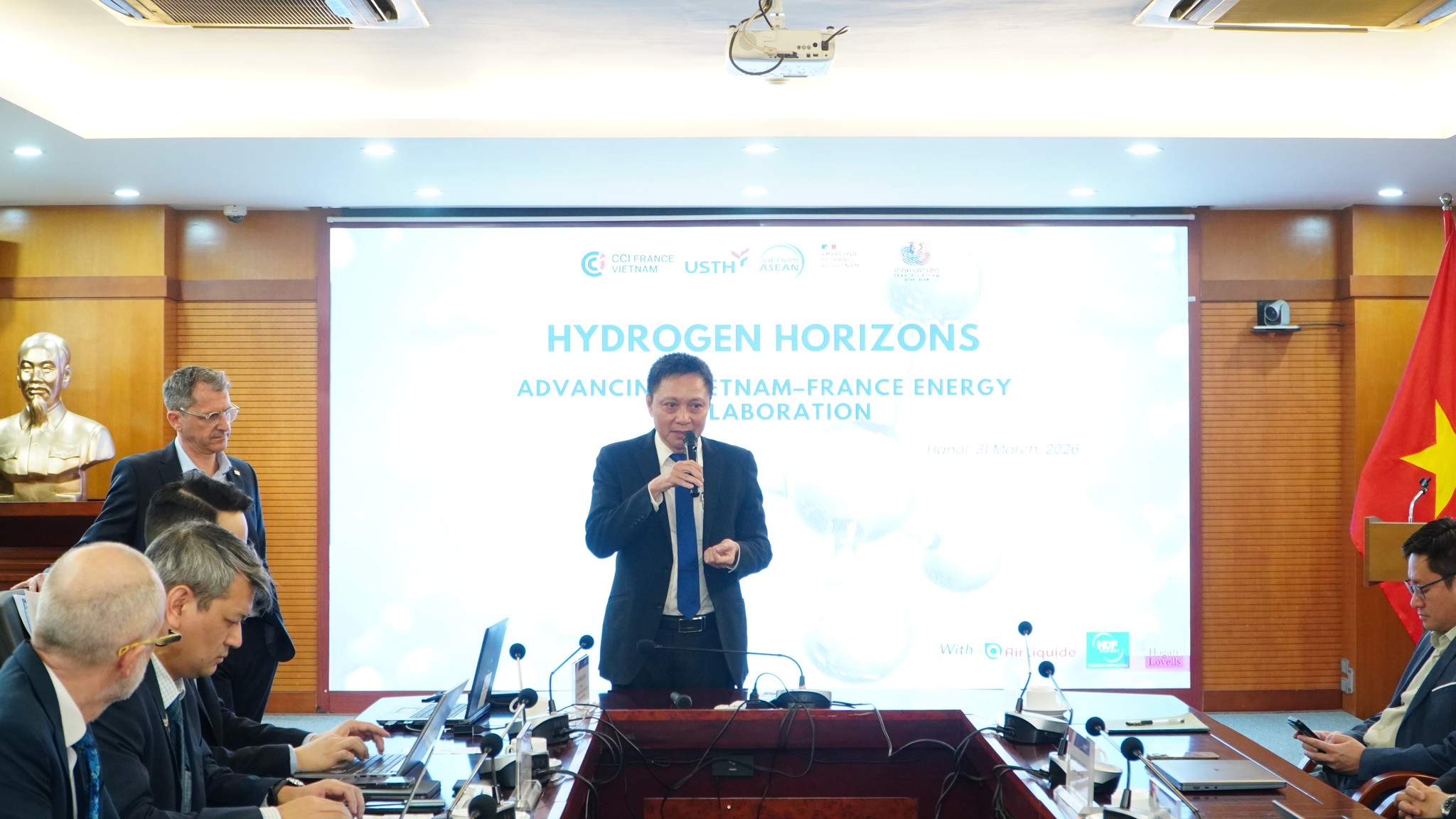
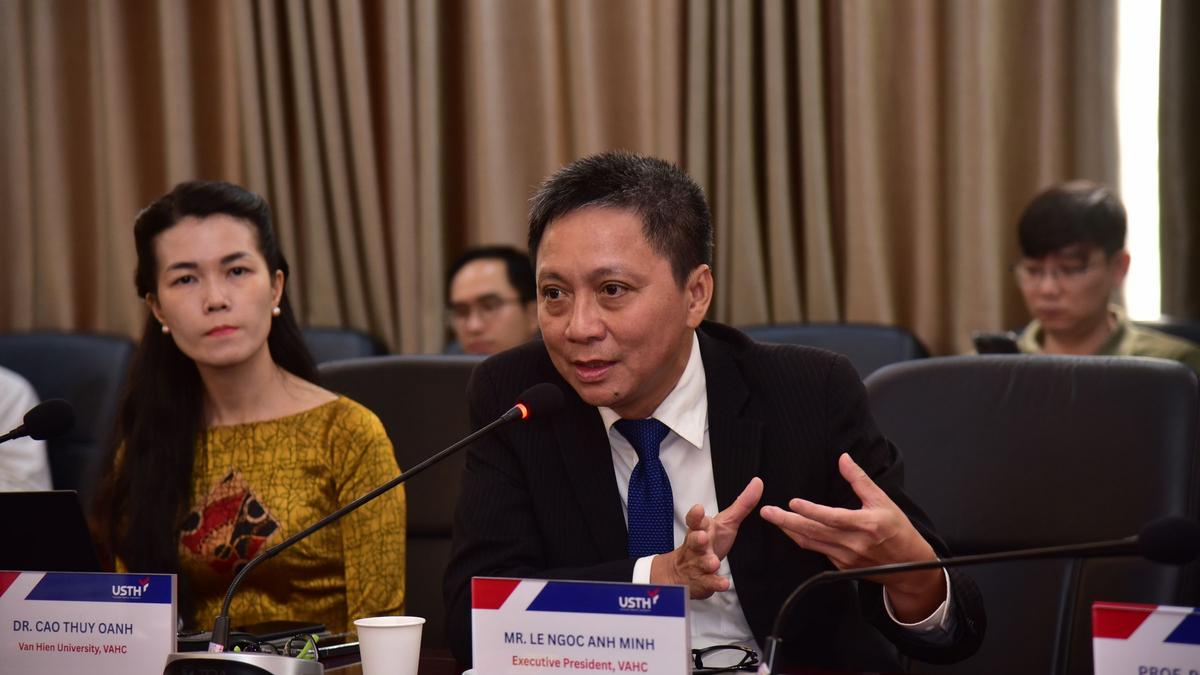
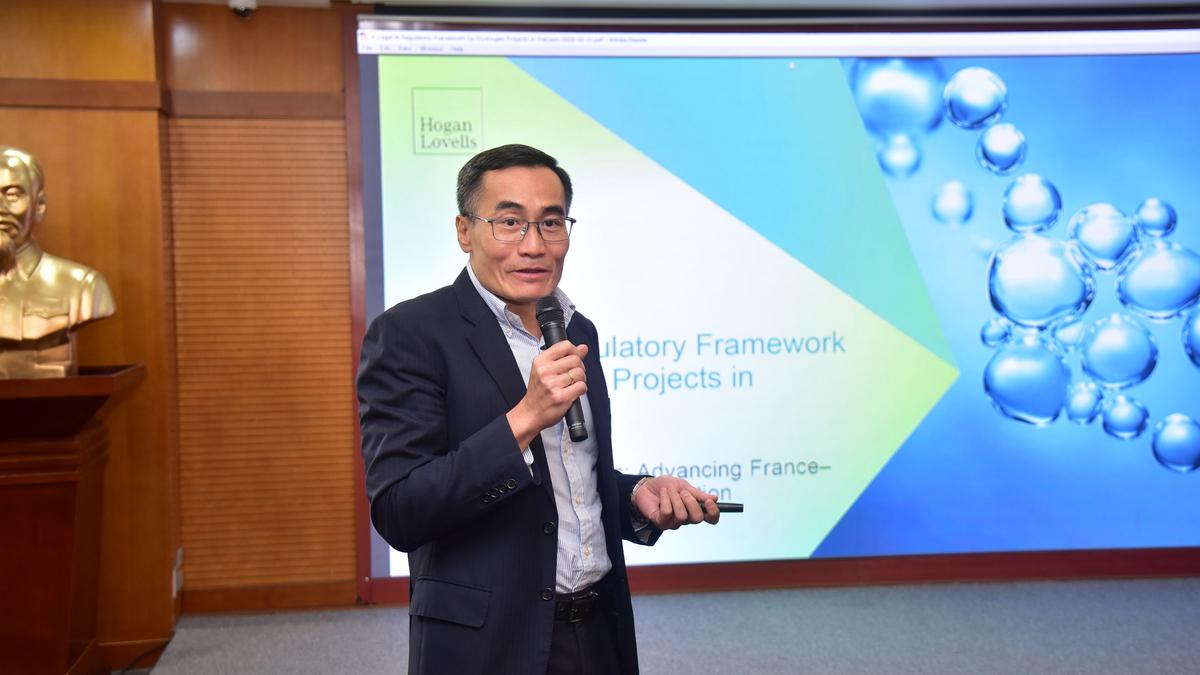
HANOI – Within the framework of the international workshop "Hydrogen Horizons - Advancing Vietnam-France Energy Collaboration" held at the University of Science and Technology of Hanoi (USTH) on March 31, 2026, Mr. Le Ngoc Anh Minh – Chairman of the Vietnam ASEAN Hydrogen Club (VAHC) – delivered a comprehensive presentation on "Global Hydrogen Market Trends & Investment Outlook" .
Mr. Minh's presentation provided a macro-level view of the global hydrogen economy, key investment trends, regional policy developments, and Vietnam's strategic positioning within the emerging ASEAN hydrogen market.
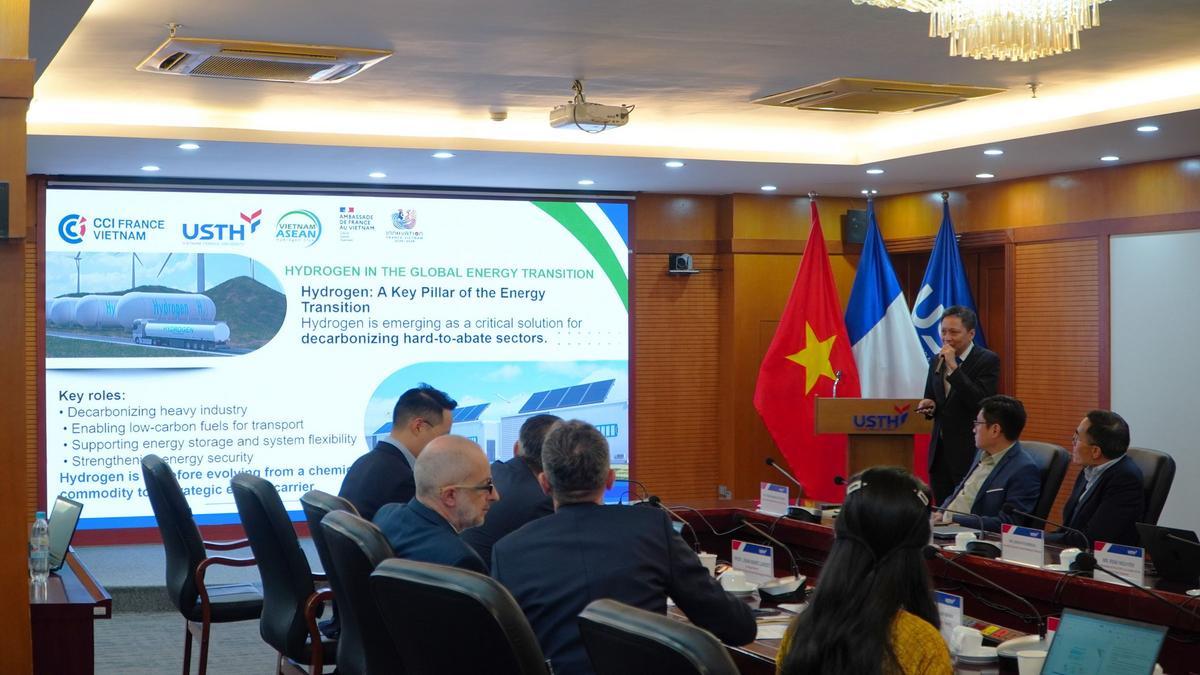
Hydrogen in the Global Energy Transition
Mr. Minh opened by emphasizing that hydrogen is emerging as a critical solution for decarbonizing hard-to-abate sectors. Hydrogen is evolving from a chemical commodity into a strategic energy carrier with four key roles:
-
Decarbonizing heavy industry
-
Enabling low-carbon fuels for transport
-
Supporting energy storage and system flexibility
-
Strengthening energy security
Global Hydrogen Market Overview (Based on IEA Global Hydrogen Review 2025)
Key facts:
-
Global hydrogen demand: approximately 100 million tonnes per year
-
Main uses: ammonia production, oil refining, methanol and chemicals
However, low-emissions hydrogen currently accounts for less than 1% of global supply.
"This highlights the massive scale of the transition ahead," Mr. Minh emphasized.
Global Hydrogen Investment Trends
Global hydrogen investment is increasing but still at an early stage. While capital is flowing into the sector, significant challenges remain, including high production costs, infrastructure gaps, and regulatory uncertainty.
Europe: Hydrogen Policy & Market Reform
Mr. Minh noted that Europe remains one of the most policy-driven hydrogen markets.
Key EU targets for 2030:
-
10 million tonnes of renewable hydrogen production
-
10 million tonnes of hydrogen imports
-
40 GW of electrolyser capacity
Europe is also developing a pan-European hydrogen pipeline network through the European Hydrogen Backbone. However, regulatory complexity and high costs are slowing project deployment.

France and the European Policy Debate
Mr. Minh highlighted recent policy debates in Europe regarding hydrogen regulations. French President Emmanuel Macron recently criticized EU hydrogen rules as too complex and restrictive.
Key messages from France:
-
Simplify hydrogen regulations
-
Strengthen industrial competitiveness
-
Support European hydrogen technology
France is also exploring natural hydrogen resources and integrating them into its hydrogen strategy.
Northeast Asia: Hydrogen Industrial Scale
Northeast Asia is described as one of the most dynamic hydrogen regions, with countries like Japan, South Korea, and China driving large-scale hydrogen deployment across industry, transport, and power generation.

ASEAN Hydrogen Market (Based on IEA Global Hydrogen Review 2025)
Southeast Asia is emerging as a new hydrogen frontier with several strong growth opportunities:
1. Industrial decarbonization:
Hydrogen could reduce emissions in ammonia production, steel manufacturing, and refineries.
2. Maritime fuels:
Singapore is positioning itself as a hub for ammonia and hydrogen-based shipping fuels.
3. Export potential:
Countries such as Indonesia and Malaysia could become future exporters of green ammonia and hydrogen.

Vietnam Hydrogen Opportunity
Mr. Minh dedicated a significant portion of his presentation to Vietnam's structural advantages for hydrogen development:
1. Large industrial demand:
Hydrogen could decarbonize steel industry, cement production, fertilizer plants, and refineries.
2. Renewable energy potential:
Vietnam has strong resources in solar power and offshore wind, which could support renewable hydrogen production.
3. Strategic logistics location:
Vietnam sits at the center of ASEAN maritime trade routes, enabling future hydrogen and ammonia exports.
4. Diversified hydrogen production pathways:
Potential options include renewable electrolysis, biomass-to-hydrogen, waste-to-hydrogen, and natural hydrogen exploration.
"Vietnam has the potential to become a key hydrogen player in ASEAN," Mr. Minh affirmed.
Strategic Conclusion
Mr. Minh concluded that the global hydrogen economy is entering a new phase of industrial competition and innovation. He outlined three strategic lessons:
1. Hydrogen deployment will start in hard-to-abate industries:
Steel, chemicals, and refining will be the first large markets.
2. Heavy transport will be an early growth sector:
Hydrogen fuel cells are particularly suitable for long-distance heavy freight transport.
3. Hydrogen production pathways must diversify:
Countries should explore renewable electrolysis, biomass and waste conversion, and natural hydrogen resources.

Final Message
"Hydrogen is not only an energy technology. It is becoming a new industrial ecosystem. For Vietnam and ASEAN, hydrogen offers an opportunity to accelerate decarbonization, build new clean industries, and strengthen regional energy cooperation," Mr. Minh concluded.
Reported by: VAHC Secretariat
Contact: contact@vahc.com.vn