
General Secretary and President To Lam Visits Antwerp-Bruges Port: Cooperation Opportunities and Lessons in Hydrogen and Ammonia Infrastructure
October 23, 2026 | By Annie Nguyễn
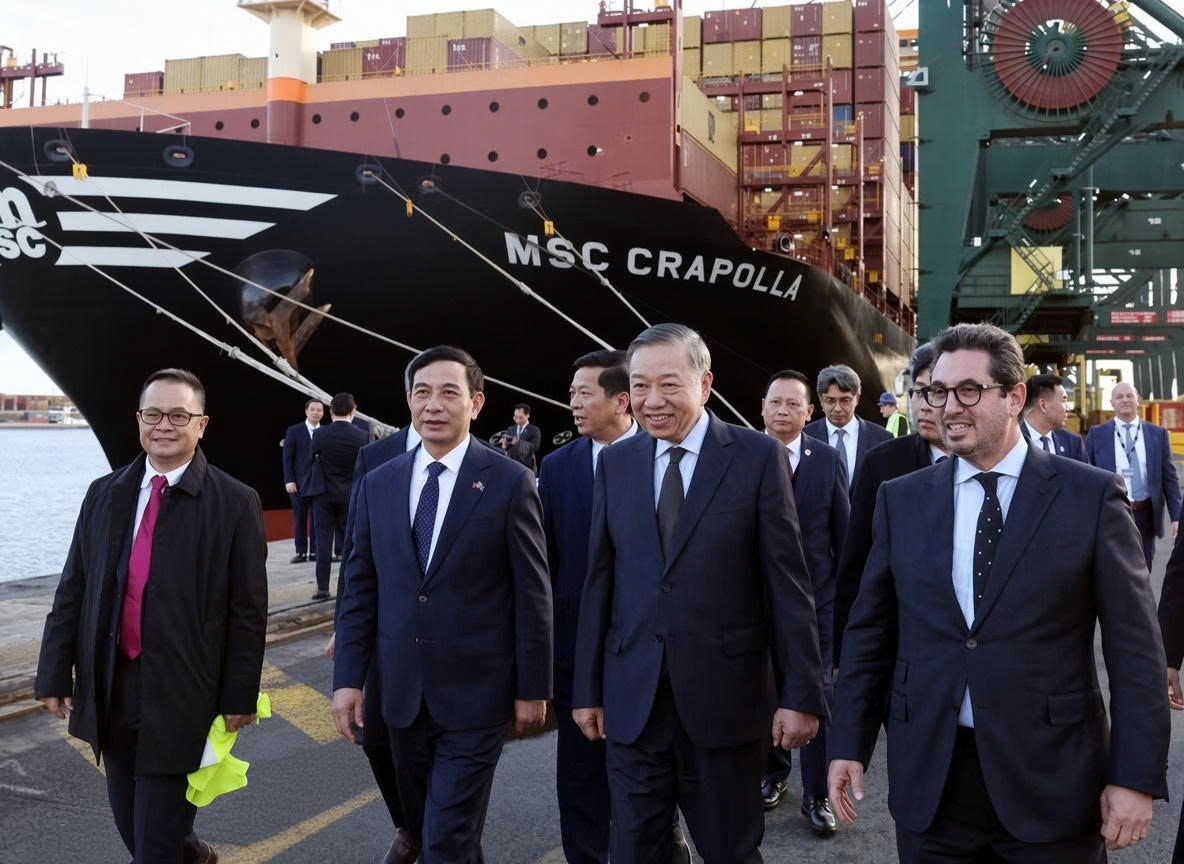
Within the framework of the state visit to the Kingdom of Belgium, on the afternoon of October 22, 2026 (local time), General Secretary and President To Lam visited the Port of Antwerp-Bruges. The event not only marks a step forward in maritime cooperation between Vietnam and Belgium but also opens up opportunities for the Vietnam Maritime Corporation (VIMC) to learn from the green transition model of one of Europe's most modern and pioneering seaports.
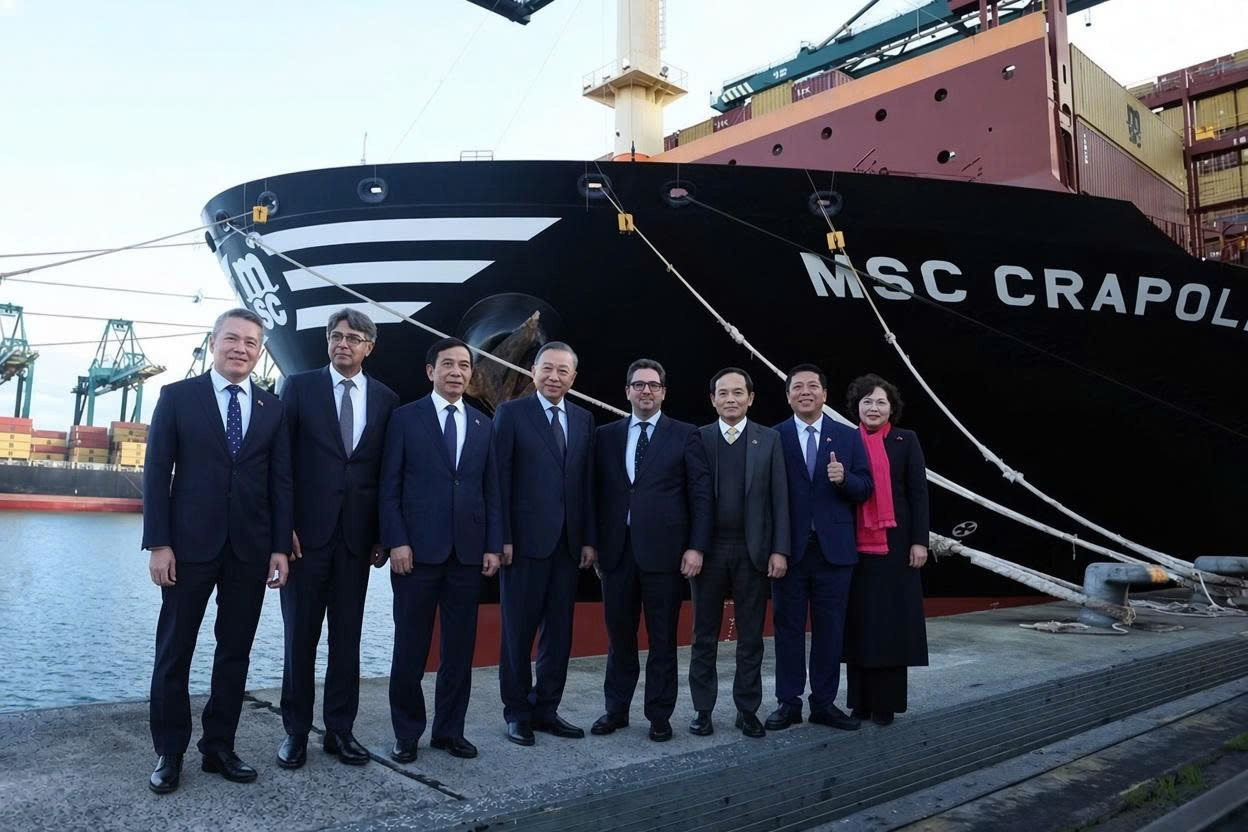
During the working session, the leadership of the Port of Antwerp-Bruges and VIMC signed a Memorandum of Understanding (MOU) on comprehensive cooperation, focusing on key areas such as port management and planning, multimodal connectivity (sea-river-rail), logistics supply chains, digital transformation, and notably, green port development and emissions reduction.
Antwerp-Bruges: Europe's Energy and Industrial Hub
Formed from the merger of the Port of Antwerp and the Port of Zeebrugge in 2022, Antwerp-Bruges is currently Europe's second-largest port. The port provides direct and indirect employment for approximately 162,000 people and contributes about 4.5% of Belgium's GDP. It is also home to Europe's largest integrated chemical industrial cluster, alongside the automotive, steel, and breakbulk industries.
A Strong Pivot Towards Hydrogen and Ammonia
The most notable aspect of Antwerp-Bruges' sustainable development strategy is the construction of infrastructure for carbon-free fuels, positioning the port as a hydrogen hub for Western Europe.
-
Green Hydrogen Import Terminal: In April 2026, the port commissioned the first phase of its green hydrogen import terminal, capable of storing and regasifying hydrogen carriers such as ammonia and liquid organic hydrogen carriers (LOHC). The port is also operating an ammonia cracking pilot facility (decomposing ammonia to extract hydrogen) with a capacity of 30 tonnes per day.
-
Open-Access Pipeline Network: The port utilizes a 100 MW PEM electrolyzer and North Sea offshore wind to produce up to 12,500 tonnes of green hydrogen annually. This hydrogen is supplied directly to ammonia-powered vessels and regional chemical plants through an internal "open-access" pipeline network, eliminating the costs and risks associated with road transport.
-
Marine Fuel Bunkering Infrastructure: Antwerp-Bruges is striving to transition from a traditional fuel bunkering port to one supplying green ammonia and methanol. A consortium of companies has announced a €500 million investment plan to build a green ammonia bunkering network at strategic European ports, including Antwerp-Bruges, with operations expected to begin in 2027. The port's new green energy dock, expected to be completed by 2030, will also focus on storage and bunkering infrastructure for ammonia and methanol. Previously, the port commissioned the world's first hydrogen-powered tugboat (Hydrotug) along with its accompanying hydrogen fuelling system.
-
International Green Shipping Corridor: In June 2026, the port joined an initiative to develop a green shipping corridor between the Port of Açu (Brazil) and Antwerp-Bruges, transporting renewable ammonia and methanol produced in Brazil to Europe. This helps secure stable demand for the port's new fuel infrastructure.
Significance for Vietnam
The visit of General Secretary and President To Lam and the signing of the MOU between VIMC and Antwerp-Bruges opens a strategic direction for cooperation. Antwerp-Bruges' development model—from import terminals and pipeline networks to marine fuel bunkering infrastructure and international green corridors—provides a systematic reference roadmap for Vietnamese seaports. Adopting green standards, digitalization, and readiness for future fuels like hydrogen and ammonia will not only help Vietnam meet the stringent requirements of the international market but also affirm the nation's position in the global clean energy supply chain.