

Fuji Hydrogen Summit 2026: From an 8-Country Lens to the "Market-Backwards" Lesson for Vietnam
October 23, 2026 | By Annie Nguyễn, VAHC Secretariat
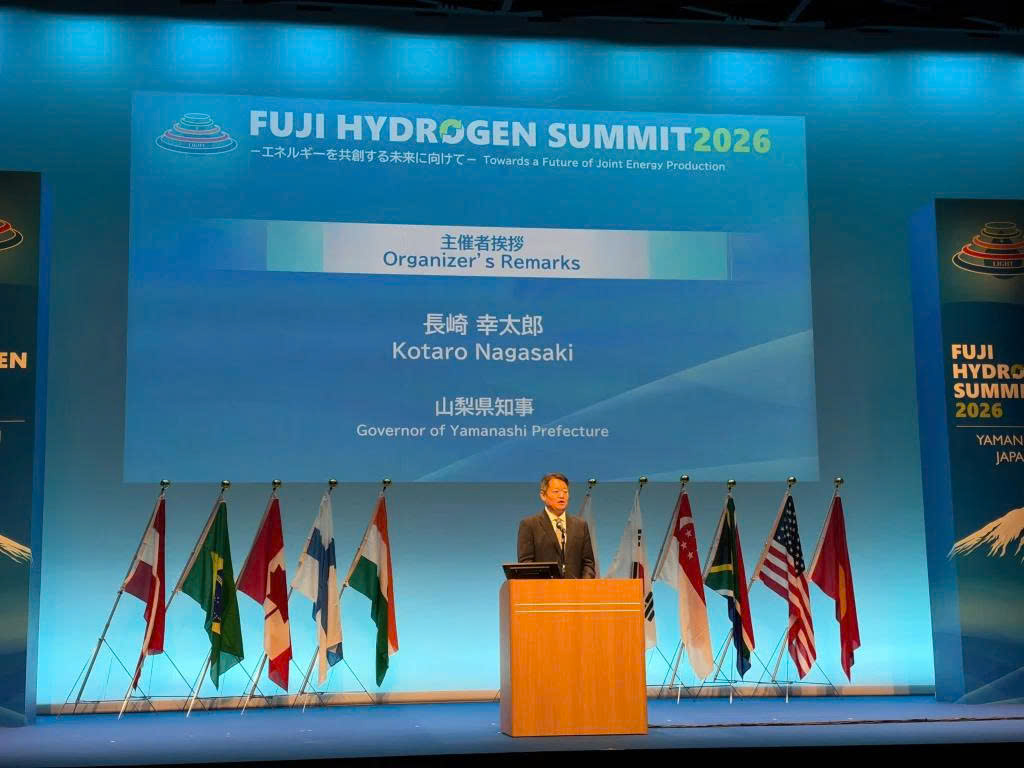
The Fuji Hydrogen Summit 2026 in Yamanashi Prefecture, Japan, concluded with a resounding message: green hydrogen projects are no longer a story of the future—they are a challenge of the present—but the greatest hurdle is not technology; it is building a functioning ecosystem from production to consumption. In the breakout session on "Social System Development," government, university, and industry representatives from eight countries—Japan, Brazil, Austria, Finland, India, South Korea, Vietnam, and Canada—candidly shared real-world barriers and proven models.
Yamanashi: The Lesson of Starting with the Customer
Japan, as host, showcased its largest Power-to-Gas (P2G) system in Yamanashi. The 16 MW P2G system, located next to the Suntory Hakushu Distillery, produces 2,200 tonnes of hydrogen annually. The hydrogen is then transported via a 2 km pipeline to industrial boilers, replacing natural gas at production sites. The core of Yamanashi's strategy is producing hydrogen where it is consumed, eliminating intermediate steps in the supply chain and optimizing costs. A representative from the prefecture emphasized: "The lesson is that producing near the consumer eliminates entire steps from the calculation."
Fukushima: Hydrogen as a Reconstruction Axis
Fukushima has turned hydrogen into a driver for post-disaster reconstruction. Currently, 59.7% of the prefecture's energy demand comes from renewables, with a goal of 100% by 2040. The Fukushima Hydrogen Energy Research Field (FH2R) operates a 10 MW alkaline electrolysis system, one of the world's largest, along with 494 fuel cell vehicles, 32 trucks, 3 buses, and police vehicles. A Fukushima representative stressed: "Density is also scale. Dozens of small applications create a market, suppliers, and a trained workforce."
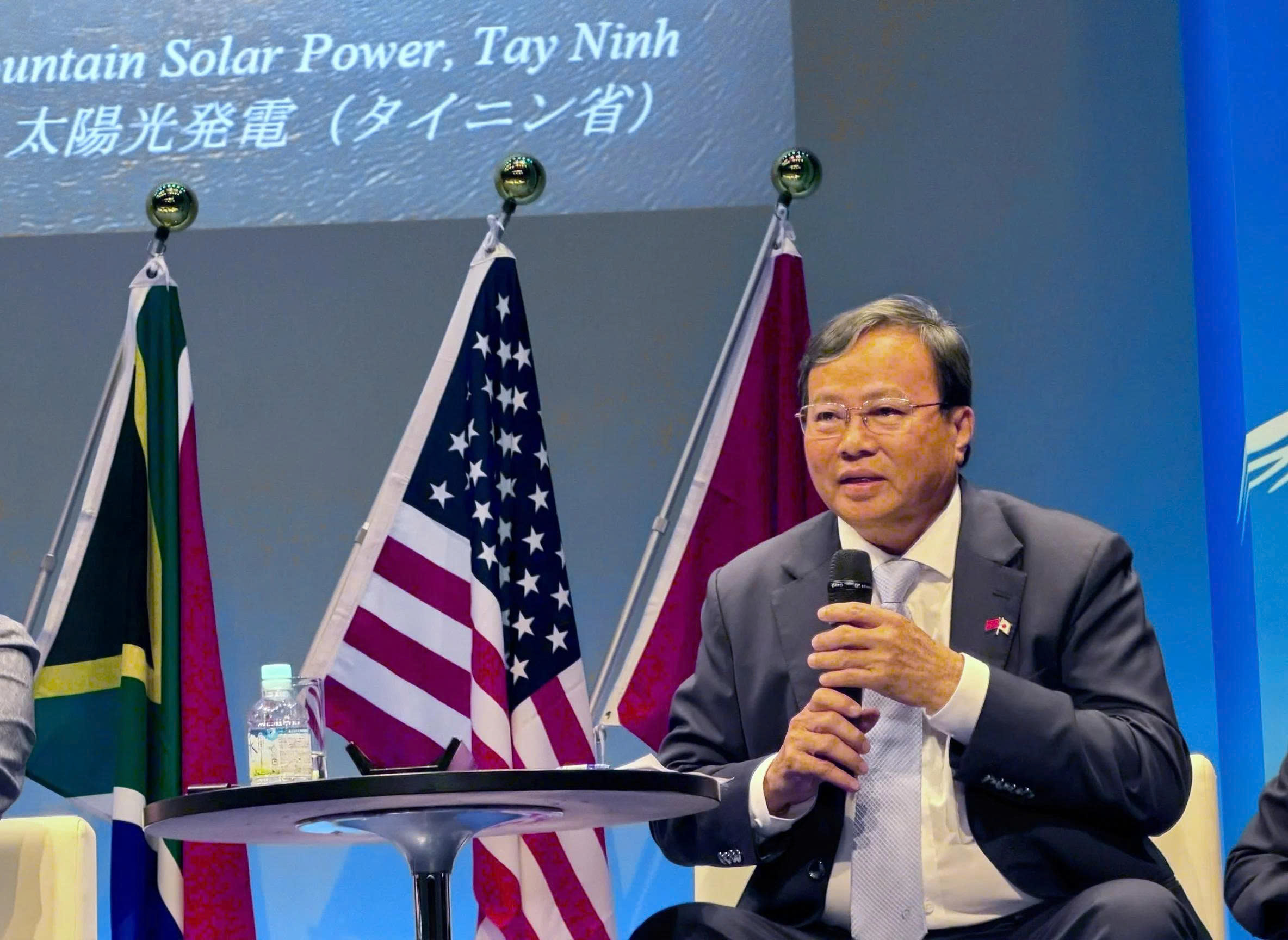
The delegation from Tay Ninh Province, led by Chairman Le Van Han, brought a practical perspective from a developing market
Tokyo: The Plant as a Classroom
Tokyo has turned the Keihinjima urban hydrogen plant—operated with Yamanashi—into a hands-on training center, where corporate technicians are trained on real equipment across the entire process: production, compression, storage, and dispensing. The message from the Tokyo Metropolitan Government was clear: "What truly matters is creating a system that continuously trains people capable of operating, maintaining, and solving problems."
Europe: Connections and Objective Comparisons
Austria (with a 200 MW electrolyzer project in Bruck an der Leitha, expected to produce 23,000 tonnes of hydrogen per year from late 2027) emphasized: "The projects are credible. The connections are what need to work." Austria also noted that comparing hydrogen with direct electrification, without dogma, is a sign of maturity. Finland (with its first commercial hydrogen station in Jyväskylä, 5 hydrogen buses, and a 1 MW Asahi Kasei alkaline electrolyzer) highlighted the role of the city as the "orchestrator" of the ecosystem, connecting businesses, universities, and local government.
India and South Korea: Lessons in Cost and Specialization
India (Uttar Pradesh) targets 1 million tonnes of green hydrogen per year, with capital subsidies of up to 40% for first-mover megaprojects and 10-year waivers on transmission charges. The lesson from India: "Grid charges weigh as much as the electrolyzer CAPEX." South Korea (Chungcheongbuk-do) chose a strategic niche: "power packs for special vehicles," with 160 MW of fuel cells, 27 refuelling stations, and 2,760 hydrogen vehicles in circulation. A Korean representative stated: "Regional specialization creates industrial advantage."
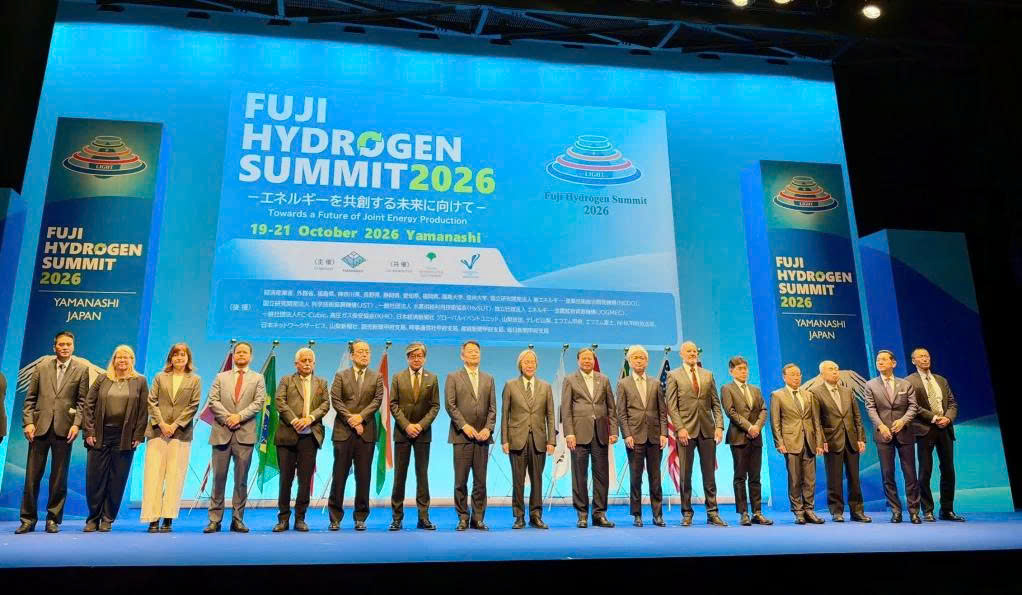
Delegation leaders' group photo at the Summit
Canada: Scale and Tax Incentives
Canada currently has the world's second-largest committed low-carbon hydrogen capacity (after China), with 40% of capital costs potentially covered by tax credits and CAD 600 million in partnership with Germany through H2Global. However, the lesson from Canada is a cautionary one: "Incentives alone do not guarantee a project. The sector has seen withdrawals and treats 2026 as a decisive year."
Vietnam (Tay Ninh): Starting with the Right Question
The delegation from Tay Ninh Province, led by Chairman Le Van Han, brought a practical perspective from a developing market. Tay Ninh currently operates 2,200 MW of renewable energy (centralized solar, rooftop solar, and biomass), along with 35 industrial parks attracting USD 27 billion in foreign investment, with Japan being a leading partner through over 174 projects and USD 1.52 billion. Instead of starting with technology, Tay Ninh posed the core question: "Who invests? Who buys? Where is the revenue? How is risk shared?" The answers shaped three business models: energy-as-a-service, biomass with carbon credits, and green hydrogen from surplus solar, following the Yamanashi model. The lesson from Tay Ninh: "The business model comes before the technology."
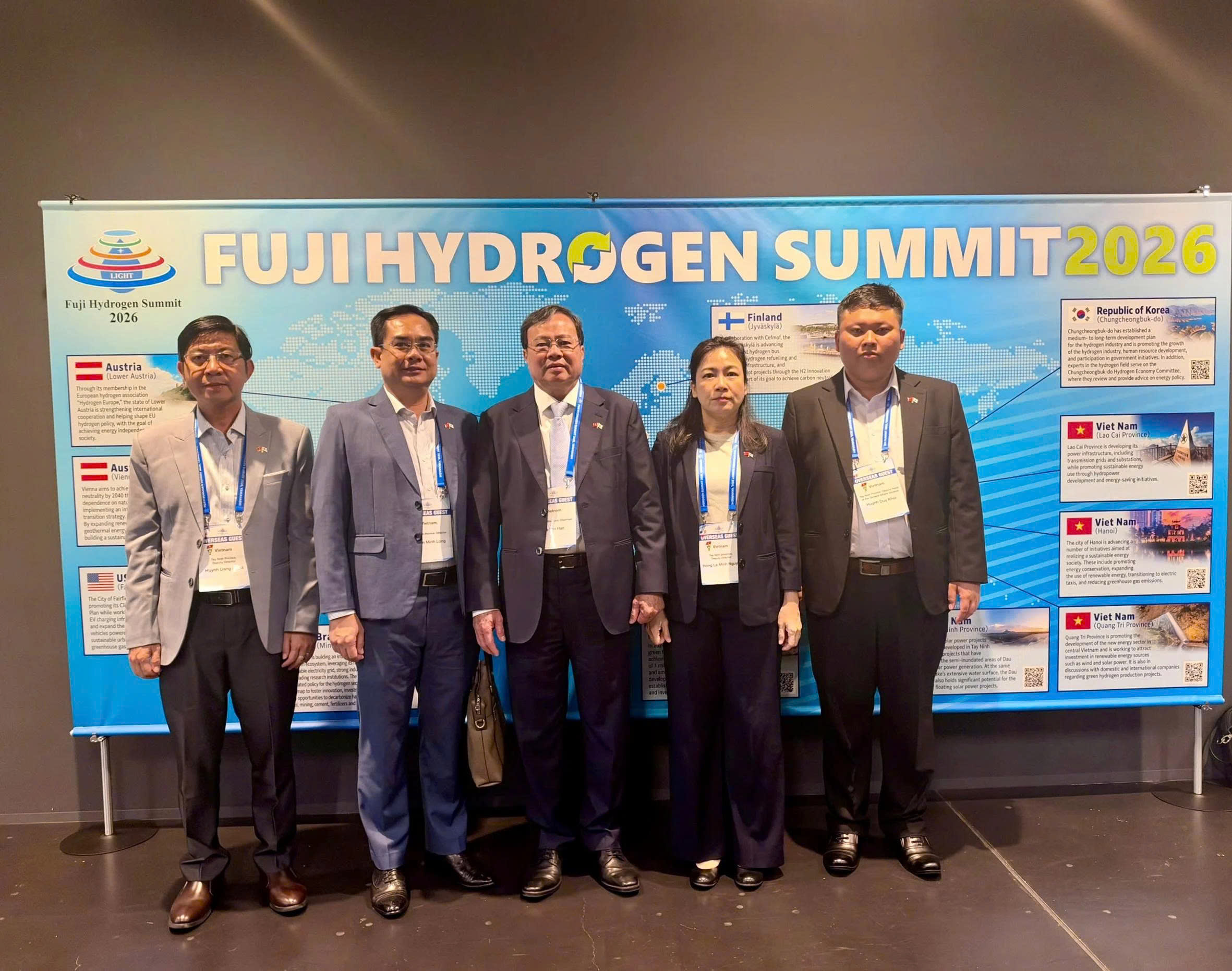
Delegation from Tây Ninh province attending the Summit
Brazil: A Complete Ecosystem
Minas Gerais impressed with a complete hydrogen ecosystem: 98% clean electricity matrix, Cemig's pilot innovation plants (blending hydrogen with natural gas in steelmaking and fertilizers), Atlas Agro's green fertilizer plant in Uberaba with a capacity of 530,000 tonnes/year, and 70 MW of PEM electrolyzers manufactured by Neuman & Esser in Belo Horizonte, alongside research at UFMG and Unifei. The differentiator: clean energy, demand, equipment manufacturing, and research all in the same state—a model many countries are seeking.
Five Overarching Lessons
From the candid exchanges among the eight countries, experts distilled five core lessons:
-
Business model before technology: Define who invests, who buys, and who bears the risk before deployment.
-
Anchor demand before scale: Start with a real customer, not a perfect market.
-
Density is also scale: Many small applications create markets, suppliers, and a skilled workforce.
-
Hydrogen is a power sector tool: It absorbs renewable variability; regulation and charges have a major impact.
-
People are infrastructure: The plant itself can become a continuous classroom.
Conclusion
The Fuji Hydrogen Summit 2026 revealed a diverse yet unified picture: from Yamanashi's customer-first P2G model to Tay Ninh's "who pays" question—all affirmed that green hydrogen is no longer a technology race, but a race to build an ecosystem. With abundant renewable energy potential, a strategic location, and growing industrial demand, Tay Ninh—and Vietnam as a whole—has the pieces to realize this model, provided they are connected by a viable business model and a well-prepared workforce.