

From Power Plants to the Dinner Table: Japan's Hydrogen Integration into Everyday Life
July 10, 2026 | Annie Nguyễn
Context and Strategic Direction
As we approach the 10th anniversary of the Japanese government establishing the world's first Basic Hydrogen Strategy in 2017, hydrogen use in Japan is expanding from its focus on power generation and industry into the realm of daily life and consumption. In particular, the enactment of the "Act on Promotion of Supply and Use of Low-Carbon Hydrogen, etc. for Smooth Transition to Carbon-Neutral Growth-Oriented Economic Structure" in 2024 established the legal foundation for the Japanese government's support for a major transition to a hydrogen economy.
The Japanese government has allocated a total of 2 trillion yen through the Green Innovation Fund for research and development, demonstration, and social implementation of low-carbon technologies such as hydrogen and fuel cells. This fund is designed to continuously support public-private partnership projects over the next 10 years.

Hydrogen Bicycles: Environmentally Friendly Compact Mobility
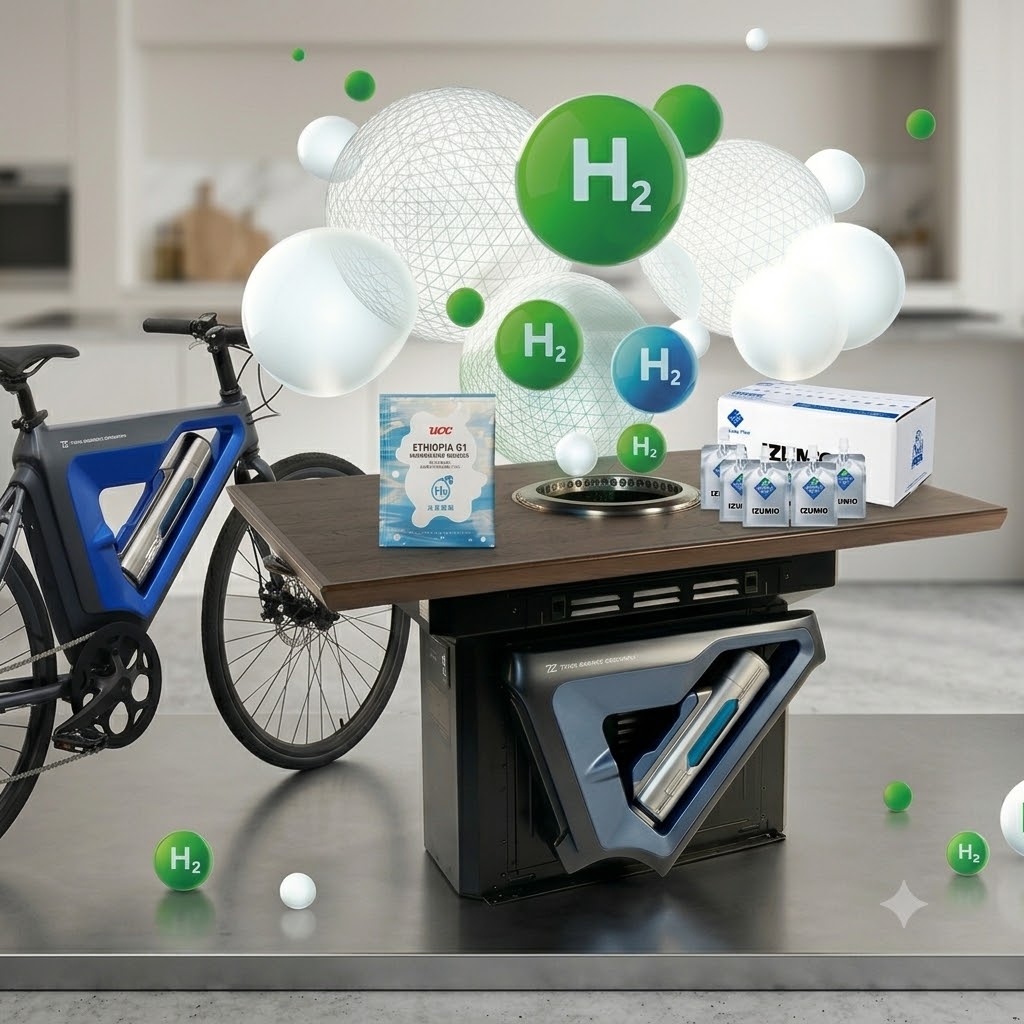
Hydrogen bicycles are environmentally friendly vehicles that use an electric assist motor, converting hydrogen stored in a small cylinder into electricity through a fuel cell. They have significantly higher energy density than conventional electric bicycles, allowing for a range of over 100 km on a single charge. Another technical advantage is the short refuelling time, as the hydrogen cylinder is replaced. The fuel cell life also reaches up to 10 years, significantly longer than the 3-4 years of conventional e-bikes.
Toyota Textile Co., Ltd. began demonstrating a hydrogen bicycle with a fuel cell output of approximately 250W in August 2024, in cooperation with Tsuruga City, Fukui Prefecture. Toyota Textile successfully miniaturized the fuel cell technology used in Toyota's hydrogen fuel cell vehicles. This technology, called the Hydrogen Power System, is designed to thermally balance by circulating water between the hydrogen cylinder and the fuel cell.
The Toyota Textile Group is pursuing commercialization with a target of 2028-2030, and the demonstration experiment with Tsuruga City marks the first collaboration with local government. Tsuruga City, which is promoting the establishment of a hydrogen energy industrial centre, also conducted a bicycle-sharing demonstration experiment using hydrogen bicycles last November. By allowing citizens to directly use hydrogen bicycles, the city collected driving data for practical application, while also using the experience as an opportunity to familiarize the public with hydrogen energy.

Hydrogen-Roasted Coffee: A Fusion of Flavour and Green Technology
UCC Ueshima Coffee, a leading Japanese coffee company, has focused on developing coffee roasting technology using hydrogen as a heat source since 2022. In April 2025, they launched a large-scale roaster using Hydro Master, a large hydrogen roaster, at their Fuji Plant in Shizuoka Prefecture. The decision to introduce the Hydro Master system at the Fuji Plant was based on factors such as its geographical proximity to Yamanashi Prefecture, a source of green hydrogen. The maximum annual production capacity is estimated at approximately 6,000 tons.
Typically, fossil fuels such as natural gas are used as the heat source for roasting coffee, and each roaster emits about 570 tons of carbon dioxide annually. In October 2025, UCC collaborated with Toyota to launch a coffee product based on the shared image of "hydrogen". The jointly developed product is an original hydrogen-roasted coffee featuring the image of four Toyota luxury models: Crown Crossover, Sports, Sedan, and Estate. The fineness and aroma of the coffee vary to match the image of each model.
Hydrogen Yakiniku Grills: Steam for Moisture Retention and Smokeless Cooking
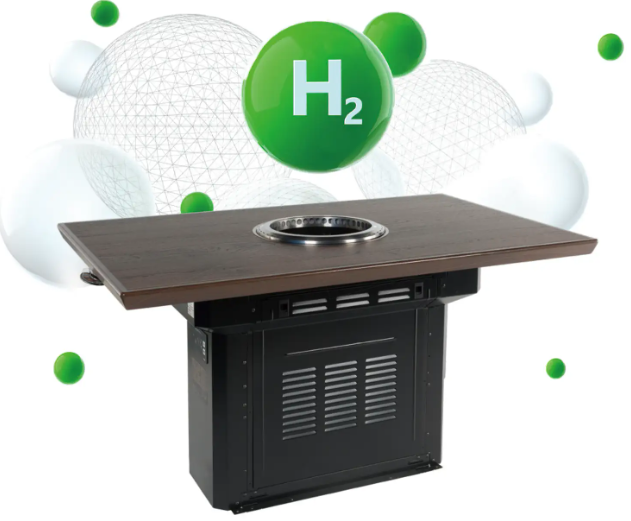
SHINPO, a specialist manufacturer of smokeless grills, has developed a hydrogen grilling device and conducted its first product demonstration in central Osaka on November 2, 2024. This is the first time hydrogen cooking equipment has been used in yakiniku restaurants where customers grill their own meat. SHINPO explains that when hydrogen burns, it combines with oxygen in the air to produce water vapour, which helps meat and vegetables retain moisture better.
Following the Japanese government's declaration of a carbon neutrality target for 2050, SHINPO's development project for a smokeless hydrogen grill began in May 2024. Chairman Norihiko Ando stated: "Currently, the equipment and operating costs are high due to the lack of infrastructure, but we have developed this project with a long-term perspective, and costs will decrease as adoption expands."
Previously, operating 25 smokeless grills for 8 hours a day emitted about 100 kg of carbon dioxide, but when using hydrogen, the only emission is water vapour. According to SHINPO, the company has experience supplying smokeless grills to approximately 2,000 stores in Japan and over 1,200 locations overseas. Significant carbon dioxide reduction is expected if adoption expands.
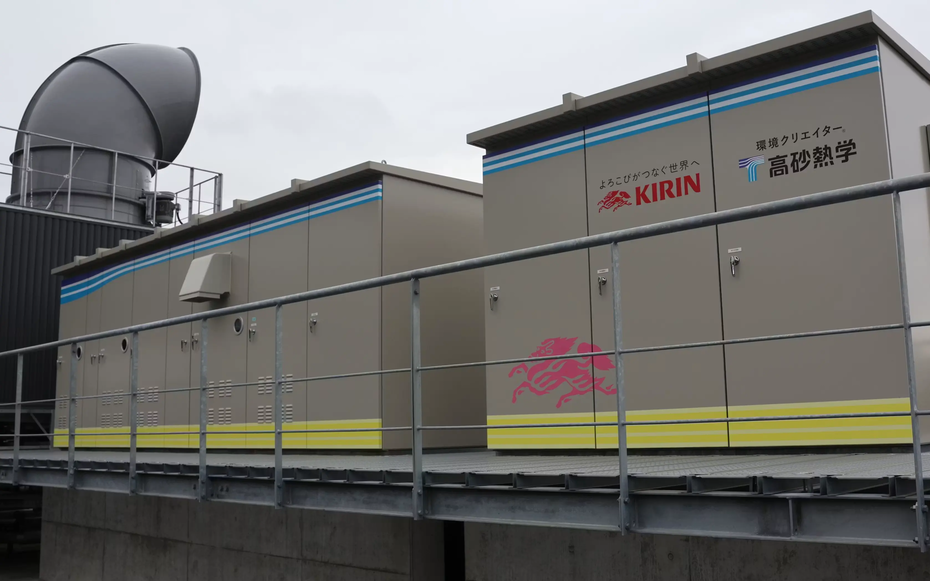
Kirin Chitose Brewery: Hydrogen Brewing and Reducing 464 Tonnes of CO₂ per Year
Another prime example of hydrogen application in daily life is the project at the Kirin Brewery Hokkaido Chitose Plant. From July 2026, the plant began a demonstration project to convert part of the thermal processes in its beer production line to green hydrogen. Electricity from newly installed solar power (284 kW) and the commercial grid will be used to electrolyze water, producing hydrogen for use as fuel in a newly installed hydrogen-fired boiler.
The hydrogen production facility consists of two PEM electrolysers with a capacity of 100 Nm³/h each, and a 2 t/h hydrogen boiler has been installed at the plant. It is estimated that approximately 23% of annual heat demand can be replaced by hydrogen, reducing approximately 464 tonnes of CO₂ per year. The demonstration period is 10 years. Kirin will use this time to evaluate safety, technological aspects, and economic viability compared to city gas, with a view to potential expansion to other plants.
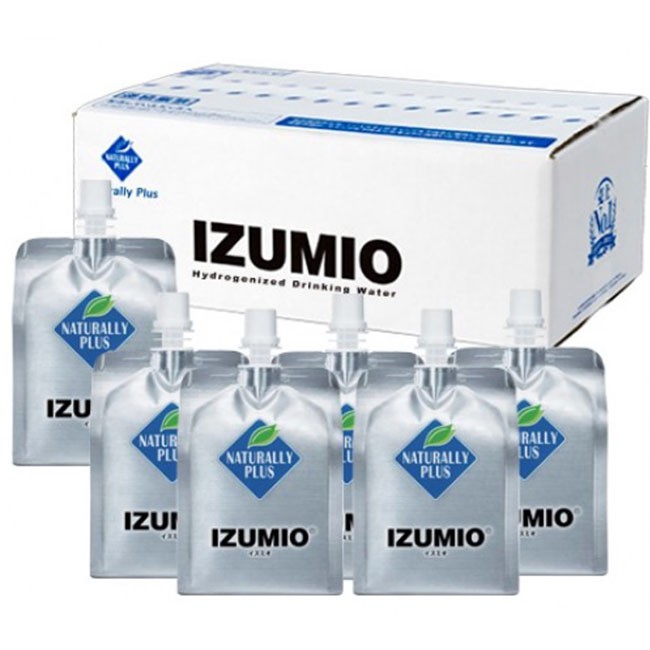
Izumio Hydrogen-Rich Water: Hydrogen Dissolved in Everyday Life
Beyond industrial and cooking applications, hydrogen is also present in everyday consumer products such as hydrogen-rich water. This is drinking water supplemented with dissolved molecular hydrogen (H₂), marketed with health benefits such as antioxidant properties. The emergence of products like Izumio shows that hydrogen is not only an energy source for the future but has already become part of a healthy lifestyle.
Hydrogen-rich water products are typically produced by bubbling hydrogen gas into purified water or using hydrogen-generating tablets. While health effects remain debated, the hydrogen water market is growing rapidly, especially in Japan and South Korea, as evidence of hydrogen's penetration into consumer life.
Conclusion: From Power Plants to the Dinner Table
Clearly, the hydrogen market will follow a technology transition curve, where demand will increase rapidly as infrastructure develops and costs fall beyond a certain point. Japan's hydrogen story is not just about industrial machines. It is gradually seeping into the smallest details, from roasting coffee and grilling meat to brewing beer and even into daily drinking water.
Japan is building a comprehensive hydrogen society, where this clean energy source is not just a dream for power plants but has become part of daily meals and drinks. Participation in demonstration projects led by the Japanese government and local authorities will help technology suppliers and co-development partners gain market access and secure a first-mover advantage in the future large-scale deployment phase.