
From Energy Transition to Rural Development Model Transformation: Lessons from South Korea for Vietnam
July 29, 2026, VAHC Secretary
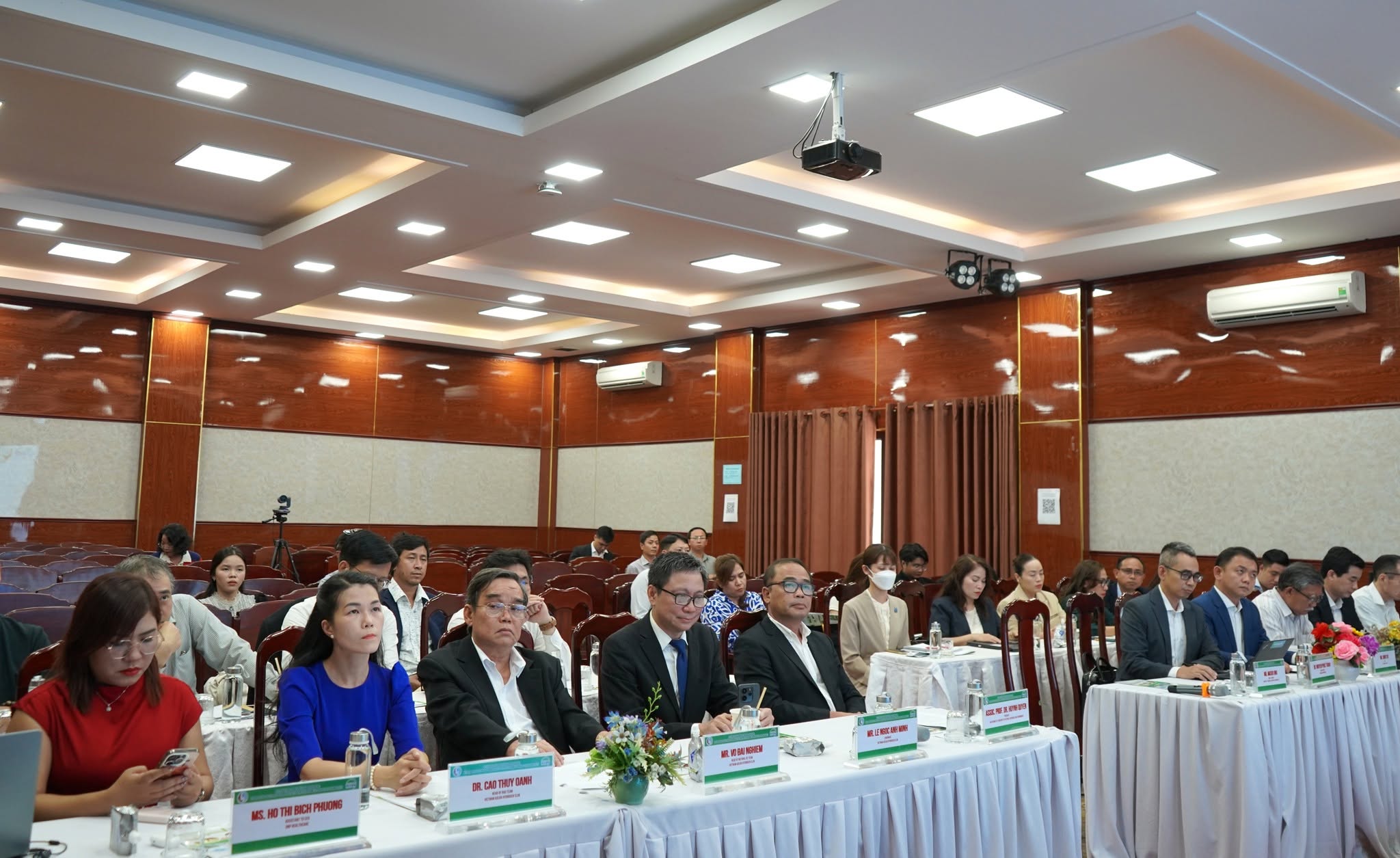
On July 29, 2026, at Ho Chi Minh City University of Natural Resources and Environment (HCMUNRE), the International Workshop on "Hydrogen Solutions for Agriculture, Environment, and Carbon Market" co-hosted by HCMUNRE and VAHC officially took place. The event brought together a large number of scientists, leading experts, domestic and international businesses, and diplomatic representatives from Japan, Malaysia, and South Korea. The workshop was organized to promote hydrogen applications in agriculture, environment, and carbon market development in Vietnam, while strengthening international cooperation in clean energy.
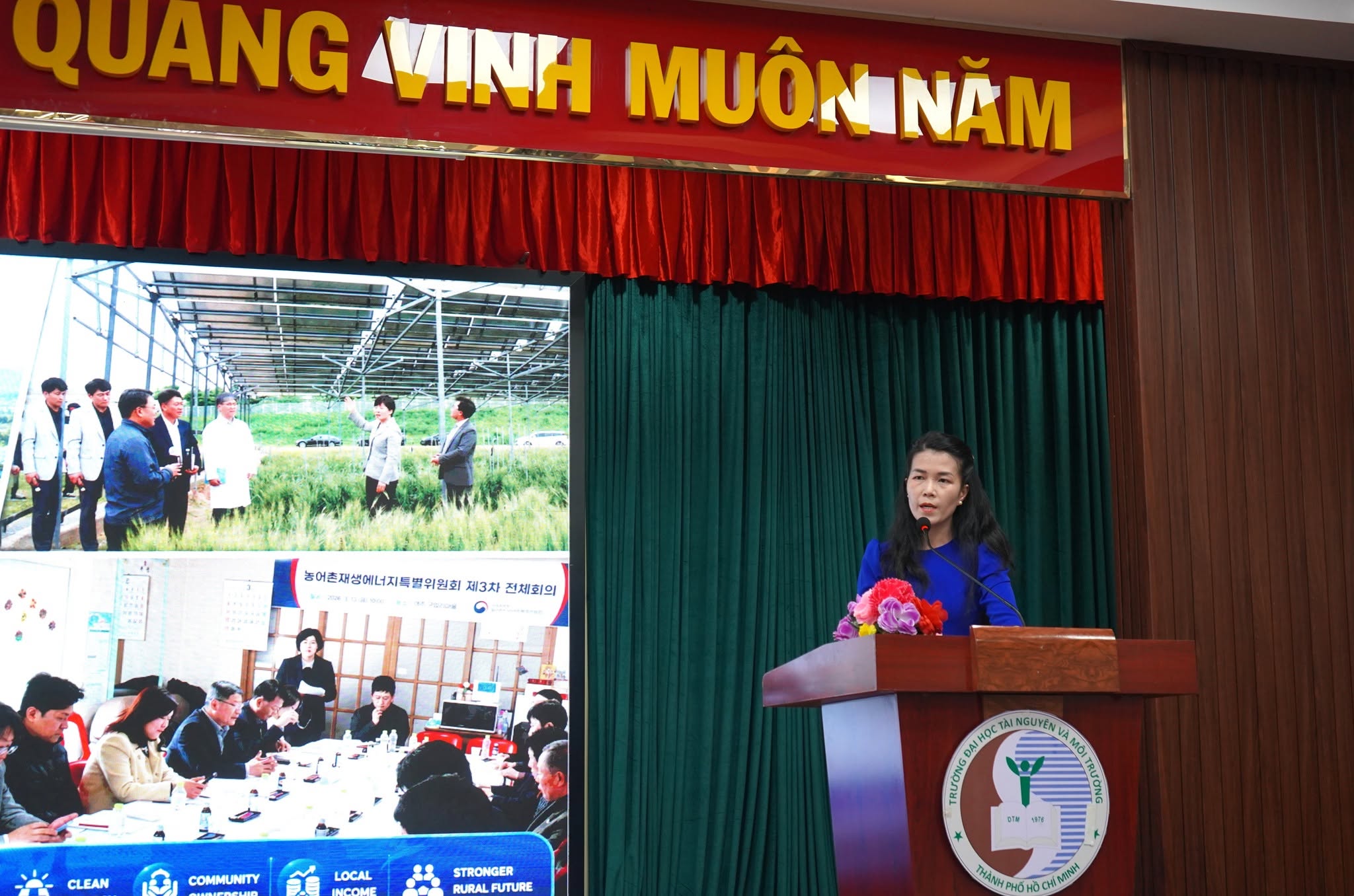
SPEAKER 6: DR. CAO THUY OANH – HEAD OF R&D TEAM, VAHC; LECTURER, VAN HIEN UNIVERSITY
Topic: From Energy Transition to Rural Development Model Transformation: Lessons from South Korea for Vietnam
Opening Message
Dr. Cao Thuy Oanh opened her presentation with the message: "Energy is no longer only the power sector's story. Rural areas are at the crossroads."
She emphasized that energy transition is not merely changing the color of energy sources but an opportunity to transform rural economic development models comprehensively.
Current Status: Agricultural Electrification and Carbon Emissions
Dr. Oanh cited a 2025 study in South Korea:
"Electricity use in agriculture generated 7.3 million tCO₂e in 2020."
Detailed Analysis:
-
Greenhouses and climate control systems.
-
Pumps and irrigation.
-
Cold storage and preservation.
-
Processing and primary processing of agricultural products.
-
Other electrical equipment in rural areas.
Important Lesson:
-
Electrification does not automatically reduce emissions if electricity still comes from high-carbon sources.
-
A system cannot truly be "smart" if it is only intelligent in productivity but not in energy.
Why Hydrogen? Not All Energy Needs Can Be Met by Electricity Alone
Dr. Oanh identified areas where electricity is not the optimal solution:
-
Hard-to-Electrify Sectors/Processes:
-
High-temperature industrial requirements.
-
Fuel for long-distance transport and shipping.
-
High operational intensity and fast refueling requirements.
-
-
Long-Duration Storage and Balancing:
-
Converting surplus renewable electricity to hydrogen for seasonal storage.
-
Hydrogen has high energy density and no self-discharge over long periods.
-
-
Connecting Renewable Energy with Other Sectors:
-
Transport.
-
Industry and buildings.
-
Local infrastructure.
-
-
Supplying Feedstock for Production Chains:
-
Fertilizer (ammonia).
-
Industrial chemicals.
-
Food processing.
-
Korea's Policy Turning Point: From Emission Reduction to Turning Energy into Rural Income
May 2026:
South Korea's Ministry of Agriculture, Food and Rural Affairs (MAFRA) established the "Task Force on Energy Transition for Agriculture and Rural Areas."
Task Force Objectives:
-
Assess energy transition impacts on agriculture and rural areas.
-
Develop policies encouraging farmers to participate in clean energy production.
-
Create mechanisms for farmers to sell energy and environmental services.
New Economic Model: "One Field, Multiple Value Streams"
Dr. Oanh introduced a new economic model for rural areas:
Traditional Model:
-
Farmers → Cultivation/Livestock → Sell Agricultural Products → Income.
New Model:
-
Farmers → Cultivation/Livestock → Sell Agricultural Products + Energy + Environmental Services + Carbon Credits → Diversified Income.
Message: "Future farmers do more than sell crops; they can sell energy and environmental services."
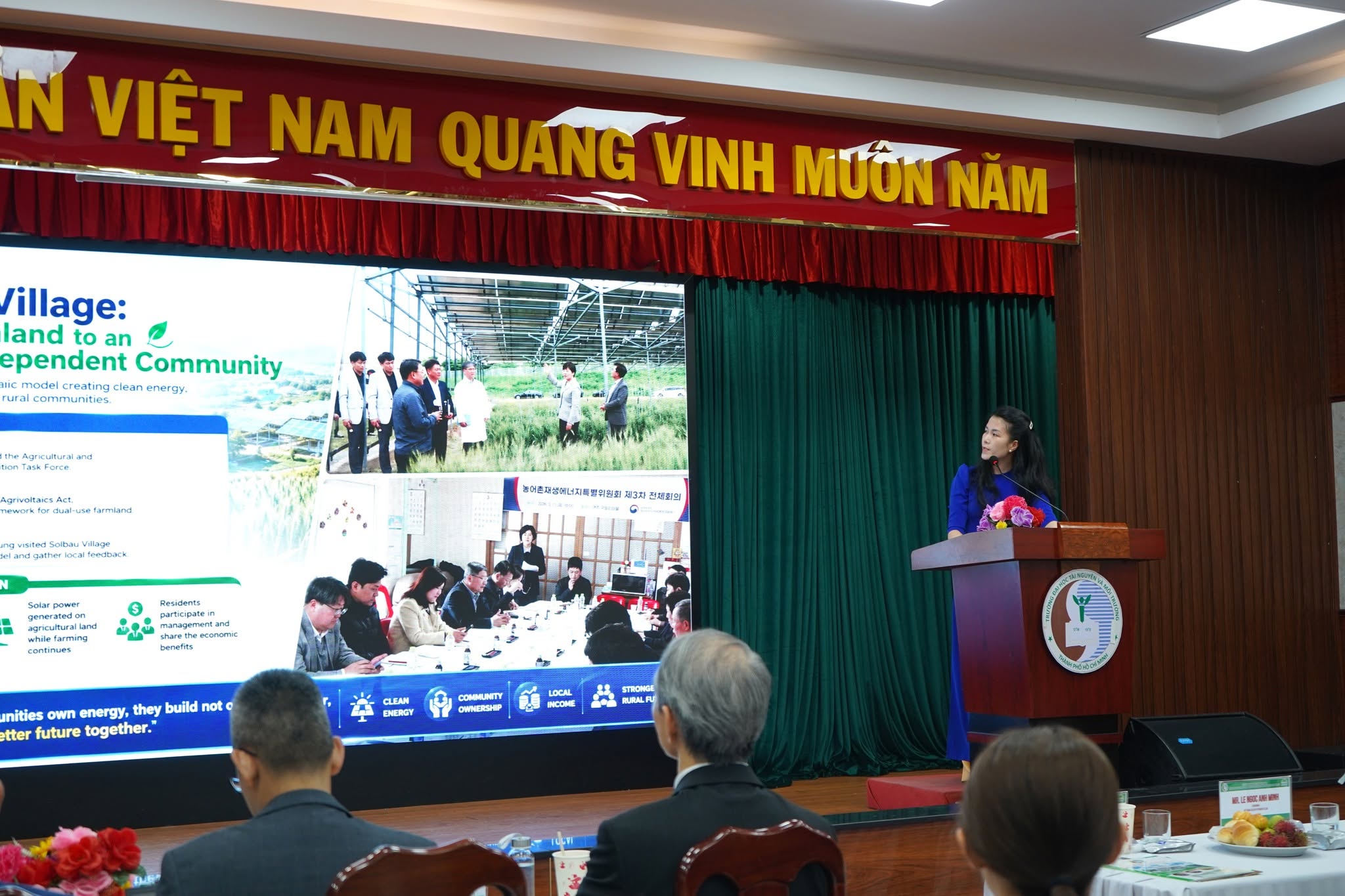
Case Study: Solbau Village – From Farmland to Energy-Independent Community
Introduction:
Solbau Village (Chuncheon, South Korea) is a pioneering rural community in the agrivoltaics model (solar power on agricultural land) owned and managed by the community.
Timeline and Events:
| Date | Event |
|---|---|
| April 27, 2026 | MAFRA established Agricultural and Rural Energy Transition Task Force |
| May 7, 2026 | South Korea enacted Agrivoltaics Act, creating legal framework for dual-use farmland |
| May 13, 2026 | Minister Song Miryung visited Solbau Village to examine the model and gather local feedback |
Operational Model:
-
Community-Owned Cooperative: Solbau Agricultural Cooperative manages the project.
-
Dual Land Use: Solar power installed on agricultural land while farming continues (shade-tolerant crops or elevated structures).
-
Community Management: Residents participate in management and share economic benefits.
-
Fair Benefit Distribution: Solar income used for community services.
Results Achieved:
| Indicator | Value |
|---|---|
| Electricity Generated | 686 MWh/year |
| Annual Demand | 706 MWh/year |
| Self-Sufficiency Rate | 96% |
| Community Income | Approximately 102 million KRW/year |
| Income Applications | Elderly welfare, transport services, milk delivery, community programs |
Key Lesson:
"The greatest achievement was not producing more electricity – it was creating local ownership, shared income, and stronger rural communities."
Statement by Mr. Hong Seong-su – Director of Solbau Agricultural Cooperative:
"Operating large-scale rice milling facilities requires a tremendous amount of electricity, creating a significant financial burden. The ongoing conflict in the Middle East has further reinforced our awareness of the importance of achieving energy self-sufficiency. At present, we generate approximately 55% of our annual electricity needs on our own, and we are actively exploring solutions to increase this figure to 100%."
Statement by Minister Song Miryung:
"Agriculture and rural areas possess abundant resources, including farmland, reservoirs, and production infrastructure. In addition, the Agrivoltaics Act—which enables the preservation of agricultural land while increasing farmers' income—has recently been passed by the National Assembly.
The government will continue to promote the sustainable development of agriculture and rural communities by preserving the public value of these areas, while enhancing energy self-sufficiency, accelerating the energy transition, and improving the efficient use of electricity in both rural life and agricultural production.
Through these efforts, we will continue to contribute to balanced regional development and the nation's overall energy transition."
Hydrogen City 2.0 – South Korea's Integrated Hydrogen Strategy
Dr. Oanh introduced South Korea's Hydrogen City 2.0 strategy:
Key Message:
"Korea does not build a hydrogen plant; Korea builds a demand-creating ecosystem."
12 Hydrogen Cities in 2024:
| City | Characteristics |
|---|---|
| Pyeongtaek | Hydrogen complex city linked to urban, agricultural, and industrial sectors |
| Dangjin | Industrial-based hydrogen city with diversified hydrogen supply |
| Seosan | Integrated hydrogen city linked to industrial complexes, research institutes, and transport hubs |
| Boryeong | Global leading hub city connected to world's largest blue hydrogen production facility |
| Buan | Green hydrogen city linked to green hydrogen production and energy self-sufficiency |
| Gwangju Dong-gu | Hydrogen city utilizing waste incineration plant landfill |
Expansion in 2026: 15 cities and counties across South Korea.
Strategic Significance:
-
Hydrogen City is not just an energy project but a local economic development tool.
-
Combining hydrogen with agriculture, industry, transport, and urban development.
-
Creating sustainable jobs and income for communities.
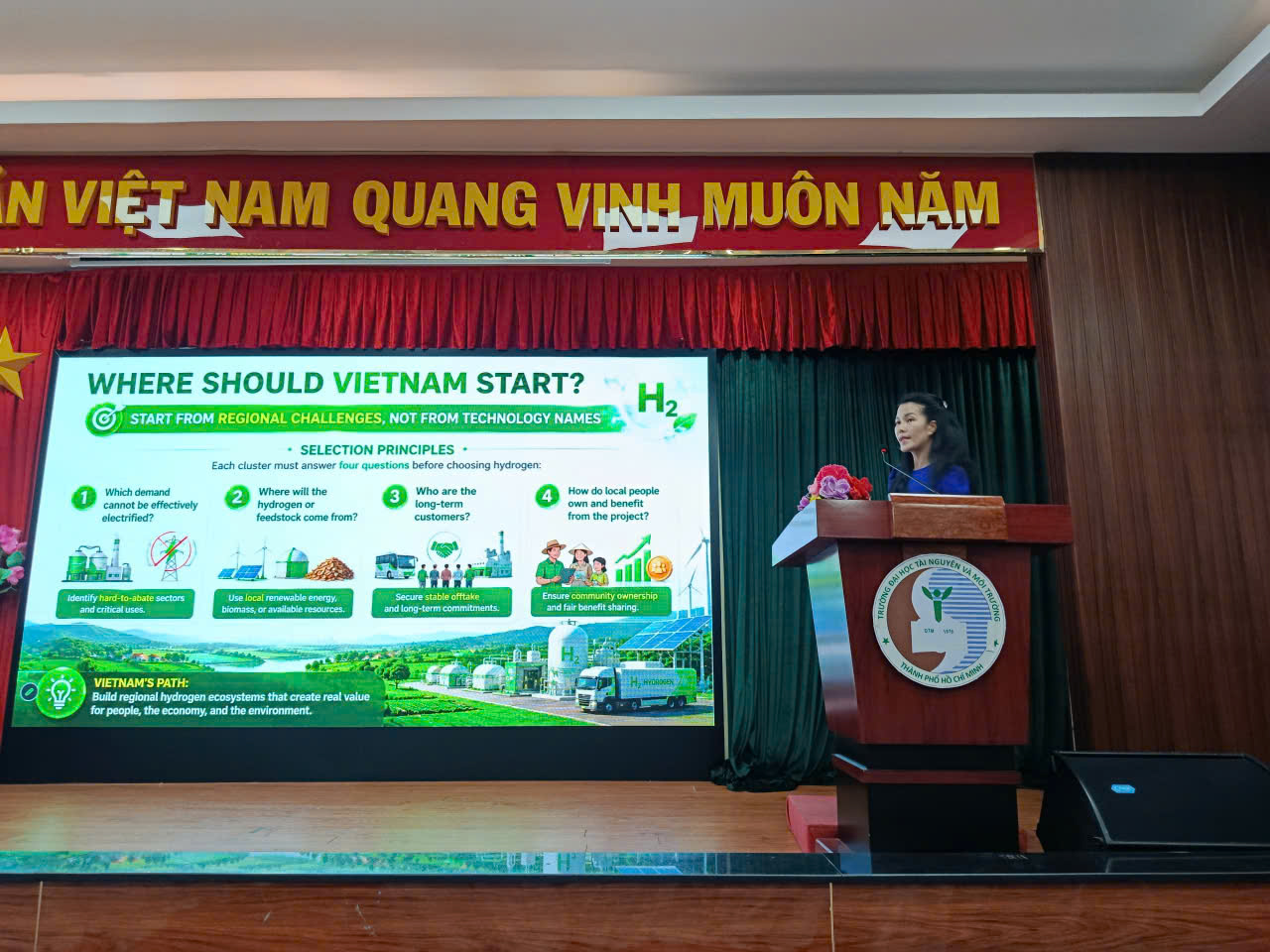
Three Selection Principles for Pilot Clusters in Vietnam
Dr. Oanh emphasized: "What we should learn is not hydrogen technology, but how to organize a local development ecosystem."
Principle 1: Start from regional challenges, not from technology names.
-
Understand the actual problems of each region (emissions from rice, livestock waste, lack of clean energy...).
-
Choose solutions appropriate to local conditions, not impose technology.
Principle 2: Ensure fair benefit distribution and community participation in ownership and governance.
-
People are not just beneficiaries but active participants.
-
Cooperative or community enterprise model.
Principle 3: Share risks, not only borne by investors.
-
Establish fair risk-sharing mechanisms.
-
Government participation in early stages to reduce private investor risk.
Three Proposed Pilot Clusters for Vietnam
Cluster 1 – Low-Carbon Rice:
Objective: Reduce methane emissions from paddy rice cultivation and create carbon credits.
Key Activities:
-
Collect rice straw and residues (instead of open-field burning).
-
Produce biomass, biogas, or bio-based products from agricultural residues.
-
Establish MRV (Measurement, Reporting, Verification) for emissions.
-
Test hydrogen only when there is stable feedstock and clear off-take markets.
Success Conditions:
-
Stable feedstock source (rice straw, husk).
-
Appropriate processing and conversion technology.
-
Market for products (biomass, biogas, carbon credits).
Cluster 2 – Circular Livestock:
Objective: Convert livestock waste into clean energy and organic fertilizer.
Key Activities:
-
Convert manure and farm residues into biogas/biomethane.
-
Recover and recycle nutrients from manure and digestate.
-
Produce high-quality organic fertilizer.
-
Test bio-hydrogen only when economically viable.
-
Prioritize multi-product models (energy + fertilizer + carbon credits) to avoid dependence on hydrogen alone.
Success Conditions:
-
Concentrated and stable livestock waste source.
-
Biogas and biomethane processing technology.
-
Market for organic fertilizer.
Cluster 3 – Greenhouses, Cold Storage & Peri-Urban Towns:
Objective: Connect rural energy supply with demand from towns, transport, and peri-urban industries.
Key Activities:
-
Reduce energy demand in greenhouses, cold storage, and buildings (insulation, energy efficiency).
-
Deploy solar PV and storage (battery or hydrogen) for clean and reliable energy.
-
Use heat pumps, biomass, or other low-emission heating solutions.
-
Apply hydrogen for heavy transport, industrial heat, or long-duration storage where it adds value.
Distinctive Features:
-
Ideal for testing supply-demand energy linkage between rural and urban areas.
-
Creating a circular and sustainable economic development model.
Strategic Messages
Dr. Oanh concluded her presentation with powerful messages:
"If energy only changes color, that is a technology transition. If income, ownership, and people's future all change, that is a development model transformation."
"If the 20th century was the era of electrifying rural areas, the 21st century will be the era of integrating clean energy, hydrogen, and the carbon economy to redefine the value of rural areas."
Vision for Vietnam:
-
Rural Vietnam can create the future today and sustainably.
-
Need to shift from "electrification" thinking to "integrating clean energy, hydrogen, and carbon economy" thinking.
-
Rural people are not just energy users but producers and providers of environmental services.
Comparing Hydrogen Approaches: South Korea vs. Vietnam
Dr. Oanh compared the two approaches:
| Criteria | South Korea | Vietnam |
|---|---|---|
| Strategy | Technology creates law | Law can call technology |
| Characteristics | Already had specialized companies with 15 years of technology accumulation. Implemented pilot projects even without laws. Pilot results became foundation for law enactment | Technology to be introduced through global cooperation. Data and experience to be accumulated. Foundation for safety regulations to be established throughout process |
Lessons for Vietnam:
-
Leverage international cooperation to access technology.
-
Build a flexible legal framework allowing pilots before formal law enactment.
-
Accumulate data and practical experience from pilot projects to refine policy.
-
Create conditions for domestic and international enterprises to cooperate in technology development.
Challenges and Solutions
Dr. Oanh identified three main challenges and proposed solutions:
1. Economic Challenges:
-
High investment costs.
-
Hydrogen demand not yet stable.
-
Small households have limited access to capital and technical services.
-
Solution: Fair risk-sharing mechanisms; long-term purchase agreements; financial incentive policies; cooperative or community enterprise models.
2. Safety Challenges:
-
FMEA study (2025) identified hydrogen leakage and membrane degradation as high-priority risks.
-
Difficulty detecting defects in gas state.
-
Solution: Safety design from the start; investment in sensors and monitoring; workforce training; strict operating procedures.
3. Governance Challenges:
-
If communities only receive land lease payments but do not participate in ownership, governance, or revenue sharing, new energy projects can reproduce old inequalities under a new color of technology.
-
Solution: Inclusive governance mechanisms; fair benefit distribution; rigorous safety standards.
Conclusion
Dr. Oanh concluded with strategic messages for Vietnam:
-
Hydrogen creates new value chains for local agriculture: From agricultural by-products to clean energy, carbon credits, and local prosperity.
-
Start from specific pilot clusters, addressing the actual challenges of each region.
-
International cooperation is key to accessing technology and experience.
-
Community participation and fair benefit distribution are prerequisites for success and sustainability.
-
Vision: Rural Vietnam can create the future today and sustainably – if we know how to organize and implement.