

Dr. Cao Thúy Oanh: "Hydrogen does not lack a strategy – Vietnam lacks an implementation plan with addresses, deadlines, and responsible persons"
Annie Nguyễn
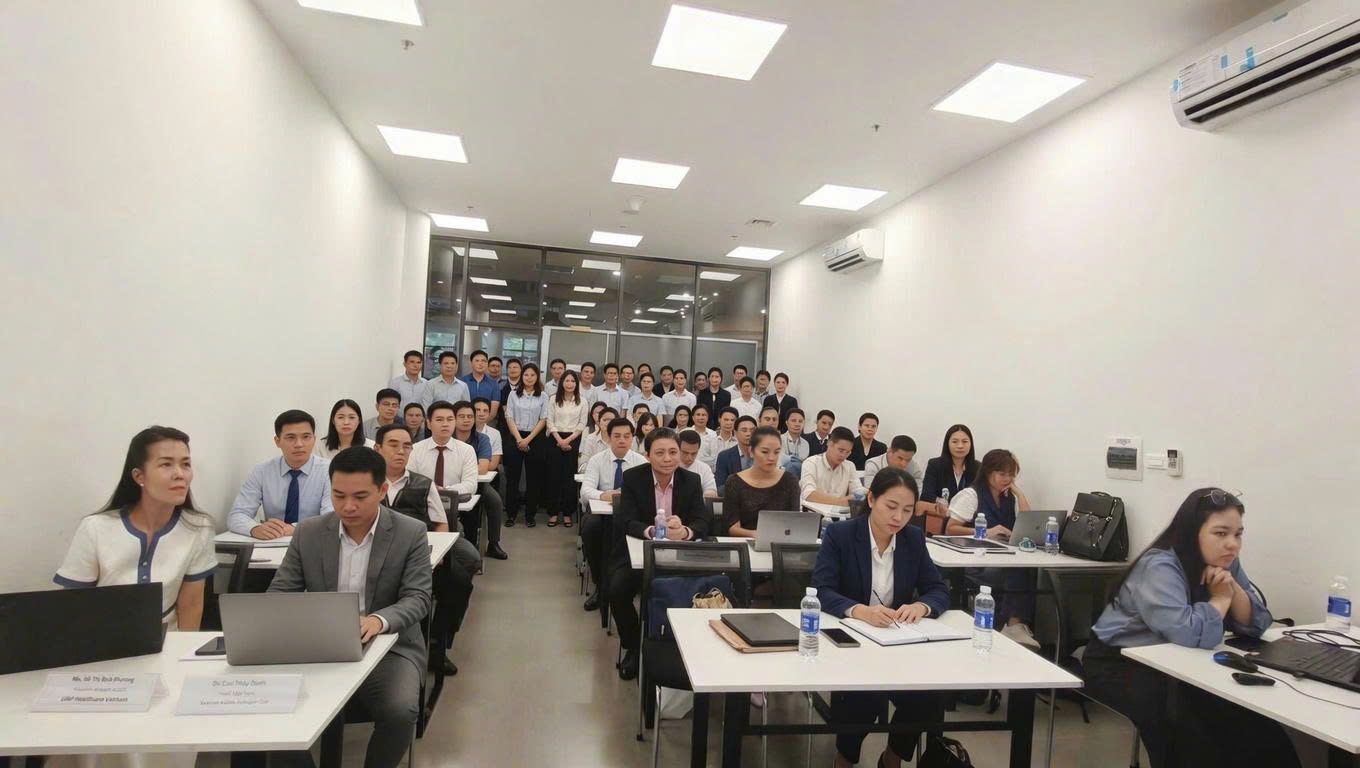
May 29, 2026 – Saigon Innovation Hub (SIHUB), Ho Chi Minh City
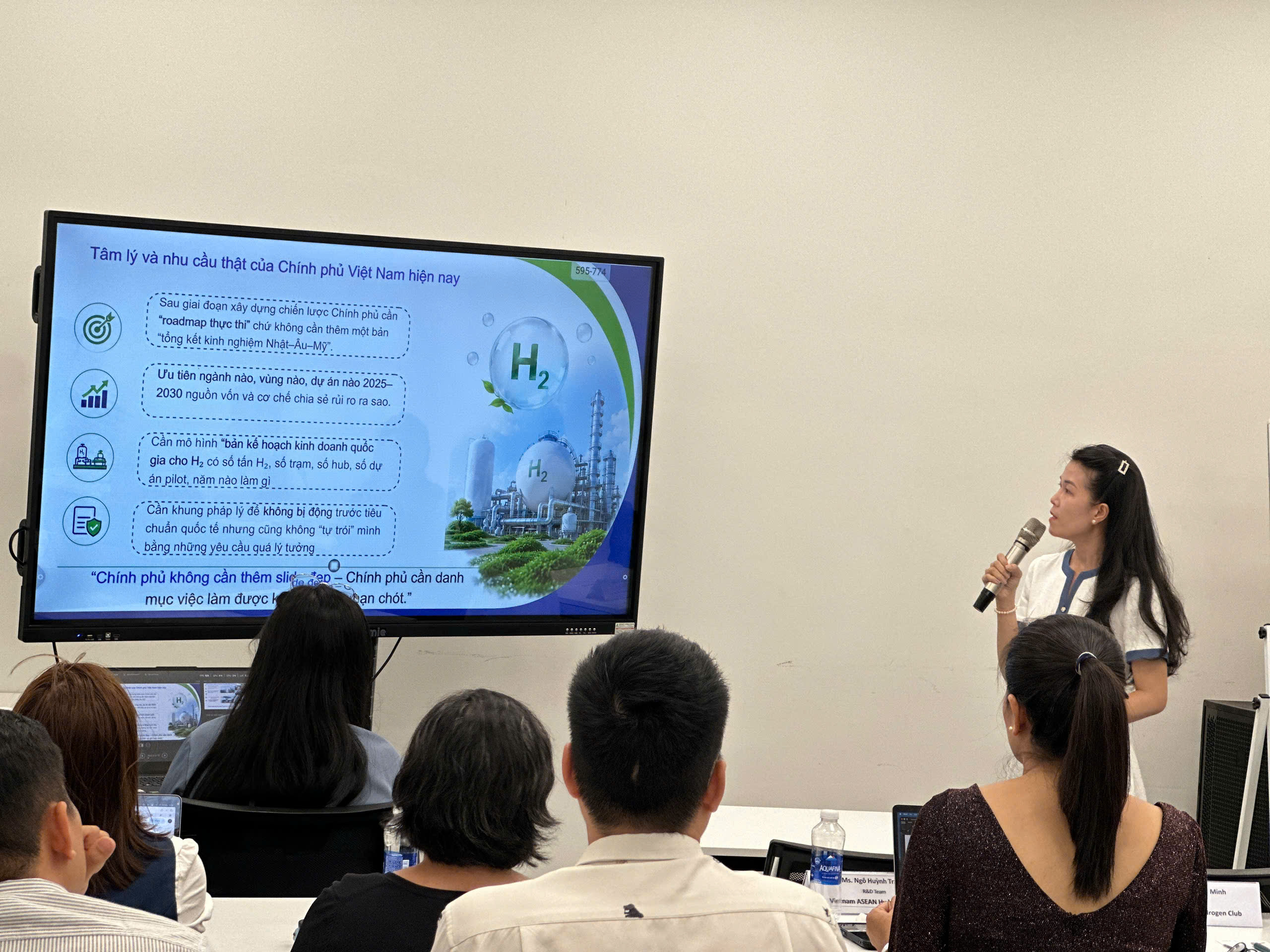
At the Vietnam Hydrogen Legal and Regulatory Forum 2026 organized by the ASEAN Vietnam Hydrogen Club (VAHC), Dr. Cao Thúy Oanh delivered a critical presentation based on a survey of 930 enterprises across 14 provinces/cities and an in-depth analysis of policy gaps. She made a candid assessment: "Hydrogen does not lack a strategy – Vietnam lacks an implementation plan with addresses, deadlines, and responsible persons."
1. Strategy exists, but the "grey zone" is larger than the green zone
Vietnam has issued Decision No. 165/QĐ-TTg (Hydrogen Energy Development Strategy to 2030, vision 2050) with ambitious targets: 100,000 – 500,000 tonnes of H₂/year by 2030 and 10 – 20 million tonnes by 2050. However, Dr. Cao Thúy Oanh noted that the strategy remains at the level of "viewpoints & targets."
She pointed out serious legal gaps:
-
No dedicated hydrogen law, unclear legal classification of H₂ (industrial gas? hazardous chemical? energy carrier?).
-
No framework decree or guiding circulars on low-emission H₂ certification, integration with electricity and carbon markets, or fire safety.
-
As a result, international investors often ask: "Does Vietnam have a concrete roadmap, support mechanisms, and standards to make H₂ projects bankable?"
She emphasized: "The strategy exists, but investors still see a grey zone larger than the green zone."
2. Data from 930 enterprises: High awareness, low action
A survey conducted by Ministry of Industry and Trade of Vietnam across 930 enterprises in 14 provinces/cities revealed:
-
58.5% of enterprises consider H₂ important or very important for the next 10–20 years.
-
Yet 68% have no significant activities related to hydrogen.
-
Only about 20% have used H₂, and less than 10% have entered the pilot stage.
-
Main barriers identified: high costs, lack of infrastructure, immature technology, lack of legal framework – standards – support mechanisms.
Her conclusion: "Enterprises are ready in awareness, but not yet ready to open their wallets."

3. International lessons: From vision to law, from law to projects
Dr. Cao Thúy Oanh reviewed the experiences of pioneering countries:
-
Japan: Had a Hydrogen & Fuel Cells Roadmap since 2014, but the "first year of hydrogen" came only after decades of R&D and demonstration.
-
South Korea: First country to enact the Hydrogen Economy Act (2021), setting quantifiable targets: 6 million H₂ vehicles, 1,200 refueling stations, 15 GW of fuel cells by 2040.
-
US, EU, Canada: Emphasize the principle "No project – No market" – without concrete projects, the market cannot form, and projects cannot reach Final Investment Decision (FID).
Key takeaway: Strategies must be "legalized" and linked to a project pipeline with off-takers, long-term contracts, and risk-sharing mechanisms.
She said: "A good strategy is one that comes with a list of projects and contract terms, not just a vision."
4. Strategic positioning: Domestic decarbonization first, exports later
According to Dr. Cao Thúy Oanh, Vietnam has a distinct heavy industrial structure: steel, fertilizers, oil refining, chemicals – sectors that are nearly impossible to decarbonize without hydrogen. At the same time, renewable energy potential (wind, solar, hydro) is enormous.
Based on GIZ and DNV reports, she argues that Vietnam is best suited for the "self-sufficiency for domestic decarbonization first, exports later" model – similar to China. Therefore, the H₂ strategy should prioritize:
-
Domestic decarbonization: power generation, steel, fertilizers, oil refining, port logistics.
-
Building domestic manufacturing capacity for hydrogen equipment and services.
Her punchline: "Vietnam should use hydrogen to clean itself before thinking about selling 'greenness' to others."
5. Three policy pillars for hydrogen
To realize the strategy, Dr. Cao Thúy Oanh proposed three policy pillars:
Pillar 1 – Legal Framework & Standards (TCVN "H₂‑core set")
-
Clearly define the legal status of hydrogen: flammable industrial gas, hazardous chemical (GHS), new energy carrier.
-
Rapidly develop a TCVN "H₂‑core set" based on ISO/TC 197 for production, storage, transport, refueling stations, composite cylinders, fuel cell vehicles.
-
Propose that Vietnam join ISO/TC 197 as an observer to proactively translate international standards.
-
Prioritize issuance of a framework decree on hydrogen energy before 2027.
Pillar 2 – Market & Financial Mechanisms
-
She emphasized: "No price support – projects are not bankable; no projects – no hydrogen market."
-
Needed tools: Contracts for Difference (CfD), competitive auctions, tax incentives, credit guarantees.
Pillar 3 – Project Bank & Priority Hydrogen Hubs
-
Establish a "National H₂ Project Bank" listing pipeline projects for 2025–2040 with full information: location, technology, CAPEX, OPEX, legal status.
-
Phase 2025–2030: select 5–10 pilot projects with clear off-takers, long-term contracts, risk-sharing mechanisms.
-
Deployment spaces: industrial – port clusters such as Cai Mep – Thi Vai, Dung Quat, Nghi Son, Vinh Tan, Van Phong, Vung Ang/Son Duong, Cua Lo, Hai Phong.
6. Three-phase roadmap 2025–2050 with quantitative targets
Phase 1 (2025–2030): Targeted launch
-
Complete minimum legal framework: framework decree + TCVN "H₂‑core set".
-
Deploy 5–10 "bankable" pilot projects.
-
2–3 diesel engine retrofit projects with H₂ injection (power, logistics, mining, ports).
-
2–3 H₂ projects for industries currently using grey H₂ (refining, fertilizers, steel, food processing).
-
Select 2 corridors (Hanoi–Haiphong–Quang Ninh; Ho Chi Minh City–Bien Hoa–Vung Tau) as "living labs."
-
Achieve 100,000 – 500,000 tonnes of H₂/year as per Strategy 165 target.
Phase 2 (2030–2040): Selective scaling
-
Design time-limited, conditional price support programs (5–7 years, degressing).
-
Develop domestic equipment manufacturing capacity (LILAMA, HB Green, Ikonomy…).
-
Expand from 2–3 to 5–7 hydrogen hubs.
-
Build 200–500 km of H₂/NH₃ distribution pipelines in industrial-port belts.
-
20–50 H₂ refueling stations (buses, trucks, logistics fleets).
-
Green + blue H₂ reach 20–30% of industrial H₂ demand.
-
5–10% of urban buses/heavy trucks convert to H₂ (FCV + H₂‑ICE).
Phase 3 (2040–2050): System optimization & regional integration
-
Achieve 10–20 million tonnes of H₂/year for domestic use and exports.
-
Power system structure: 40–50% of capacity from flexible H₂/NH₃ + renewables, full phase-out of coal power.
-
H₂ contributes 15–20% of final energy demand.
-
Vietnam becomes a regional H₂/NH₃ hub similar to Singapore/Australia but linked to domestic production chains.
7. Additional technologies and applications: H₂‑ICE, agriculture, health
Dr. Cao Thúy Oanh also highlighted practical, easily deployable applications for Vietnam:
Hydrogen internal combustion engines (H₂‑ICE):
-
Trials at Vung Ang (2025) showed that injecting 5–20% H₂ into diesel engines saves fuel by 5–15%, improves combustion efficiency by 3–10%, and significantly reduces CO, CO₂, HC.
-
This is a practical "bridge" between today's fleet and tomorrow's zero-emission vehicles.
Hydrogen in agriculture:
-
International research shows H₂‑enriched water increases yields of rice, strawberries, leafy vegetables.
-
About 30% of surveyed enterprises are in food processing – ideal for pilot projects.
Hydrogen and health:
-
H₂ is studied as a "medical gas" with antioxidant, anti-inflammatory effects, supporting cardiovascular, neurological, and metabolic diseases.
-
Need to clearly classify H₂ wellness products vs. medical devices, requiring minimum clinical evidence.
Natural (white) hydrogen:
-
Global trend (France, EU, US) is surveying and piloting natural H₂ extraction with theoretical costs <1 USD/kg.
-
Proposed roadmap: Phase 1 (2025–2030) integrate natural H₂ questions into geological and oil & gas surveys; Phase 2 (2030–2040) pilot 2–3 small projects; Phase 3 (post-2040) develop extraction legal framework if feasible.
8. Short-term legal package 2025–2027: "Skeleton" for the hydrogen market
Dr. Cao Thúy Oanh stressed the urgency of three priority legal documents:
1. Framework Decree on Hydrogen Energy
-
Define "hydrogen energy", legal classification: industrial gas, hazardous chemical (GHS), energy carrier.
-
Clearly assign responsibilities: Ministry of Industry and Trade, Ministry of Natural Resources and Environment, Ministry of Transport, Ministry of Science and Technology, Ministry of National Defense, local authorities.
-
Allow a sandbox mechanism for H₂ projects in 2025–2030.
2. TCVN "H₂ core set" based on ISO/TC 197
-
Standards for: electrolyzers, storage vessels, pipelines, refueling stations, fuel cell vehicles, fire safety.
-
Validate using data from international projects in Vietnam (Tay Ninh, Japan–Vietnam JCM).
3. Circular/Decision on low-emission H₂ certification
-
Set CO₂ emission intensity criteria (g CO₂/kg H₂), certification procedures, mutual recognition with international markets.
-
Link to domestic carbon market and international credit mechanisms (JCM, climate funds).
She concluded this section: "Without a framework decree and a minimum TCVN set, every hydrogen project is in a legal risk zone."
9. Hydrogen clusters & valleys: A model for scaling
Drawing on experiences from Japan, South Korea, China, and the EU, Dr. Cao Thúy Oanh proposed that Vietnam adopt the hydrogen cluster/valley model:
-
Locate within or adjacent to industrial – port zones where real H₂ demand already exists (steel, fertilizers, refining, chemicals, logistics).
-
Produce H₂ on-site for on-site use, reducing transport costs, enabling easy intra-cluster pipeline design.
-
Utilize waste heat, surplus electricity, and by-product gases from existing plants to power electrolysis or other H₂ processes.
She emphasized: "If we want an effective H₂ bank, money must flow into 'hydrogen valleys' – where every kilogram of H₂ produced has a factory in the cluster ready to use it immediately."
10. Implementation, monitoring & roadmap adjustment mechanism
Dr. Cao Thúy Oanh recommended establishing a Hydrogen Delivery Unit with clear KPIs: number of projects, standard progress, capital mobilization, workforce training. Monitoring indicators should include: H₂ production volume, emission reductions, number of FID projects, cost per kWh of H₂, social acceptance index.
Every three years, update the National Hydrogen Progress Report, adjusting the roadmap based on actual data (technology costs, pilot results, market demand). Ensure a consultation mechanism with enterprises, research institutes, and international organizations (GIZ, DNV, VAHC) in every update.
She concluded: "The hydrogen roadmap is not a fixed map – it is a satellite navigation system that needs continuous calibration."
11. Conclusion: Hydrogen – a strategic opportunity and a test of policy coordination capacity
Dr. Cao Thúy Oanh affirmed that hydrogen is a "triple opportunity" for Vietnam: energy, industry, exports. But it is also a test of the nation's ability to design laws, standards, and implementation roadmaps.
If Vietnam does three things well:
-
Clear legal classification,
-
Adherence to ISO/TC 197 and international standards,
-
Linking strategy to concrete projects, enterprise data, and quantitative targets,
then Vietnam can both achieve Net Zero 2050 and upgrade its industrial capacity.
She emphasized: "What the Government needs now is not more slides on international experience, but concrete policy decisions for the next 5 years: where to pilot, who will do it, what standards, with what money."
Final conclusion: "Hydrogen is a test: either Vietnam learns how to go from strategy to projects, or we will stand outside the energy race of the 21st century."