

Detailed analysis of the BRICS Joint Report on Hydrogen Value Chains 2026
September 12, 2026, Annie Nguyen, VAHC Secretariat
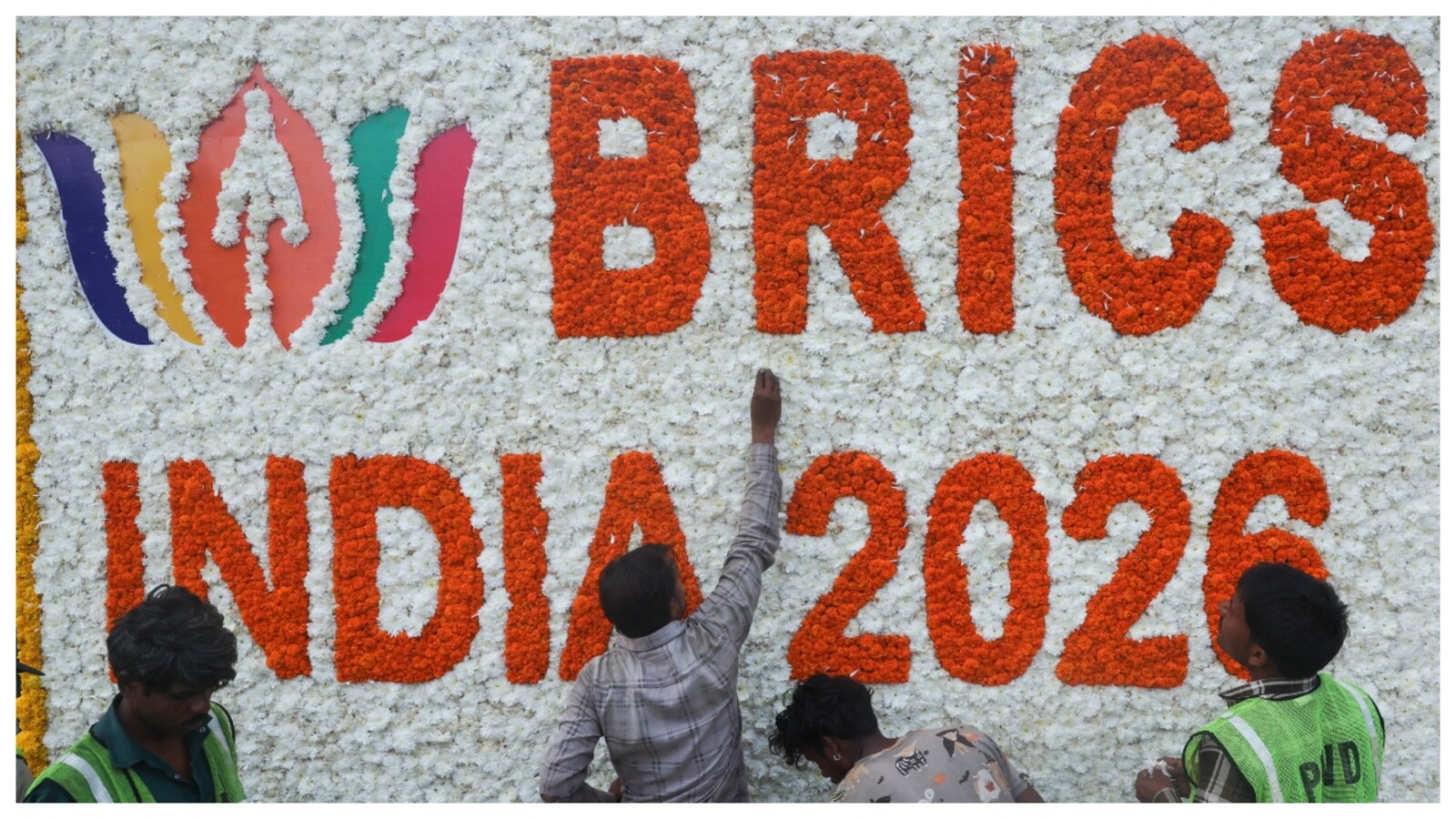
The BRICS Joint Report on Hydrogen Value Chains 2026 is an official product of the BRICS Energy Working Group, developed under India’s 2026 Chairship and referenced/launched in the context of the 11th BRICS Energy Ministers’ Meeting in Gurugram (June 2026). The UAE contributed through the Working Group.

Vietnamese Prime Minister Le Minh Hung arrives in New Delhi, beginning the program to attend the BRICS Summit and conduct bilateral engagements in India. Dated September 12, 2026
Context and purpose
The report was prepared against the background of an expanded BRICS (11 members) and the energy cooperation priorities under the theme “Building for Resilience, Innovation, Cooperation and Sustainability.” It falls under Priority 3 (Technology and Innovation) of the energy agenda, alongside smart grids, energy storage, digitalisation, AI, energy efficiency, biofuels, and carbon capture.
According to official communiqués, its main purposes are:
- To provide a foundation for enhanced cooperation on hydrogen technologies, standards, industrial applications, and future value chains.
- To outline a shared vision for expanding hydrogen investment, innovation, and integrated low-emission hydrogen value chains.
- To support collaboration on interoperable standards and certification frameworks for zero/low-emissions hydrogen.
In the Energy Ministers’ Joint Communiqué, members “welcome the ongoing work on the BRICS Joint Report on Hydrogen Value Chains, which we agree to finalize shortly during the Indian Chairship” and encourage cooperation on standards and certification.
The report is described as building on momentum from COP28 (UAE Consensus and the Hydrogen Declaration on harmonising certification frameworks) to support the deployment of low-emission technologies, including hydrogen.

UAE strengthens BRICS energy cooperation with focus on AI, hydrogen and smart grids. (Photo Credit: WAM)
Core content (based on official descriptions)
The full text has not been publicly released in detail (as of the latest available information, only high-level summaries from communiqués and statements are available). Confirmed key points include:
- Shared vision for integrated value chains
Emphasis on developing comprehensive low-emission hydrogen value chains covering production (electrolysis from renewables and other pathways consistent with national circumstances), storage, transport, industrial applications, and derivatives (e.g., ammonia, methanol). The aim is to create linkages among BRICS countries, which include major producers (China, India, Brazil, UAE, Saudi Arabia, Russia, etc.) and significant industrial demand. - Investment and innovation
Encouragement of expanded investment in hydrogen, technology innovation, and expertise sharing. This provides a basis for joint research, pilots, and scale-up among members. - Standards, certification, and technical cooperation
Focus on interoperable standards and certification frameworks to facilitate trade and cross-border cooperation. This is important because BRICS members pursue different hydrogen pathways (green, blue, mixed) and require greater compatibility to develop common or linked markets. - Industrial applications and future value chains
Highlighting hydrogen’s role in industrial decarbonisation (steel, fertilisers, refining, etc.) and connections to domestic demand as well as potential exports of derivatives.
The report does not impose a uniform pathway. It respects national circumstances, development priorities, and energy mixes — consistent with the broader BRICS principle of just, orderly, equitable, and inclusive energy transitions.
Significance and place within BRICS cooperation
- Institutional foundation: The report provides a technical basis for subsequent activities under the updated BRICS Energy Research Cooperation Platform (ERCP). It complements other initiatives such as the Guiding Principles on Smart Grids and Energy Storage and the Digital Centre of Excellence for Smart Grids and Energy Storage.
- Link to national strategies: It reflects and supports members’ national hydrogen strategies (e.g., India’s National Green Hydrogen Mission, China’s medium- and long-term plan, Brazil’s PNH2, UAE and South African strategies, etc.).
- Towards practical outcomes: It is intended as more than a political statement, aiming to enable practical cooperation on research, standards, investment, and experience sharing — aligning with the desire to move BRICS from a discussion forum towards a delivery platform.
- Global context: It connects with international efforts on hydrogen (COP28, certification standards) while prioritising the interests of the Global South, energy security, and equitable access.
Limitations and notes
The full report has not been widely published on official public channels (such as brics2026.gov.in or detailed PIB releases). Analysis is therefore based on official statements from the Energy Ministers’ Meeting, the Joint Communiqué, and interventions by delegations (particularly the UAE). No public data are available on specific quantitative targets, investment projections, or detailed pilot projects contained in the report.
The document serves as a technical-policy foundation intended to facilitate more substantive hydrogen cooperation within BRICS after 2026 (under China’s 2027 Chairship). If the full text is released, deeper analysis of technical content, specific recommendations, and cooperation roadmaps will become possible.
Hydrogen certification standards framework
Hydrogen certification standards frameworks are systems of rules, methodologies, and mechanisms designed to verify the origin, greenhouse-gas (GHG) emission intensity, and sustainability attributes of hydrogen (and its derivatives such as ammonia and methanol). Their primary objectives are to build market credibility, facilitate cross-border trade, enable access to incentives/policies, and prevent greenwashing.
Core elements of a certification framework
According to the IPHE comparison report (updated May 2026, analysing approximately 21–28 mechanisms), certification frameworks typically cover four key elements:
- Product attributes
- GHG emission thresholds (kg CO₂e/kg H₂).
- System boundaries (Well-to-Gate, Well-to-Wheel, or including transport/conversion).
- Electricity source requirements (100% renewable, additionality, temporal/geographic correlation).
- Broader sustainability criteria (water, land, social aspects).
- Operational setup and procedures
Monitoring, reporting, and verification (MRV); roles of certification bodies and independent auditors. - Chain of custody model
Book-and-claim (certificates detached from physical product), mass-balance, or identity-preserved. - Information technology and registries
Digital systems, QR codes, or blockchain for traceability and prevention of double-counting.
Major global frameworks and standards (as of 2026)
1. European Union – RFNBO (Renewable Fuels of Non-Biological Origin)
- Based on RED II/III and related Delegated Regulations.
- Threshold: approximately 3.38 kg CO₂e/kg H₂ (Well-to-Wheel, ≥70% GHG savings relative to fossil fuels).
- Strict requirements on additionality and temporal/geographic correlation of renewable electricity.
- Recognised voluntary schemes: CertifHy EU, ISCC EU, REDcert EU.
- Multiple projects already certified (e.g., Hy2Gen Werlte among the first operational production sites).
2. India – Green Hydrogen Certification Scheme of India (GHCI)
- Issued in April 2025 by the Ministry of New and Renewable Energy under the National Green Hydrogen Mission.
- Threshold: ≤ 2 kg CO₂e/kg H₂ (Well-to-Gate, 12-month average) — one of the strictest globally.
- Applies to hydrogen produced via renewable-powered electrolysis or biomass conversion.
- Separate standards for Green Ammonia (≤ 0.38 kg CO₂e/kg NH₃) and Green Methanol (≤ 0.44 kg CO₂e/kg CH₃OH).
- Digital GHCI Portal supports registration, verification, and issuance of certificates (with QR verification).
- Multi-tier certificates: Concept, Facility-level, Provisional, and Final.
- Supports access to incentives, carbon credits, and exports.
3. ISO and international technical standards
- ISO/TC 197 (Hydrogen technologies) develops standards covering production, storage, transport, measurement, and use.
- ISO/TS 19870 provides a methodology for calculating lifecycle GHG emissions (frequently referenced).
- Safety, quality, and refuelling standards (ISO 19880 series) support the ecosystem but are not GHG certification schemes themselves.
4. Other frameworks
- CertifHy (European and international): Voluntary scheme for renewable and low-carbon hydrogen.
- Brazil (SBCH2): Threshold around 7 kg CO₂e/kg H₂, book-and-claim model, with provisions for international alignment.
- China: Group and industry standards; a more comprehensive framework is under development within the 15th Five-Year Plan.
- COP28 Hydrogen Declaration: 39 countries expressed intent to work towards mutual recognition of certification schemes.
- IPHE: Comparison reports and the Hydrogen Certification 101 paper aim to promote interoperability and mutual recognition.
Situation within BRICS
The BRICS Joint Report on Hydrogen Value Chains 2026 encourages collaboration on interoperable standards and certification frameworks for zero/low-emissions hydrogen. The objective is to support trade, investment, and shared value chains without imposing a single uniform standard, while respecting national circumstances.
Members are developing their own frameworks (India’s strict GHCI; Brazil’s more flexible SBCH2; China, UAE, South Africa, and others progressing with national approaches). BRICS cooperation focuses on experience sharing, joint research, and progress towards compatibility to reduce intra-bloc trade barriers.
Challenges and trends
- Significant differences: GHG thresholds (India 2 kg vs EU ~3.38 kg vs higher thresholds elsewhere), system boundaries, additionality requirements, and calculation methodologies create barriers to cross-border trade.
- Trends: Movement towards modular approaches (common modules + jurisdiction-specific modules), mutual recognition, digital traceability, and greater alignment with ISO methodologies.
- Impact: Credible certification frameworks are a prerequisite for low-emission hydrogen to become a tradable global commodity, attract investment, and support policy instruments (incentives, quotas, carbon markets).
In summary, hydrogen certification standards frameworks are evolving rapidly but remain fragmented. International efforts (IPHE, COP28, ISO) and regional initiatives (EU, India, BRICS) are all working towards greater interoperability to support the development of a low-emission hydrogen market.