

China's Hydrogen Strategy and Suggestions for Vietnam: Securing Energy Autonomy in an Era of Geopolitical Disruption
Annie Nguyễn
May 29, 2026 – Saigon Innovation Hub (SIHUB), Ho Chi Minh City
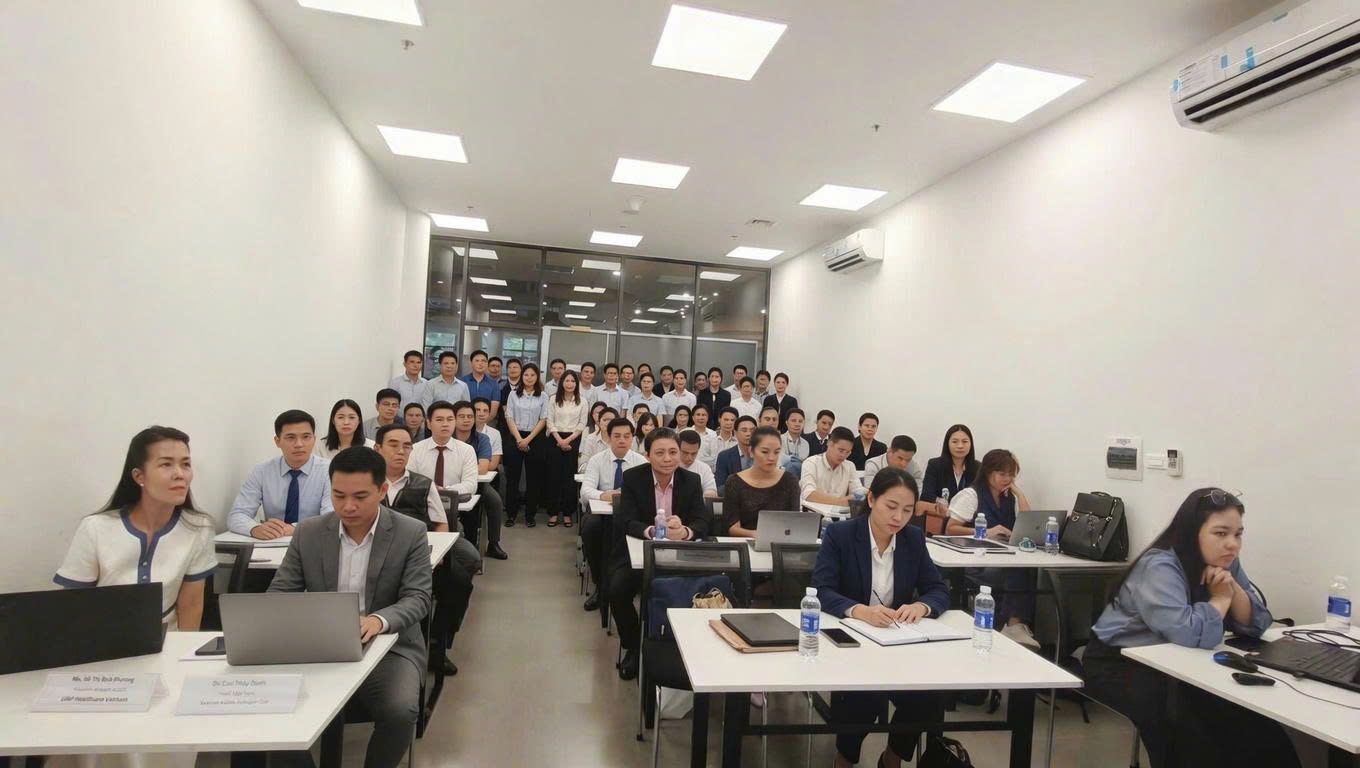
Mr. Ianton Tan, Regional Director for Asia Pacific (APAC) of United Hydrogen Group, presented a keynote on China's hydrogen development strategy and policy suggestions for Vietnam at the Vietnam Hydrogen Legal and Regulatory Forum 2026. The presentation focused on lessons from geopolitical crises, China's development model, rethinking safety standards, demand‑side policies, standard localization, and prioritizing chemical carriers.
The Geopolitical Catalyst: From the Strait of Hormuz Crisis to National Energy Security
The crisis in the Strait of Hormuz has fundamentally altered the calculus of national security. Vulnerable maritime chokepoints expose heavy reliance on imported fossil fuels. New energy is no longer just an environmental initiative – it has become a National Energy Security Strategy.
As a core principle: "If you are autonomous, your back is straight." True sovereignty requires domestic, resilient energy generation and chemical feedstocks.
Decoding China's Breakthrough
China achieved a major breakthrough in hydrogen commercialization through a pragmatic shift in policy and standards, structured under the "1 + X + N" model:
-
"1" – Top‑level strategy: Central government principles for carbon peaking, setting macroeconomic priority and national will, de‑risking the market for early investors.
-
"X" – Standard systems: Over 111 national standards for production, storage, and transport were codified, enabling manufacturing to scale rapidly.
-
"N" – Sectoral plans: Specific roadmaps for industry, transport, and energy, empowering provincial governments to set targets based on local industrial strengths.
The pragmatism principle: Allowing the ecosystem to build scale using existing technologies first, rather than halting development by demanding absolute environmental purity from day one.
Rethinking Safety Standards
Previously, hydrogen was strictly regulated under traditional, rigid chemical management systems, stunting widespread energy use. The breakthrough occurred when regulators began managing vehicle and power applications under a more adaptable Energy Management System.
Regulators allowed "small pilots" to test safety controls in real‑world commercial environments before national rollout. Standards are never compromised – safety is never relaxed – rather, the regulatory boundary expands to accommodate new technologies validated by practice.
A compelling example: The upgrade to 30 MPa transport pressure. This was not a spontaneous decision. Equipment R&D and standard drafting began 10 years ago. Manufacturers and test agencies collaborated globally to ensure manufacturing systems were robust. Regulators created controlled commercial pathways for new technology to prove its safety, demonstrating a natural, step‑by‑step growth model.
Targeted Demand Policy: Highway Toll Exemptions
Subsidizing production is futile without end‑users. China pioneered a simple, massive demand stimulant: Highway toll exemptions for hydrogen trucks.
In the logistics sector, tolls account for roughly 25% of the lifecycle operating costs (OPEX) of heavy vehicles. By waiving these fees for hydrogen trucks, governments artificially bridged the cost gap with diesel. This ensures subsidized vehicles are actively deployed, creating predictable, high‑volume demand for hydrogen fuel along specific freight corridors.
The Strategy of Localization
If emerging markets blindly copy highly restrictive Western (EU) standards, they risk throttling their infant industries with impossible compliance costs.
Vietnam can fast‑track deployment by referencing proven Asian standards (such as China's GB standards) – which are built for rapid scaling – and localizing them to fit national needs.
Harmonizing standards lowers the barrier for technology transfer, equipment import, and foreign direct investment (FDI). A unified regional standard framework within ASEAN enables cross‑border energy trade and regional energy complementarity.
Lessons from Vietnam's Solar Boom
Vietnam's success with the Feed‑in‑Tariff (FiT) mechanism triggered a massive explosion in solar capacity (over 16 GW in a few years), proving the market can mobilize capital extremely fast given the right price signals.
But there was also a pitfall: Rapid deployment outpaced grid infrastructure and standard absorption, leading to severe curtailment.
The mandate for hydrogen: The "X" factors (storage, transport, safety standards) must be established before heavily incentivizing production ("N"). The solution: Focus early deployments on closed‑loop industrial ecosystems (e.g., ports, fertilizer plants) to minimize transport infrastructure bottlenecks.
Prioritising Chemical Carriers: Green Ammonia and Green Methanol
Pure hydrogen is thermodynamically intensive to transport. Vietnam should leverage its maritime position by focusing on high‑density carrier molecules.
Green Ammonia (NH₃):
-
Domestic decarbonization: Directly replace the imported and grey ammonia currently used in Vietnam's massive fertilizer industry (e.g., Phu My, Ca Mau).
-
Food security: Insulates the agricultural supply chain from global natural gas and fertilizer shocks.
-
Export potential: High demand from industrialized Asian markets (Japan, South Korea) for zero‑carbon energy carriers.
Green Methanol (CH₃OH):
-
Maritime shipping lead: Liquid at room temperature, making it the immediate fuel of the future for global maritime logistics.
-
Bunkering hub: Vietnam's extensive coastline and deep‑water ports position it perfectly to become Southeast Asia's premier green methanol bunkering hub.
-
Industrial feedstock: Reduces reliance on the over USD 80 million annual methanol import bill.
Conclusion: Securing Vietnam's Energy Future
From China's hydrogen strategy, Vietnam can draw crucial lessons: pragmatism in standards, controlled piloting, demand stimulation through targeted policy, localization of standards, and prioritization of chemical carriers that align with geographical advantages.
Mr. Ianton Tan called on Vietnam to act today to build a hydrogen strategy that both ensures energy security and leverages its competitive position in the regional and global clean energy value chain.
This article is based on the presentation delivered by Mr. Ianton Tan, Regional Director for Asia Pacific (APAC) of United Hydrogen Group, at the Vietnam Hydrogen Legal and Regulatory Forum 2026, on May 29, 2026, at the Saigon Innovation Hub, Ho Chi Minh City.