

AI and Hydrogen – "Two-Way Accelerator" for the Energy and Intelligence Era: VAHC Hosts Seminar with Experts from India, the Netherlands, Saudi Arabia, and Vietnam
July 1, 2026 – Annie Nguyễn
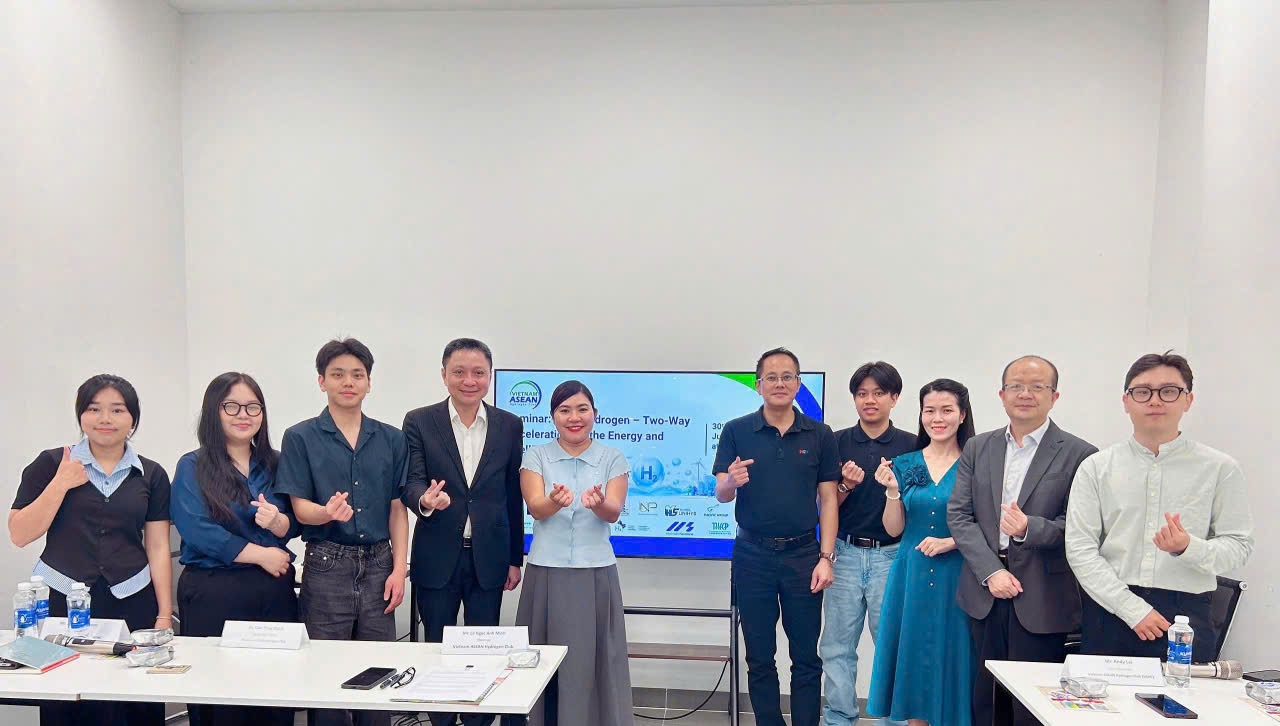
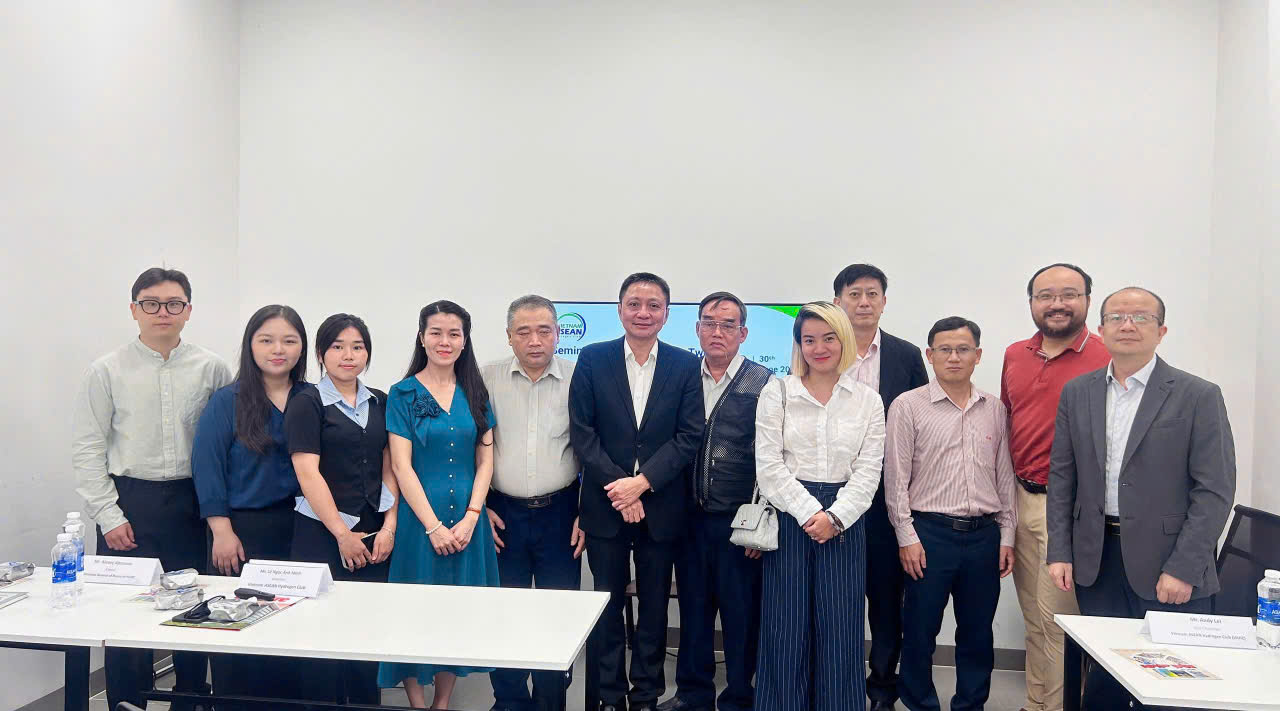
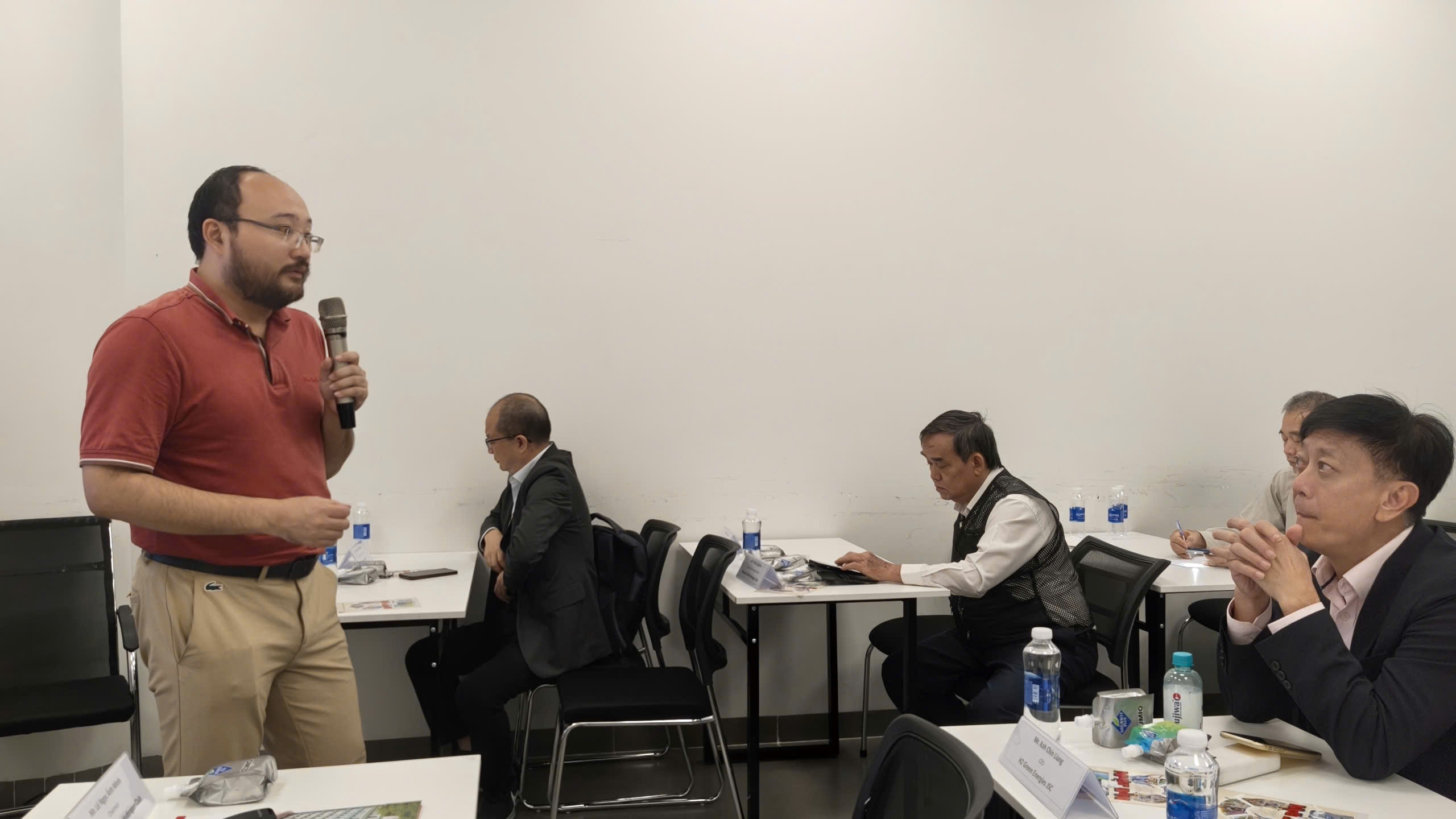
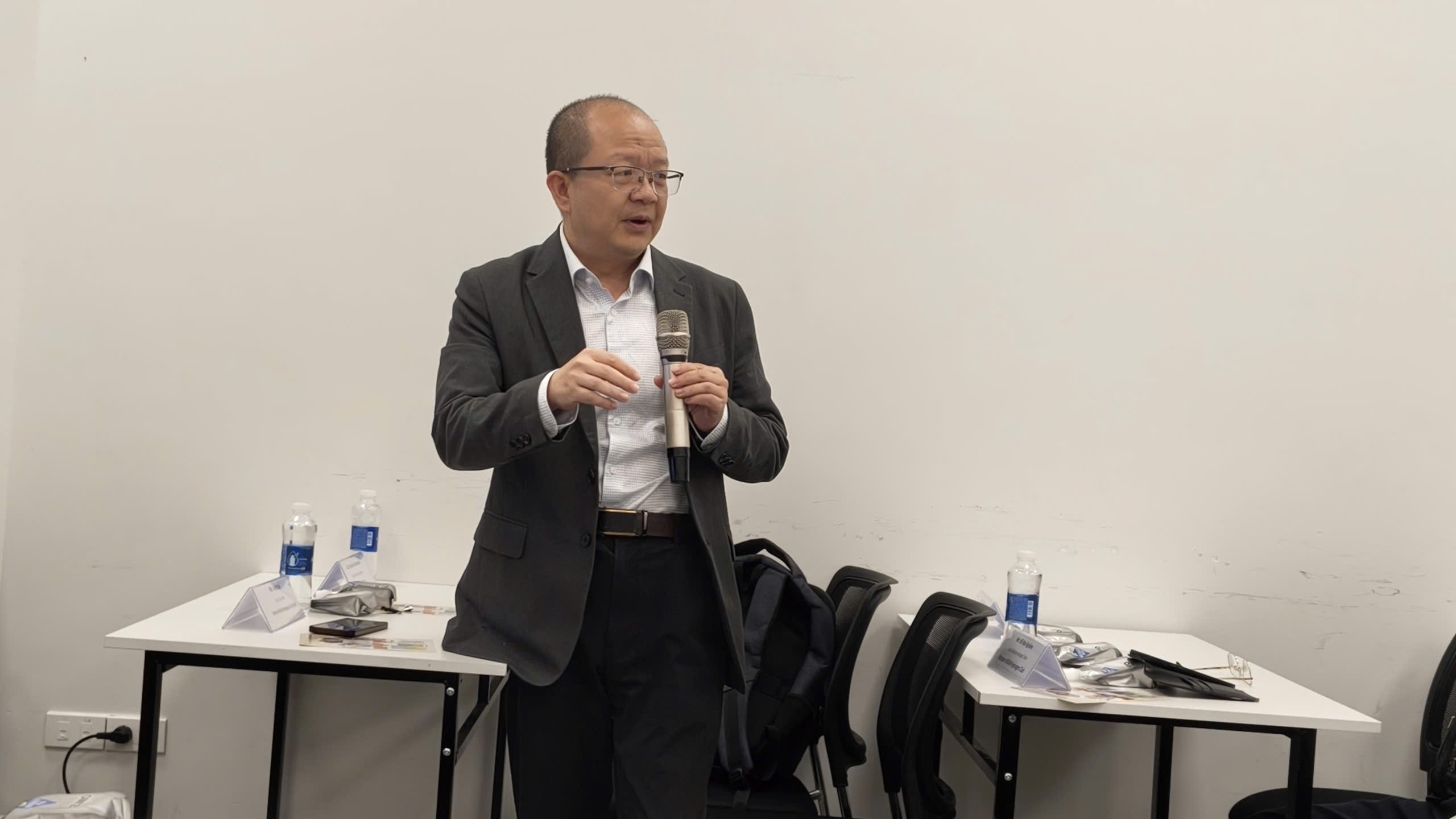
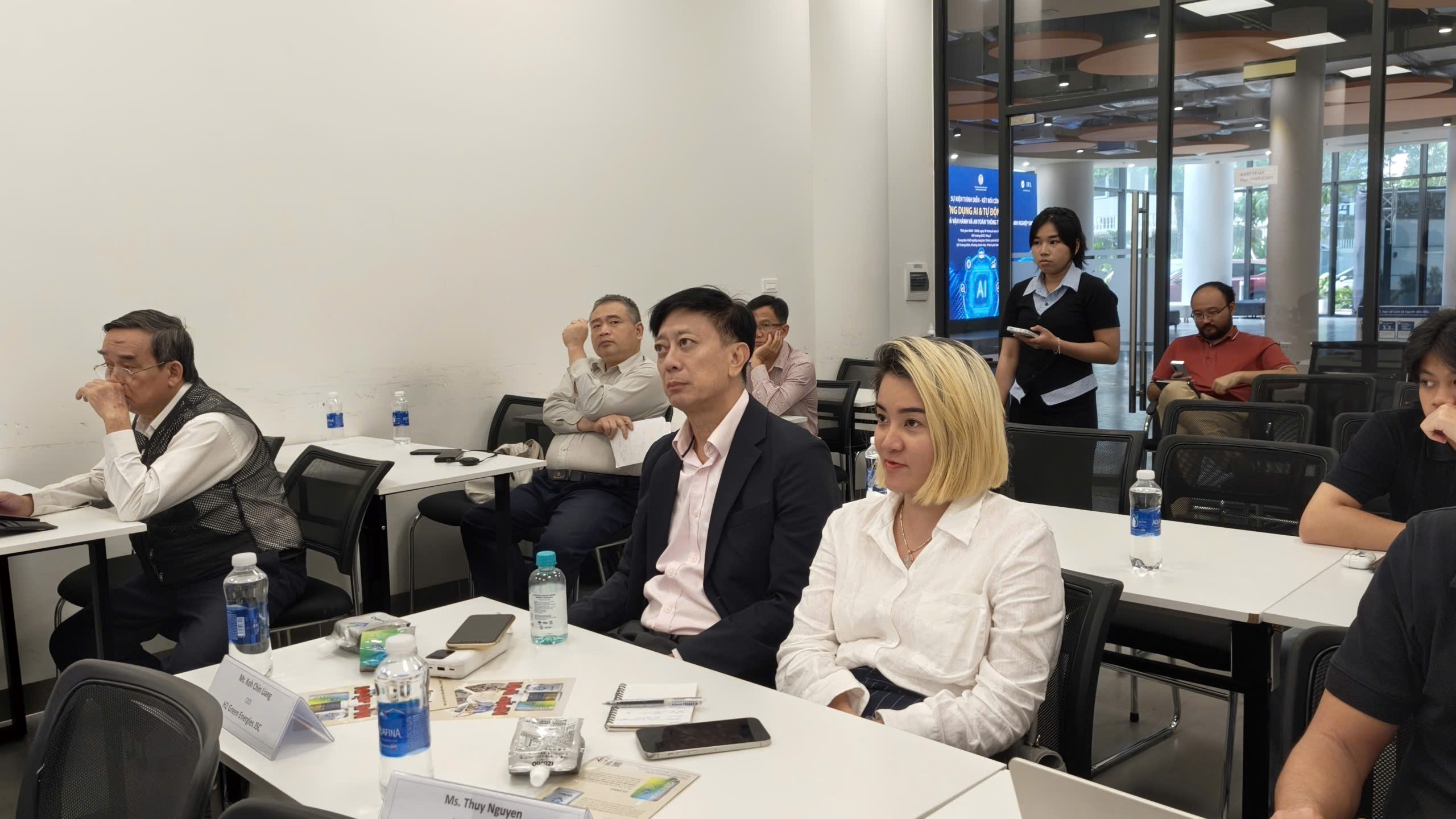
On June 30, 2026, at the Saigon Innovation Hub (SIHUB) in Ho Chi Minh City, the Vietnam ASEAN Hydrogen Club (VAHC) hosted its annual Hydrogen Specialized Seminar under the theme "AI ⇄ Hydrogen: Two-Way Acceleration for the Energy and Intelligence Era". The event brought together leading experts from Vietnam, ASEAN, and internationally to discuss the symbiotic relationship between artificial intelligence and hydrogen energy – two fields considered key drivers of the global energy transition.
Opening Remarks: Vision from VAHC
In the opening remarks, a representative of the VAHC Organizing Committee emphasized: "The year 2026 is witnessing two major parallel trends. On one side is the explosion of artificial intelligence with increasingly massive energy demands from data centers. On the other is the global hydrogen industry moving out of the pilot phase and entering the commercialization stage with projects capable of attracting capital. The key question is: Can AI help the hydrogen industry solve its most difficult challenges regarding cost and efficiency? And conversely, can hydrogen become a sustainable energy solution for the AI industry itself? This seminar will seek the answers".
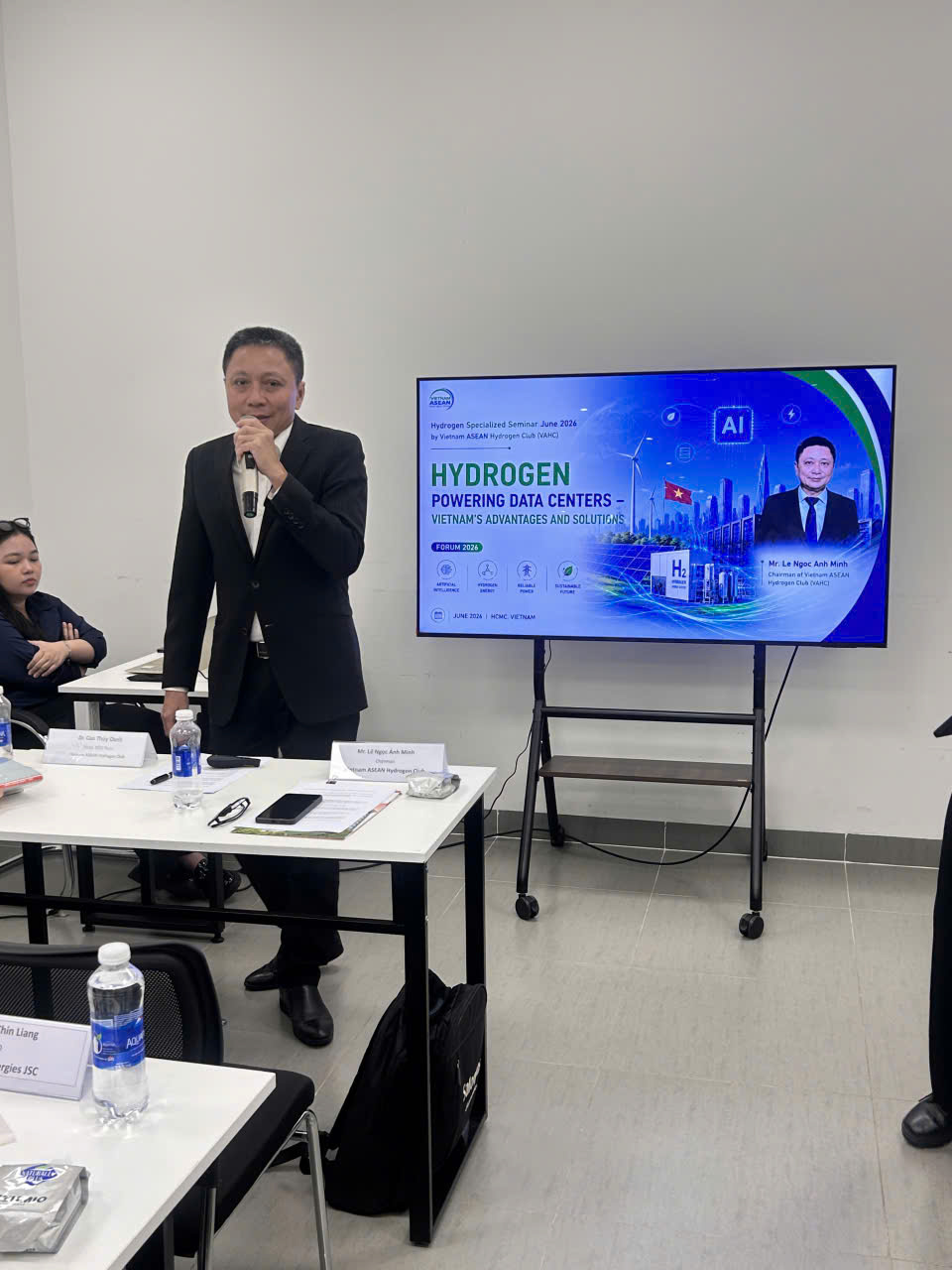
Mr. Le Ngoc Anh Minh – Chairman of VAHC, Executive President of Pacific Group – is the founder and leader of the club, with over 30 years of experience in infrastructure, energy, and large-scale project investment. In his presentation, he emphasized: "AI and hydrogen are not just two parallel trends but can accelerate each other. AI helps optimize hydrogen production, transport, and utilization, while hydrogen provides clean, stable power to operate AI data centers – which are consuming ever-increasing amounts of electricity." He also presented Vietnam's quantifiable advantages in green hydrogen production for data centers: offshore wind potential of 1,068 GW – the largest in Southeast Asia – along with other renewable sources such as geothermal (269 sites), tidal and ocean currents, most of which remain untapped.
Perspective from India: AI Reshaping the Green Hydrogen Value Chain
As part of the event, Dr. Sandeep P. Dhurat (India) – Innovator, Strategist, Founder & Managing Partner of SPD Futurix LLP (Mumbai) – delivered a keynote presentation: "How AI is Reshaping the Green Hydrogen Value Chain from Production to End Use – An Indian Perspective".
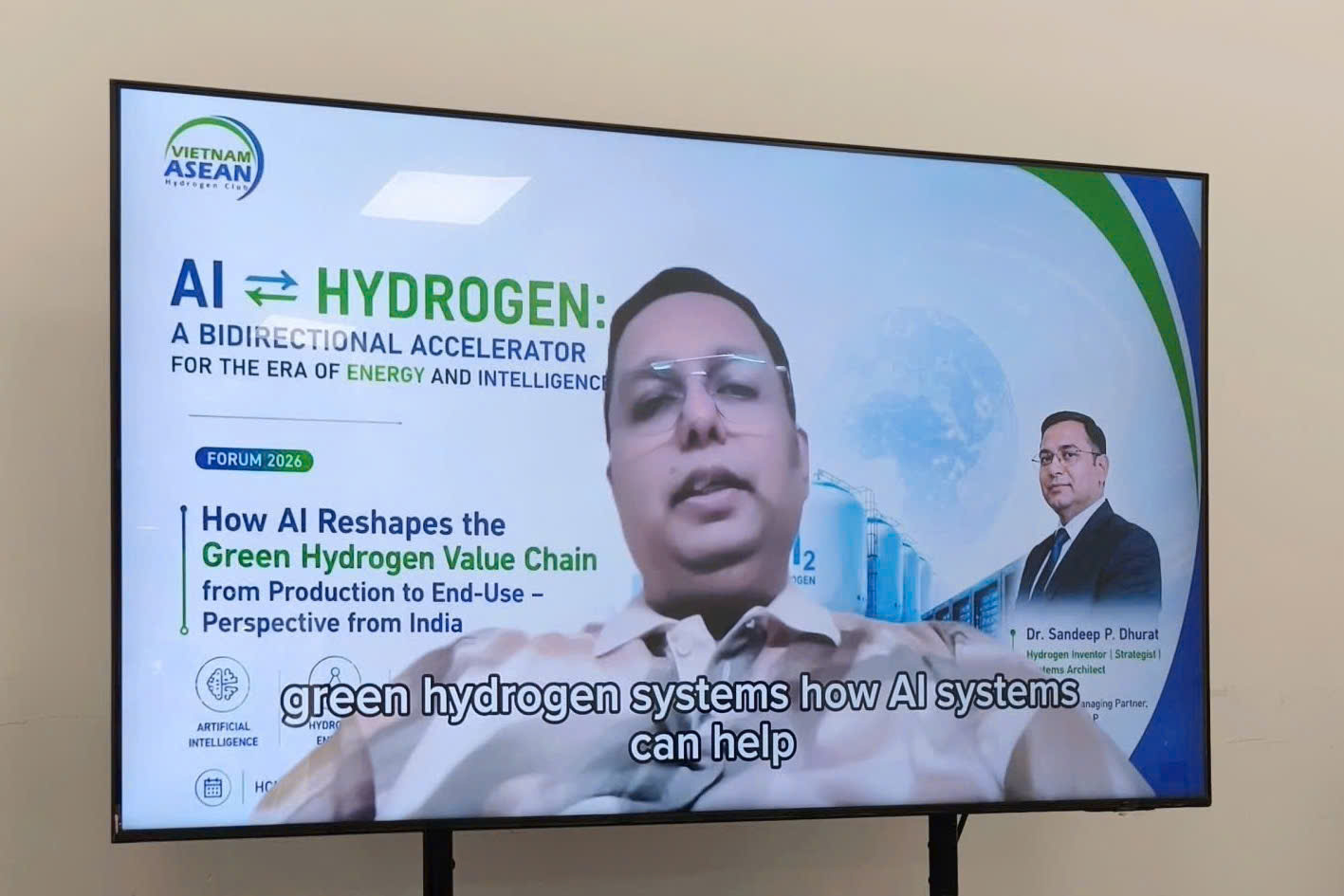
Dr. Dhurat is a leading expert with remarkable achievements: nominated for the "Future Hydrogen Leader" award at the World Hydrogen Awards 2026, member of the International Association for Carbon Capture, holder of 21 patents and author of 30 published books. He is the creator of the Hydrogen Vehicle Safety Index (HVSI) – the world's first global standard for hydrogen vehicles – and the HydroX innovation. He has also been nominated as an expert for TCVN TC 197 (Vietnam's Hydrogen Technical Committee).
His presentation covered: the convergence of AI and green hydrogen; AI in production, storage, transport, safety, and end-use applications; the H2 Guardian Digital Twin system; and the vision for an autonomous hydrogen ecosystem. He emphasized: "The future energy transition is not just about producing clean energy, but about producing clean energy intelligently." He acknowledged Vietnam's efforts in the hydrogen sector, particularly through TCVN TC 197, and called for strengthened cooperation between India, Vietnam, and the global hydrogen community.
Perspective from the Netherlands: AI in Green Hydrogen Production
Ms. Ann Wolter – PhD Candidate, Lecturer and Researcher of Renewable Transitions at HAN International School of Business and the University of Greater Manchester (the Netherlands) – presented a European perspective on how AI is reshaping the entire green hydrogen value chain. According to her, green hydrogen is seen as a key technology for reducing greenhouse gas emissions, decarbonizing transport, aviation and industry, increasing energy security, and storing intermittent renewable energy from solar and wind sources.
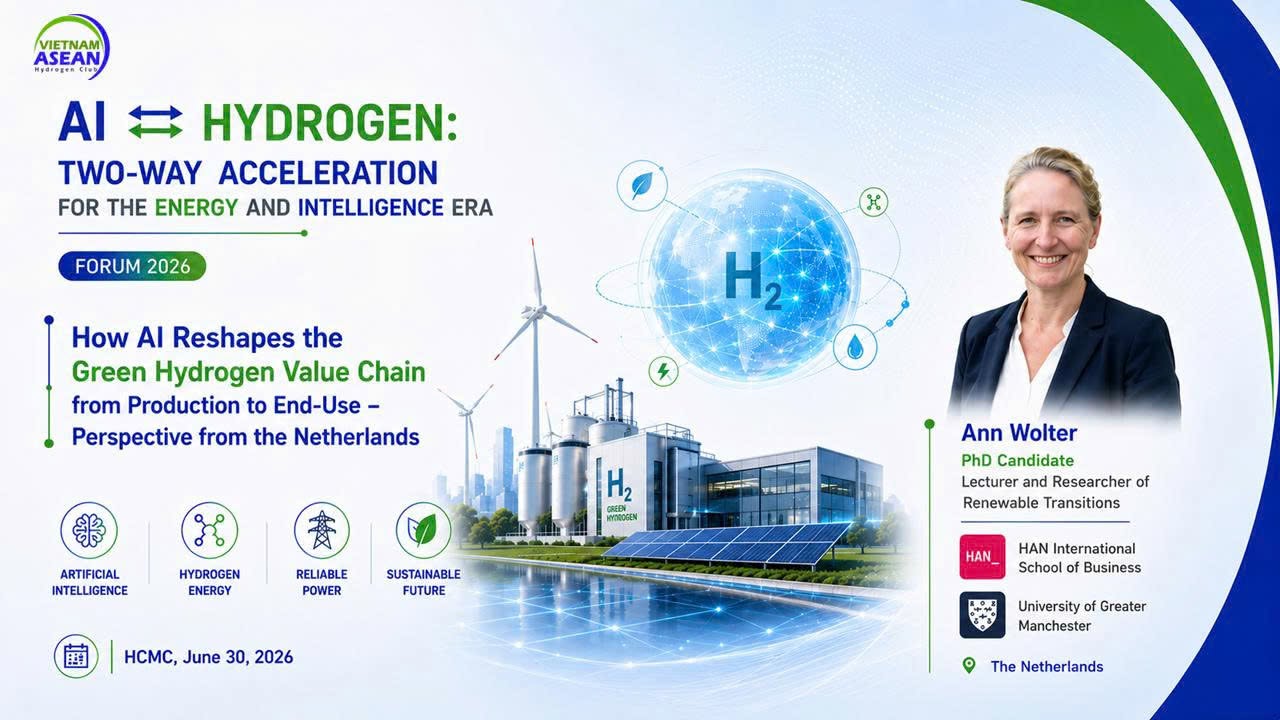
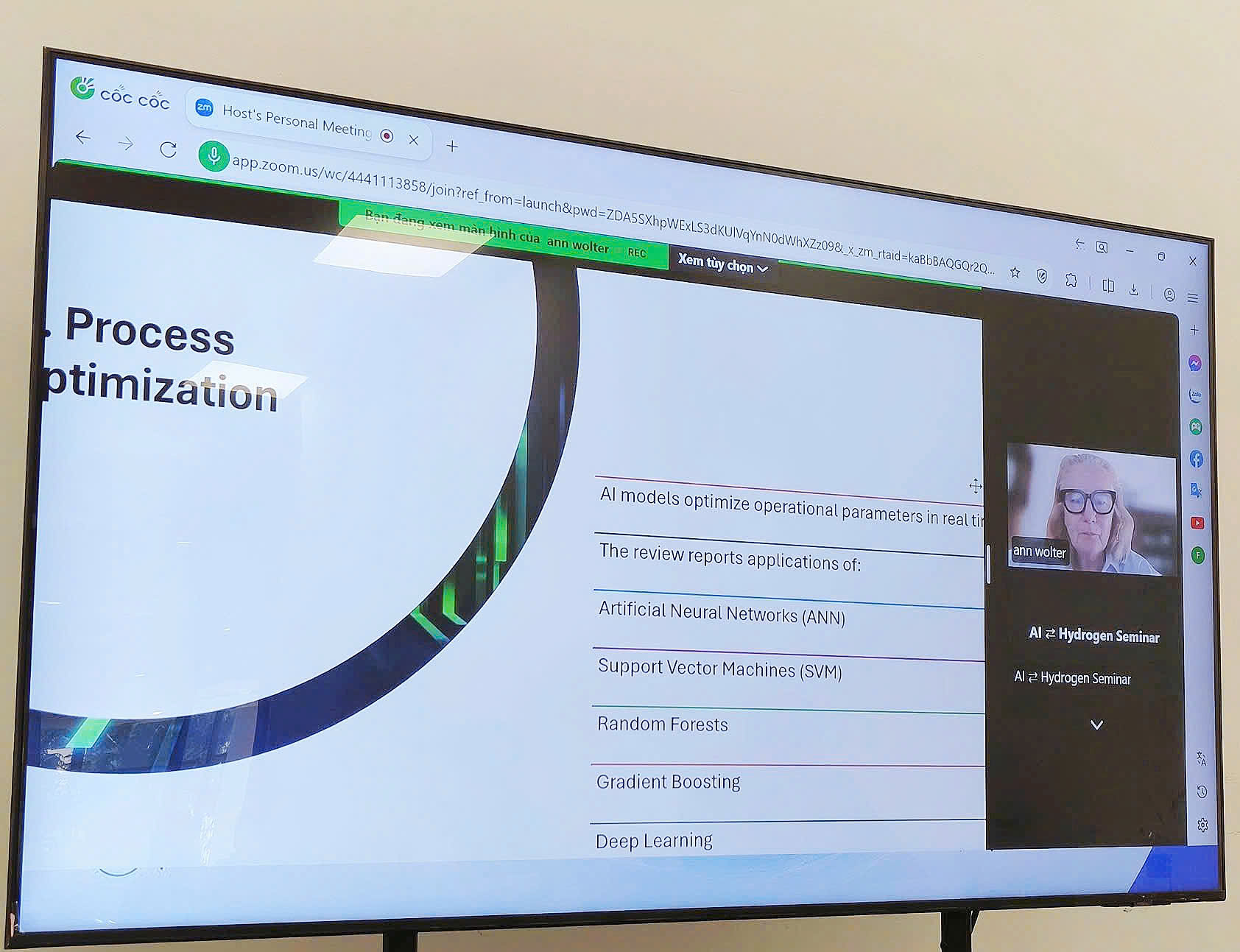
Key AI applications in hydrogen production include: renewable energy forecasting (solar irradiance, wind speed, power generation, and electricity demand using Neural Networks, Deep Learning, LSTM, and Reinforcement Learning); fault detection in solar panels, wind turbines, electrolyzers, and hydrogen storage systems; real-time process optimization using Artificial Neural Networks (ANN), Support Vector Machines (SVM), Random Forests, and Deep Learning; and Digital Twins for simulation, forecasting, and lifecycle optimization.
According to the research presented, among hydrogen production optimization methods, Response Surface Methodology (RSM) accounts for 43%, Artificial Neural Networks for 19%, Genetic Algorithms for 16%, and Machine Learning for 14%.
Ms. Wolter also introduced real-world examples from the Netherlands: The 200MW ELYgator project at the Port of Rotterdam (Air Liquide/Siemens) and the Djevels project in Delfzijl, where AI and Digital Twins help orchestrate energy conversion; the Hydrohub Innovation Programme led by the Institute for Sustainable Process Technology (ISPT); and startups like Elestor using AI to balance renewable energy grids via hydrogen-bromine flow batteries.
Perspective from Saudi Arabia: Legal and Governance Framework for the Hydrogen-AI Ecosystem
The seminar featured a team of experts from Saudi Arabia, including Professor Saad Mohamed Abdelrahman – Professor of Analytical and Nuclear Chemistry – along with Dr. Hossam S. Abd El Raheem – Assistant Professor of Commercial Law, Practicing Arbitrator, and AI Governance Researcher – and Ms. Razan Aljohani – Legal Researcher in Law and AI. The team presented "Navigating the Hydrogen-AI Nexus: Specialized Arbitration, Water Governance, and AI-Driven Evidence", focusing on legal and governance aspects at the intersection of hydrogen and AI.
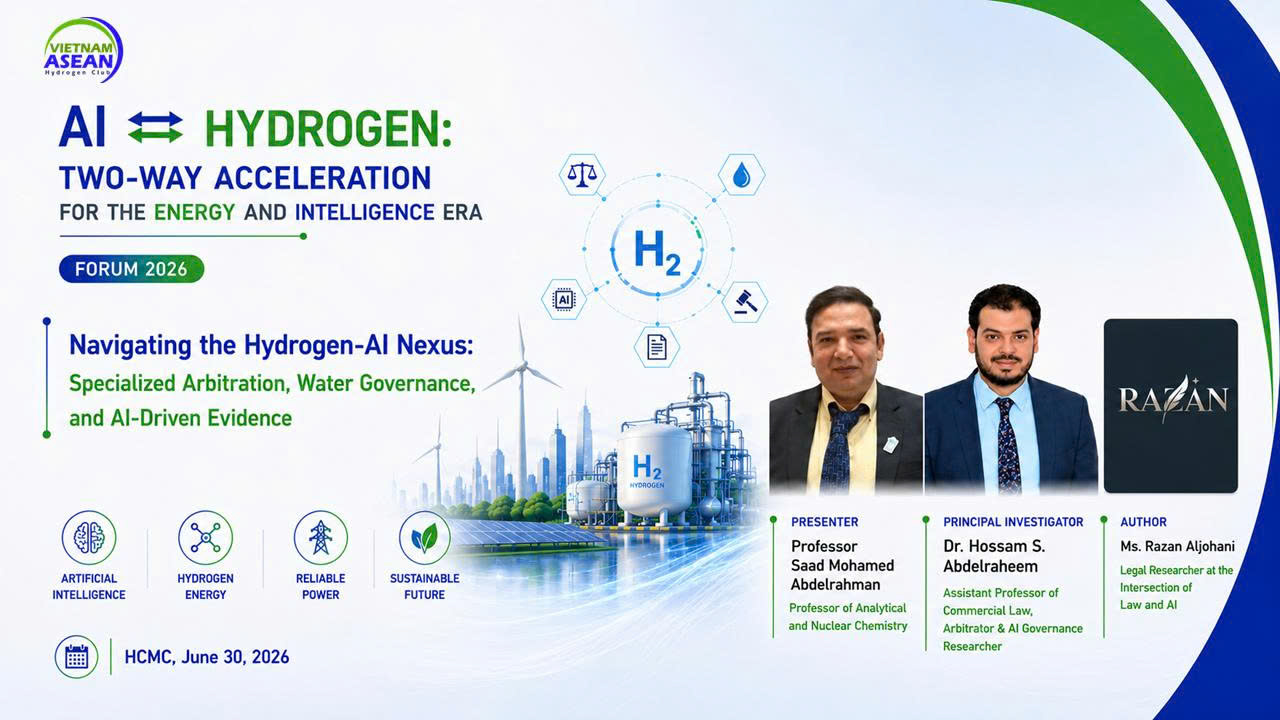
The presentation covered three main areas:
1. Specialized Arbitration in Hydrogen-Related Disputes: The team categorized potential disputes in the hydrogen-AI sector, including:
-
Environmental and water disputes: Brine discharge from desalination plants for hydrogen production; water allocation between industrial needs and community access (SDG 6); transboundary water conflicts (particularly the Mekong River).
-
Cyber and smart infrastructure disputes: IoT investment vs. operational efficiency; liability for SCADA system failures managing hydrogen infrastructure.
-
AI and algorithmic liability disputes: When AI incorrectly predicts equipment conditions, pressure levels, or resource availability.
-
Intellectual property disputes: Who owns AI-generated patents in electrochemical R&D for new catalyst materials?
The team emphasized the need for multidisciplinary arbitral tribunals (combining legal, electrochemical, and data science expertise) to effectively resolve these complex disputes.
2. AI-Supported Evidence in Legal Proceedings: The team presented legal standards for admitting AI-generated evidence, including reliability, transparency (Explainable AI – XAI), data integrity, and chain of custody. They also highlighted challenges: the "black box" problem, algorithmic bias risks, and deepfake issues in digital evidence.
3. Three-Layer Digital Arbitration Model: The team introduced an integrated model:
-
Smart Contracts Layer: Automatically triggers arbitration protocols upon detecting contractual breaches.
-
Blockchain Evidence Layer: Ensures data integrity and immutability.
-
AI Arbitration Engine: Uses Explainable AI (SHAP, LIME) to assist arbitrators in analyzing complex technical datasets.
The team also emphasized the "Human-in-the-Loop" (HITL) principle – human arbitrators retain ultimate control over all legal decisions.
The proposed governance framework is built on four pillars: Technical and Safety (Zero Trust, mechanical redundancy, regular audits); Water and Environment (prioritizing human water access, transboundary water management); Arbitration and Legal (multidisciplinary tribunals, legal standards for AI evidence); Ethics and Data (transparency, confidentiality, anti-bias, and liability frameworks).
Perspective from Vietnam: Energy Challenges for AI Data Centers
Dr. Cao Thúy Oanh – Head of R&D at VAHC, Lecturer at Van Hien University – presented "The Energy Challenge for AI Data Centers – Trends and Issues". She is one of Vietnam's leading hydrogen experts, having delivered numerous presentations on Vietnam's national hydrogen strategy and hydrogen applications in medicine.
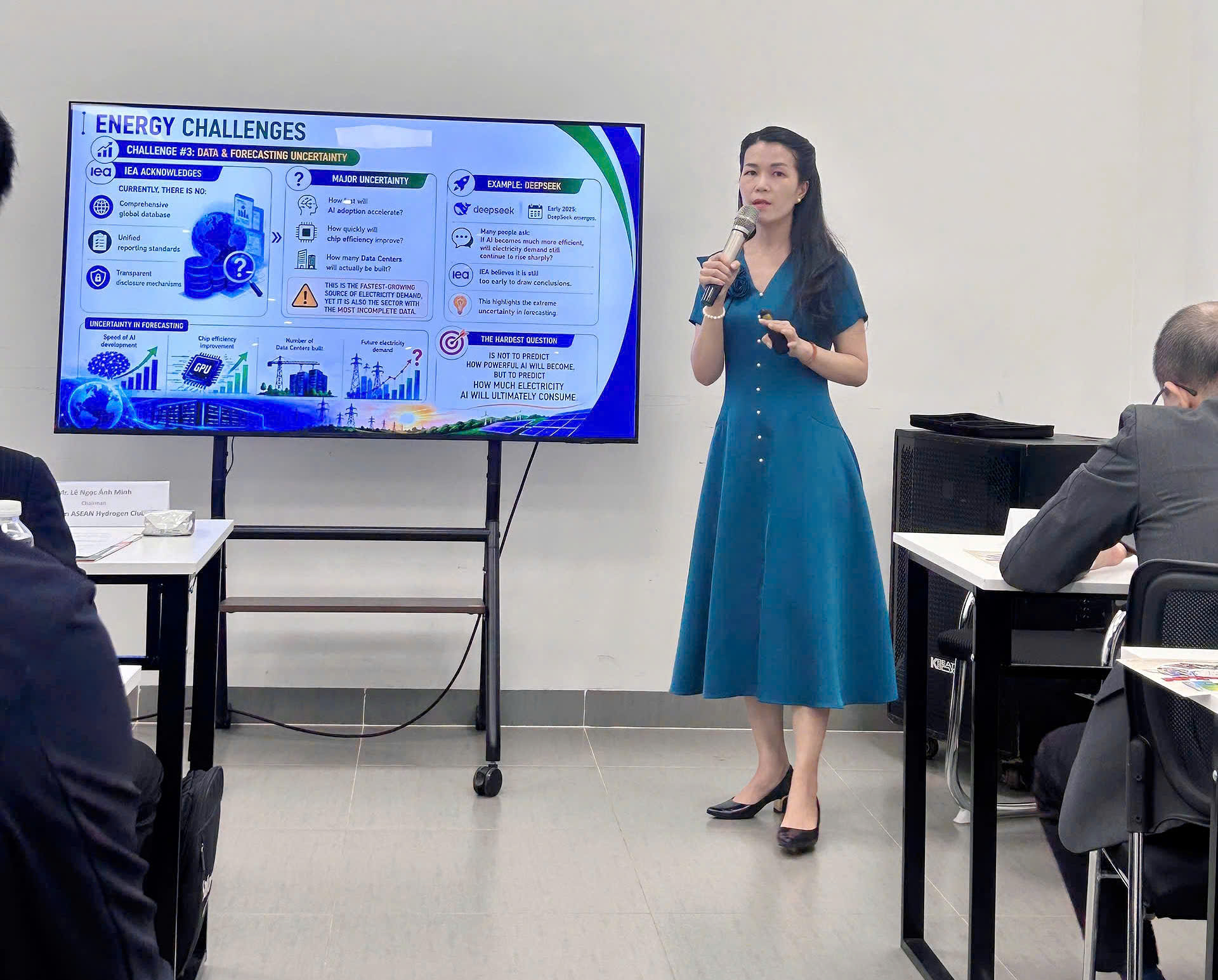
Her presentation focused on three major challenges:
Challenge 1: Pressure on the Power Grid – AI data centers are heavily concentrated: the US accounts for 45%, China 25%, Europe 15%. According to Deloitte, US AI data center power demand could grow more than 30-fold by 2035, from 4 GW (2024) to 123 GW. She cited Ireland – where data centers already consume over 20% of national electricity and the government has considered restricting new projects – to illustrate real grid pressure.
Challenge 2: Carbon and Sustainable Development – The global electricity mix still relies heavily on fossil fuels (about 60%). Data center emissions currently account for about 0.5% of global CO₂ and could reach 1% by 2030. Big Tech is taking action: Google targets 100% carbon-free electricity 24/7 and signed nuclear power agreements; Microsoft is restarting the Three Mile Island nuclear plant; Amazon is investing in Small Modular Reactors (SMRs). "Big Tech companies are increasingly looking like energy companies rather than technology companies," she observed.
Challenge 3: Data and Forecasting – The IEA acknowledges there is no complete global database, unified reporting standard, or transparent disclosure mechanism for AI electricity consumption. The emergence of DeepSeek in early 2025 raised the question: If AI becomes much more efficient, will electricity demand still grow strongly? "The hardest thing is not forecasting how powerful AI will become, but forecasting how much electricity AI will consume," she concluded.
How the World is Responding
Dr. Cao Thúy Oanh also presented global response trends: Data centers are adopting captive power with battery storage, gas, and hybrid energy; and NVIDIA and Emerald AI successfully demonstrated a 25% peak power reduction in Phoenix, Arizona, without impacting service quality – transforming data centers into "software batteries" for the power grid.
Conclusion and Outlook
The seminar affirmed that Vietnam possesses all the necessary elements to become a green hydrogen production and application hub serving data centers across ASEAN. With growing cloud computing capacity and the global shift toward green energy, green hydrogen and AI promise to be two mutually reinforcing drivers on the journey toward net-zero emissions.
#VAHC #AI #Hydrogen #GreenHydrogen #DataCenters #EnergyTransition #Vietnam #India #Netherlands #SaudiArabia #RenewableEnergy #NetZero #DigitalTransformation